
UK ulcerative colitis diet: NHS and ECCO aligned, personalised steps

Diet cannot cure ulcerative colitis, but a stage-based approach reduces symptoms and supports recovery: soft, low-residue foods during flares, and a varied, nutrient-dense pattern once you’re in remission. Hydration matters at every stage, and unexplained weight loss or ongoing deficiencies deserve a referral to a dietitian rather than more self-imposed restriction.
TL;DR:
- During a flare, a low-residue diet with cooked, peeled, and refined foods reduces gut irritation, while hydration with broth and rehydration solutions prevents electrolyte loss.
- Reintroducing fiber during remission should be gradual, starting with cooked foods and adding raw items carefully over weeks to monitor tolerance.
- Nutrient deficiencies like calcium, vitamin D, iron, and B12 are common in UC and should be checked through blood tests and supplemented based on confirmed needs.
- Common trigger foods include high-fiber raw vegetables, nuts, spicy, greasy foods, alcohol, caffeine, and additives, but individual responses vary widely.
- Personalized, stage-specific nutrition programs supported by ongoing monitoring and lab testing help manage UC more effectively than generic advice or prolonged restriction.
Table of Contents
- What to eat during an active ulcerative colitis flare
- What to eat when your ulcerative colitis is in remission
- Common trigger foods and what to avoid or limit
- Practical meal planning, texture swaps and quick recipe ideas
- Special diets and supplements: evidence, role and safety cautions
- Monitoring nutrition, red flags and when to seek dietetic or medical help
- How personalised nutrition plans and working with a specialist help
- Getting the balance right between caution and restriction
- Foodconnection: personalised nutrition programmes and how to book
- Sources
What to eat during an active ulcerative colitis flare
When your gut is inflamed, the priority shifts from variety to gentleness. A low-residue diet, one that limits fibrous, bulky foods, reduces the volume of undigested material passing through an already irritated bowel. That’s the rationale behind advice to favour cooked, peeled, seedless vegetables over raw ones; refined grains such as white rice, white pasta and white bread over wholegrain versions; and lean, well-cooked protein such as chicken, fish or eggs over fattier, tougher cuts. The Cleveland Clinic’s guidance on ulcerative colitis sets this out clearly as first-line advice during a flare, alongside hydration as an equal priority, not an afterthought.
Diarrhoea drains fluid and electrolytes fast. Water helps, but it isn’t always enough on its own. Broth replaces sodium lost through frequent stools, and oral rehydration solutions (the sachets you dissolve in water) replace glucose and electrolytes in the right ratio for absorption. If you’re losing more fluid than you’re taking in, plain water can actually dilute your remaining electrolytes further, which is why broth and rehydration solutions earn a specific mention rather than “drink more water” alone.
Appetite often drops during a flare, right when your body needs more energy and protein to repair gut tissue. Small, frequent meals, five or six modest servings rather than three large ones, tend to be easier to manage than trying to force down a full plate. Where appetite is genuinely poor, energy-dense choices matter more than volume: a smoothie with full-fat yoghurt and a banana packs more calories per mouthful than a bowl of dry crackers.
Some practical meals that tend to sit well during a flare:
- Blended vegetable soup made from peeled courgette, carrot and potato, with a poached egg or shredded chicken stirred through.
- A smoothie of banana, lactose-free milk or a plant alternative, smooth peanut butter (if tolerated) and a spoon of honey.
- Soft porridge made with water or lactose-free milk, topped with a little golden syrup rather than raw seeds or dried fruit.
- White rice with steamed, well-cooked fish and a spoonful of olive oil.
- Scrambled eggs on white toast with the crusts removed.
Pro Tip: Batch-cook a plain vegetable and rice soup when you’re feeling well and freeze it in single portions. On a bad flare day, you won’t have the energy to cook, and having something ready removes one decision you don’t need to make.
Not every symptom during a flare is something diet alone should manage. Persistent rectal bleeding, weight loss you didn’t intend, fever, or an inability to keep fluids down are reasons to contact your IBD team promptly rather than adjusting meals and waiting it out. Dietary changes ease discomfort; they don’t substitute for medical review when a flare is escalating.
What to eat when your ulcerative colitis is in remission
Remission is where the goal flips. Instead of narrowing your diet, you’re rebuilding it. The 2025 ECCO consensus on dietary management of inflammatory bowel disease states plainly that no single diet is proven to induce remission in UC, but a Mediterranean-style pattern, plenty of vegetables, fruit, wholegrains, oily fish, legumes and olive oil, is worth considering as a maintenance approach. That’s a meaningful shift from the low-residue caution of a flare, and many people hold onto flare-era restrictions for far longer than they need to.
Fear of fibre is one of the most common and often misplaced worries once symptoms settle. Harvard Health’s guidance on dietary changes for UC notes that a balanced, nutrient-dense diet built around whole foods, rather than processed alternatives, supports gut health during quiet periods. Unless raw, insoluble fibre is a documented personal trigger, avoiding it indefinitely does more harm than good by narrowing your nutrient intake.
Reintroduction works best as a stepwise process rather than a sudden return to your old diet:
- Start with cooked, then progress to raw: a steamed carrot before a raw one, tinned peaches before fresh with skin on.
- Add one new food at a time, over a few days, so you can trace any reaction back to a specific item.
- Increase portion size gradually rather than switching straight from a small serving to a full one.
- Keep wholegrains for last if your gut has been sensitive, since the bran layer is the most fibrous part.
Nutrient gaps are common in UC, partly from reduced intake during flares and partly from the disease itself affecting absorption. A few practical, everyday sources:
| Nutrient | Why it matters in UC | Simple food sources |
|---|---|---|
| Calcium | Bone health, especially with steroid use | Dairy or fortified plant milk, tinned sardines with bones, tofu |
| Vitamin D | Bone health and immune function | Oily fish, eggs, fortified spreads, sensible sun exposure |
| Iron | Replaces losses from bleeding or poor intake | Red meat, lentils, fortified cereals, dark green vegetables |
| Vitamin B12 | Absorption can be affected by ileal inflammation | Meat, fish, eggs, dairy, fortified nutritional yeast |
NHS-aligned clinical guidance from University Hospitals Sussex puts adult calcium intake at around 1,000mg a day, rising for postmenopausal women, and flags this as one of the more commonly overlooked targets in long-term UC management.
The other side of remission eating is what to scale back, not eliminate outright. Systematic review evidence on diet and UC links high intake of ultra-processed food to reduced diversity in the gut microbiome, which may work against the stability you’re aiming for. Red and processed meat, sausages, bacon, ready meals heavy in additives, are worth limiting rather than banning, in favour of whole-food alternatives most days of the week.
Common trigger foods and what to avoid or limit
Triggers in ulcerative colitis are individual. What flares one person’s gut leaves another completely unaffected, which is exactly why blanket “foods to avoid” lists frustrate so many people newly diagnosed. Still, some categories come up often enough to be worth flagging and testing carefully for yourself.
- Raw high-fibre vegetables and salads. Coleslaw, raw broccoli and mixed leaf salads are common culprits during sensitive periods, though many people tolerate them fine in remission.
- Nuts, seeds and popcorn. Their hard, sharp texture can be mechanically irritating to inflamed bowel lining, separate from any nutritional concern.
- Spicy and greasy foods. Chilli-heavy dishes and fried food are frequently reported triggers, likely through a mix of gut motility effects and fat malabsorption.
- Alcohol. It can worsen diarrhoea and irritate the gut lining directly, and interacts with some IBD medications.
- Caffeine. A stimulant effect on gut motility means coffee, strong tea and energy drinks can worsen urgency for some people.
- Certain food additives. Emulsifiers such as carrageenan and polysorbate-80, found in some processed foods and ice creams, have been raised as a possible concern in UC, adding weight to the general advice to limit ultra-processed products.
Lactose intolerance deserves a specific mention because it’s often mistaken for a UC flare itself. Inflammation in the small bowel can temporarily reduce lactase production, so dairy sensitivity may come and go with disease activity rather than being a fixed, lifelong issue. A short trial of lactose-free milk, hard cheeses (naturally low in lactose) or a calcium-fortified plant alternative for two to three weeks will usually clarify whether dairy itself is the problem, or whether it’s coincidental timing with a flare.
The most reliable way to separate a genuine trigger from bad luck is a food-symptom diary. Mayo Clinic’s guidance on the gut microbiome and UC recommends this kind of tracking specifically to avoid unnecessary long-term restriction, since eliminating foods based on a single bad day often removes things that were never actually the problem. Note what you ate, roughly when symptoms appeared, and their severity, over several weeks, then look for patterns rather than reacting to one meal.
Practical meal planning, texture swaps and quick recipe ideas
Texture, not just ingredient choice, decides whether a food sits well. Peeling, cooking until fork-tender, blending and sieving all reduce the mechanical work your gut has to do, and they let you keep foods in your diet that raw or whole would cause trouble.
A few swaps that keep meals recognisable while easing the load on your gut:
- White toast instead of granary or seeded bread when things are sensitive; soft porridge instead of muesli.
- A cooked vegetable bowl (steamed carrots, courgette, peeled squash) instead of a raw mixed salad.
- Skinless, well-cooked chicken or white fish instead of red meat or anything charred and fatty.
- Tinned or stewed fruit without skin instead of a whole apple or handful of berries.
- Hummus blended smooth, or nut butter thinned with a little water, instead of whole nuts as a snack.
Reading labels matters more than most people expect. Ingredients lists that include carrageenan, polysorbate-80, or a long string of unfamiliar emulsifiers and gums are worth treating with some caution, given the link between ultra-processed food and reduced gut microbial diversity noted in current systematic review evidence. You don’t need to memorise a banned-ingredients list. Simply preferring shorter ingredient lists and recognisable foods most of the time does most of the work.
When appetite is low but your energy needs are high, calorie density becomes your ally rather than your enemy. A drizzle of olive oil overcooked vegetables, a spoon of smooth nut butter stirred into porridge (if nuts are tolerated), or a smoothie built on full-fat yoghurt rather than water all add meaningful calories without requiring you to eat more volume.
Pro Tip: Keep two or three “safe” meals on rotation that you know your gut tolerates, and treat them as your default on low-energy or uncertain days. Save experimentation with new foods for days when you’re feeling steady, so you’re not trying to diagnose a reaction while already unwell.
For more structured meal ideas, a 7-day gut healing meal plan built around similar texture principles can offer a useful starting template, though any plan should flex around your own tolerance rather than being followed rigidly.
Special diets and supplements: evidence, role and safety cautions
The low-FODMAP diet gets recommended constantly for digestive conditions, but it targets a different problem than UC inflammation itself. It’s designed to reduce fermentable carbohydrates that trigger bloating, cramping and erratic bowel habits, symptoms that overlap heavily with irritable bowel syndrome. The Crohn’s & Colitis Foundation’s dietary guidance is clear that low-FODMAP can help where IBS-type symptoms persist alongside quiescent UC, but it isn’t an anti-inflammatory diet and won’t treat active disease. If your gut still misbehaves once inflammation markers are normal, that overlap is worth raising with a dietitian rather than assuming your UC itself is flaring. A practical UK-focused low-FODMAP guide walks through the elimination and reintroduction phases in more detail.
Curcumin and QingDai, a traditional Chinese herbal preparation, have drawn genuine research interest as adjunct treatments. The 2025 ECCO consensus lists both as having supporting evidence for induction or maintenance, but explicitly under medical supervision, given real uncertainty around dosing and toxicity risk. This isn’t a “try it and see” supplement. QingDai in particular has been associated with liver toxicity in some reported cases, which is exactly why the consensus frames it as a clinician-supervised option, not a health-shop purchase.
What the evidence actually shows: a randomised, placebo-controlled trial from the Falk Foundation found that a small group given 1,000mg of EPA (an omega-3 fatty acid) daily showed reduced mucosal inflammation, a genuine signal, but from a small sample that needs replication before it becomes standard advice.
Probiotics sit in similarly mixed territory. Some strains show promise in smaller studies for maintaining remission, but results vary considerably between trials, strains and doses, and there’s no consensus “best” probiotic for UC specifically. The honest position is that probiotics might help some people, the evidence isn’t strong or consistent enough to recommend them universally, and any decision to start one is worth discussing with your IBD team, particularly if you’re on immunosuppressive medication.
A few practical takeaways from this evidence:
- Low-FODMAP is a symptom-management tool for IBS overlap, not a UC treatment, and works best with dietitian guidance.
- Curcumin and QingDai have genuine supporting evidence but carry real safety caveats that rule out unsupervised self-dosing.
- Omega-3 supplementation shows an early positive signal from small trials, not yet a settled recommendation.
- Probiotic evidence remains inconsistent enough that no single strain or product can be confidently recommended for everyone.
Monitoring nutrition, red flags and when to seek dietetic or medical help
Weight is one of the simplest things to track at home, and one of the most telling. Unintentional loss, even modest, over a few weeks is worth flagging rather than waiting to see if it stabilises on its own. Alongside weight, keep half an eye on stool frequency and any visible blood, and watch for dehydration signs such as dark urine, dizziness on standing, or a dry mouth that doesn’t ease with normal drinking.
Nutritionally, four areas come up repeatedly in UC: protein, which needs are higher during active flares to support tissue repair; calcium and vitamin D, for bone health, especially if you’ve had steroid courses; iron, if blood loss or poor intake has been ongoing; and B12, which can be affected if inflammation involves the terminal ileum. Blood tests, rather than guesswork, are the only reliable way to know if you’re short on any of these, and supplementation should follow a confirmed deficiency rather than a hunch.
Contact your IBD team without delay if you notice:
- Rapid or unintentional weight loss over a short period.
- Persistent or worsening rectal bleeding.
- Signs of significant dehydration, such as reduced urination or dizziness.
- A marked, sustained drop in appetite that isn’t improving.
If you’re heading to a dietitian appointment, bring a food-symptom diary covering at least two to three weeks, your most recent weight, and a current list of medications and supplements. That combination lets a dietitian spot patterns far faster than a verbal summary of “I think dairy sometimes bothers me.”
How personalised nutrition plans and working with a specialist help
A structured programme differs from a single consultation in one key way: it follows you through change rather than handing you a sheet and wishing you luck. An approach to complex digestive concerns starts with a full assessment, current symptoms, flare history, existing deficiencies, and how your diet has already shifted in response to UC, before any specific recommendations are made.
From there, a plan gets built around your actual stage: tighter, low-residue guidance if you’re managing an active flare, or a stepwise reintroduction plan if you’re moving into remission and rebuilding variety. That staging matters, because generic advice pitched at “UC in general” often misses which half of the two-stage picture you’re actually in right now.
Ongoing support is the part a one-off consultation can’t replicate. Reintroducing foods safely takes weeks, not a single appointment, and having someone to check in with when a new food causes an unclear reaction avoids the common trap of over-restricting out of caution. This kind of stepwise monitoring is particularly useful where symptoms don’t fit neatly into “flare” or “remission,” persistent low-grade symptoms, unexplained weight loss, or an overlap with IBS-type bloating that muddies the picture.
Programmes can also incorporate functional laboratory testing where deficiencies or malabsorption are suspected, giving both you and your practitioner objective markers to track rather than relying purely on symptom reporting. For anyone whose UC has become tangled up with other issues, thyroid changes, chronic fatigue, or weight fluctuations that don’t respond to the obvious fixes, that broader lens often catches what a narrower, UC-only conversation misses.
If your current approach feels like a list of foods to avoid with no clear next step, a structured programme is designed to replace that uncertainty with a plan built around where you actually are.
Getting the balance right between caution and restriction
The advice that circulates most widely about ulcerative colitis diet tends to over-index on restriction. Cut this, avoid that, stay safe. What the actual evidence supports is more nuanced: strict low-residue eating has a genuine, time-limited purpose during a flare, but carrying that caution into remission indefinitely does measurable harm, narrower nutrient intake, reduced microbial diversity, and often unnecessary anxiety around food that outlasts the flare itself by months or years.
The conventional advice falls short specifically on the “when to stop being careful” question. Plenty of resources tell you what to avoid during a flare. Far fewer give confident, practical guidance on reintroduction once you’re stable, which leaves people stuck in flare-mode eating long after their gut could handle more.
If there’s one priority worth acting on first, it’s this: if you’ve been avoiding entire food groups for months without a clear, tested reason, that’s worth revisiting with proper support rather than assuming it’s simply “how your gut is now.”
— Irina
Foodconnection: personalised nutrition programmes and how to book
If you’ve read this far still unsure whether your current diet is helping or quietly holding you back, that uncertainty is exactly what a personalised programme is built to resolve. A structured, programme-based nutrition support service is delivered through clinics and online consultations, specifically for people managing ongoing digestive conditions like ulcerative colitis, alongside related concerns such as hormonal imbalances, chronic fatigue and weight changes that often accompany a long-term flare pattern.
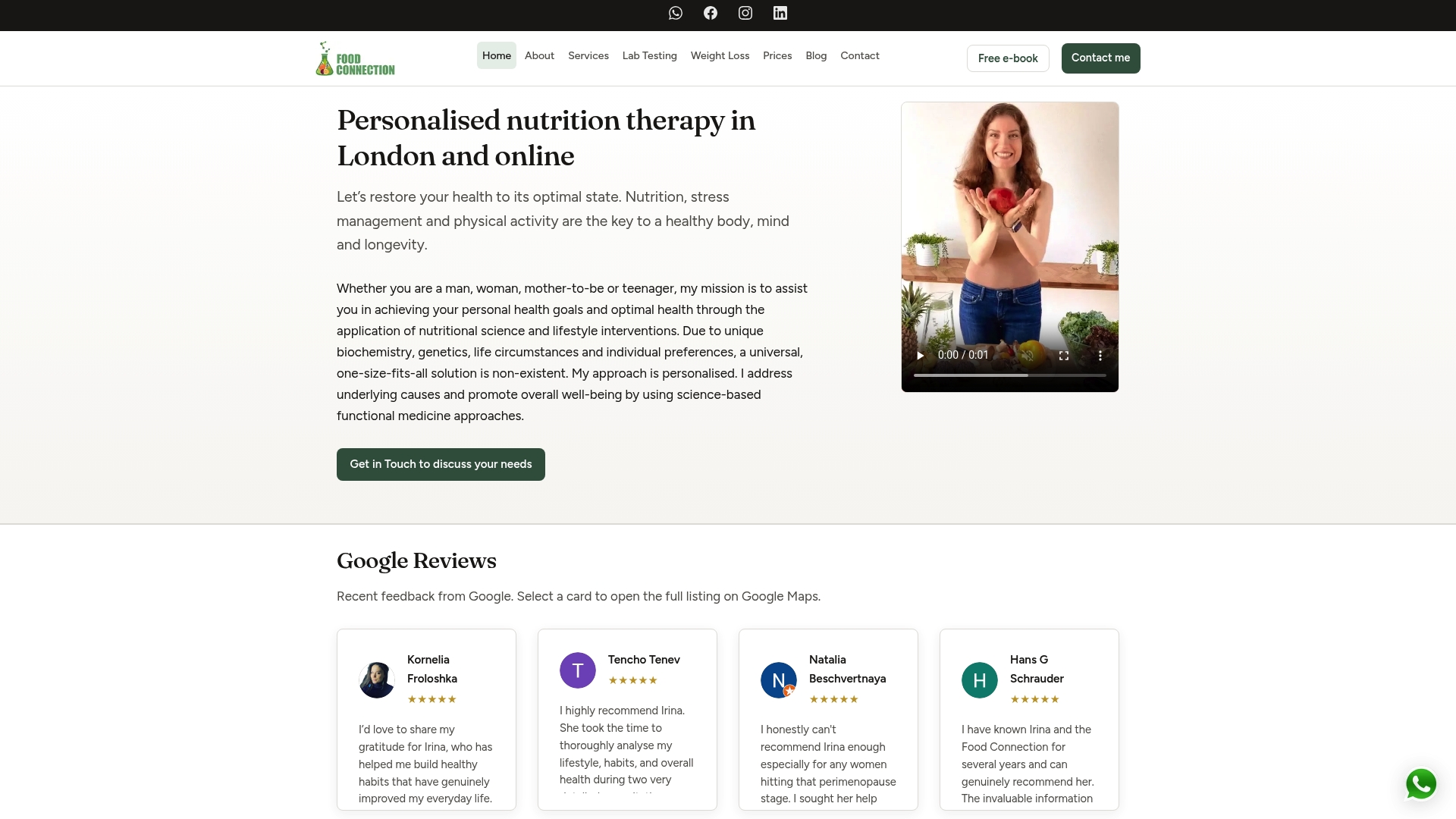
The service goes beyond a single meal plan handed over and left. Programmes include stepwise dietary guidance matched to your current stage, whether that’s flare management or careful remission reintroduction, plus the option of functional laboratory testing with full interpretation where deficiencies or malabsorption are suspected. This suits people who’ve tried generic advice and found it doesn’t account for how erratic UC symptoms actually are, or whose restriction has crept further than it needs to.
If persistent symptoms, unexplained weight change, or food anxiety around UC sound familiar, the first step is booking an initial assessment through Foodconnection’s services page to talk through your history and current diet before any plan gets built.
This article is general information, not a substitute for advice from a qualified doctor. Consult a qualified healthcare professional about your own circumstances before acting on anything here.
Sources
- Ulcerative colitis diet — Cleveland Clinic
- Dietary changes to help reduce ulcerative colitis symptoms — Harvard Health
- Ulcerative colitis and your diet — University Hospitals Sussex NHS
- A systematic review of the role of diet in ulcerative colitis — PMC