
Fix Levothyroxine First, Try an NHS Thyroid Weight Loss Diet

Weight loss with hypothyroidism is achievable, but it depends on getting thyroid replacement therapy right first and setting realistic expectations second. If you’re newly diagnosed or still struggling, the priorities are simple: confirm your levothyroxine dose and timing are correct, build meals around the NHS Eatwell Guide with enough protein and fibre, and book a review with your GP if symptoms haven’t settled.
TL;DR:
- Correct medication timing and a balanced, nutrient-dense diet are essential for supporting weight loss in hypothyroidism.
- Most weight gain is water retention from untreated or undertreated hypothyroidism, not fat, and it often resolves with proper levothyroxine management.
- A calorie deficit of 300 to 500 calories, focusing on protein and fiber, is sustainable and more effective than restrictive diets, especially with thyroid issues.
- Excessive iodine, selenium, or supplements taken without medical advice can harm thyroid health and should be approached cautiously.
- Lifestyle factors such as adequate sleep, stress management, and resistance exercise help sustain weight loss efforts in thyroid conditions.
Table of Contents
- Thyroid weight loss diet: what to do today
- Why does an underactive thyroid make weight loss harder?
- What diet actually supports thyroid health and weight loss?
- Which nutrients matter most for thyroid function?
- Which foods and supplements should you limit or avoid?
- Do Mediterranean or ketogenic diets help thyroid weight loss?
- How do you take levothyroxine to avoid absorption problems?
- What does a practical thyroid-friendly day of eating look like?
- Do exercise, sleep and stress affect thyroid weight loss?
- When should you see your GP about thyroid weight issues?
- Why individualised nutrition changes the outcome
- The conventional advice on thyroid dieting gets one thing badly wrong
- Get personalised support for your thyroid and weight goals
- Sources
- FAQ
Thyroid weight loss diet: what to do today
Before touching your diet in detail, sort the basics that make everything else work.
- Check your levothyroxine timing. Most people do best taking it on an empty stomach, 30 to 60 minutes before breakfast, unless your clinician has advised a different routine such as bedtime dosing.
- Swap one processed snack for a protein and fibre combination. Try Greek yoghurt with berries instead of a packaged cereal bar, or oatcakes with houmous instead of crisps.
- Add a vegetable portion to your largest meal of the day. This single change quietly increases fibre and satiety without you having to think about calories at all.
- Aim for 6 to 8 glasses of fluid daily and keep your bedroom cool and dark to support 7 to 9 hours of sleep, since poor sleep directly affects appetite hormones the next day.
None of these steps require a diet overhaul. They just remove the obstacles that make weight loss harder than it needs to be when your thyroid isn’t cooperating.
Why does an underactive thyroid make weight loss harder?
Thyroid hormone controls your basal metabolic rate, the energy your body burns at rest. When levels drop, as they do in hypothyroidism, that resting burn slows down, and the body also tends to hold onto more fluid and sodium. Both effects show up on the scales, but they are not the same thing as fat gain.
Most people gain a modest amount of weight from an underactive thyroid, often in the range clinicians describe as a few kilograms rather than a dramatic shift, and a meaningful chunk of that is water retention rather than fat. Once levothyroxine restores your hormone levels to a normal range, much of that fluid weight tends to resolve on its own within weeks to a few months.
This matters for expectations. If you were hoping thyroid treatment alone would strip away a large amount of body fat, it usually won’t. Treatment corrects the metabolic slowdown and drains the excess fluid; the fat loss part still comes down to the same energy balance principles that apply to anyone else, just working from a fairer starting point once your levels are stable.
What diet actually supports thyroid health and weight loss?
There is no clinically proven “thyroid diet” that treats hypothyroidism on its own. What works is a pattern consistent with the NHS Eatwell Guide: plenty of fruit and vegetables, fibre-rich starchy foods, moderate lean protein, and healthy fats, alongside adequate fluid intake. This isn’t a compromise diet chosen because nothing better exists. It’s the pattern with the strongest track record for sustainable weight management, thyroid or not.
Energy balance still governs fat loss. A gentle deficit, roughly 300 to 500 calories below what you burn, tends to be more sustainable than aggressive restriction, particularly because very low-calorie diets can themselves suppress thyroid hormone conversion and leave you fighting your own metabolism.
Protein and fibre do the heavy lifting for appetite control. Protein preserves muscle mass during weight loss, which keeps your metabolic rate from dropping further than it needs to, while fibre slows digestion and keeps you fuller for longer on fewer calories.
Pro Tip: Build each main meal around a palm-sized portion of protein and a fist-sized portion of vegetables before you add any starchy carbohydrate. It’s a faster habit to build than counting anything.
Practical ways to apply this:
- Choose wholegrain bread, rice, and pasta over refined versions for extra fibre.
- Include a protein source at every meal, such as eggs, fish, chicken, tofu, or lentils.
- Use oily fish twice a week for its healthy fat profile.
- Keep ultra-processed foods occasional rather than routine, since they’re typically low in fibre and easy to overeat.
Which nutrients matter most for thyroid function?
Several micronutrients are directly involved in making and converting thyroid hormone, and deficiency in any of them can blunt your progress even when your levothyroxine dose looks correct on paper.
- Iodine is essential for hormone production, but excess is genuinely harmful rather than helpful. A typical UK diet with dairy, fish, and iodised salt usually supplies enough without extra supplementation.
- Selenium supports the conversion of T4 into the active T3 hormone, yet high-dose supplements carry their own risks. Doses above 300 micrograms a day have been linked to harm in some studies, so more is not automatically better.
- Iron, zinc, vitamin D, and vitamin B12 all support thyroid hormone synthesis and general energy metabolism, and deficiencies in any of them are common in people with hypothyroidism.
The diet, gut, and thyroid relationship is well established in endocrinology research: these nutrients work together, and excess intake of some (particularly iodine and selenium) can do more harm than a modest shortfall. If fatigue, hair thinning, or poor concentration persist despite treatment, ask your GP for a blood panel covering ferritin, vitamin D, and B12 rather than reaching for a supplement aisle guess.
Which foods and supplements should you limit or avoid?
Some products cause more harm than good specifically because of how they interact with thyroid function or your medication.
- Kelp and seaweed supplements contain unpredictable, often very high amounts of iodine, which can push an already sensitive thyroid further out of balance.
- High-dose iodine or selenium supplements taken without medical advice carry real risk of harm rather than benefit, despite marketing that suggests otherwise.
- Soya products, calcium, and iron supplements taken too close to your levothyroxine dose can reduce how much of the medication your body absorbs, so space them at least four hours apart.
- Large amounts of raw brassicas (raw kale, cabbage, broccoli) in very high quantities can mildly interfere with iodine uptake, though cooking largely removes this effect and normal portions are not a concern.
- Biotin supplements, popular for hair and nails, can distort thyroid blood test results, so stop taking them for a few days before any thyroid function test to avoid a false reading.
Do Mediterranean or ketogenic diets help thyroid weight loss?
Not all popular diets carry the same risk profile when your thyroid is already under strain.
- Mediterranean and low-glycaemic-load diets are the safer, better-supported choices. Low-glycaemic-load eating patterns support weight loss and may reduce body fat in people with autoimmune thyroid conditions like Hashimoto’s, with a low risk profile overall.
- Ketogenic and very low-carbohydrate diets are more complicated. Trials on diets around 15% carbohydrate, 60% fat, and 25% protein have shown decreased serum T3 levels, the active thyroid hormone, which could theoretically work against people already managing an underactive thyroid.
- Extreme or fad protocols in general tend to backfire, since severe restriction can suppress hormone conversion at exactly the point you need it working normally.
If you’re drawn to keto for weight loss, discuss it with your GP or a nutrition professional first rather than trying it alone, especially if your thyroid levels aren’t yet stable.
How do you take levothyroxine to avoid absorption problems?
Getting the timing right does more for your weight-loss efforts than almost any dietary tweak, because a poorly absorbed dose leaves you undertreated no matter how well you eat.
- Take levothyroxine on an empty stomach, 30 to 60 minutes before breakfast, unless your clinician has recommended an alternative such as a bedtime dose taken at least three hours after your last meal.
- Wait at least four hours before taking calcium or iron supplements, or eating large amounts of soya.
- Be aware that some antacids and proton pump inhibitors can also reduce absorption, so check timing with a pharmacist if you’re on one long term.
- Keep your dosing time consistent day to day, since erratic timing makes it harder for you and your GP to judge whether your dose actually needs adjusting.
Pro Tip: If mornings are chaotic, ask your GP about switching to a bedtime dose instead of forcing an early alarm just for medication. Some people find it far easier to stick to consistently.
What does a practical thyroid-friendly day of eating look like?
Think in terms of a plate rather than strict rules: roughly a quarter protein, a quarter wholegrain carbohydrate, and half vegetables or salad at main meals.
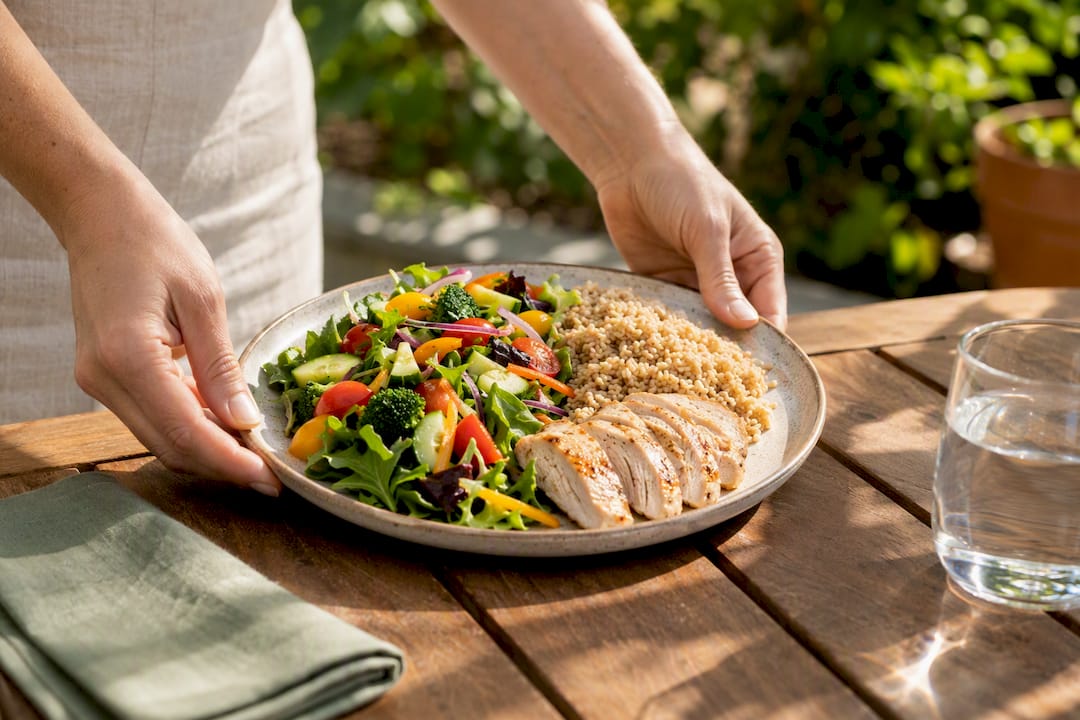
A realistic day might run: porridge with berries and a spoon of nut butter for breakfast (well after your morning dose), a lentil and vegetable soup with wholegrain bread at lunch, a handful of nuts or a boiled egg mid-afternoon, and grilled salmon with roasted vegetables and brown rice for dinner.
For snacks and shopping, useful staples include:
- Greek yoghurt, boiled eggs, and hummus with vegetable sticks.
- Tinned fish, beans, and pulses for quick protein without much preparation.
- Frozen vegetables to cut down on waste and keep fibre intake consistent.
- Batch-cooked grains like brown rice or quinoa stored for the week ahead.
Cooking in batches on one day solves the “too tired to cook properly” problem that quietly derails more diets than any single food choice does.
Do exercise, sleep and stress affect thyroid weight loss?
Diet carries most of the weight-loss workload, but these three factors decide whether you can sustain it.
Aim for two resistance training sessions a week, even just bodyweight exercises at home, since preserving muscle mass helps protect your metabolic rate while you’re in a calorie deficit. Build aerobic activity gradually, such as brisk walking most days, rather than jumping straight into intense cardio that leaves you exhausted and more likely to quit.
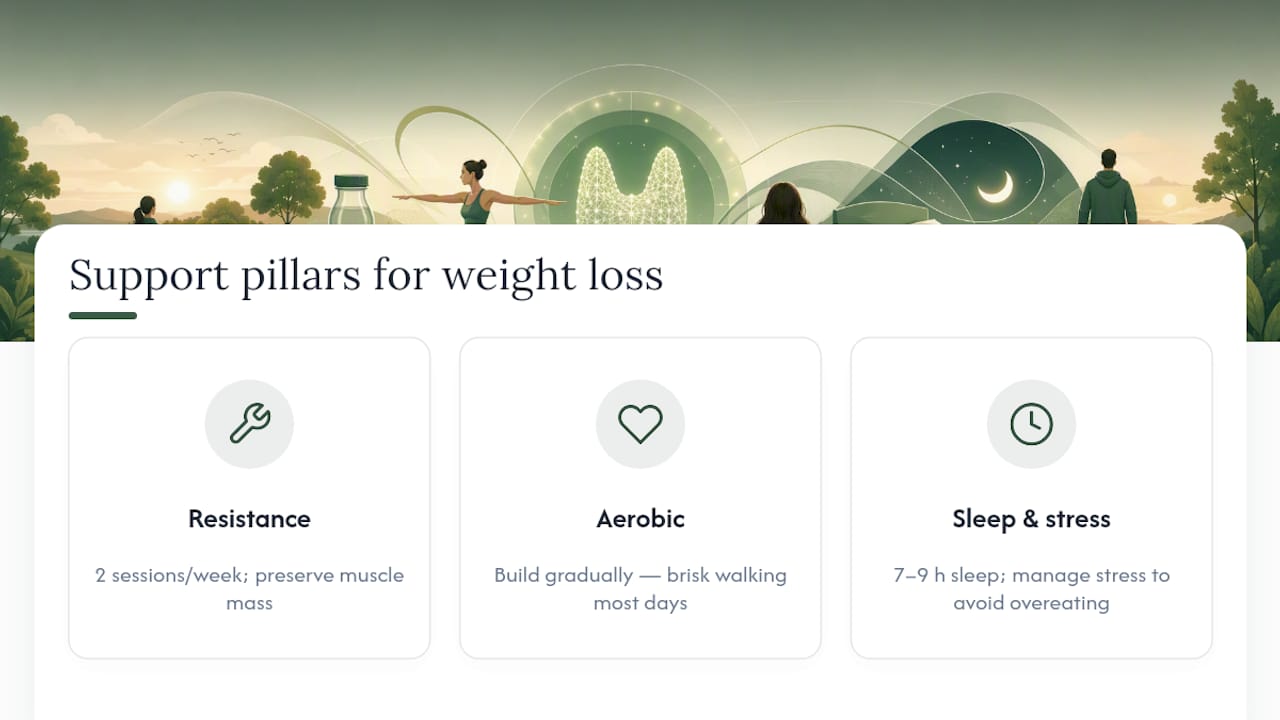
Sleep hygiene deserves more attention than it usually gets. A consistent wake time and 7 to 9 hours of sleep a night help regulate the hunger hormones ghrelin and leptin, and poor sleep reliably drives higher calorie intake the following day. Stress management, whether through short walks, breathing exercises, or simply protecting downtime, reduces the emotional eating that undoes an otherwise solid eating pattern.
When should you see your GP about thyroid weight issues?
Book a review if you’re experiencing persistent fatigue, unexplained weight changes despite following your treatment plan, hair loss, constipation, or feeling cold most of the time, even on a stable levothyroxine dose.
Ask specifically for TSH, free T4, and free T3 testing, along with ferritin, vitamin D, and B12 levels, since deficiencies in these are common and often mistaken for medication failure. A combined approach, correct medical treatment alongside personalised nutritional support, tends to produce better results than either alone. If you want structured, ongoing guidance rather than generic advice, that’s exactly where a tailored consultation can help you move forward.
Why individualised nutrition changes the outcome
Two people with identical TSH results can have completely different iron stores, gut symptoms, and food habits, which is why generic thyroid diet advice so often falls flat in practice. What tends to work is treating the whole picture: medication timing, nutrient status, and daily eating habits together, adjusted as things change.
That’s the thinking behind Foodconnection’s programme-based approach, which pairs personalised meal planning with optional lab testing to catch issues like low ferritin or vitamin D before they stall progress. It’s built around continuous support rather than a single one-off session.
The conventional advice on thyroid dieting gets one thing badly wrong
Search for “thyroid diet” and you’ll find endless lists of foods to eliminate, supplements to stack, and cleanses to try. Most of it distracts from the two things that actually move the needle: getting your levothyroxine dose and timing right, and eating a genuinely balanced diet consistently. Neither is glamorous. Neither sells supplements.
The uncomfortable truth is that a large share of “stubborn thyroid weight” isn’t fat resistant to normal weight-loss methods. It’s fluid retention from undertreated hypothyroidism, or muscle loss from crash dieting that lowered metabolic rate further. Fix the medication and the basic eating pattern first, and many people find the picture changes faster than they expected, without needing a single “thyroid superfood.”
Where I’d push back hardest against popular wisdom is the idea that thyroid patients need a special diet at all. They need the same fundamentals as everyone else, protein, fibre, consistent meals, decent sleep, applied more carefully because their starting metabolism is working against them. Extreme diets, particularly ketogenic ones, are where I’d urge real caution given their effect on T3 levels. Sustainable beats extreme, every time, for this population especially.
— Irina
Get personalised support for your thyroid and weight goals
If you’ve read this far, you already understand that generic thyroid diet advice only gets you so far. What actually shifts the numbers is a plan built around your bloodwork, your medication timing, and your real daily routine, not a downloaded meal template.
Foodconnection runs structured, personalised nutrition programmes specifically for people managing weight alongside hormonal conditions like hypothyroidism, with the option to add functional lab testing (ferritin, vitamin D, and thyroid markers among them) alongside detailed interpretation. Programmes include ongoing support rather than a single consultation, so adjustments happen as your levels and symptoms change. An initial consultation covers your current bloodwork, medication routine, and eating habits, then builds a plan around what’s actually going on rather than generic assumptions. Book a consultation through Foodconnection’s services page to get started.
This article is general information, not a substitute for advice from a qualified doctor. Consult a qualified healthcare professional about your own circumstances before acting on anything here.
Sources
- Pilot trials and short-term diet studies on low-carbohydrate/ketogenic diets and thyroid hormones
- Diet–gut–thyroid axis and micronutrient roles in thyroid hormone synthesis (Journal review)
- Low-glycaemic-load diets and thyroid function: narrative review
- Mayo Clinic: Hypothyroidism diet FAQs
- Thyroid and weight (American Thyroid Association patient resource)
FAQ
How can thyroid patients lose weight fast?
There’s no fast, safe route specific to thyroid patients. The reliable approach is correcting your levothyroxine dose first, then following a moderate calorie deficit with an Eatwell-style diet, since rapid or extreme dieting risks lowering thyroid hormone conversion further.
Will I lose weight on levothyroxine?
Many people lose some weight once levothyroxine restores normal hormone levels, largely because excess fluid retention resolves and metabolism returns closer to normal. Actual fat loss beyond that still depends on diet and activity, as it does for anyone else.
Can an underactive thyroid cause weight gain?
Yes, an underactive thyroid slows your resting metabolism and increases fluid retention, which together typically cause a modest weight gain, often a few kilograms rather than a dramatic amount.
Can you fix hypothyroidism with diet and exercise?
No. Diet and exercise support weight management and general health, but they don’t replace thyroid hormone replacement therapy. Hypothyroidism requires medication, usually levothyroxine, with diet playing a supporting role alongside it.