
Sustainable weight loss diet: a guide for chronic conditions

A sustainable weight-loss diet is a modest, maintainable calorie deficit paired with a high-quality food pattern that preserves muscle, supports metabolic health, and fits your actual preferences. It is not a temporary fix. Clinical guidance commonly recommends starting with a modest calorie deficit aimed at a steady, manageable rate of weight loss per week. For adults managing chronic conditions, the single most important next step is a personalised assessment before changing anything.
At a glance:
- Goal: steady fat loss while preserving muscle and metabolic function
- Safe rate: 0.5–1 kg per week, guided by clinical review
- Evidence base: NHS balanced-diet fundamentals and high-fibre, plant-forward patterns supported by systematic reviews
- Next step: if you have diabetes, thyroid disease, menopause symptoms, or digestive disorders, seek a registered nutritionist or dietitian before adjusting your intake
An initial goal of 5–10% body weight loss is clinically meaningful for cardiometabolic risk. You do not need to lose a dramatic amount to see real health improvements.
Table of Contents
- What does a sustainable weight-loss diet actually include?
- How to build a personalised eating plan that actually sticks
- How to spot when your diet is doing more harm than good
- Adjustments for common chronic conditions
- How to track progress without obsessing over the scales
- Key takeaways
- Why most weight-loss advice misses the point for people with chronic conditions
- Foodconnection’s personalised weight-loss programmes
- Useful sources and further reading
What does a sustainable weight-loss diet actually include?
The NHS recommends that fruit and vegetables make up just over a third of your daily intake, with at least five varied portions daily, and that meals are based on higher-fibre starchy foods such as wholegrain bread, oats, and brown rice. Starchy foods should also make up just over a third of what you eat. That leaves roughly a third for protein sources, dairy or fortified alternatives, and small amounts of unsaturated fats.
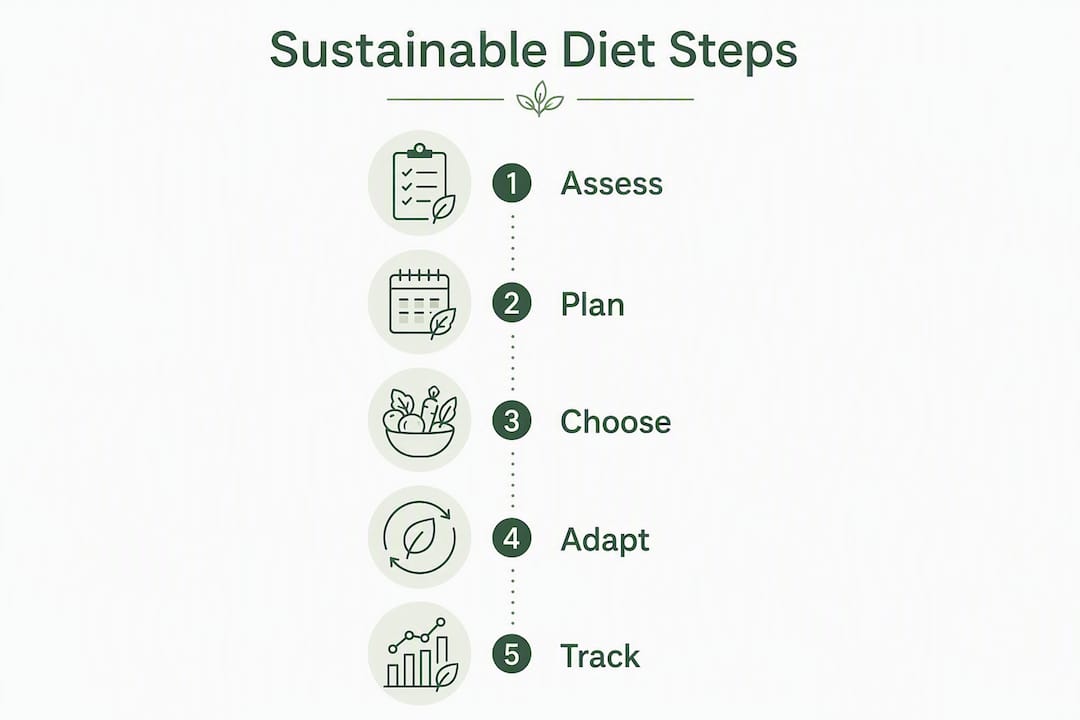
Protein deserves particular attention. It preserves lean muscle during a calorie deficit and keeps hunger lower between meals. Resistance training alongside adequate protein intake can prevent most of the muscle loss that aggressive restriction causes. NIDDK guidance recommends muscle-strengthening activity on two or more days per week alongside regular aerobic movement.
Practical priorities for a balanced weight-loss diet:
- Aim to include a variety of fruit and vegetables daily
- Choose higher-fibre starchy foods over refined versions
- Include a quality protein source at every meal (eggs, legumes, fish, lean meat, tofu)
- Limit added sugars and choose unsaturated fats over saturated ones
- Reduce ultra-processed foods; check UK food labels for high salt (over 1.5 g per 100 g), sugar, and saturated fat
- Stay hydrated: water supports metabolism and is often confused with hunger
High-fibre, plant-forward, low-glycaemic patterns carry stronger evidence for long-term sustainability than most rapid-weight-loss approaches. They also tend to be more compatible with chronic-condition management.
How to build a personalised eating plan that actually sticks
Start with an honest assessment of where you are: current medications, diagnosed conditions, eating patterns, sleep quality, and stress levels. All of these affect how your body responds to a calorie deficit. Thyroid medication timing, for instance, changes nutrient absorption; metformin affects B12 status. A plan that ignores these factors is not a plan, it is a guess.

Sample daily meal template (flexible, not prescriptive):
| Meal | Focus | Example |
|---|---|---|
| Breakfast | Protein + fibre | Porridge with Greek yoghurt and berries |
| Lunch | Vegetables + lean protein | Lentil soup with wholegrain bread |
| Dinner | Plant-forward + healthy fat | Baked salmon, roasted vegetables, quinoa |
| Snacks | Satiety support | High-protein snacks such as cottage cheese or edamame |
For UK supermarket shopping, swap white bread for seeded wholegrain, swap crisps for unsalted nuts, and choose tinned fish or pulses as affordable, high-protein staples. Preference matters: a plan you enjoy is one you follow.
Poor sleep increases the likelihood of choosing high-calorie foods and reduces energy for activity. Building sleep and stress management into your programme is not optional for complex cases.
Pro Tip: If you are managing a chronic condition, ask your clinician about an initial conservative deficit of 300–500 kcal/day and reassess after four weeks rather than starting with a larger cut. Small, measured steps reduce the risk of metabolic adaptation.
How to spot when your diet is doing more harm than good
Aggressive restriction triggers measurable physiological responses: elevated ghrelin, metabolic adaptation, and muscle loss. These are not signs of weak willpower. They are your body signalling that the deficit is too large.
Red flags to watch for:
- Persistent fatigue that does not improve with rest
- Irritability, low mood, or difficulty concentrating
- Unusual preoccupation with food or meal timing
- Noticeable loss of strength or muscle tone
- Hair thinning or feeling cold most of the time
- Worsening blood glucose control (for people with diabetes)
“People who lose weight at a gradual, steady pace — about 1 to 2 pounds a week — are more likely to keep the weight off long term.” — CDC Healthy Weight guidance
When to contact a clinician:
- Urgent: chest discomfort, arrhythmia, severe dizziness, or fainting during dietary changes
- Routine but important: glucose readings outside your target range, unexplained weight gain despite restriction, or symptoms suggesting electrolyte imbalance (muscle cramps, palpitations)
Very low-calorie diets without medical supervision carry real risks for people on medication. Lab monitoring of thyroid function, electrolytes, and kidney markers is standard practice in supervised programmes.
Adjustments for common chronic conditions
Different conditions require different modifications. A single template does not cover everyone.
| Condition | Key dietary adjustment | When specialist input is required |
|---|---|---|
| Type 2 diabetes | Carbohydrate timing and glycaemic load management; spread carbs evenly | Insulin-treated diabetes always requires dietitian oversight |
| Thyroid disease | Take levothyroxine before eating; avoid high-fibre foods immediately after medication | Uncontrolled thyroid disease; significant weight changes affecting dose |
| Menopause / perimenopause | Increase protein and resistance training to counter muscle loss; reduce refined carbs | Hormone therapy interactions; severe symptoms affecting appetite |
| Digestive disorders (IBS, IBD) | Low-FODMAP adjustments; symptom-driven food choices; avoid trigger foods | Severe gastrointestinal disease; malabsorption concerns |
For perimenopause-related weight changes, hormonal shifts alter how the body stores fat and responds to calorie restriction. Protein targets and resistance training become more important, not less.
If you have insulin resistance, the timing and type of carbohydrate matters as much as the total amount. A plant-rich, low-glycaemic approach tends to work better than blanket carbohydrate restriction.
Pro Tip: For complex cases, consider functional laboratory testing (thyroid panel, fasting insulin, inflammatory markers) before setting calorie targets. Interpreting these results alongside dietary changes is where a structured programme adds the most value.
How to track progress without obsessing over the scales
The number on the scales is one data point, not the whole picture.
- Weekly weight trend — weigh at the same time each morning and track the weekly average, not daily fluctuations
- Waist circumference — a reduction of 2–4 cm over 8–12 weeks is a meaningful marker of visceral fat loss
- Strength performance — if you can lift the same weight or more, you are preserving muscle
- Energy and mood — sustained energy through the afternoon is a reliable sign the deficit is appropriate; afternoon energy crashes often signal under-eating or poor carbohydrate timing
- Sleep quality — improving sleep is both a sign of progress and a driver of further loss
- Hunger levels — manageable hunger is normal; constant, distracting hunger is a signal to reassess
Clinical targets suggest 0.5–1 kg per week as a safe, sustainable rate. Plateaux after 8–12 weeks are normal and usually reflect metabolic adaptation rather than failure. At that point, a calorie recalculation or a short period of reverse dieting (gradually increasing calories to reset metabolic rate before resuming a deficit) can help. Periodic clinical review every 8–12 weeks keeps the plan calibrated to your actual progress.
Key takeaways
A sustainable weight-loss diet works because it combines a modest calorie deficit with high diet quality, muscle preservation, and clinical oversight for anyone managing a chronic condition.
| Point | Details |
|---|---|
| Modest deficit, not aggressive restriction | Aim for 0.5–1 kg per week; a 500 kcal/day deficit is a common, evidence-based starting point. |
| Protein and resistance training | Both are non-negotiable for preserving muscle and metabolic rate during weight loss. |
| High fibre and whole foods | Plant-forward, low-glycaemic patterns carry the strongest evidence for long-term sustainability. |
| Clinical oversight for chronic conditions | Diabetes, thyroid disease, menopause, and digestive disorders all require tailored adjustments and monitoring. |
| Foodconnection | Offers personalised, programme-based nutrition support with optional lab testing for adults with complex health needs. |
Why most weight-loss advice misses the point for people with chronic conditions
The standard advice, eat less and move more, is not wrong. It is just incomplete for anyone whose body is already managing a thyroid condition, fluctuating blood glucose, or the hormonal shifts of perimenopause. In those cases, the same 500 kcal deficit that works smoothly for a healthy adult can trigger fatigue, worsen glucose control, or accelerate muscle loss in ways that are genuinely hard to distinguish from the condition itself.
What I find consistently underestimated is the role of programme structure. A one-off consultation gives you a plan. A structured programme gives you a plan, a review at week four, a recalibration when the plateau hits, and someone who notices when your energy crash is actually a sign of under-eating rather than poor sleep. For complex cases, that ongoing adjustment is where the real work happens.
The other thing worth saying plainly: sustainable dieting is not about discipline. It is about designing a pattern of eating that your body can maintain without fighting you. When the food is enjoyable, the deficit is modest, and the plan accounts for your medications and conditions, adherence follows naturally. Willpower is not the variable.
Foodconnection’s personalised weight-loss programmes
Chronic health conditions make generic weight-loss plans genuinely risky. Foodconnection’s personalised weight-loss programmes are built around a full assessment of your health history, medications, lifestyle, and goals before a single calorie target is set.

The programme includes tailored meal plans, dietary and lifestyle guidance, and ongoing support across the full programme period. For clients who need deeper insight, optional functional laboratory tests (thyroid panels, fasting insulin, inflammatory markers) are available with detailed interpretation. Every plan is adjusted as your results and circumstances change.
To find out which nutrition services fit your situation, book a discovery call or view the weight-loss programme page. This article provides general information only; if you have urgent clinical concerns, contact your GP or call 999.
Useful sources and further reading
| Source | What it covers | Best for |
|---|---|---|
| NHS — Eating a balanced diet | UK dietary proportions, food group guidance | Practical daily eating structure |
| Harvard Health — Calorie deficit explained | Safe deficit ranges, metabolic adaptation, red flags | Understanding safe rates and warning signs |
| NIDDK — Eating and physical activity | Combined diet and activity guidance, food group targets | Activity integration and food choices |
| StatPearls / NCBI — Dietary approaches to obesity | Systematic review evidence for dietary patterns | Clinical detail and long-term outcome data |
| CDC — Steps for losing weight | Practical lifestyle framework, realistic timelines | Getting started and setting goals |
“For people with chronic diseases, healthy eating can help manage these conditions and prevent complications.” — CDC Healthy Eating guidance
For personalised advice tailored to your specific conditions and medications, consult a registered dietitian or nutritionist rather than relying on general guidance alone.
Recommended
- Prediabetes diet: managing blood sugar with complex health needs | FoodConnection blog
- Post-viral fatigue diet: what to eat for Long Covid recovery | FoodConnection blog
- Fatty liver diet: what to eat, avoid, and change | FoodConnection blog
- Weight loss support — personalised programmes | FoodConnection