
No Food Has Progesterone: Clinician Backed UK Meals and When to Test

No food contains progesterone. What certain foods do is supply the nutrients, mainly vitamin B6, zinc and magnesium, that help your body ovulate properly and keep the corpus luteum producing progesterone as it should. If you want practical results, focus on whole foods, steady energy intake, decent sleep and lower stress rather than chasing a single “miracle” ingredient. If your cycles are irregular or nothing changes after a few months, that’s a conversation for a GP or a nutrition professional, not a supplement aisle.
TL;DR:
- Consistent ovulation is essential for progesterone production, and diet can only support this process by providing key nutrients like vitamin B6, zinc, and magnesium.
- Adequate energy intake, lower stress, and hormonal balance are more effective than focusing on individual foods or supplements to improve progesterone levels.
- An excess of ultra-processed foods, alcohol, and very low-fat diets can disrupt hormonal balance and impede progesterone synthesis.
- Practical, sustainable meal patterns including fish, vegetables, nuts, and whole grains can help support hormone production without requiring special ingredients.
- Persistent hormonal issues or irregular cycles should prompt consultation with a healthcare professional for personalized testing and guidance.
Table of Contents
- Key nutrients that support progesterone and where to find them
- Why diet helps, and where the evidence runs thin
- Foods and habits that work against hormonal balance
- A sample day of progesterone-friendly eating
- When diet isn’t enough: evidence, caveats and professional support
- A clinician’s reframe: consistency beats quick fixes
- Ready for a nutrition plan built around your cycle?
- Sources
- FAQ
Key nutrients that support progesterone and where to find them
Progesterone is manufactured in your body from cholesterol, mainly by the corpus luteum after ovulation. Diet can’t hand you the hormone directly, but it can supply the building blocks and cofactors your ovaries need to do that job well. Several nutrients keep coming up in clinical guidance on low progesterone, and each has clear food sources you can find in any UK supermarket.
Vitamin B6 supports the enzymes involved in hormone regulation and has long been associated with luteal phase health. Chickpeas, potatoes, bananas, chicken and tuna are strong sources, and most of them slot into meals you’re probably already cooking.
Zinc matters more than people realise. It’s directly linked to ovulation and corpus luteum function, and a shortfall shows up as luteal phase defects and lower progesterone output. Oysters top the list, followed by beef, pumpkin seeds and chickpeas, useful if shellfish isn’t your thing.
Magnesium helps regulate the stress response, which matters because chronic stress hormones compete with progesterone for the same raw materials. Spinach, almonds, seeds and dark chocolate all deliver a decent dose.
Vitamin C and antioxidants support the corpus luteum during the second half of your cycle. Citrus fruit, red peppers, strawberries and broccoli are the standouts, and red peppers actually carry more vitamin C gram for gram than oranges.
Healthy fats and cholesterol are the literal raw material for progesterone synthesis. Oily fish, avocado, olive oil and a small handful of nuts each day give you what you need without overloading on saturated fat.
A few swaps make this easier in practice:
- Swap white toast for wholegrain with peanut butter and banana (B6 plus magnesium).
- Add pumpkin seeds to salads or porridge instead of croutons (zinc).
- Trade fruit juice for whole citrus fruit (vitamin C without the sugar spike).
- Cook with olive oil rather than reduced fat spreads.
Pro Tip: Pair your vitamin C source with an iron or zinc rich food in the same meal. Vitamin C improves absorption of both minerals, so a spinach salad with strawberries and pumpkin seeds does more work than eating them separately.
Why diet helps, and where the evidence runs thin
Progesterone only gets made if you ovulate. The corpus luteum, the temporary gland that forms on the ovary after an egg is released, is the sole source of progesterone in a natural cycle. No ovulation means no corpus luteum, and no corpus luteum means no progesterone, regardless of what’s on your plate.
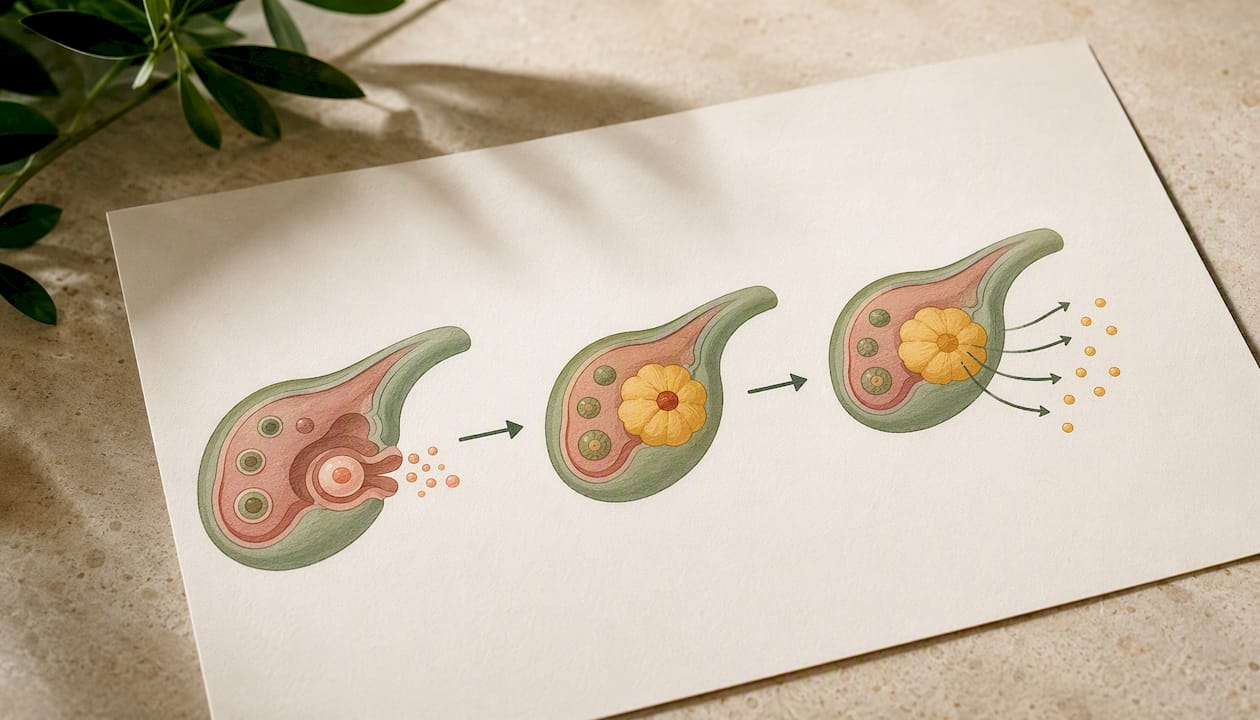
This is why diet works indirectly rather than directly. Adequate energy intake, the right nutrient cofactors and lower cortisol all support consistent ovulation, and correcting energy availability and chronic stress can resolve anovulatory cycles more effectively than any single food choice. Under eating or over exercising can switch ovulation off entirely, which is a common blind spot for women focused purely on “eating for hormones” while running a calorie deficit.
There’s a second mechanism worth knowing: balance matters as much as raw levels. NHS guidance notes that the ratio between oestrogen and progesterone is often more clinically relevant than progesterone alone, and fibre-rich foods help your liver clear excess oestrogen, which improves that ratio.
Some plant compounds, including kaempferol, apigenin, luteolin and naringenin, show progestin-like activity in laboratory studies, but human clinical evidence remains limited, according to a 2021 review of phytoprogestins. Treat these as an interesting research direction, not a dietary substitute for prescribed progesterone.
Foods and habits that work against hormonal balance
Certain patterns consistently undermine the physiology progesterone depends on, and they’re worth trimming before you add anything new.
- Ultra-processed foods and refined sugar disrupt insulin sensitivity, which in turn skews oestrogen balance and makes the progesterone to oestrogen ratio harder to manage.
- Excess alcohol puts extra strain on the liver, the organ responsible for metabolising and clearing hormones, oestrogen included.
- Very low fat or very low cholesterol diets starve your body of the raw material steroid hormones are built from, progesterone among them.
- Wild yam extracts, topical “progesterone” creams and other unproven products are marketed heavily but lack robust clinical backing, and clinical overviews of low progesterone don’t support them as reliable fixes.
Pro Tip: Before buying anything labelled “natural progesterone,” check whether it’s actually regulated as a medicine. Most over-the-counter creams and supplements sold under that banner aren’t, and their hormone content is inconsistent between batches.
A sample day of progesterone-friendly eating
Turning nutrients into meals is where most people get stuck, so here’s a realistic day rather than a theoretical list.
- Breakfast: porridge topped with pumpkin seeds, sliced banana and a spoon of Greek yoghurt, covering B6, zinc, magnesium and a little protein to keep you full.
- Lunch: salmon salad with spinach, red pepper and quinoa, dressed in olive oil, which delivers B6, vitamin C, magnesium and healthy fats in one bowl.
- Snacks: a small handful of almonds, a square or two of dark chocolate, or a citrus fruit, each targeting zinc, magnesium or vitamin C without much effort.
- Dinner: chickpea and vegetable curry with brown rice, easy to batch cook on a Sunday and reheat through the week, giving you B6 and zinc without extra shopping trips.
None of this requires special ingredients or a dramatic overhaul. It’s closer to a Mediterranean style pattern with a few deliberate additions, which is exactly why it’s sustainable past the first fortnight.
When diet isn’t enough: evidence, caveats and professional support
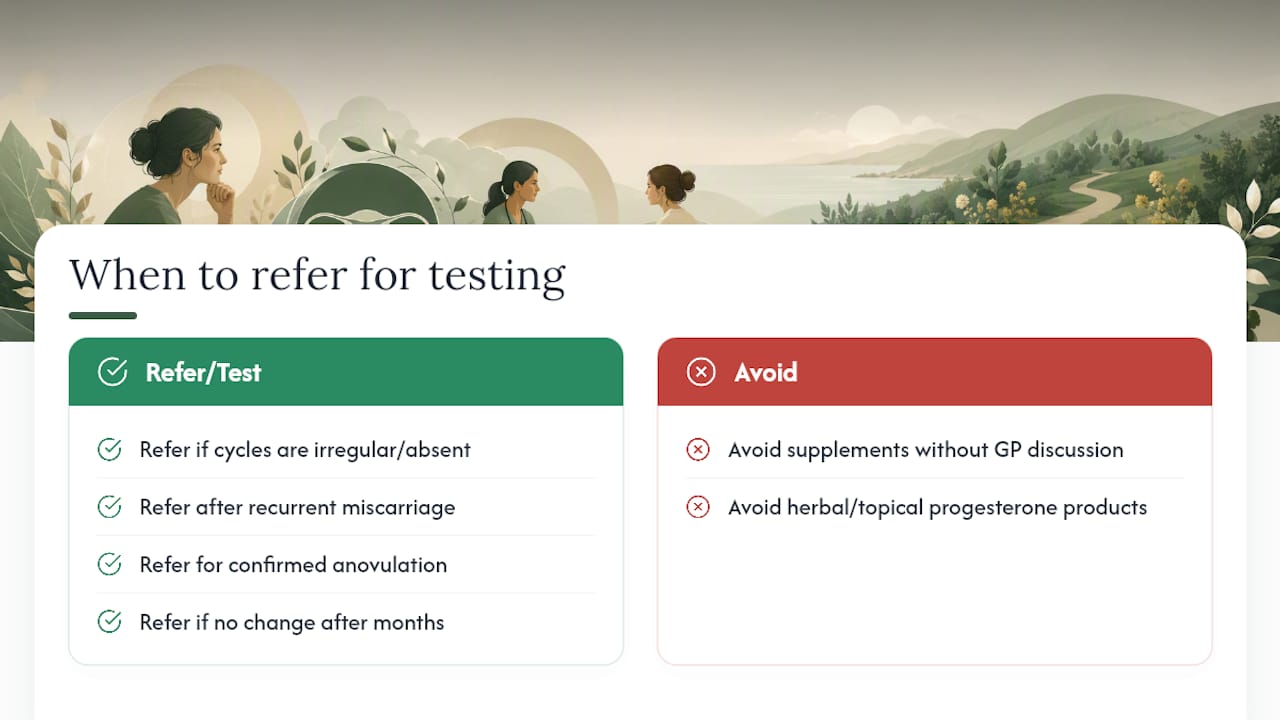
Diet has real limits, and knowing where they sit saves you months of guessing. A nutrition consultant flags four signs that warrant a GP referral or hormone testing rather than another round of dietary tweaks: irregular or absent cycles, recurrent miscarriage, confirmed anovulation, or no meaningful change after several months of consistent dietary changes.
Foodconnection builds personalised nutrition programmes around exactly this kind of nuance, combining tailored meal plans with optional laboratory testing where hormonal imbalance is suspected. Supplements, herbal remedies and topical creams marketed for progesterone support still lack strong clinical evidence, so anything beyond food deserves a conversation with your GP first.
A clinician’s reframe: consistency beats quick fixes
Prioritise nutrient-rich meals, steady sleep and lower stress over hunting for one perfect superfood. Small, repeated swaps, more zinc here, less refined sugar there, tend to move the needle further than any single ingredient ever will. If your cycles still feel off after a genuine effort, ask a clinician about personalised testing rather than guessing your way through another supplement.
— Irina
Ready for a nutrition plan built around your cycle?
Reading a list of foods is one thing. Working out which nutrients your own diet is actually missing, and why your cycle isn’t responding, is another matter entirely, and it’s exactly where a generic meal plan runs out of road.
Personalised nutrition programmes can start with an assessment of your current diet, symptoms and cycle history instead of a template. From there, clients may receive a tailored eating plan, ongoing follow-up support, and the option to add lab testing if hormonal imbalance is suspected rather than assumed. Sessions may run online as well as in person, so location isn’t necessarily a barrier to getting started. If irregular cycles, fatigue or unexplained symptoms have you wondering whether food alone will fix things, book a personalised nutrition consultation and get a plan built around your own results, not a generic list.
Sources
- Review on phytoprogestins (PMC 2021)
- NHS — searchable health information pages
- Medical News Today — Low progesterone: Symptoms, food sources, and remedies
- Cleveland Clinic — Low progesterone clinical overview
This article is general information, not a substitute for advice from a qualified doctor. Consult a qualified healthcare professional about your own circumstances before acting on anything here.
FAQ
What foods can increase your progesterone?
No food raises progesterone directly, but foods rich in vitamin B6 (chickpeas, bananas, chicken), zinc (oysters, pumpkin seeds, beef) and magnesium (spinach, almonds, dark chocolate) support the ovulation and corpus luteum function progesterone depends on.
How can I raise my progesterone levels naturally?
Eat enough to support regular ovulation, prioritise the nutrients above, manage stress and sleep well, since chronic stress and under eating are common causes of anovulatory cycles and low progesterone. Persistent low levels need a GP assessment rather than diet alone.
What are the signs of low progesterone?
Irregular or short cycles, spotting before your period, difficulty conceiving or maintaining early pregnancy, and mood changes in the second half of the cycle are common signs, according to clinical summaries on progesterone deficiency.
What is the most natural progesterone?
There is no natural dietary equivalent to progesterone. Some plant compounds show progestin-like activity in laboratory research, but human clinical evidence is limited, so they shouldn’t be treated as a substitute for prescribed progesterone or a diagnosed medical need.