
Prediabetes diet: managing blood sugar with complex health needs

A prediabetes diet is a balanced, high-fibre eating framework that slows glucose absorption by prioritising wholegrains, lean protein, unsaturated fats and non-starchy vegetables. Start today by swapping your breakfast cereal for porridge with ground flaxseed, or adding a handful of spinach to your morning eggs. That single change begins shifting your fibre intake towards the recommended daily target for blood sugar control that supports blood sugar control.
The core approach at a glance:
- Aim for a daily fibre intake of 25–30 grams to slow glucose absorption and improve satiety
- Build every meal using the plate method: about half non-starchy veg, a quarter lean protein, and a quarter complex carbs
- Target at least moderate activity for around two and a half hours per week, or about one and a quarter hours of vigorous activity
- Pair carbohydrates with protein and fibre at every meal to blunt blood sugar spikes
If you have PCOS, thyroid disease, perimenopause, or weight-management complexity, standard advice rarely goes far enough. Personalised support from a programme like Foodconnection is worth considering early, not as a last resort.
Table of Contents
- What should you eat on a prediabetes diet?
- Practical food swaps and what to limit
- How does the plate method work in practice?
- Physical activity: how much and when does it matter?
- How do you monitor progress and when should you see your GP?
- Personalising the plan for hormonal imbalance and weight complexity
- A 1-week sample prediabetes meal plan (UK-friendly)
- Key takeaways
- Why generic advice so often misses the mark
- Foodconnection: personalised nutrition programmes for prediabetes in the UK
- Selected sources and further reading
What should you eat on a prediabetes diet?
The evidence points clearly towards a Mediterranean-style balanced pattern rather than any restrictive fad diet. Johns Hopkins dietitian Tara Seymour puts it plainly: success is built on gradual, sustainable behaviour change, not elimination.
“There is no single prediabetes diet — the most effective approach is an evidence-based framework adjusted to the individual’s health profile, including A1C, cholesterol, and comorbidities.” — Harvard Health
The six principles that matter most:
- Fibre first. Aim for a daily fibre intake of 25–30 grams from wholegrains, pulses, vegetables and fruit. When you increase fibre, increase fluid intake accordingly to avoid digestive discomfort.
- Wholegrains over refined carbs. Oats, brown rice, wholemeal bread and quinoa digest more slowly, producing a gentler glucose rise.
- Pair protein with every carb. Adding protein and fat to a carbohydrate-containing meal blunts the glycaemic response — the mechanism is straightforward: slower gastric emptying, lower glucose peak.
- Healthy fats. Olive oil, oily fish, avocado and unsalted nuts support cardiometabolic health without spiking blood sugar.
- Fill half your plate with non-starchy vegetables. Broccoli, spinach, peppers, courgette and green beans are high-volume, low-glucose foods that crowd out refined carbohydrates without triggering deprivation.
- Limit added sugar and refined carbs. Sugary drinks, white bread, pastries and fruit juice cause rapid glucose spikes that a prediabetic pancreas struggles to manage.
Fibre and activity targets:
| Target | Recommendation |
|---|---|
| Daily fibre | 25–30 g per day |
| Fluid when increasing fibre | 2.25–3 litres per day |
| Moderate aerobic activity | ≥150 minutes per week |
| Vigorous aerobic activity | about 75 minutes per week |
| Resistance training | Twice weekly |

Practical food swaps and what to limit
Translating principles into a shopping list is where most people stall. These swaps require no special equipment and no dramatic overhaul.
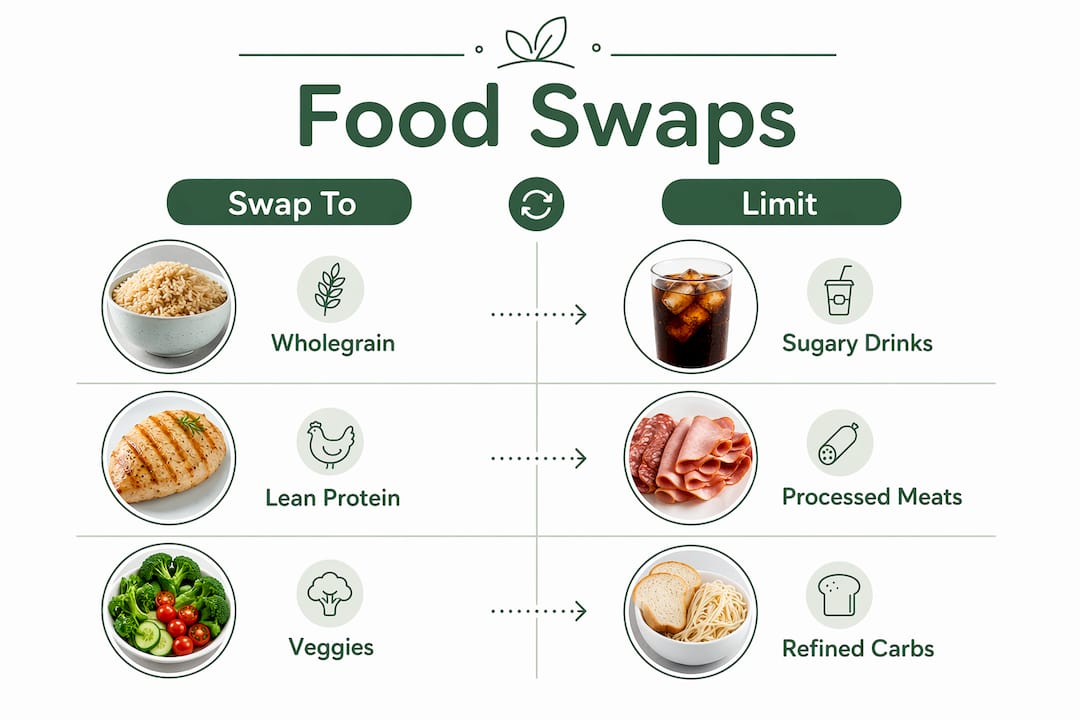
| Instead of | Choose |
|---|---|
| White bread | Seeded wholegrain or rye bread |
| White rice | Brown rice or cauliflower rice |
| Sugary breakfast cereal | Porridge oats with berries |
| Fruit juice | Sparkling water with a slice of lemon |
| Crisps or biscuits | Oatcakes with nut butter |
| Sweetened yoghurt | Plain Greek yoghurt with seeds |
| Processed meat | Grilled chicken, tinned salmon or eggs |
Quick portable snacks that balance protein, fibre and healthy fat:
- A small handful of mixed unsalted nuts with an apple
- Plain Greek yoghurt with a tablespoon of ground flaxseed
- Oatcakes with hummus and sliced cucumber
- A boiled egg with a few cherry tomatoes
- Celery sticks with almond butter
Alcohol and social eating. Alcohol lowers blood sugar initially, then causes a rebound spike, and it adds empty calories that undermine weight management. Limit intake to no more than 14 units per week (the UK guideline), spread across several days, and never drink on an empty stomach. At restaurants, scan the menu before you arrive, choose grilled or baked over fried, ask for sauces on the side, and replace the bread basket with a side salad. Consistent carbohydrate timing matters even when eating out.
Foods to limit: sugary drinks, fruit juice, white bread and pasta, confectionery, processed meats, and anything with added sugar listed in the first three ingredients.
How does the plate method work in practice?
The plate method removes the cognitive load of calorie counting. Fill half a standard dinner plate with non-starchy vegetables, one quarter with lean protein, and one quarter with complex carbohydrates. Drink water or an unsweetened drink alongside.
Three UK-friendly examples:
- Salmon and veg: Baked salmon fillet (120–150 g), a large portion of roasted broccoli and courgette, and 4–5 tablespoons of brown rice
- Chicken and lentils: Grilled chicken breast (120 g), mixed salad with olive oil dressing, and a 150 g serving of cooked green lentils
- Veggie option: Baked tofu (100 g), stir-fried spinach and peppers, and 4 tablespoons of wholegrain bulgur wheat
Pro Tip: If you have hormonal imbalance or significant insulin resistance, the standard plate method is a starting point, not the finish line. People with PCOS or perimenopause often need to reduce the carbohydrate quarter further and pair it with extra protein and fibre at the same meal. A single large carbohydrate portion can cause a disproportionate glucose spike even when the food is technically “complex.” Smaller, more consistent carb portions across the day tend to produce steadier results.
Physical activity: how much and when does it matter?
At least moderate aerobic activity totaling a few hours weekly is the standard recommendation for improving insulin sensitivity alongside diet. Add resistance training twice weekly for additional metabolic benefit.
Practical options across fitness levels:
- Low impact: 30-minute brisk walks, 5 days a week; swimming; cycling on flat terrain
- Moderate: Dancing, hiking, aqua aerobics, or a beginner’s yoga flow
- Resistance: Bodyweight squats, resistance bands, or light dumbbell circuits at home
- Daily habit: Breaking up sitting every 30–45 minutes with a short walk reduces post-meal glucose peaks even without a formal workout session
Timing matters. Physical activity after meals, particularly after lunch or dinner, blunts the post-meal glucose rise more effectively than the same activity done fasted. A 10-minute walk after eating is genuinely useful, not just a nice idea.
Safety note: If you take glucose-lowering medication, speak to your GP before significantly increasing exercise intensity. Hypoglycaemia risk changes with activity level.
How do you monitor progress and when should you see your GP?
Expect to re-check your HbA1c approximately three months after making diet and lifestyle changes. HbA1c reflects average blood glucose over the preceding 12 weeks, making it the most reliable marker of sustained improvement. Fasting plasma glucose gives a shorter-term snapshot and can shift within weeks of dietary change.
Short-term signs of progress (weeks 2–6): improved energy, reduced afternoon slumps, and more stable hunger between meals. Objective markers (months 3–6): falling HbA1c, lower fasting glucose, and modest weight loss. Losing 5–10% of body weight produces measurable improvements in insulin sensitivity even before HbA1c normalises.
Contact your GP or diabetes clinic if your HbA1c is rising despite dietary changes, if you experience symptoms of hyperglycaemia (excessive thirst, frequent urination, blurred vision), or if a new medication is affecting your appetite or weight.
Personalising the plan for hormonal imbalance and weight complexity
Standard plate rules need tailoring for PCOS, menopause, thyroid disease, or anyone taking weight-affecting medications such as antidepressants, antipsychotics, or corticosteroids. These conditions alter insulin sensitivity, cortisol patterns, and appetite regulation in ways a generic meal plan cannot address. For hormonal context, the perimenopause and food guide covers the specific nutritional shifts that matter at midlife.
What to bring to a nutrition consultation:
- A list of current medications and supplements
- Recent blood test results (HbA1c, fasting glucose, thyroid panel, lipids)
- A typical day of eating, written down honestly
- Sleep patterns and stress levels (both affect cortisol and glucose)
- Previous diet attempts and what happened
- Any functional test results you already have
Key personalisation strategies include tighter carbohydrate timing, reducing single-meal carb loads for severe insulin resistance, adjusting macronutrient ratios for thyroid or adrenal conditions, and addressing sleep and stress as metabolic variables, not lifestyle extras.
Pro Tip: Functional laboratory testing, such as a fasting insulin panel or DUTCH hormone test, can reveal insulin resistance patterns that standard NHS blood tests miss. A private programme that includes lab interpretation gives you a clearer map before you start adjusting your diet.
When to consider a private programme: if NHS referral to a dietitian has a long wait, if your condition involves multiple interacting factors, or if previous attempts at standard dietary advice have not moved your numbers.
A 1-week sample prediabetes meal plan (UK-friendly)
This plan is an example only. Calorie needs, allergies, and medication interactions vary. Fibre estimates are approximate.
| Day | Breakfast | Lunch | Dinner | Snack | ~Fibre |
|---|---|---|---|---|---|
| Mon | Porridge with ground flax and blueberries | Lentil soup with wholemeal roll | Baked salmon, broccoli, brown rice | Apple + almond butter | 25–30 grams |
| Tue | Scrambled eggs on wholegrain toast, spinach | Chicken and roasted veg salad, olive oil | Turkey mince with wholemeal pasta, tomato sauce | Greek yoghurt, seeds | 25–30 grams |
| Wed | Greek yoghurt, mixed berries, oats | Tinned mackerel on rye, cucumber | Tofu stir-fry, pak choi, brown rice | Oatcakes, hummus | 25–30 grams |
| Thu | Overnight oats with chia seeds | Homemade vegetable soup, wholemeal bread | Grilled chicken, sweet potato, green beans | Handful of walnuts | 25–30 grams |
| Fri | Poached eggs, avocado, wholegrain toast | Lentil and spinach salad, feta | Baked cod, cauliflower mash, asparagus | Pear + cottage cheese | 25–30 grams |
| Sat | Smoked salmon, rye bread, cream cheese | Bean and vegetable stew, brown rice | Roast chicken thigh, roasted veg, quinoa | Celery, nut butter | 25–30 grams |
| Sun | Wholemeal pancakes, berries, Greek yoghurt | Leftover roast veg frittata, salad | Salmon fishcakes, peas, leafy salad | Boiled egg, tomatoes | 25–30 grams |
Overnight oats (prep note): Combine 50 g rolled oats, 1 tbsp chia seeds, 150 ml unsweetened oat milk, and a handful of berries. Refrigerate overnight. Eat cold or warm. Fibre per serving: approximately 8–9 g.
Lentil tray bake (prep note): Roast a tin of green lentils with chopped peppers, courgette, red onion, olive oil, and smoked paprika at 200°C for 25 minutes. Portion into three servings for the week.
Key takeaways
A prediabetes diet built on fibre, balanced plates, and consistent carbohydrate pairing can meaningfully lower HbA1c within three months, particularly when personalised for hormonal or weight-management complexity.
| Point | Details |
|---|---|
| Daily fibre target | Aim for 25–30 g per day from wholegrains, pulses, and vegetables to slow glucose absorption. |
| Plate method | Fill 50% with non-starchy veg, 25% lean protein, 25% complex carbs at every meal. |
| Activity target | At least 150 minutes of moderate activity per week; add resistance training twice weekly. |
| Monitor with HbA1c | Re-check HbA1c at approximately three months after dietary changes to assess real progress. |
| Foodconnection | Offers personalised nutrition programmes with lab testing for complex hormonal and weight-management cases in the UK. |
Why generic advice so often misses the mark
Most prediabetes guides hand you a food list and wish you luck. The problem is that blood sugar management is rarely just about food choices in isolation. Cortisol, thyroid function, sleep quality, and medication side effects all alter how your body handles glucose, sometimes dramatically. A client with untreated subclinical hypothyroidism following a textbook Mediterranean diet may see almost no movement in their HbA1c, not because the diet is wrong, but because the underlying metabolic picture has not been addressed.
The other common pitfall is overly restrictive plans. Cutting carbohydrates aggressively can work short-term, but it tends to collapse within weeks for most people, particularly those with emotional or behavioural eating patterns tied to stress or hormonal fluctuations. Sustainable change comes from adding high-volume, high-fibre foods first, crowding out refined carbohydrates gradually rather than banning them overnight.
Personalised programmes matter because the variables are genuinely individual. The snacking question alone illustrates this: some people with insulin resistance do better with three structured meals and no snacks, keeping insulin lower between meals; others need a planned mid-morning snack to prevent a cortisol-driven glucose spike before lunch. There is no universal answer, and a programme that does not ask the right questions will not find the right one.
Foodconnection: personalised nutrition programmes for prediabetes in the UK
Where NHS pathways offer general dietary advice and long waiting lists, Foodconnection provides a structured, one-to-one programme built around your specific blood results, health history, and lifestyle. The difference is not just the meal plan; it is the interpretation of what your labs actually mean for your eating pattern, and the ongoing support to adjust as your numbers change.
New clients begin with a detailed initial assessment covering current medications, recent blood tests, symptoms, sleep, and eating history. From there, a tailored meal plan and dietary strategy are built around your specific HbA1c, hormonal profile, and weight-management goals. Functional laboratory testing, including fasting insulin, DUTCH hormone panels, and thyroid markers, is available as an add-on with full interpretation. Follow-up sessions track progress and refine the plan as your body responds.
For adults managing prediabetes alongside PCOS, perimenopause, thyroid conditions, or weight complexity, a private programme removes the guesswork that standard advice leaves behind. Explore nutrition services and programme options or, if weight management is a central concern, see the dedicated weight loss support programme. Book a consultation to get started.
This article provides general information and is not a substitute for personalised medical or nutritional advice. Confirm current guidelines and your individual situation with your GP or a qualified nutrition professional.
Selected sources and further reading
- NHS — Diabetes prevention: Overview of prediabetes risk, HbA1c testing, and lifestyle intervention pathways. Useful for understanding where you sit on the glucose spectrum.
- Johns Hopkins Medicine — Prediabetes diet: Dietitian-reviewed guidance on the Mediterranean pattern, fibre targets, carbohydrate pairing, and meal timing. One of the most clinically grounded free resources available.
- Cleveland Clinic — What to eat with prediabetes: Practical plate method guidance, weight loss targets, and monitoring advice. Good for translating principles into portion practice.
- Mayo Clinic — Prediabetes diagnosis and treatment: Activity recommendations and treatment overview, including when medication may be considered alongside lifestyle change.
- Alberta Health Services — Healthy eating with prediabetes: A practical handout with fibre targets, sample meal plans, and snack lists. Bring it to your first consultation as a reference point.
- Harvard Health — Prediabetes diet: Nuanced discussion of why no single diet fits all cases and how to adapt the evidence base to individual health profiles.
Recommended
- Perimenopause: what’s happening and how food can help | FoodConnection blog
- Why do I crash in the afternoon? | FoodConnection blog
- Eating Healthy But Not Losing Weight? 5 Hidden Reasons Why | FoodConnection blog
- Why You’re Gaining Weight in Perimenopause (And What Actually Works) | FoodConnection blog