
Evidence led postpartum nutrition: one handed meals, 2–3L for UK mums

Focus on protein, iron, vitamin D and iodine at every meal, drink roughly two to three litres of fluid a day, and add around 330 to 500 extra calories daily if you’re breastfeeding, according to CDC guidance. Skip crash diets in the early weeks, and get a blood test if fatigue feels extreme or something seems wrong. Personalised nutrition consulting services can build plans around exactly this, when you want more than general advice.
TL;DR:
- Adequate protein intake, about 1.1 grams per kilogram of body weight daily, is essential for tissue repair, especially after childbirth or surgery.
- Iron and vitamin C-rich foods, like red meat and leafy greens, should be paired carefully to optimize iron absorption and prevent anemia postpartum.
- Breastfeeding increases maternal calorie requirements by roughly 330 to 500 calories daily, depending on feeding intensity and activity level.
- Hydration of 2 to 3 liters of fluid daily is critical, with practical tips including keeping water bottles by feeds and sipping regularly during breastfeeding.
- Personalized nutrition plans, often supported by lab testing, improve postpartum recovery by targeting specific deficiencies such as iron, vitamin D, or B12.
Table of Contents
- Postpartum nutrition: the key nutrients and foods that actually help recovery
- Calories, weight change and safe postpartum weight loss
- Hydration and grab-and-go feeding for the newborn haze
- Supplements, screening and when to test for deficiencies
- Vegetarian, vegan and other restricted postpartum diets
- Fixing postpartum constipation without making things worse
- When postpartum symptoms need medical attention
- How Foodconnection supports postpartum clients
- Alcohol, caffeine and fish: what to limit while breastfeeding
- Nutrition after gestational diabetes: what changes postpartum
- Nutrition and mood: eating in a way that supports mental health
- A clinician’s view: small habits beat big overhauls
- Get personalised postpartum nutrition support from Foodconnection
- Primary sources used for this guide
- Sources
- FAQ
Postpartum nutrition: the key nutrients and foods that actually help recovery
Recovery from childbirth is, biologically speaking, wound healing. Your body is repairing tissue, replacing blood volume, and possibly manufacturing breast milk, all while you’re running on fragmented sleep. That combination makes certain nutrients disproportionately important, and general “eat healthily” advice doesn’t quite cut it.
Protein sits at the top of the list because it rebuilds the tissue damaged during birth, whether that’s from a caesarean incision or vaginal delivery. Aim for a palm-sized portion at each meal: eggs, Greek yoghurt, chicken, tofu, lentils, or oily fish all work. A rough target is 1.1 grams per kilogram of body weight daily, higher if you’re breastfeeding or recovering from surgery.
Iron and folate matter because blood loss during birth, even a straightforward delivery, depletes iron stores that pregnancy has already stretched thin. Fatigue, breathlessness, and poor concentration can all point to low iron, and the NHS notes that iron deficiency anaemia is common after childbirth. Red meat, dark leafy greens, fortified cereals, and pulses are the main food sources. Pair them with a source of vitamin C, a glass of orange juice, a handful of strawberries, or peppers in a stir fry, because vitamin C significantly improves how much iron your gut actually absorbs, particularly from plant sources.
Vitamin D and calcium deserve attention because low vitamin D status is widespread among new mothers in the UK, largely down to limited sun exposure and modern indoor lifestyles. Oily fish, egg yolks, and fortified spreads help, but food alone rarely closes the gap. Safe, brief sun exposure supports it further, though a blood test is the only way to know your actual level if you’re feeling low on energy.
Iodine and choline are less talked about but genuinely important for lactation: iodine supports the baby’s thyroid and brain development via breast milk, and choline supports the infant’s developing nervous system. Dairy, fish, and eggs cover both reasonably well. The CDC flags that iodine and choline requirements rise during breastfeeding, and supplementation is sometimes appropriate if dietary intake is patchy.
Omega-3 (DHA) supports both maternal mood regulation and infant brain development. Low-mercury options like salmon, sardines, and mackerel, two portions a week, are the practical route. An algae-based DHA supplement is a sound alternative if fish isn’t appealing or you’re following a plant-based diet.
B12 rounds out the list, particularly relevant if your diet leans plant-based, since it’s found almost exclusively in animal products.
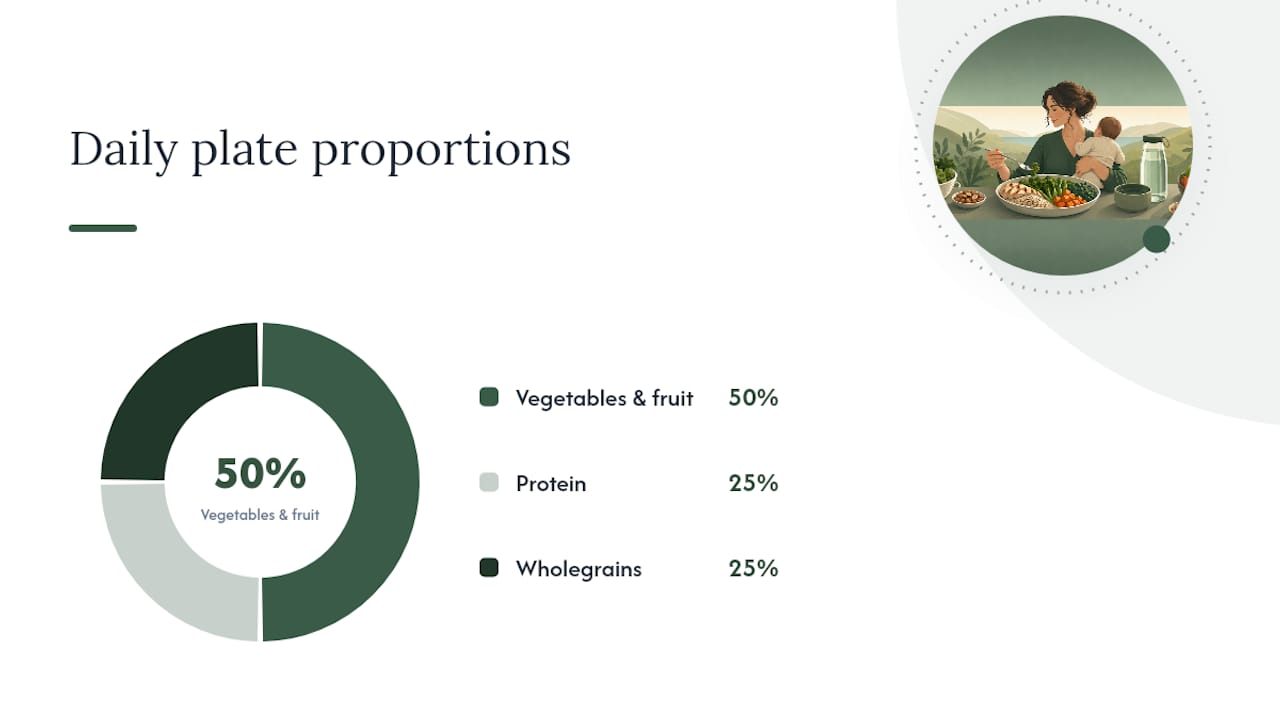
A simple daily plate to aim for: half filled with vegetables and fruit, a quarter with protein, a quarter with wholegrains, plus a dairy or fortified alternative and a small serving of healthy fats.
Three meal templates that tick multiple boxes at once:
- Breakfast: Greek yoghurt, berries, a spoon of ground flaxseed, and a boiled egg on the side.
- Lunch: Lentil and spinach soup with a slice of wholegrain bread and a glass of orange juice.
- Dinner: Grilled salmon, sweet potato, and steamed broccoli.
Pro Tip: Batch-cook a big tray of egg muffins with spinach and cheese at the weekend. They’re protein-rich, iron-friendly, freeze well, and can be eaten cold with one hand while you’re feeding.
Calories, weight change and safe postpartum weight loss
If you’re breastfeeding, you need roughly 330 to 500 extra kilocalories a day compared with your pre-pregnancy intake, according to CDC maternal diet guidance, though the exact figure depends on how exclusively you’re feeding, your activity level, and your starting weight. That’s roughly one extra substantial snack, not a second dinner.
If you’re not breastfeeding, your calorie needs return closer to your usual baseline once you’re not carrying and delivering a pregnancy, and there’s no need to “eat for two” any more.
Weight loss, if you want it, should happen gradually. A widely cited a safe pace is modest, gradual weight loss over weeks, achieved through modest, sustainable adjustments rather than restriction. Severe calorie cutting in the postpartum period risks slowing recovery, reducing milk supply, and worsening fatigue.
Practical ways to moderate intake without losing nutrient quality:
- Swap refined snacks for protein-paired ones. Crackers with cheese or hummus fill you up for longer than biscuits.
- Watch portion size on carbohydrates, not on protein or vegetables. Fill your plate with vegetables first.
- Eat at fairly regular intervals. Skipping meals because you’re exhausted often leads to overeating later, or under-fuelling that stalls milk supply and energy.
- Delay serious weight-loss goals for the first six weeks. Prioritise healing and, if breastfeeding, establishing supply before thinking about calorie deficits at all.
Hydration and grab-and-go feeding for the newborn haze
Aim for around 2 to 3 litres of fluid a day, a target the NHS recommends for breastfeeding mothers, and use pale straw-coloured urine as a rough, practical gauge that you’re drinking enough. Thirst is a late signal when you’re sleep-deprived, so don’t wait for it.
Nobody eats well with a newborn by planning elaborate meals. They eat well by having the right things within arm’s reach.
A short grab-and-go list worth keeping stocked:
- Boiled eggs, pre-peeled and refrigerated
- Greek yoghurt pots with a nut butter sachet
- Cheese portions with oatcakes
- Pre-cut vegetables with hummus
- A bowl of mixed nuts and dried apricots on the side table
Pro Tip: Keep a water bottle by your usual feeding chair and take a few sips every time your baby latches on. Attaching the habit to something you already do dozens of times a day, rather than relying on remembering, is the only hydration trick that reliably works. This mirrors advice the NHS gives on maintaining hydration during breastfeeding sessions.
For milk supply specifically, frequent feeding or pumping does more than any single food, and pairing that with feeding-frequency strategies like those covering increasing milk supply through consistent feeds can help alongside good nutrition, not instead of it.
Supplements, screening and when to test for deficiencies
Continuing a prenatal multivitamin postpartum is reasonable for many women, but it’s not automatically the right answer for everyone. Mayo Clinic guidance on breastfeeding nutrition notes that targeted supplementation, vitamin D, B12, iodine, or iron, becomes more relevant when diet or sun exposure falls short, and dosing should ideally follow an actual test rather than guesswork.
Blood tests worth requesting from your GP if you’re feeling unusually fatigued or unwell:
- Full blood count to check for anaemia
- Ferritin to assess iron stores specifically, since confirming true iron deficiency reliably requires this test rather than symptoms alone
- Vitamin D if you rarely spend time outdoors or have limited dietary sources
- B12, particularly if you follow a vegetarian or vegan diet
- Thyroid function, since postpartum thyroiditis can mimic ordinary new-parent exhaustion
Low ferritin without anaemia can still cause noticeable fatigue and hair shedding, which is why testing beats treating symptoms blindly.
When choosing a postnatal supplement off the shelf, check that it names specific doses (not just “contains iron”), confirms it’s suitable for breastfeeding, and avoids excessive vitamin A, which carries its own risks. If you’re juggling multiple deficiencies or a chronic condition alongside recovery, a registered dietitian can tailor doses in a way a generic multivitamin never will, and a structured personalised nutrition plan can pull all of this together rather than leaving you guessing.
Vegetarian, vegan and other restricted postpartum diets
Plant-based mothers can meet postpartum and breastfeeding needs, but four nutrients deserve deliberate attention: B12, iron, iodine, and DHA. B12 exists almost exclusively in animal foods, so vegans need a supplement, non-negotiably, alongside fortified plant milks and nutritional yeast. Iron absorption from plant sources is lower than from meat, so pairing lentils, tofu, and fortified cereals with vitamin C at the same meal matters even more than usual.
Iodine is trickier on a vegan diet since dairy and fish are the main natural sources; iodised salt or a supplement often fills the gap. DHA is available through algae-based supplements, a genuinely equivalent option to fish oil for anyone avoiding seafood.
A workable plant-based template: tofu scramble with spinach and fortified plant milk for breakfast, a chickpea and quinoa bowl with peppers for lunch, and lentil dahl with brown rice for dinner, with a B12 and algae-DHA supplement alongside.
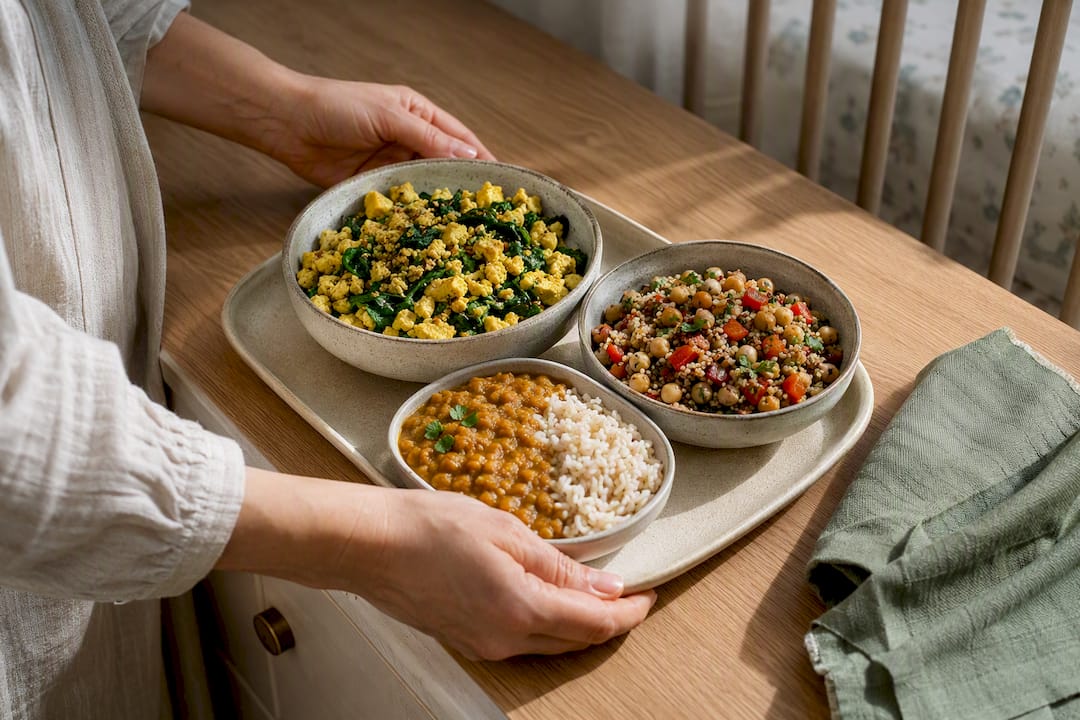
If you’re exclusively breastfeeding on a restricted diet, mention it to your health visitor or GP so your baby’s growth and any feeding changes can be monitored, and consider asking for B12 and iron testing for yourself rather than assuming the diet is covering it.
Fixing postpartum constipation without making things worse
Postpartum constipation is common, driven by a combination of dehydration, reduced fibre intake when you’re eating on the go, pain medication after birth, and pelvic floor tenderness that makes straining uncomfortable. Fluid and fibre address the first two causes directly, and the NHS links adequate hydration and fibre to reduced constipation risk in the postpartum period specifically.
Add fibre gradually rather than all at once, since a sudden jump can cause bloating that feels worse than the original problem. Useful sources include:
- Oats and wholegrain bread
- Berries, pears, and prunes
- Lentils and beans
- Ground flaxseed stirred into yoghurt
If diet and fluids aren’t enough after a few days, a gentle over-the-counter laxative is generally safe while breastfeeding, but persistent constipation, pain, or bleeding warrants a call to your GP rather than continued self-treatment.
When postpartum symptoms need medical attention
Most fatigue and low mood in the early weeks are ordinary. Some symptoms are not, and diet alone won’t fix them.
- Extreme, unrelenting fatigue or breathlessness on mild exertion can signal significant anaemia and warrants a full blood count and ferritin test.
- Persistent low mood, anxiety, or intrusive thoughts beyond the first two weeks need a conversation with your GP or health visitor, not just a better diet.
- A baby who isn’t gaining weight or shows unusual reactions after feeds should prompt a review of both feeding pattern and maternal diet.
Keep a rough food and feeding diary before appointments; it makes it far easier for a clinician to spot patterns. NHS pathways cover blood tests and mental health referrals free of charge, while private dietetic support, such as a structured programme, suits those wanting closer, ongoing nutritional guidance alongside standard care.
How Foodconnection supports postpartum clients
Postpartum nutrition services often build plans around an initial in-depth assessment of diet, symptoms, and lifestyle, with optional functional lab testing such as ferritin, vitamin D, and thyroid panels when fatigue or other symptoms suggest it’s warranted. From there, support can continue over weeks rather than stopping after a single consultation.
Experienced nutrition therapists can work with new mothers on practical problems: rebuilding iron stores after blood loss, designing meals that work when you’re eating with one hand, and untangling whether fatigue is diet-related, sleep-related, or both. Approaches draw on evidence bases such as NHS and CDC guidance, alongside practical details of what actually survives contact with a newborn’s schedule.
For background on how this continues from pregnancy itself, the prenatal nutrition checklist and the low ferritin food plan cover related ground in more depth.
Alcohol, caffeine and fish: what to limit while breastfeeding
Alcohol passes into breast milk, so the safest approach is to avoid it or keep it occasional and minimal, timing any drink well before the next feed. Caffeine is generally fine in moderation, with guidance suggesting a moderate amount of caffeine per day, roughly two to three cups of coffee, since higher intake can make a baby unsettled or disrupt their sleep.
Fish deserves nuance rather than a blanket “avoid it” message. Oily fish like salmon, sardines, and mackerel are genuinely valuable for DHA, but high-mercury species, shark, swordfish, and marlin, should be avoided altogether while breastfeeding, and tuna kept to modest weekly limits. This guidance comes directly from CDC recommendations on maternal diet during breastfeeding, which flag alcohol, caffeine, and fish choice as the three areas worth active attention rather than general anxiety about food.
Beyond those three, there’s no long list of forbidden foods. Spicy food, garlic, and cruciferous vegetables sometimes get blamed for unsettled babies, but the evidence for this is thin, and cutting entire food groups on suspicion alone rarely helps and often just makes your diet more restrictive than it needs to be.
Nutrition after gestational diabetes: what changes postpartum
Blood sugar regulation typically improves quickly after delivery for most women who had gestational diabetes, but the nutritional habits that helped during pregnancy are worth keeping, not abandoning, because gestational diabetes meaningfully raises the lifetime risk of developing type 2 diabetes.
Continue favouring high-fibre, lower-glycaemic carbohydrates, wholegrains over refined ones, and pairing carbohydrates with protein or fat to blunt blood sugar spikes. This matters even more if you’re breastfeeding, since your calorie needs are higher but the quality of those calories still counts. Regular meals rather than long gaps also help keep blood sugar steadier, which doubles as good general postpartum practice anyway.
Most maternity units offer a follow-up glucose test around six weeks after birth, and it’s worth attending even if you feel completely well, since gestational diabetes often causes no obvious symptoms once it resolves. If results show ongoing impaired glucose tolerance, a dietitian can help translate that into a sustainable long-term eating pattern rather than a return to old habits by default.
Nutrition and mood: eating in a way that supports mental health
Diet doesn’t replace treatment for postnatal depression, but it does influence how you feel day to day, and undernourishment makes low mood, anxiety, and irritability measurably harder to manage. Blood sugar crashes from skipped meals or too much refined sugar can mimic or worsen mood swings, which is one more reason regular, protein-anchored meals matter beyond just physical recovery.
Omega-3 fatty acids have a reasonably consistent, if modest, association with mood regulation, adding another reason to prioritise oily fish or an algae-based DHA supplement. Iron and vitamin D deficiencies both independently contribute to low mood and fatigue that can be mistaken for, or can compound, postnatal depression, which is part of why testing matters rather than assuming everything is “just hormones.”
If low mood persists beyond a couple of weeks, feels overwhelming, or comes with thoughts of harming yourself or your baby, that needs a conversation with your GP or health visitor immediately, not a dietary adjustment. Nutrition sits alongside proper mental health support, never in place of it.
A clinician’s view: small habits beat big overhauls
Three habits do more work than any elaborate meal plan: sip water every time you sit down to feed, keep a protein-and-fibre snack within reach at each feed rather than reaching for whatever’s nearest, and simplify your plate to “protein, vegetable, carbohydrate” instead of aiming for complicated recipes you won’t have energy to cook.
Progress in the postpartum period is rarely linear, and that’s normal, not a failure of willpower. What isn’t normal is extreme fatigue, persistent low mood, or a sense that something is genuinely off. That’s the point to ask for testing or a proper assessment rather than pushing through on general advice alone.
— Irina
Get personalised postpartum nutrition support from Foodconnection
Generic advice covers the basics, but it can’t account for your ferritin level, your feeding pattern, or the fact that you’re eating one-handed at 3am. Personalised nutrition consulting is designed to fill that gap: plans that adapt around your actual recovery, not a template.
What that looks like in practice:
- A tailored postpartum eating plan built around your symptoms, diet history, and feeding pattern
- Optional functional lab testing for iron, vitamin D, thyroid, and other markers when fatigue or other symptoms suggest it’s worth checking
- Ongoing, remote-friendly support rather than a single consultation and a printed sheet
Your first appointment focuses on understanding your recovery so far, your feeding goals, and any red-flag symptoms, before building a realistic plan around your actual week, not an idealised one. Full details of what’s included sit on the nutrition services page, and you can book directly through Foodconnection when you’re ready for a plan built around you rather than a general list.
Primary sources used for this guide
This guide draws on NHS breastfeeding and diet guidance, CDC maternal diet and micronutrient guidance, the ECLIPSES peer-reviewed study on postpartum nutrient intake, NHS guidance on iron deficiency anaemia, and Mayo Clinic breastfeeding nutrition guidance.
This article is general information, not a substitute for advice from a qualified doctor. Consult a qualified healthcare professional about your own circumstances before acting on anything here.
Sources
- Maternal diet and breastfeeding | CDC
- Nutrient Intake during Pregnancy and Post-Partum: ECLIPSES Study | PMC
- Iron deficiency anaemia | NHS
- Breastfeeding nutrition: Tips for moms | Mayo Clinic
FAQ
What is the 5-5-5 rule for postpartum recovery?
The rule suggests spending the initial days after birth prioritising rest over activity. It’s a helpful mindset framework rather than a strict clinical rule, and good nutrition, protein, iron, and steady meals, supports exactly this kind of unhurried physical recovery.
What does a good postpartum nutrition plan actually include?
A solid plan centres on protein-rich meals, iron paired with vitamin C, adequate vitamin D and iodine, roughly 2 to 3 litres of fluid daily, and, if breastfeeding, an extra 330 to 500 calories a day. A personalised postpartum nutrition plan tailors these targets to your specific bloodwork and recovery pace.
What is the 3-3-3 rule for postpartum?
Definitions of this rule vary online, and there’s no single clinical standard behind it, so treat any specific version cautiously rather than as established medical guidance.
What is the 777 rule for postpartum?
Like the 3-3-3 rule, this rule isn’t a recognised clinical guideline, and versions circulating online differ, so it’s best treated as informal advice rather than an evidence-based framework.
Do I need to take supplements while breastfeeding?
Not automatically, but targeted supplementation for vitamin D, iodine, B12, or iron often helps, particularly when a blood test confirms a genuine shortfall, according to Mayo Clinic guidance. Testing first, rather than supplementing blindly, avoids unnecessary or excessive dosing.