
Post-viral fatigue diet: what to eat for Long Covid recovery

If you have post-viral fatigue or Long Covid, the most useful thing you can do today is eat regularly, prioritise protein, and stay well hydrated. There is no single “Long Covid diet” that cures the condition. What the evidence does support, and what the British Dietetic Association recommends, is a non-restrictive, Mediterranean-style eating pattern with small, frequent meals, a moderate amount of protein per sitting, and a fluid intake of around 2.25–3 litres per day.
Start today with these basics:
- Eat every 3–4 hours. Small, regular meals prevent energy crashes better than two or three large ones.
- Add protein to every meal and snack. Eggs, tinned fish, Greek yoghurt, pulses, and cheese are low-effort sources.
- Drink consistently through the day. Water, milk, diluted juice, and fortified drinks all count.
- If your appetite is poor, choose energy-dense options first: full-fat yoghurt, nut butter on toast, or a milk-based smoothie rather than a low-calorie alternative.
- Avoid restrictive experiments. Cutting out food groups without clinical guidance risks making fatigue worse, not better.
Table of Contents
- What is post-viral fatigue, and how does diet affect it?
- What are the core dietary targets for post-viral fatigue?
- How do you manage eating when symptoms make it difficult?
- Which supplements actually help, and what tests should you ask for?
- When should you see your GP or a registered dietitian?
- How does personalised nutrition support help with post-viral recovery?
- Quick meal ideas and simple swaps for low-energy days
- What are realistic timelines, and when should you reassess?
- Key takeaways
- A practitioner’s perspective on pacing and nourishment
- Foodconnection: personalised nutrition support for post-viral recovery
- Useful sources and further reading
What is post-viral fatigue, and how does diet affect it?
Post-viral fatigue is persistent exhaustion that continues weeks or months after a viral infection has cleared. Long Covid is the most widely recognised form, but the pattern appears after influenza, Epstein-Barr virus, and other infections too. The NHS describes Long Covid as symptoms lasting beyond 12 weeks that are not explained by another diagnosis.
Several symptom clusters directly affect eating. Fatigue itself makes cooking feel impossible. Altered taste and smell reduce appetite. Gut symptoms including bloating, nausea, and changed bowel habits are common. Unintentional weight loss or, in some cases, weight gain can both occur.
Diet matters here for three reasons. First, chronic inflammation is a feature of post-viral illness, and food choices influence the body’s inflammatory load. A 2025 observational study found that diets higher in pro-inflammatory foods were statistically associated with worse fatigue scores (p < 0.001), while anti-inflammatory patterns correlated with lower fatigue. Second, inadequate nutrition accelerates muscle loss (sarcopenia), which deepens fatigue and slows functional recovery. Third, the gut microbiome interacts with immune function, and emerging evidence links Mediterranean diet adherence with increased beneficial bacteria and reduced systemic inflammation.
Diet is not a standalone cure. It is a support system for a body working hard to recover.
What are the core dietary targets for post-viral fatigue?
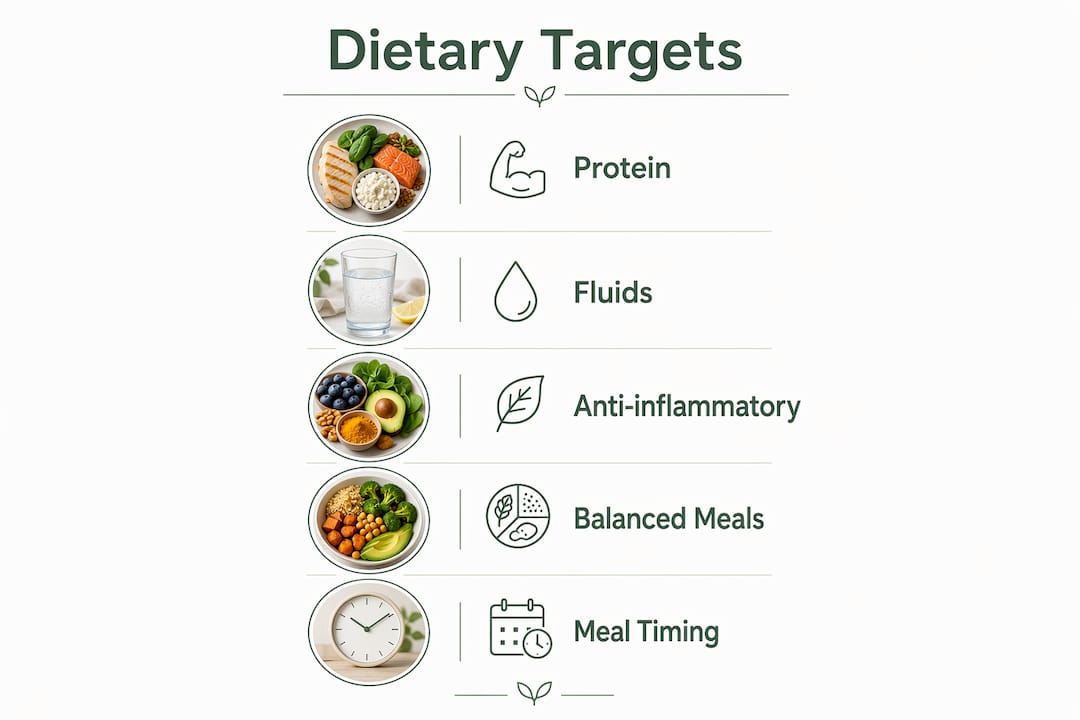
Clinical guidance converges on a handful of concrete targets. These are the numbers worth knowing.
Protein
Aim for at least 0.83 g of protein per kilogram of body weight per day as a minimum baseline, with higher intakes often appropriate where muscle loss is evident. In practical terms, spread protein across meals: 15–30 g per meal is the range most post-COVID recovery guidance recommends. A 70 kg person needs roughly 58 g per day at the minimum, but many clinicians working with post-viral patients suggest 1.0–1.2 g/kg/day where fatigue and deconditioning are significant.
Fluids
Target a sufficient amount of fluid per day, spread evenly rather than consumed in large amounts at once. Dehydration worsens fatigue and cognitive symptoms. Water is fine; milk, herbal teas, and diluted juice all contribute.
Dietary pattern
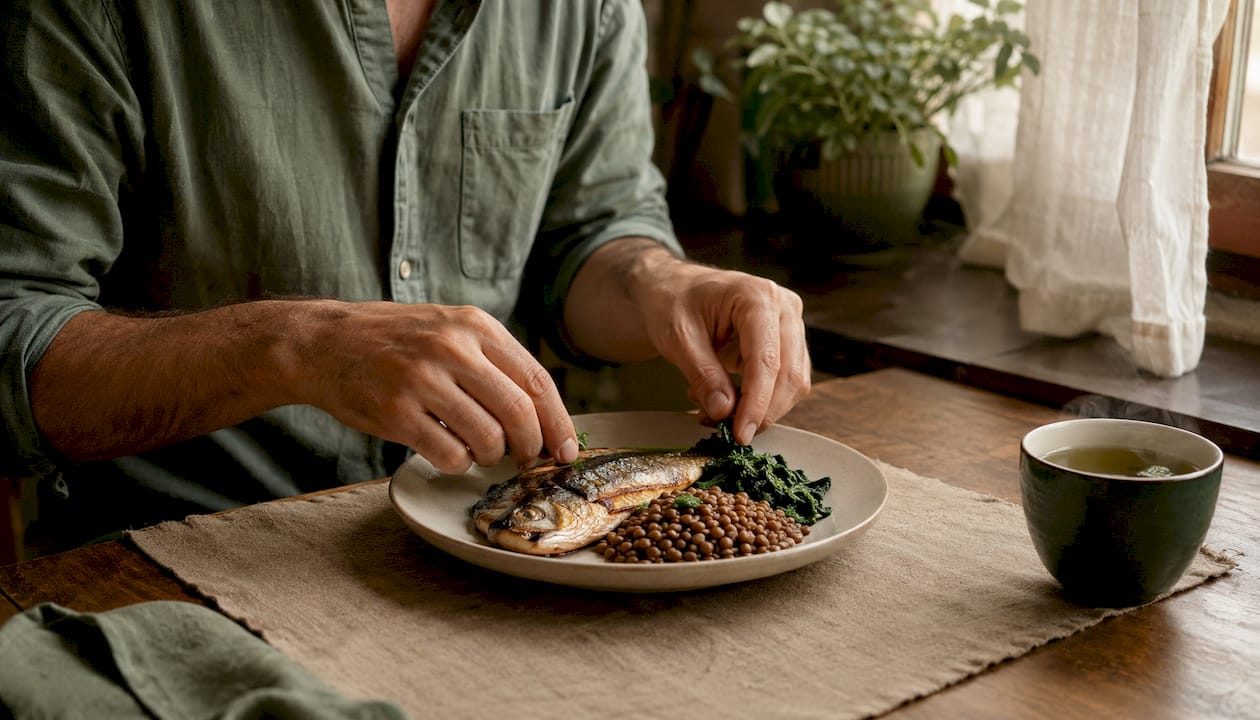
The Mediterranean-style whole-food pattern is the most consistently recommended approach: abundant vegetables and fruit, wholegrains, legumes, oily fish at least twice weekly, nuts and seeds, and unsaturated oils such as olive oil. Limit ultra-processed foods, sugary drinks, and refined carbohydrates, which are associated with higher inflammatory load.
| Target | Recommended range | Practical example |
|---|---|---|
| Protein per kg body weight | 0.83–1.2 g/kg/day | 58 g/day for a 70 kg adult |
| Protein per meal | 15–30 g | 2 eggs + Greek yoghurt = ~25 g |
| Daily fluid intake | 2.25–3 L/day | water or equivalent fluids |
| Oily fish | At least 2 portions/week | Salmon, mackerel, sardines, trout |
| Ultra-processed foods | Minimise | Swap crisps for nuts; swap fizzy drinks for milk |
Clinical target: Alberta Health Services’ post-COVID nutrition guidance specifies a minimum of 0.83 g of protein per kilogram of body weight per day, with fluid targets of 2.25–3 L daily, as the foundation for adult recovery from post-viral illness.
How do you manage eating when symptoms make it difficult?
This is where the theory meets reality. When you are exhausted, nauseous, or cannot taste anything, even the best dietary advice feels out of reach. These strategies are designed for the harder days.
When appetite is poor or you are losing weight
- Fortify what you already eat. Stir powdered skimmed milk into porridge, soups, or mashed potato to add protein and calories without increasing volume.
- Add calorie density quietly. A tablespoon of nut butter in a smoothie, a drizzle of olive oil over vegetables, or full-fat dairy instead of low-fat versions can meaningfully increase energy intake.
- Batch cook and freeze in small portions. On a better day, make a large pot of lentil soup or a bean stew and freeze it in single servings. On a bad day, you just need a microwave.
- Keep no-cook options stocked. Tinned fish, pre-cooked pulses, cheese, yoghurt, boiled eggs, and nut butter on oatcakes require almost no effort and deliver solid nutrition.
When taste or smell is altered
Taste and smell changes are among the most disruptive symptoms for eating. A few practical adjustments help:
- Layer flavours. If food tastes bland, try adding umami-rich ingredients: miso paste, Parmesan, soy sauce, or nutritional yeast.
- Experiment with temperature. Some people find cold or room-temperature foods more palatable than hot ones during taste disturbance.
- Rotate textures. If a food you normally enjoy now tastes wrong, try it in a different form. Salmon that tastes unpleasant grilled may be fine in a cold pasta salad.
- Avoid forcing disliked foods. Eating something that triggers nausea is counterproductive. Rotate to alternatives and revisit later.
When nausea or gut symptoms are present
Stick to bland, easy-to-digest foods during flares: plain rice, toast, boiled potatoes, and cooked vegetables. Reduce fatty, spicy, or very high-fibre foods temporarily. A short-term low-fibre approach can ease gut distress, but should only be sustained beyond a few days with dietitian guidance, as it risks reducing microbiome diversity. If bloating is a persistent problem, a gut health nutritionist can help identify triggers without unnecessary elimination.
Pro Tip: Time your largest protein-containing meal or snack for the part of the day when your energy is relatively higher. For many people with post-viral fatigue, that is mid-morning rather than evening. If you tend to crash in the afternoon, eating a protein-and-carbohydrate snack before that window can reduce the severity of the dip.
Which supplements actually help, and what tests should you ask for?
The honest answer is that no supplement cures Long Covid. UCLH’s post-COVID nutrition service is explicit that “miracle cure” claims online are misleading and potentially harmful. What targeted supplementation can do is correct a documented deficiency that is contributing to fatigue.
Tests worth requesting from your GP
- Full blood count to check for anaemia.
- Ferritin and iron studies if you are tired despite eating adequately.
- Vitamin D if you have spent limited time outdoors, particularly over winter.
- Vitamin B12 and folate, especially if you follow a vegetarian or vegan diet, or have gut absorption issues.
- Thyroid function to rule out hypothyroidism, which mimics post-viral fatigue closely.
- Basic metabolic panel (kidney function, electrolytes) if dehydration or gut symptoms are significant.
When supplementation is appropriate
- Vitamin D: Deficiency is common in the UK, particularly in winter. The NHS recommends 10 micrograms (400 IU) daily for most adults as a baseline; higher doses require medical supervision.
- Iron: Only supplement if a deficiency is confirmed. Taking iron without a deficiency can cause harm, including liver damage.
- Vitamin B12: Relevant for those with confirmed deficiency, vegans, or people with absorption difficulties.
- Magnesium: Low intake is associated with fatigue and poor sleep. Dietary sources (leafy greens, nuts, seeds, wholegrains) are preferable; supplementation may be considered if dietary intake is consistently low.
Emerging but unproven interventions
Synbiotics (combined probiotics and prebiotics), L-arginine, and multi-nutrient formulas have shown promise in some trials, but evidence remains heterogeneous and better-powered randomised trials are still needed. These are not first-line recommendations. Avoid high-dose single-nutrient megadoses without medical supervision, and always flag supplements to your GP if you are taking any medications, as interactions are possible.
When should you see your GP or a registered dietitian?
Some situations require professional input rather than self-management.
Red flags that need urgent GP review
- Rapid or unintentional weight loss (more than 5% of body weight over 3–6 months).
- Difficulty swallowing or pain when eating.
- Severe dehydration: dark urine, dizziness, or inability to keep fluids down.
- Chest pain, breathlessness, or new neurological symptoms.
When to ask for specific tests
Ask your GP for ferritin testing if you are persistently tired despite eating well. Request vitamin D if you have had limited sun exposure. Ask about B12 if you are vegetarian or vegan and experiencing neurological symptoms such as tingling or brain fog.
What a dietitian referral looks like
A registered dietitian will conduct a full nutritional assessment, review your dietary intake, assess body composition where relevant, and build a stepwise plan tailored to your symptoms. Body composition monitoring is particularly valuable because muscle loss can drive fatigue even when weight appears stable on the scales. Registered dietitians are regulated by the Health and Care Professions Council (HCPC); nutritional therapists are not statutory registrants, so check credentials carefully. For guidance on choosing a nutritional therapist, look for BANT registration and relevant clinical experience.
What to bring to your appointment
- A 3–5 day food and symptom diary.
- A note of recent weight changes.
- Your current medication and supplement list.
- A list of your main symptoms and when they are worst.
How does personalised nutrition support help with post-viral recovery?
DIY dietary changes get many people some of the way. Personalised support closes the gap for those with complex or persistent symptoms.
A structured programme typically includes a detailed history covering medical background, dietary habits, lifestyle, and symptom patterns. Dietary analysis identifies specific gaps, whether that is protein, micronutrients, or meal timing. Where indicated, functional testing can assess markers that standard GP panels do not routinely cover. The plan is built in steps, not handed over as a rigid prescription, and follow-up appointments allow it to be adjusted as recovery progresses.
The clinical benefits are concrete. Targeted correction of iron, vitamin D, or B12 deficiency removes a direct driver of fatigue. Adequate protein intake, combined with gentle progressive activity, helps reverse sarcopenia. Symptom-specific strategies for taste loss, gut disturbance, and poor appetite make the difference between a plan that works on paper and one that actually gets followed.
Foodconnection offers one-to-one nutrition consultations, personalised programmes, and optional functional laboratory testing with full interpretation. The approach is collaborative: sessions are structured around your specific symptoms, energy patterns, and food preferences, with ongoing support as you rebuild function. For anyone wondering whether professional support is worth the investment, the case for personalised nutrition is strongest precisely when symptoms are complex and self-management has stalled.
Quick meal ideas and simple swaps for low-energy days
A sample low-effort day might look like this:
Breakfast: Fortified porridge made with full-fat milk, topped with a tablespoon of almond butter and a small pot of Greek yoghurt on the side. Roughly 25–30 g protein.
Mid-morning: A small pot of cottage cheese with oatcakes, or a milk-based smoothie with a banana and a scoop of plain yoghurt.
Lunch: Tinned sardines or mackerel on wholegrain toast with sliced tomato. Takes under five minutes and delivers around 20 g protein.
Afternoon snack: A small handful of mixed nuts and a glass of milk, or a boiled egg with a piece of fruit.
Evening meal: A one-pot lentil and vegetable soup made in bulk, served with wholegrain bread. Batch-cook and freeze in portions.
Before bed: Avoid heavy meals within 1–2 hours of sleep, and limit caffeine after midday to protect sleep quality and reduce palpitations.
Simple swaps
| Instead of | Try this | Why |
|---|---|---|
| Plain biscuits or crisps | Oatcakes with nut butter or cheese | Adds protein and sustained energy |
| Sugary fizzy drink | Full-fat milk or a milk-based smoothie | Protein, calcium, and hydration |
| Low-fat yoghurt | Full-fat Greek yoghurt | More calories and protein per serving |
| White toast alone | Wholegrain toast with eggs or tinned fish | Protein + fibre for steadier energy |
| Large evening meal | Smaller portions spread through the day | Reduces post-meal fatigue and bloating |
Batch cooking is the single biggest energy-conservation strategy. Soups, stews, and grain salads keep well in the fridge for three days and freeze for up to three months. On days when cooking is not possible, tinned fish, pre-cooked pulses, and cheese require no preparation at all.
What are realistic timelines, and when should you reassess?
Recovery from post-viral fatigue varies enormously. Some people see meaningful improvement in energy and appetite within four to eight weeks of consistent nutritional changes. Others, particularly those with Long Covid, experience a slower trajectory measured in months rather than weeks. Neither pattern is unusual.
Expect the first two weeks to be about stabilising intake rather than dramatic improvement. Adding protein consistently, hydrating well, and avoiding energy crashes through regular eating lays the foundation. Noticeable changes in stamina and cognitive clarity often follow once nutritional deficiencies are corrected and muscle loss is halted.
Signs that warrant reassessment
- Progressive weight loss despite eating adequately.
- Worsening fatigue after four to six weeks of consistent dietary changes.
- New neurological symptoms, chest symptoms, or breathlessness.
- Persistent inability to eat enough due to nausea, taste changes, or swallowing difficulty.
A sensible follow-up rhythm is an initial review with a dietitian or GP at four to eight weeks, with body composition checks if muscle loss is suspected. Keep a simple log of your food intake, symptoms, and energy levels between appointments. Patterns in that log are often more informative than a single clinical snapshot.
Key takeaways
A post-viral fatigue diet works best when it is consistent, protein-adequate, and built around whole foods rather than restriction or supplementation without clinical guidance.
| Point | Details |
|---|---|
| Protein targets matter | Aim for sufficient protein intake spread over the day, balancing per meal amounts according to individual needs where possible. |
| Hydration is non-negotiable | Target 2.25–3 litres of fluid per day, spread evenly through the day. |
| No supplement replaces testing | Only supplement vitamin D, iron, or B12 when a deficiency is confirmed; megadoses without supervision can cause harm. |
| Restrictive diets risk making things worse | Elimination approaches without dietitian oversight can widen nutrient gaps and worsen fatigue. |
| Foodconnection offers structured support | One-to-one consultations, personalised meal plans, and optional functional lab testing are available for those whose recovery needs more than general guidance. |
A practitioner’s perspective on pacing and nourishment
The most common mistake I see in post-viral recovery is the impulse to do something dramatic: cut out a food group, start an aggressive supplement protocol, or follow a highly restrictive plan found online. The intention is understandable. When you feel terrible for months, you want to feel in control of something. But the evidence consistently points in the opposite direction.
What actually moves the needle is unglamorous: eating enough, eating regularly, and getting adequate protein. Small, consistent changes sustained over weeks are what allow the body to rebuild muscle, reduce inflammatory load, and stabilise energy. A person who eats three protein-containing meals a day and drinks enough water will almost always do better than one who is cycling through elimination diets and expensive supplements without a clear deficiency to correct.
Pacing applies to diet too. Trying to overhaul everything at once is exhausting, and exhaustion is the last thing you need. Pick one or two changes this week. Add a protein source to breakfast. Drink a glass of water before each meal. Build from there. Recovery is not linear, and the goal is not perfection. It is consistent, nourishing eating that your body can actually use.
Foodconnection: personalised nutrition support for post-viral recovery
Recovering from post-viral fatigue is not a one-size-fits-all process, and general guidance only takes you so far when symptoms are complex or persistent.
Foodconnection provides one-to-one nutrition consultations and structured programmes specifically designed for people dealing with chronic fatigue, gut symptoms, hormonal changes, and the overlapping challenges that often accompany post-viral illness. Sessions include a detailed dietary and lifestyle assessment, personalised meal planning, and ongoing support as your recovery progresses. Optional functional lab testing with full clinical interpretation is available for those who want a clearer picture of deficiencies or gut health markers that standard GP panels may not cover.
The approach is collaborative and evidence-based, built around what you can realistically manage, not an idealised plan that falls apart on a bad day. To find out what a first appointment includes and how to get started, visit the Foodconnection services page.
Useful sources and further reading
These are the most reliable UK-focused resources for post-viral fatigue and nutrition:
- British Dietetic Association: Long Covid and diet — The BDA’s patient-facing resource covering dietary principles, practical tips, and when to seek professional support. A good starting point for anyone newly diagnosed.
- NHS: Long-term effects of coronavirus (Long Covid) — Official NHS overview of Long Covid symptoms, diagnosis, and where to get help in England.
- UCLH Post-COVID Service: Diet and Nutrition — Detailed clinical guidance from University College London Hospitals, including practical meal advice, supplement cautions, and behavioural tips for sleep and energy management.
- Your COVID Recovery: Eating well — The NHS rehabilitation platform’s nutrition section, with accessible guidance on eating well during recovery.
- PMC review: Dietary recommendations for post-COVID-19 syndrome — A peer-reviewed summary of protein targets, anti-inflammatory dietary patterns, and micronutrient considerations for post-COVID recovery.
- MDPI scoping review: Diet and nutrition in Long Covid — A comprehensive review of 50 studies examining dietary interventions and symptom outcomes; useful for clinicians and informed readers wanting the evidence base.
This article is general information, not medical or dietetic advice. Confirm current guidance and your individual nutritional needs with your GP or a registered dietitian.