
PMS diet: foods that ease cramps, bloating and mood

The most effective PMS diet is a consistent, balanced eating pattern built around oily fish, whole grains, vegetables, legumes and low-fat dairy, with particular attention to omega-3s, calcium, magnesium and vitamin D. This pattern doesn’t cure premenstrual syndrome, but a systematic review of dietary patterns and PMS found it consistently correlates with milder symptoms, while diets heavy in processed food, sugar and fried food correlate with worse ones.
Favour: oily fish, leafy greens, wholegrains, legumes, nuts and seeds, low-fat dairy or fortified alternatives, olive oil. Limit: ultra-processed snacks, refined carbohydrates, excess caffeine, alcohol, and salty or fried food.
Give it time. Most dietary changes take a few menstrual cycles before you notice a real difference, roughly the same window used in the 2024 omega-3 meta-analysis, which tracked supplementation over several months. If symptoms are severe enough to disrupt work, relationships or daily functioning, that’s a signal to see a GP rather than rely solely on dietary changes.
Key Takeaways
A consistent, whole-food PMS diet built around omega-3s, calcium, magnesium and vitamin D reduces symptom severity more reliably than any single supplement or last-minute fix.
| Point | Details |
|---|---|
| Pattern beats single foods | Whole, unprocessed diets correlate with milder PMS; ultra-processed diets correlate with worse symptoms. |
| Omega-3s have the strongest evidence | Trials use omega-3 supplementation within a range over several months to reduce menstrual pain. |
| Cut processed food, sugar and alcohol | These are the most consistently cited triggers for bloating, mood swings and fluid retention. |
| Give it two to three cycles | Dietary changes need sustained time to show measurable improvement, not days. |
| Get personalised support when self-guided change stalls | Foodconnection builds tailored meal plans and offers lab testing to pinpoint deficiencies driving symptoms. |
Table of Contents
- What does the evidence actually say about a PMS diet?
- What foods and nutrients actually help PMS symptoms?
- Which foods and habits make PMS symptoms worse?
- Which supplements have real evidence, and what doses do trials use?
- What does a practical day of eating look like in the luteal phase?
- How does diet actually influence cramps and mood, and how fast will you see results?
- When should you see a GP about PMS symptoms?
- A nutritionist’s view on realistic expectations
- How Foodconnection supports women managing PMS through nutrition
- Frequently asked questions
- Sources
What does the evidence actually say about a PMS diet?
The honest answer is that nutrition research on PMS is genuinely encouraging in places and frustratingly thin in others. It helps to know which is which before you start rearranging your fridge.
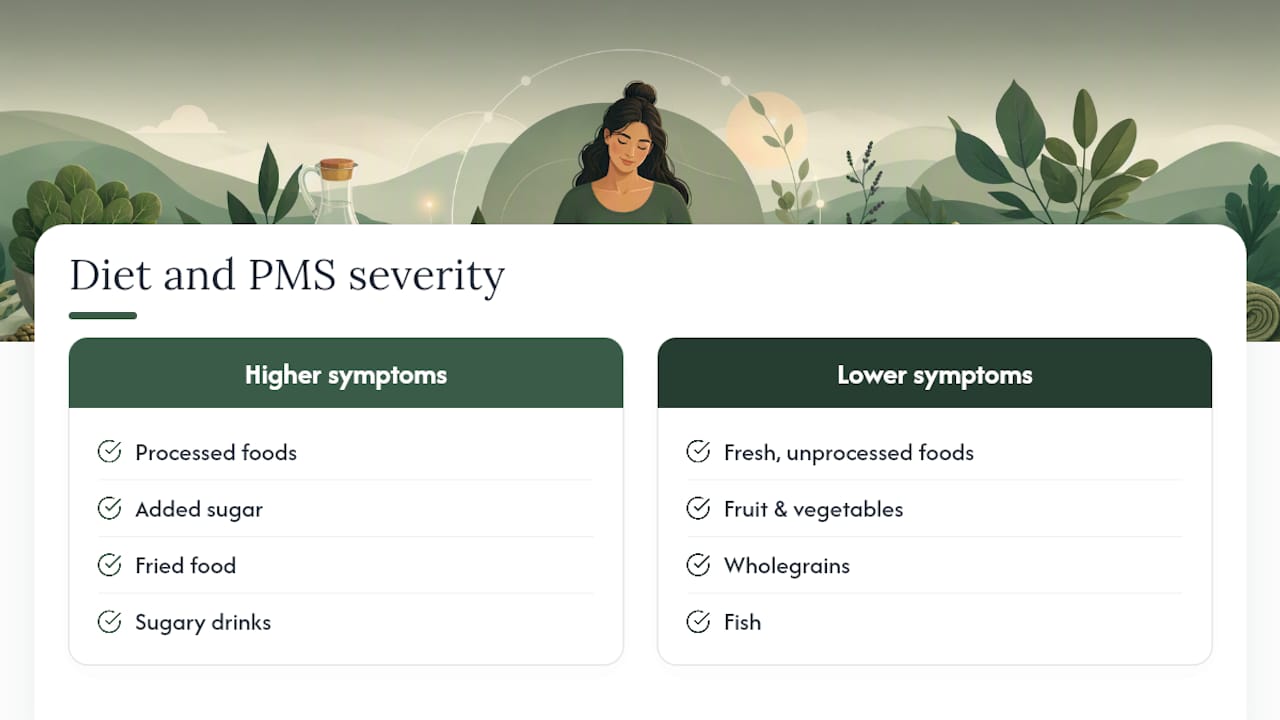
The strongest signal comes from dietary pattern research rather than any single “superfood”. A review of diet composition and PMS found that diets rich in fresh, unprocessed foods, fruit, vegetables, wholegrains, fish and nuts, are associated with lower PMS severity, while diets high in processed foods, added sugar and fried food track with more severe symptoms. That’s a correlation drawn largely from observational studies, so it can’t prove diet alone drives the difference. But the consistency across multiple studies, spanning different countries and populations, gives it more weight than a single trial would.
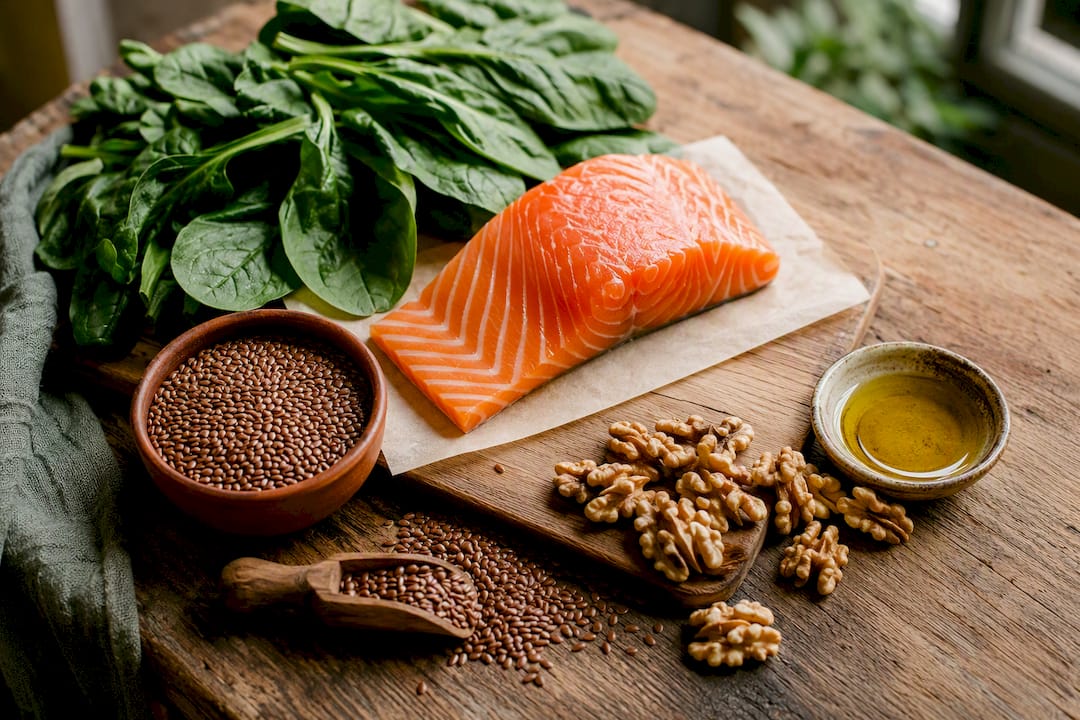
Omega-3 fatty acids have the best quality evidence of any single nutrient. A 2024 meta-analysis pooling multiple randomised trials found that omega-3 supplementation over several months reduced menstrual pain and cut reliance on pain medication. Benefit was observed across a range of doses.
Calcium, magnesium and vitamin D sit in a slightly different evidence category. Multiple trials and reviews associate adequate intake of these three with lower PMS symptom scores, but the studies vary a lot in design, dose and duration, which makes it harder to say exactly how much you need or how quickly it works. Vitamin E has some supportive short-course trial data too, though protocols differ between studies, which we’ll cover in the supplements section.
On the “avoid” side, the evidence is similarly pattern-based rather than nutrient-specific. Observational research linking processed food intake to menstrual symptoms found higher consumption of fried food, sugary drinks and fast food correlated with greater symptom severity in some populations, again correlational, but consistent with the broader pattern findings.
What should you take from all this? The NHS recommends a balanced diet, whole grains, fruit, vegetables, lean protein, and smaller, more frequent meals, as a sensible, low-risk starting point. It’s not a dramatic claim, and that’s precisely why it holds up: it’s the kind of advice that doesn’t rely on one shaky trial to justify it. Where the evidence gets thinner is in precision. Nobody can currently tell you the exact daily magnesium dose that will stop your bloating, and dietary recall studies (where participants self-report what they ate) are notoriously imprecise. Treat specific numbers as useful ranges, not prescriptions.
What foods and nutrients actually help PMS symptoms?
Forget chasing a single miracle ingredient. The goal is a plate that consistently supplies the nutrients linked to milder symptoms, meal after meal, not just in the week before your period.
Here’s what a PMS-friendly plate tends to include, with the reasoning behind each element:
- Oily fish (salmon, mackerel, sardines, twice a week): the main dietary source of omega-3s, the nutrient with the strongest trial evidence for reducing menstrual pain.
- Leafy greens and low-fat dairy or fortified plant alternatives: reliable calcium sources, linked in several studies to lower symptom scores.
- Pumpkin seeds, almonds, dark leafy greens, wholegrains: good magnesium sources, relevant to both bloating and mood regulation.
- Eggs, fortified cereals, or a supplement if levels are low: vitamin D, worth checking via a blood test if you’re rarely outdoors or have darker skin, since dietary sources alone are limited.
- Nuts, seeds, wheatgerm, avocado: vitamin E, with some short-course trial evidence for pain reduction.
- Wholegrains, legumes and lean meat: B vitamins and protein, both useful for stable energy and mood across the day.
- Red meat, lentils, spinach, paired with vitamin C foods: iron matters if your periods are heavy, and pairing non-haem iron with vitamin C (think lentil dahl with a squeeze of lemon, or spinach with bell pepper) meaningfully improves how much you absorb.
On portions, you don’t need to overhaul every meal. A simple swap, roasted chickpeas instead of crisps, or a handful of walnuts instead of a biscuit, delivers magnesium and fibre without feeling like a diet. Fibre itself deserves a mention here too: wholegrains, legumes and vegetables slow the release of sugar into your bloodstream, which matters more than most people realise in the luteal phase (the two weeks before your period, when PMS symptoms build).
Meal frequency is worth building into the plan deliberately. Guidance on diet composition and PMS notes that smaller, more regular meals appear repeatedly across recommendations because they help stabilise blood sugar and reduce bloating and cravings, particularly useful if you notice energy crashes or sudden hunger in the afternoon before your period.
Pro Tip: Batch-cook a base of cooked lentils or chickpeas at the start of the week. Toss a handful into salads, stir into soups, or roast with paprika for a savoury snack, it covers your magnesium, fibre and protein bases without extra decisions when cravings hit.
Which foods and habits make PMS symptoms worse?
Five categories show up again and again in the research as consistent troublemakers, and knowing why each one causes problems makes it far easier to cut back without feeling deprived.
- Ultra-processed foods: linked to greater PMS severity in dietary pattern studies, likely through a combination of low fibre, additives and displacement of nutrient-dense food.
- High sugar and refined carbohydrates: cause rapid blood-sugar spikes and crashes, which can intensify irritability and fatigue during the luteal phase.
- Excess caffeine: has a vascular effect that can worsen breast tenderness and anxiety in some people, and disrupts sleep, which compounds mood symptoms.
- Alcohol: interferes with liver metabolism of hormones and disrupts sleep quality, both relevant to mood and bloating.
- High salt and deep-fried food: contribute to fluid retention and are associated with greater symptom severity in observational data.
None of this means banning chocolate or coffee outright. It means noticing where the biggest impact sits and adjusting the worst offenders first, usually sugary drinks and fried takeaways rather than your morning tea.
Pro Tip: When a craving hits hard in the days before your period, reach for dark chocolate above 70% cocoa rather than milk chocolate. It satisfies the craving with a fraction of the sugar and brings useful magnesium along with it, a genuinely evidence-backed swap rather than a willpower exercise.
Which supplements have real evidence, and what doses do trials use?
Food should be the foundation. Supplements are a secondary layer, useful when diet alone isn’t closing the gap, not a replacement for it.
Omega-3s have the clearest trial evidence. The 2024 meta-analysis found doses of roughly 300 to 1,800mg per day, taken for 2 to 3 months, reduced menstrual pain and cut reliance on pain relief. If you’re on anticoagulant medication (blood thinners), speak to your GP first, high-dose omega-3 can increase bleeding risk in combination with these drugs.
Calcium, magnesium and vitamin D show promising but less precisely dosed evidence:
- Calcium and magnesium from food (dairy, leafy greens, nuts, seeds, wholegrains) is the recommended starting point; supplementation is generally considered secondary unless a blood test or clinical assessment suggests a genuine deficiency, according to guidance on calcium and vitamin D use in PMS.
- Vitamin D deficiency is common in the UK, particularly over autumn and winter, and worth testing via a simple blood test if you rarely get midday sun exposure. Some trials have used large weekly doses (in the tens of thousands of IU) under clinical supervision, this is not a self-prescribing dose, and any figure that high needs a doctor overseeing it.
Vitamin E has trial evidence too, though protocols vary considerably between studies, one trial used 90mg twice daily for five days starting two days before a period began. That’s a narrow, specific window, and it illustrates why self-medicating from a headline dose without professional guidance is risky: get the timing or amount wrong and you either waste your money or risk side effects.
A few safety notes worth taking seriously:
- Omega-3 supplements can interact with blood-thinning medication.
- High-dose vitamin D over long periods needs blood monitoring to avoid toxicity.
- Magnesium supplements can cause digestive upset at higher doses and interact with certain antibiotics.
- Supplements are not a substitute for clinical assessment, particularly if symptoms are severe or you’re on existing medication.
If in doubt, get levels tested rather than guessing. A blood test for vitamin D or ferritin (iron stores) costs little compared with months of taking a supplement that may not be doing anything.
What does a practical day of eating look like in the luteal phase?
Theory is only useful once it’s on a plate. Here’s a realistic day for the two weeks before your period, when most PMS symptoms build.
- Breakfast: porridge oats with milk (or fortified oat milk), a tablespoon of ground flaxseed, and a handful of berries. Slow-release carbohydrate plus omega-3s to start the day steady.
- Mid-morning snack: a small handful of almonds or walnuts with an apple. Magnesium, vitamin E and fibre in one go.
- Lunch: a lentil or chickpea salad with leafy greens, roasted vegetables and a squeeze of lemon (the vitamin C helps you absorb the iron from the lentils), dressed with olive oil.
- Afternoon snack: roasted chickpeas or a small square of dark chocolate (>70% cocoa) with a cup of herbal tea instead of a third coffee.
- Dinner: grilled salmon or mackerel, sweet potato, and steamed broccoli or spinach. Omega-3s, calcium and iron-friendly vitamin C all on one plate.
- Evening snack: natural yoghurt with a few pumpkin seeds, or a small bowl of fortified plant yoghurt if you’re dairy-free.
For vegetarians, swap the fish for a small portion of walnuts, chia seeds or an algae-based omega-3 supplement, plant sources convert to the active omega-3 forms less efficiently, so a supplement is worth considering if fish is off the table entirely. Vegans should pay particular attention to vitamin B12 and iron, pairing plant iron sources with vitamin C-rich vegetables as standard practice.
A few practical habits make this easier to sustain:
- Batch-cook a grain and a legume at the weekend, you can build three different meals from the same base.
- Keep a bag of nuts and seeds at your desk so the “convenient” option is also the nutrient-dense one.
- Buy oily fish frozen if fresh feels like a hassle, the omega-3 content holds up well.
- Plan smaller, more frequent meals rather than three large ones, this is the single change most consistently mentioned in PMS dietary guidance for stabilising blood sugar and reducing cravings.
Pro Tip: Habit change sticks far better when it’s attached to an existing routine rather than requiring a new one. If you already make tea each afternoon, that’s your trigger to add a handful of nuts alongside it, no extra decision-making required, which is usually where good intentions fall apart.
How does diet actually influence cramps and mood, and how fast will you see results?
The mechanisms aren’t mysterious once you break them down. Omega-3s reduce the production of certain prostaglandins, the compounds responsible for uterine cramping, which is the biological basis for the pain-reduction results seen in trials. Calcium and magnesium play roles in nerve and neurotransmitter regulation, which may explain their association with mood-related symptoms. Stable blood sugar, achieved through fibre, protein and regular meals, avoids the energy crashes that can tip irritability into something sharper.
None of this happens overnight. Trial data suggests most benefits emerge over 2 to 3 menstrual cycles of consistent change, roughly matching the durations used in the omega-3 research. Expect gradual markers, slightly less bloating, a marginally better mood on day 25, rather than a dramatic single-month transformation. Individual response varies considerably, and diet works best stacked alongside other approaches like exercise and sleep, not as a stand-alone fix.
When should you see a GP about PMS symptoms?
Diet has real limits, and knowing where those limits sit matters as much as knowing what to eat.
See a GP if you notice any of the following:
- Mood changes severe enough to affect work, relationships or daily functioning, or any thoughts of self-harm.
- Very heavy bleeding, soaking through protection hourly, or bleeding lasting longer than seven days.
- Pain that doesn’t respond to over-the-counter medication or dietary changes after a couple of cycles.
- Symptoms so severe they disrupt your ability to function for a week or more each month, this pattern can indicate premenstrual dysphoric disorder (PMDD), a more severe condition than standard PMS that often needs specialist input.
Before your appointment, keep a symptom diary for two to three cycles, noting timing, severity and what you’d already tried. Bring a list of any medication or supplements you’re taking, some, like omega-3s at high doses, can interact with blood thinners or other prescriptions. Your GP needs the full picture to advise safely.
A nutritionist’s view on realistic expectations
The biggest mistake I see is people expecting a diet change to work like a painkiller, fast, dramatic, done in a week. It doesn’t work that way, and setting that expectation up front saves a lot of frustration. Diet change is cumulative. It’s also common to see someone fixate on one supplement, usually magnesium or evening primrose oil, while ignoring the bigger pattern of meals around it. A single nutrient rarely rescues a diet that’s otherwise erratic.
What actually moves the needle is tracking properly, not just symptoms, but what you ate, when, and how you slept, across a full cycle or two. That’s where personalised nutrition earns its keep: it spots the pattern faster than guesswork ever will, and adjusts before you’ve wasted another two months on the wrong lever.
How Foodconnection supports women managing PMS through nutrition
Reading about omega-3 doses and blood-sugar stability is one thing. Working out what that means for your actual weekly shop, your specific symptoms, and any hormonal contraceptive you’re taking, is another, and that’s where a generic meal plan usually falls short.
Foodconnection builds personalised nutrition programmes rather than one-off advice sheets, with tailored meal plans that account for your cycle, your existing conditions, and how your symptoms actually present, plus the option to add functional lab testing if we suspect a deficiency worth confirming before recommending a supplement dose. Clients get a structured plan and ongoing support through the adjustment period, rather than a single consultation and a printout, which matters given that meaningful change typically takes several cycles to show. If you’re ready to move from general guidance to a plan built around your own bloodwork and symptom pattern, explore Foodconnection’s nutrition services or book a consultation to get started.
Frequently asked questions
What is the best diet for PMS symptoms? A balanced, whole-food pattern rich in oily fish, wholegrains, vegetables, legumes and low-fat dairy, with regular meals to stabilise blood sugar, has the most consistent evidence behind it, rather than any single superfood.
What foods should I avoid during PMS? Ultra-processed food, high sugar and refined carbohydrates, excess caffeine, alcohol, and salty or fried food are the most commonly cited triggers for worse bloating, mood swings and cramps.
How long does it take for a PMS diet to work? Most people need two to three menstrual cycles of consistent change before noticing a meaningful difference, roughly matching the duration used in omega-3 supplement trials.
Can supplements replace dietary changes for PMS? No. Supplements work best as a secondary layer on top of a solid diet, and dietary calcium and magnesium are generally recommended before routine supplementation unless testing indicates a genuine deficiency.
When should I see a doctor about PMS instead of just changing my diet? See a GP if symptoms severely disrupt daily life, involve extreme mood changes or thoughts of self-harm, or if pain and heavy bleeding don’t improve after a couple of cycles of dietary change, these can indicate PMDD or another condition needing clinical assessment.
Sources
- Relationships between Premenstrual Syndrome (PMS) and Diet Composition, Dietary Patterns and Eating Behaviors
- Meta-analysis on omega-3 fatty acids for menstrual pain (2024)
- PMS (premenstrual syndrome) — NHS
- Got period pain or cramps? What to eat and avoid — University of Queensland / Medicine
- What to eat during your period (and why it matters) — BBC Food