
4 Week Evidence Led Perimenopause Diet for UK Women

The most effective perimenopause diet is a varied, plant-forward Mediterranean-style pattern that prioritises protein, calcium, vitamin D and fibre while cutting back on alcohol and highly processed sugar. It eases symptoms and protects long-term heart and bone health, but it will not switch off severe hot flushes or mood swings on its own. If bleeding is heavy, symptoms are severe, or you suspect a deficiency, see your GP or a registered dietitian alongside making these changes.
TL;DR:
- A Mediterranean-style diet centered on vegetables, wholegrains, pulses, oily fish, nuts, and olive oil reduces hot flushes, mood swings, and cardiometabolic risks during perimenopause.
- Key nutrients to focus on include protein (20-25g per meal), calcium, vitamin D, omega-3s, and fiber, with specific targets such as 30 different plant foods weekly and a daily supplement of vitamin D in winter.
- Common symptom triggers like alcohol, caffeine, spicy food, and large late meals vary between individuals, so personalized testing and elimination-reintroduction methods are more effective than blanket bans.
- Resistance training twice weekly, moderate calorie deficits, and high fiber intake better support weight management and muscle preservation than extreme diets.
- Hydration, aiming for six to eight glasses daily, helps reduce hot flushes, headaches, and dry skin, especially when replacing diuretics like alcohol and caffeine.
Table of Contents
- What does the evidence actually say about perimenopause nutrition?
- Which nutrients matter most, and how do you actually hit the targets?
- What foods and drinks tend to trigger perimenopause symptoms?
- How do you manage perimenopause and weight gain without extreme dieting?
- What should you eat to protect bones and muscle long-term?
- Which supplements are worth taking, and which tests should you request?
- How do you build a 4-week perimenopause meal plan that actually sticks?
- When does personalised nutrition support make a real difference?
- Does drinking more water actually help perimenopause symptoms?
- Do soy and phytoestrogens really help balance hormones?
- How does perimenopause affect blood sugar and insulin sensitivity?
- Why does gut health matter so much during perimenopause?
- A practitioner’s view on what actually derails perimenopause diet changes
- How Foodconnection supports your perimenopause diet and next steps
- Sources
What does the evidence actually say about perimenopause nutrition?
There’s no single “menopause superfood,” and anyone promising one is oversimplifying. What the research does support, consistently, is a dietary pattern: Mediterranean-style eating built around vegetables, wholegrains, pulses, oily fish, nuts and olive oil, with meat and processed food kept to the margins.
The British Nutrition Foundation links this pattern to fewer vasomotor symptoms (the hot flushes and night sweats that make perimenopause miserable for so many), better mood stability, and lower cardiometabolic risk. A comprehensive review of nutrition in perimenopause and menopause sets out roughly 20 practical dietary recommendations, spanning fibre, calcium, vitamin D, plant oils and limits on processed food, all pointing the same direction.
Three mechanisms explain why this pattern helps, rather than any one ingredient:
- Anti-inflammatory load. Falling oestrogen is associated with a rise in background inflammation, and diets rich in polyphenols (found in olive oil, berries, leafy greens) appear to blunt that shift.
- Insulin sensitivity. Refined carbohydrate and added sugar spike blood glucose more sharply as oestrogen drops, and a fibre-rich, protein-anchored plate slows that spike.
- The estrobolome. Gut bacteria help metabolise circulating oestrogen, and a more diverse microbiome, fed by plant fibre, seems to support more stable hormone metabolism. Foodconnection’s own piece on hormones and perimenopause goes into this gut-hormone link in more depth.
That last point drives one of the more practical, if unusual, targets in nutrition advice right now: plant diversity. Guidance from the British Dietetic Association recommends aiming for around 30 different plant foods a week, not 30 portions. Herbs, spices, seeds, pulses, and different colours of vegetable all count separately. It sounds like a gimmick until you actually tally a typical week’s shopping list and realise most people hover around 12 to 15.
Where the evidence is honest about its limits: most of this comes from observational studies and smaller intervention trials, not the large randomised controlled trials you’d want for a firm “diet X cures symptom Y” claim. Diet changes symptom severity and long-term risk; it rarely eliminates symptoms outright, and severe restriction backfires. Reviews caution specifically against very low-calorie diets in midlife, which tend to accelerate muscle loss and nutrient shortfalls rather than solve anything.
At plate level, this translates simply: half the plate vegetables and fruit, a quarter wholegrains or starchy carbohydrates, a quarter protein, a thumb of healthy fat. It’s not exotic. It’s just consistent, which is exactly why it works better than any 14-day “reset.”
Which nutrients matter most, and how do you actually hit the targets?
Five nutrients do most of the heavy lifting during perimenopause: protein, calcium, vitamin D, omega-3 fats and fibre. Get specific about quantities here, because vague advice like “eat more protein” rarely changes what ends up on a plate.
Protein needs rise as muscle mass becomes harder to maintain. Current guidance suggests 1.0 to 1.2 grams per kilogram of body weight daily for many women in this life stage, roughly 30% more than the standard adult reference intake. The detail that changes behaviour more than the daily total: aim for 20 to 25 grams of high-quality protein per meal, spread across the day, rather than loading it all into dinner. A skimpy 8-gram breakfast followed by a 40-gram steak at 8pm does not average out the same way physiologically.
Calcium should come from food first. Dairy, fortified plant milks, tinned fish with bones (sardines, salmon), tofu set with calcium sulphate, and leafy greens like kale all contribute. Vitamin D is trickier in the UK, because the angle of the sun between October and March means skin synthesis effectively stops. SACN guidance recommends a daily supplement through autumn and winter months for most adults, and testing becomes worthwhile if you’re considering a higher dose or have risk factors for deficiency.
| Nutrient | Practical target | Best food sources |
|---|---|---|
| Protein | 20–25g per meal, 3 to 4 times daily | Eggs, Greek yoghurt, chicken, tofu, lentils, fish |
| Calcium | Food-first, dairy or fortified alternatives daily | Milk, cheese, fortified plant milk, sardines, kale |
| Vitamin D | Supplement Oct to March; test if unsure | Oily fish, egg yolk, fortified cereals, sunlight (summer) |
| Omega-3 | A couple of portions of oily fish weekly are recommended | Salmon, mackerel, sardines, or algae-oil supplement |
| Fibre | 21 to 30g daily | Oats, beans, lentils, vegetables, wholegrains, nuts |
Omega-3s matter for both mood and inflammation, and two portions of oily fish weekly gets most people there. If fish isn’t on the menu, an algae-oil supplement is the practical plant-based substitute, since flaxseed and walnuts provide a different, less efficiently converted form of omega-3.
Fibre targets sit around 21 to 30 grams a day, tied to that same 30-plant-foods-a-week diversity goal. Higher fibre intake correlates with lower rates of metabolic syndrome, which becomes more relevant as insulin sensitivity shifts in this decade of life.
B vitamins and iron round out the list. B12 sits mainly in animal foods, so vegetarians and vegans should check levels periodically. Iron needs often drop once periods become lighter or stop, but heavy or erratic perimenopausal bleeding can cause the opposite problem, iron deficiency, so fatigue that doesn’t lift with better sleep is worth flagging to a GP.
A few non-negotiables worth writing on the fridge:
- Include protein throughout the day, including at breakfast.
- Aim to include oily fish a few times per week, including tinned varieties.
- Consider vitamin D supplementation during the autumn and winter months when sun exposure is low.
- Something fermented or high-fibre at most meals.
What foods and drinks tend to trigger perimenopause symptoms?
Alcohol, caffeine, high-sugar drinks, spicy food and large late meals are the five triggers reported most consistently for hot flushes, night sweats and disrupted sleep. Not everyone reacts to all five, and this is one area where individual variation is genuinely wide, which is exactly why testing your own response matters more than following a blanket ban.
Alcohol has the strongest and most consistent link to worsened vasomotor symptoms, largely through its effect on blood vessel dilation and sleep architecture. Caffeine after midday tends to compound the problem for anyone already prone to night sweats, since both push core temperature and heart rate up. Spicy food and large, late meals share a mechanism: both raise metabolic heat production right when your body is trying to wind down for sleep.
Rather than cutting everything at once, try a simple elimination and reintroduction test:
- Weeks 1 to 2: Remove one suspected trigger completely, most people start with alcohol or evening caffeine, and keep a short daily note of flushes, sweats and sleep quality.
- Week 3: Reintroduce it at a normal serving size on a day when nothing else has changed, and compare that night against your trigger-free baseline.
- Repeat for the next suspected trigger, one at a time, rather than removing everything simultaneously, which makes it impossible to know what actually helped.
This N-of-1 approach, testing on yourself rather than trusting generic lists, tends to be far more useful than any blanket “avoid these 10 foods” article, because triggers genuinely differ between individuals.
Pro Tip: Move your last caffeine to before 12pm and your last full meal to at least three hours before bed for two weeks straight. Most people notice fewer night sweats within the first week, before any other dietary change kicks in.
How do you manage perimenopause and weight gain without extreme dieting?
Midlife weight gain, particularly around the abdomen, happens for reasons beyond “eating too much.” Falling oestrogen shifts fat storage from hips and thighs to the visceral area around organs, muscle mass declines with age regardless of activity level, and resting metabolic rate drops as a direct consequence of that muscle loss. Diet alone rarely reverses this; it works best paired with resistance training.

A modest energy deficit, if weight loss is genuinely the goal, works better than a dramatic one. Cutting 300 to 500 calories a day preserves far more lean mass than a crash 1,200-calorie plan, and it’s sustainable for months rather than days. Metabolic reviews of perimenopause specifically link Mediterranean-style eating combined with a modest deficit to measurable improvements in visceral fat and insulin sensitivity, an outcome that a low-fat or low-carb diet alone doesn’t replicate as reliably.
Practical levers that matter more than calorie-counting:
- Protein at every meal. Distributing 20 to 25 grams across breakfast, lunch and dinner preserves muscle far better than one large protein hit at dinner.
- Resistance training twice a week, minimum. Muscle is metabolically active tissue; losing it is what makes midlife weight gain feel so much harder to shift than it did at 30.
- Ultra-processed food, not fat, is the target. Packaged snacks, sugary drinks and refined carbohydrates drive the insulin spikes that make visceral fat storage worse; naturally occurring fats in olive oil, nuts and fish don’t carry the same risk.
- Satiety-first snacking. A boiled egg, a small pot of cottage cheese, or a handful of nuts keeps blood sugar level between meals far better than a biscuit, which spikes and crashes within the hour.
The British Dietetic Association is blunt about the combination that actually moves the needle: diet and exercise together outperform either one alone, and that’s particularly true for the metabolic shifts specific to this decade. Foodconnection’s breakdown of perimenopause weight gain covers this pattern in more detail if you want the mechanics behind why the usual “just eat less” advice tends to fail here.
What should you eat to protect bones and muscle long-term?
Bone density loss accelerates sharply in the years around the menopause transition, and the nutrition choices made now largely determine osteoporosis risk decades later. Calcium, vitamin D and resistance-based exercise form the three pillars, and none of them work well in isolation.
Aim for calcium-rich food at most meals rather than relying on a single big dose, since the body absorbs it more efficiently in smaller amounts spread through the day. Pairing calcium with vitamin D matters directly: without enough vitamin D circulating, the gut absorbs far less of the calcium you eat, no matter how much dairy or fortified food you consume.
Vitamin D status genuinely depends on where you live and what season it is. UK latitude means skin can’t make meaningful vitamin D from sunlight between roughly October and March, which is why SACN guidance recommends a daily supplement through the autumn and winter months for most adults. If levels test below 30 nmol/L on a 25-OH vitamin D blood test, bone outcomes measurably improve with correction, which makes testing worthwhile before committing to a high-dose supplement rather than guessing.
- Weight-bearing exercise (brisk walking, dancing, stair climbing) stimulates bone remodelling directly.
- Resistance training two to three times weekly builds the muscle that protects joints and reduces fall risk.
- Calcium-rich meals spread through the day beat one large dairy-heavy dinner.
- A vitamin D supplement from October to March covers the seasonal gap most UK diets can’t close through food alone.
Foodconnection’s practical bone health diet guide sets out daily targets and meal ideas if you want a more granular breakdown of how to hit these numbers without turning every dinner into a calcium calculation exercise.
Which supplements are worth taking, and which tests should you request?
Supplements fill genuine gaps, but they don’t replace food, and several popular options carry more marketing than evidence behind them. Calcium and vitamin D have the strongest backing when dietary intake or sun exposure falls short. Omega-3 supplementation, usually fish or algae oil, helps when oily fish genuinely isn’t eaten twice weekly.
Soy isoflavones sit in a more complicated place. Reviews show modest benefit for some women’s vasomotor symptoms, but results are inconsistent across studies, meaning soy foods are worth trying but shouldn’t be sold as a guaranteed fix. Herbal remedies marketed for menopause, black cohosh, red clover, evening primrose oil among them, carry far weaker and more mixed evidence, and some interact with medications including blood thinners and hormone treatments, which is a real risk if you’re not discussing them with whoever prescribes your medication.
Three blood tests are worth requesting from a GP if symptoms persist despite solid dietary changes:
- 25-OH vitamin D, particularly useful before committing to a higher-dose supplement.
- Ferritin and full iron panel, especially relevant if perimenopausal bleeding has been heavy or erratic and fatigue persists.
- Thyroid function (TSH), because thyroid symptoms overlap heavily with perimenopause and are easy to misattribute.
None of this replaces medical treatment where it’s needed. Diet supports symptom management and long-term risk reduction; it is not a substitute for HRT or other prescribed treatment when symptoms are severe, and coordinating supplement use with a GP or dietitian matters most for anyone already on regular medication.
How do you build a 4-week perimenopause meal plan that actually sticks?
Small, sequenced changes outlast a total overhaul. Trying to fix protein, fibre, alcohol and sleep all in week one is precisely how most diet resets collapse by day ten.
- Week 1: Protein and plate structure. Add a protein source to breakfast (eggs, Greek yoghurt, or a protein smoothie) and restructure one meal a day to the half-plate-vegetables model. Measurable habit: 20g+ protein at breakfast, five days out of seven.
- Week 2: Plant diversity and fibre. Add two new plant foods to your usual shop, a different bean, a new herb, a vegetable you don’t normally buy, and track a running tally toward that 30-a-week target. Measurable habit: one new plant food added daily.
- Week 3: Trigger testing. Run the alcohol or caffeine elimination test described earlier, alongside moving your last meal earlier in the evening. Measurable habit: no alcohol on four or more nights, log sleep quality each morning.
- Week 4: Consolidation and oily fish. Lock in two oily fish meals for the week and review which of the previous three weeks’ changes actually stuck. Measurable habit: two fish meals logged, plus a shortlist of which habits to keep long-term.
A sample day midway through the plan looks like this: Greek yoghurt with berries, oats and a tablespoon of ground flaxseed for breakfast; a lentil and roasted vegetable salad with feta for lunch; grilled salmon, a large side of greens, and a small portion of brown rice for dinner; a handful of walnuts and an apple as an afternoon snack. That’s roughly 90 grams of protein spread across the day, two of your 30 weekly plant foods ticked off before lunch, and an oily fish serving without needing a separate “menopause meal” recipe at all.
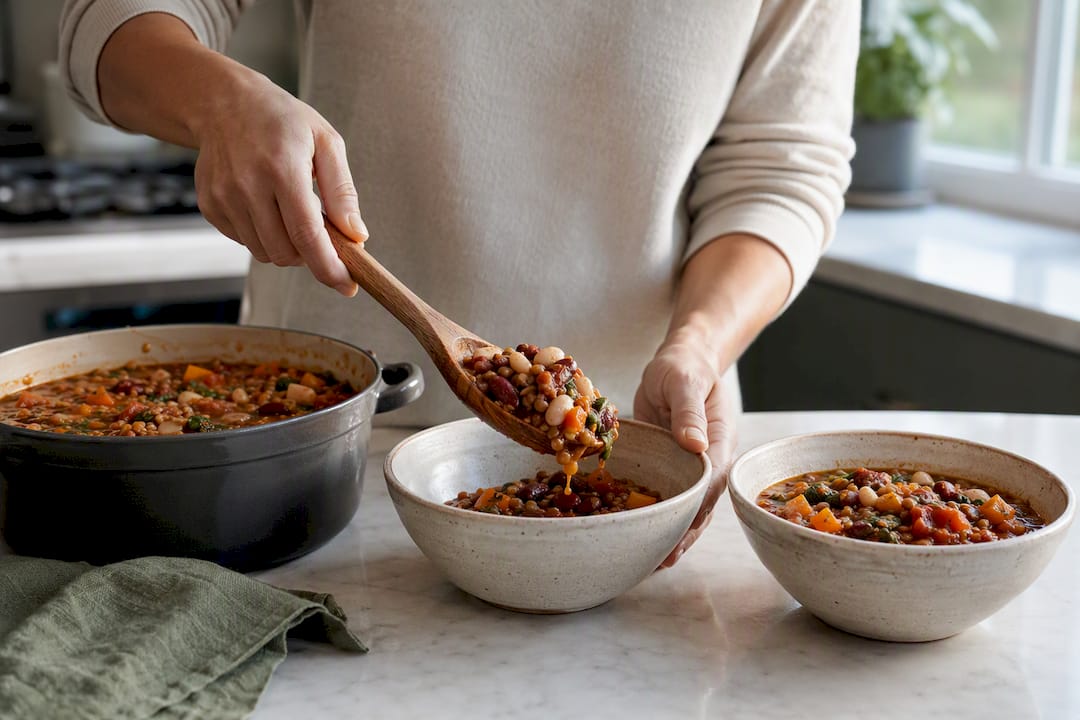
For a full week, rotate the protein source daily (eggs, chicken, tofu, fish, lentils, cottage cheese, prawns) and vary the vegetables by colour rather than sticking to the same three. Batch-cooking a big pot of bean or lentil stew on a Sunday covers two or three lunches without extra effort mid-week, and it’s an easy way to bank plant diversity points without extra shopping trips.
For vegetarian or vegan adaptation, swap oily fish for an algae-oil supplement and ground flaxseed, lean on tofu, tempeh, lentils and Greek-style plant yoghurts for the protein distribution target, and pay closer attention to B12 and iron intake, since both sit predominantly in animal foods. A quick shopping list to anchor the whole month: oats, Greek yoghurt or a plant alternative, eggs, tinned sardines or salmon, a rotating bag of frozen mixed vegetables, three or four different tinned beans, mixed nuts, olive oil, and whichever fresh herbs are cheapest that week.
When does personalised nutrition support make a real difference?
Generic dietary advice, even good advice like the pattern described above, only goes so far when someone is dealing with overlapping issues: persistent fatigue, digestive symptoms, unexplained weight changes and mood swings all at once. That’s usually where a structured, personalised approach earns its place.
A proper assessment goes beyond “eat more vegetables.” It typically covers a detailed history of symptoms and eating patterns, relevant lab markers (vitamin D, ferritin, thyroid function, sometimes a fuller metabolic panel), and a body composition picture that tells you whether weight change is fat, muscle, or fluid, information a bathroom scale simply can’t provide. That combination changes what gets recommended; someone with low ferritin and high fatigue needs a different plan to someone with normal iron and disrupted sleep, even if both describe “exhaustion” the same way.
Some nutrition services build perimenopause and menopause programmes around exactly this kind of assessment, pairing dietary and lifestyle changes with optional functional lab testing and ongoing support rather than a single one-off consultation. The programme model matters because perimenopause symptoms shift over months, not days, and a plan that adjusts as those symptoms change tends to outperform a static list of instructions handed over once.
People who benefit most from this level of support tend to share a pattern:
- Persistent symptoms that haven’t budged despite genuinely trying the basics for several weeks.
- Overlapping complaints, digestive issues plus fatigue plus weight change, that are hard to untangle alone.
- A suspected but unconfirmed deficiency or thyroid issue worth investigating properly rather than guessing.
- A history of extreme dieting that’s left metabolism and eating patterns genuinely disrupted.
If your symptoms map onto any of that list, a structured programme with lab context behind it will get you further, faster, than another round of trial and error.
Does drinking more water actually help perimenopause symptoms?
Hydration doesn’t get the attention protein or calcium does, but dehydration measurably worsens several perimenopause symptoms, particularly fatigue, headaches and the intensity of hot flushes. Even mild fluid loss raises core body temperature slightly, which matters directly when your thermoregulation is already unstable from shifting oestrogen levels.
Water also plays a supporting role in two of the areas already covered here. Fibre needs adequate fluid to do its job; increasing fibre intake toward that 21 to 30 gram daily target without drinking more water tends to cause bloating and constipation rather than the digestive benefits you’re after. And skin changes common in perimenopause, dryness and reduced elasticity among them, respond partly to hydration status alongside the hormonal shift itself.
A practical target most adults can work towards is about six to eight glasses of fluid daily, adjusted upward in hot weather, during exercise, or during a night sweat-heavy week. Water is the obvious base, but herbal teas and water-rich foods like cucumber, melon and soups all count toward the total.
One practical swap worth making: alcohol and high-caffeine drinks both act as mild diuretics, meaning they push fluid out faster than plain water replaces it. On a night when hot flushes are already disrupting sleep, that combination compounds the problem rather than helping it. Swapping an evening glass of wine for sparkling water with a slice of lime addresses hydration and the alcohol trigger discussed earlier in one move.
Do soy and phytoestrogens really help balance hormones?
Soy foods and other phytoestrogen sources, chickpeas, lentils, flaxseed, don’t “balance hormones” in the dramatic sense marketing copy often implies, but they may modestly ease vasomotor symptoms for some women. That’s a meaningfully different claim, and it’s worth understanding the difference before building an entire diet around soy expecting a guaranteed fix.
Phytoestrogens are plant compounds that weakly mimic oestrogen in the body, binding to the same receptors but with far less potent effect. The theory is straightforward: as your own oestrogen production becomes erratic during perimenopause, a mild plant-based version might smooth some of that fluctuation, particularly for hot flushes. In practice, reviews of the clinical evidence show inconsistent results, with some studies showing modest benefit and others showing none at all, likely because individual gut bacteria affect how efficiently isoflavones get converted into their active form.
What this means practically: soy foods, tofu, tempeh, edamame, soy milk, are worth including as part of a varied plant-forward diet regardless of the hormone question, because they’re a genuinely good source of protein and fibre. If they also ease your hot flushes, that’s a welcome bonus rather than something to bet the whole diet on. There’s no good evidence that avoiding soy helps, despite some persistent myths about it affecting breast health; UK and international dietary guidance doesn’t support restriction. One to two servings a day sits comfortably within a normal, varied diet and shouldn’t be treated as either a cure or a risk.
How does perimenopause affect blood sugar and insulin sensitivity?
Insulin sensitivity declines measurably during perimenopause, independent of weight, which is part of why blood sugar swings and afternoon energy crashes often appear even in women who haven’t changed their diet at all; understanding more about inzulinrezisztencia kezelése can support managing these symptoms effectively. Falling oestrogen affects how efficiently muscle and fat tissue take up glucose, meaning the same meal that caused no issue at 35 can produce a noticeable post-lunch slump at 46.
The practical fix mirrors the weight-management advice already covered, but it’s worth restating with blood sugar specifically in mind. Pairing carbohydrate with protein and fibre at every meal blunts the glucose spike that follows eating refined carbohydrate alone; a slice of toast eaten with eggs behaves very differently in the bloodstream than the same slice eaten with jam. Meal timing matters too. Front-loading carbohydrate earlier in the day, when insulin sensitivity is naturally higher, and keeping evening meals more protein and vegetable-focused tends to reduce the overnight glucose swings that some women report as a trigger for night sweats.
Ultra-processed food is the clearest dietary culprit here, more so than natural sugar in fruit, because refined carbohydrate combined with added fat and minimal fibre produces the sharpest, fastest glucose spikes. Foodconnection’s guide to insulin resistance and personalised diet covers meal structuring for this specific issue in more depth, including how blood glucose monitoring can reveal individual food responses that generic advice simply can’t predict.
Regular movement after meals, even a ten-minute walk, measurably improves glucose clearance and is one of the lowest-effort interventions available for anyone noticing energy crashes an hour or two after eating.
Why does gut health matter so much during perimenopause?
Gut bacteria directly influence how oestrogen gets metabolised and recirculated in the body, through a collection of microbes researchers call the estrobolome. When gut diversity drops, a common pattern as diets narrow with age or stress, that metabolic process becomes less efficient, and some research links this shift to worsened perimenopause symptoms and less stable energy levels.
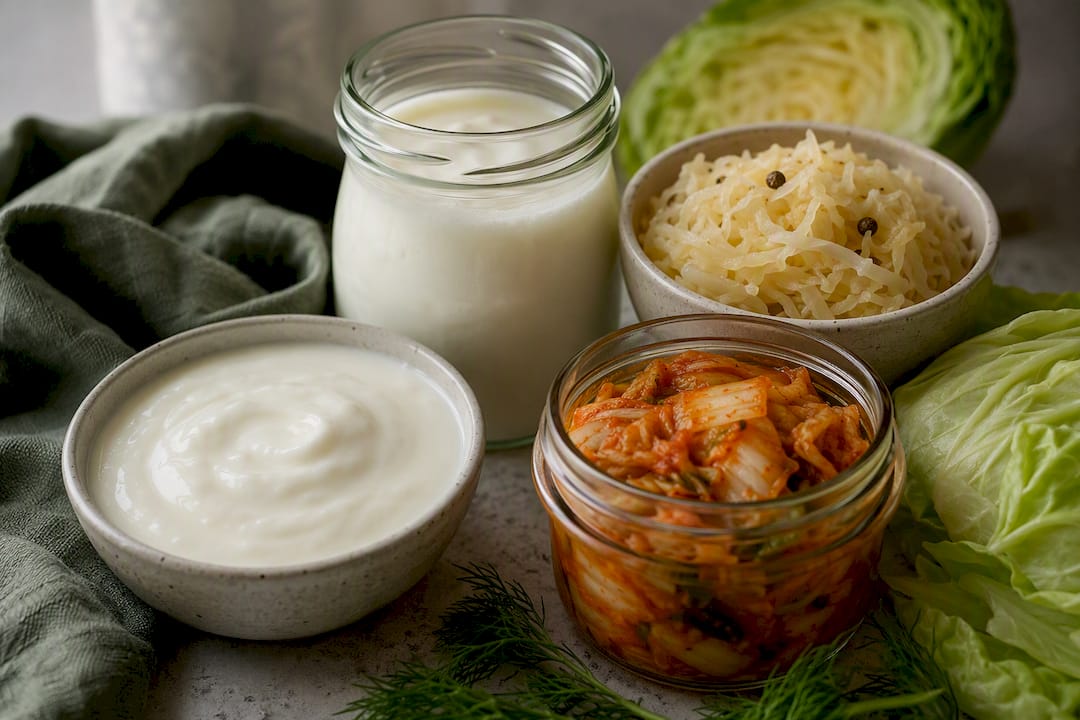
Fibre is the primary lever here, feeding the specific bacterial strains involved in oestrogen metabolism, which is exactly why the 30-plant-foods-a-week target from earlier in this piece isn’t an arbitrary number. Fermented foods, live yoghurt, kefir, sauerkraut, kimchi, add beneficial bacteria directly, complementing rather than replacing the fibre-first approach.
Digestive symptoms that shift alongside hormone changes, new bloating, altered bowel habits, increased sensitivity to certain foods, are common enough during perimenopause that they’re worth taking seriously rather than dismissing as unrelated. Foodconnection’s detailed piece on menopause gut health covers the mechanics of this shift and practical fibre and fermented-food strategies in more depth than fits here.
The overlap with blood sugar and weight management is real and worth noticing: a more diverse gut microbiome is independently linked to better insulin sensitivity, meaning the fibre-rich, plant-diverse pattern recommended throughout this piece is quietly doing three jobs at once, supporting hormone metabolism, blood sugar control, and digestive comfort, rather than three separate diets stacked on top of each other.
A practitioner’s view on what actually derails perimenopause diet changes
The biggest mistake I see isn’t ignorance about what to eat. Most women in perimenopause already know vegetables and protein matter. It’s the instinct to go extreme the moment symptoms get bad, cutting out entire food groups overnight, slashing calories hard, or chasing a strict elimination diet based on something read online. That approach almost always backfires, because it adds stress to a system that’s already under hormonal strain, and stress hormones themselves worsen several perimenopause symptoms.
The second mistake is treating diet and sleep as separate problems, or skipping strength work because “cardio feels like it’s doing more.” Neither holds up. Poor sleep drives cravings and insulin resistance the next day regardless of how clean your diet was, and muscle mass is what protects your metabolism as oestrogen falls, something walking alone doesn’t build.
On timelines: expect small, real changes, better sleep, less bloating, steadier energy, within two to twelve weeks of consistent effort. The bigger shifts, visible changes in body composition, meaningful reduction in vasomotor symptoms, take longer, often several months, and they rarely arrive on a straight line. Some weeks will feel like nothing’s working. That’s normal, not failure.
Combine the diet with resistance training and proper sleep hygiene, and be honest with a clinician about symptoms that diet alone clearly isn’t touching. Sustainable, unglamorous changes beat every reset you’ll see advertised.
— Irina
How Foodconnection supports your perimenopause diet and next steps
Reading this far tells us something: you want a plan built around evidence, not another 14-day fix promising the impossible. That’s exactly the gap Foodconnection fills. Where a generic meal plan gives you the same advice as everyone else, a personalised programme adjusts to your actual labs, your actual symptoms, and how your body responds over time, rather than guessing once and hoping it holds for six months.

A first consultation typically covers a detailed symptom and diet history, a look at whether functional lab testing (vitamin D, ferritin, thyroid function, among others) would sharpen the plan, and a realistic look at your current eating pattern against the targets covered throughout this piece. Programmes then run over several weeks to months, structured around ongoing check-ins rather than a single document you’re left to interpret alone, because perimenopause symptoms shift, and a fixed plan from month one rarely still fits by month four.
If persistent fatigue, stubborn weight change, or digestive symptoms haven’t budged despite genuinely trying the changes above, that’s the signal it’s time for more than a blog post. Explore some nutrition services to see how lab-informed, one-to-one support works, or head straight to a programme overview to book an initial consultation.
Sources
- The Importance of Nutrition in Menopause and Perimenopause—A Review — PMC
- Eating well for the perimenopause and menopause — British Dietetic Association
- Metabolic changes of perimenopause and nutritional advice — Current Nutrition Reports (Springer)