
Peptic ulcer diet: what to eat and what to avoid

The best diet for a peptic ulcer is a steady, balanced one built around smaller, regular meals, with the foods and drinks that set off your own symptoms taken out one at a time. Your GP treats the ulcer itself. Food is how you keep symptoms calmer while that happens, and a plan built around your triggers, your medicines and your life will serve you better than a generic list. Below is what UK guidance says, a practical food list, and how to make it personal.
TL;DR
- A peptic ulcer is a sore in the lining of the stomach or the upper small intestine. Treatment comes from your GP: usually acid-reducing medicine and, if H. pylori bacteria are found, antibiotics.
- Eat smaller, regular meals, finish your evening meal 3 to 4 hours before bed, and chew slowly.
- Common triggers are fatty and spicy foods, coffee, chocolate, fizzy drinks, alcohol and smoking. Not everyone reacts to all of them.
- A 7-day food and symptom diary shows your personal triggers without cutting out everything.
- If you have tried several diets and nothing has settled things, a one-to-one plan can look at the whole picture.
Table of Contents
- What a peptic ulcer is and what treats it
- The meal pattern matters as much as the menu
- Foods that tend to sit well
- Common triggers to look at
- Find your own triggers without an overly restrictive diet
- A sample day
- Our view: why personalise
- Working with us on your ulcer diet
- FAQ
- Sources
What a peptic ulcer is and what treats it
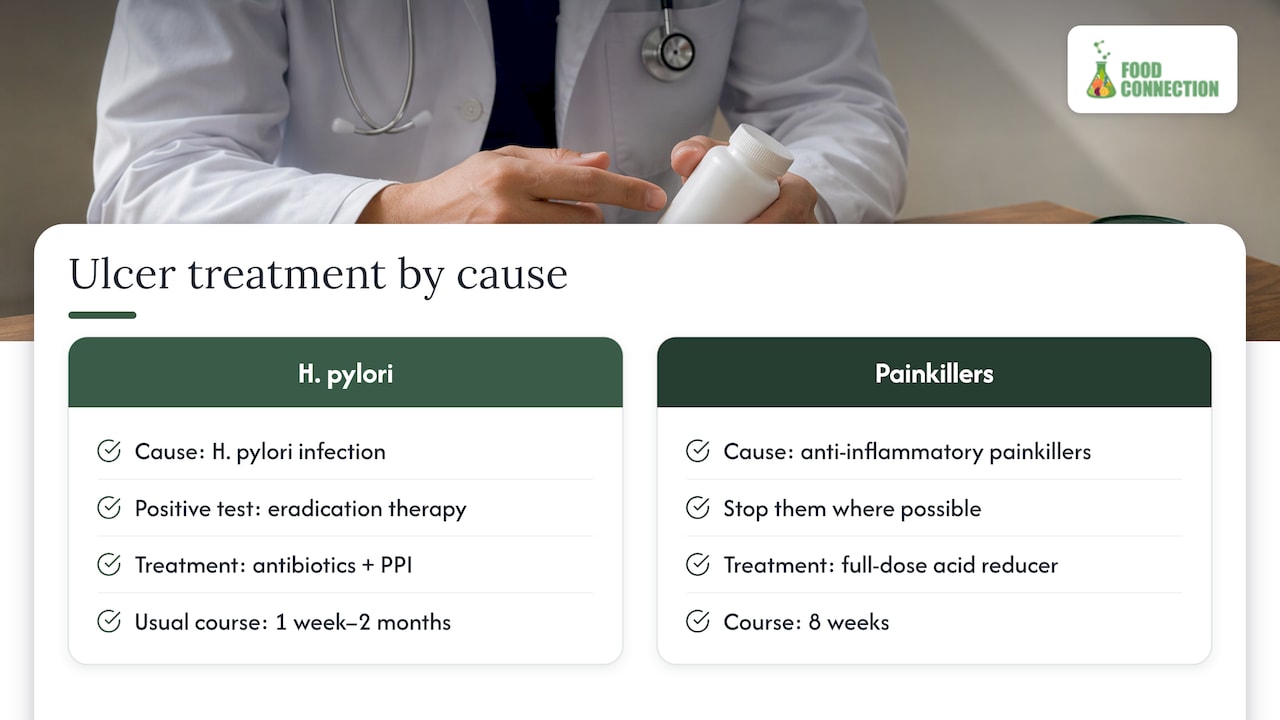
NICE describes a peptic ulcer as a break in the lining of the stomach or the upper part of the small intestine. The NHS lists the main causes as infection with H. pylori bacteria and regular use of anti-inflammatory painkillers such as ibuprofen. Ulcers are also more common in smokers and become more likely with age.
Treatment follows the cause. The NHS says you may be offered antibiotics for H. pylori plus acid-reducing medicines called proton pump inhibitors (PPIs), usually for 1 week to 2 months. NICE guideline CG184 recommends eradication therapy for people who test positive for H. pylori. For ulcers linked to anti-inflammatory painkillers, it advises stopping them where possible and taking a full-dose acid-reducing medicine for 8 weeks. Knowing which cause applies to you matters, and a stomach ulcer test is one way to understand how H. pylori is detected before you speak to your doctor.
See your GP about persistent upper abdominal pain. Get urgent help if you vomit blood or pass black, tarry stools, as the NHS stomach ulcer page explains.
The meal pattern matters as much as the menu
UK dietitians put the pattern of eating first. A West Suffolk NHS Foundation Trust dietetics leaflet on dyspepsia (indigestion) advises:
- smaller, more regular meals, for example 5 to 6 smaller meals a day, without skipping any
- at least three hours between your last meal and bed
- eating slowly and chewing well
- drinking between meals rather than with them
- no more than 14 units of alcohol a week
The NHS stomach ulcer page gives a similar steer: smaller meals, your evening meal 3 to 4 hours before bed, a healthy weight and managing stress.
One nuance from dietitians in Canada: a Niagara Health handout suggests that eating more often (three meals and three snacks) may ease duodenal ulcer pain, while three meals without snacks may suit gastric ulcers better. Which kind you have is something your GP or hospital team can tell you, and it is worth building into your plan.
Foods that tend to sit well
No single food heals an ulcer. What you can do is build meals from foods that are generally well tolerated and good for digestion overall. A 2024 review of ulcer management lists these among the foods allowed:
| Group | Examples |
|---|---|
| Fruit | Apple, papaya, melon, banana, mango |
| Dairy | Yoghurt, low-fat cheeses, fermented milk |
| Grains | Brown rice, bulgur, millet, oatmeal |
| Vegetables | Carrot, beetroot, spinach, kale and other dark leafy greens |
| Protein | Lean meats, lentils, chickpeas, soya |
| Drinks | Green tea |
The NHS digestive health advice aims for 30g of fibre a day from wholemeal bread, brown rice, fruit, vegetables, beans and oats, with a glass of water at every meal. It also suggests lean meat and fish, and grilling rather than frying.
Soluble fibre (oats, barley, beans, lentils, many fruits and vegetables) gets particular attention. The PCRM clinicians’ guide reports a large Harvard cohort in which high-fibre diets were linked with a 45% lower risk of developing a duodenal ulcer over 6 years, and 60% for soluble-fibre sources. That is an association in a population, not a promise for any one person. If your gut is flared, build fibre up gradually and see how you feel.
Common triggers to look at
The same Suffolk leaflet names the usual suspects, with swaps that keep meals interesting:
- Caffeine: aim for fewer than 3 cups a day, or try decaffeinated and herbal teas.
- Very spicy food: use herbs, turmeric or paprika for flavour instead.
- Very hot or very cold food and drinks.
- Fizzy drinks and alcohol.
- Citrus fruit, juices and tomatoes.
- Chocolate.
- High-fat meals: grill, bake or poach rather than deep-fry.
NICE CG184 says people should avoid known precipitants they link to their symptoms, including smoking, alcohol, coffee, chocolate and fatty foods. The word that matters is their. Plenty of people tolerate a curry or a coffee, and others do not.
Smoking and painkillers
These are not food, but they shape your result. Smoking raises ulcer risk, and regular anti-inflammatory painkillers are a main cause. If you take ibuprofen or aspirin regularly, talk to your GP or pharmacist about alternatives rather than stopping on your own.
Find your own triggers without an overly restrictive diet
The Suffolk dietitians recommend a 7-day food and symptom diary and warn that cutting out many foods can leave a diet unbalanced. A simple method:
- Write down everything you eat and drink, the time, and any pain, burning, nausea or bloating, and when it started.
- Note the meal pattern too: skipped meals, late dinners, stress.
- After a week, look for repeats. Coffee on an empty stomach, or a large late meal, often stands out.
- Change one thing at a time for a week or two, then reassess.
- Keep everything that is not clearly causing trouble, so you stay well nourished.
H. pylori can also interfere with absorption of vitamin C, vitamin A, iron, folate and vitamin B12, so if you feel unusually tired, mention it to your GP. This is where a broader view of your diet can help.
A sample day
This is an illustration of the pattern, not a prescription:
- Breakfast: porridge made with oats and a banana, with a decaffeinated or herbal tea.
- Mid-morning: plain yoghurt with melon.
- Lunch: brown rice with grilled chicken and cooked carrots and spinach.
- Mid-afternoon: oatcakes with a little low-fat cheese.
- Evening meal (at least 3 hours before bed): baked fish, boiled potatoes, steamed kale.
Swap in what you tolerate. If you also manage a long-term condition such as pre-diabetes, thyroid problems or chronic fatigue, the plan needs to work with those too.
Our view: why personalise
Ulcer advice online is often a single list of foods for everyone. Real people arrive with more than an ulcer: reflux, menopause symptoms, low energy, years of dieting, a medicine list.
We look at the whole picture: your symptoms, your medicines, your routine and your history. Then we build a plan you can follow without stress. Our approach is programme-based, so you have support as things change, not one conversation and good luck.
Where it helps, we can also interpret functional laboratory tests. Our practitioners hold an MSc in Nutrition and are registered with BANT and CNHC.
Irina
Working with us on your ulcer diet
Foodconnection offers personalised nutrition consulting in London and online. Your initial consultation lasts one and a half hours and comes with written personalised recommendations, at £150. A follow-up within 8 weeks is £120, and later one-hour follow-ups are £80. If you would like steady backing, 12 weeks of dedicated support costs £250. You can see everything on our prices page, or read about one-to-one nutrition support and laboratory test interpretation.
If your symptoms overlap with other digestive conditions, our guides to the gastritis diet and the low stomach acid diet may help.
FAQ
What should I eat if I have a stomach ulcer?
Build meals around fruit, vegetables, oats, brown rice, lean protein and yoghurt. Eat smaller meals regularly and finish your last meal 3 to 4 hours before bed. Remove only the foods your own diary shows are a problem.
Can I eat yoghurt with a peptic ulcer?
Yes. A 2024 review lists yoghurt, low-fat cheeses and fermented milk among the foods allowed for people with peptic ulcers. Choose plain, lower-fat versions and see how you feel.
Will pantoprazole heal an ulcer?
Pantoprazole is a proton pump inhibitor, one of the acid-reducing medicines the NHS says you may be offered, usually for 1 week to 2 months depending on the cause. Take it exactly as your GP prescribes and ask them how long you need it.
Do I need to avoid spicy food and coffee for ever?
Not necessarily. They are common triggers, and reactions differ between people. Cut back during symptoms, then reintroduce them one at a time and watch the result.
Sources
- Stomach ulcer - NHS
- NICE CG184 recommendations
- NICE peptic ulcer information for the public
- West Suffolk NHS Foundation Trust: Dyspepsia (Indigestion) leaflet
- Good foods to help your digestion - NHS
- The management of peptic ulcer disease (2024 review)
- PCRM: Gastritis and Peptic Ulcer Disease
- Niagara Health: Nutrition and Peptic Ulcers
- Stomach ulcer test explained