
£50–£250: UK Nutritionist Fees, Credential Checks & Food Connection

A private nutritionist consultation in the UK typically costs £50 to £250 for an initial session and £60 to £150 for follow-ups, depending on who you see and where. NHS dietetic care is free with a GP referral but often means a wait of weeks or months. If speed and tailored support matter more to you than cost, check the practitioner’s register, then book privately.
TL;DR:
- Private nutrition consultations in the UK cost between £50 and £250, with higher fees for London, specialized cases, or experienced practitioners.
- Session length, location, and practitioner qualifications significantly influence the price, with longer and more complex cases charging more.
- NHS dietetic care is free but often involves long waiting times, while private support offers faster, tailored help but at a higher cost.
- Fees often include package options, but laboratory tests, supplements, and custom plans are usually billed separately.
- Always verify credentials through proper registers and request a detailed fee breakdown before booking to avoid unexpected costs.
Table of Contents
- Typical price ranges in the UK
- Dietitian versus nutritionist: regulation, scope and cost implications
- NHS versus private: when NHS care is free and why private care costs more
- Five practical cost drivers you should check when comparing fees
- Packages, tests and hidden costs
- How to choose and verify a safe, evidence-based practitioner
- Timing and money-saving tips when paying for private nutrition support
- Clinician’s perspective: how Food Connection structures fees and support
- Food Connection pricing and services
- FAQ
- Sources
Typical price ranges in the UK
Private nutrition fees sit on a wide spectrum, and the number you’re quoted depends heavily on who’s doing the consulting. According to Prospects’ nutritional therapist job profile, many private practitioners charge between £100 and £250 for an initial consultation and between £60 and £150 for follow-up appointments, with fees shaped by experience, session length and location.
At the lower end, you’ll find newer practitioners or shorter, focused sessions, sometimes as little as £50 for a brief check-in. At the higher end, specialists dealing with complex conditions such as hormonal imbalances or digestive disorders tend to charge closer to £200 or £250, particularly for a longer initial assessment that includes a written plan.
Session length matters as much as the headline price. A 30-minute follow-up costs less than a 60-minute one, and some practitioners price by the hour rather than by a flat consultation fee. When you’re comparing quotes, always check what length of session the price buys you.
Location adds another layer. Practitioners in London and the South East generally charge more than those elsewhere in the UK, a pattern that tracks with the wider cost of running a clinic in these areas. This mirrors NHS pay structures too: Band 6 dietitian salaries carry London weighting supplements, which gives a sense of how far regional cost differences stretch across the profession.
- Budget consultations (shorter sessions, less experienced practitioners): roughly £50 to £100.
- Mid-range consultations (standard initial assessment, established practitioner): £100 to £180.
- Specialist or London-based consultations (complex cases, senior practitioners): £180 to £250.
Online sessions tend to sit at the lower to middle end of these bands, since practitioners save on clinic overheads. Our guide on whether online nutrition consultations are worth it breaks down how remote and in-person pricing compares in more detail.
Dietitian versus nutritionist: regulation, scope and cost implications
The word “dietitian” is legally protected in the UK. Anyone using the title must be registered with the Health and Care Professions Council (HCPC), which means they’ve met set training standards and are bound by a professional code of conduct. You can check the register before booking.
“Nutritionist” isn’t a protected title, so anyone can technically use it regardless of qualifications. That’s why the Association for Nutrition maintains the UK Voluntary Register of Nutritionists (UKVRN): Registered Nutritionists on this list have met defined, evidence-based competency standards, even though the title itself isn’t legally enforced.
This distinction affects both cost and scope. Dietitians typically work within clinical settings and medical referral pathways, often treating diagnosed conditions. Nutritionists and nutritional therapists more commonly focus on lifestyle and wellness goals, which is where much of the private consultation market sits. Our piece on choosing between a dietitian and a nutritionist covers how to match the right practitioner type to your situation.
NHS versus private: when NHS care is free and why private care costs more
NHS dietetic support is free once you have a GP referral, but it’s reserved for diagnosed medical needs, not general wellness goals. According to the NHS adult dietetic outpatient service page, waits for these referral-based services vary from a few weeks to several months, depending on your area and the urgency of your case.
That wait is the main reason people choose to pay privately. Private practitioners offer faster appointments and, in many cases, broader lifestyle coaching that sits outside what NHS dietetics typically covers. The trade-off is that you’re paying the full cost yourself, and any tests or prescriptions arranged privately usually stay private. NHS guidance on private prescriptions confirms that patients pay the full cost of medicines and dispensing fees when a prescription is issued privately rather than through the NHS.
It’s worth understanding that private and NHS care don’t automatically combine. Guidance on the boundaries between NHS and private healthcare notes that the NHS has no obligation to fund monitoring or testing linked to privately arranged care, so if a private nutritionist recommends a lab test, expect to pay for it separately.
Five practical cost drivers you should check when comparing fees
Price alone doesn’t tell you much. These five factors explain most of the variation you’ll see between quotes.
- Location and demand: clinics in London and the South East generally charge more, reflecting higher running costs and demand, a pattern consistent with regional NHS pay differentials.
- Qualifications and specialism: a Registered Nutritionist or HCPC-registered dietitian with years of experience in a specific area, such as hormonal health or sports nutrition, typically charges more than a generalist.
- Session length and case complexity: a 90-minute initial consultation covering a complex digestive issue costs more than a 30-minute weight-management check-in.
- Extras built into the fee: laboratory testing, supplement recommendations and bespoke meal plans can be bundled into the price or charged separately, so the headline figure isn’t always the full picture.
- Delivery method and policies: online sessions are often slightly cheaper than in-person ones, and cancellation or rebooking policies can add hidden costs if you’re not careful.
Specialist experience genuinely moves prices. In sports nutrition, for example, the technical demands described in guidance on nutrition’s role in basketball performance illustrate why practitioners with sport-specific expertise often charge at the upper end of the scale.
Pro Tip: Ask every practitioner for a written breakdown of what’s included before you book, not just the headline price.
Packages, tests and hidden costs
Many practitioners structure their fees as a package rather than charging per session: an initial consultation, a set number of follow-ups, a written plan and sometimes a longer block of ongoing support. This shape tends to work out cheaper per session than booking appointments individually, particularly for anyone tackling a chronic or complex issue that needs several months of adjustment.
What’s commonly excluded from the base package is where costs can creep up:
- Functional laboratory tests (stool, hormone or thyroid panels) are usually priced separately from the consultation fee.
- Supplement recommendations add their own cost, on top of whatever the practitioner charges for advice.
- Bespoke, highly detailed meal plans sometimes carry an extra fee beyond a standard written summary.
Before committing, ask the practitioner directly: does this price include a written plan, how many follow-ups are covered, and are tests or supplements extra? Getting this in writing avoids an unwelcome second invoice.
How to choose and verify a safe, evidence-based practitioner
Checking credentials takes a few minutes and protects you from paying for advice that isn’t evidence-based. For dietitians, search the HCPC register directly, since anyone using the protected title must appear there. For nutritionists, check the UKVRN list via the Association for Nutrition, which confirms Registered Nutritionist status against defined competency standards.
Beyond the register check, a short set of questions helps you judge fit before you pay:
- What’s your specific experience with cases like mine, and how many have you handled?
- What exactly does this fee include: consultation time, written plan, follow-up support?
- Are lab tests or supplements part of the price, or billed separately?
Watch for red flags too. Vague or missing pricing, promises of rapid results, and pressure to buy specific tests or supplements before any proper assessment are all signs to walk away. A credible practitioner is transparent about cost and cautious about guarantees.
Timing and money-saving tips when paying for private nutrition support
Most people notice early changes within a few weeks of starting a structured plan, though meaningful progress on complex issues such as hormonal imbalances or digestive disorders usually takes a few months of consistent follow-up. Programmes built around 8 to 12 weeks of support reflect that reality rather than a single session fixing things overnight.
A few ways to keep costs manageable: choose online sessions where appropriate, since they tend to run slightly cheaper than in-person ones; opt for a limited package rather than open-ended ad-hoc bookings if your situation is relatively straightforward; and hold off on expensive lab testing until a practitioner has reviewed your history and confirmed it’s actually necessary rather than routine.
Clinician’s perspective: how Food Connection structures fees and support
Clients often ask why a programme costs more upfront than a single session. The answer is that one consultation rarely changes a hormonal or digestive issue; it takes repeated adjustment over weeks. Food Connection’s pricing reflects that: an initial consultation, a follow-up within 8 weeks, and optional extended support are priced as distinct steps rather than bundled into one inflated number. Clients budget for lab testing separately once it’s clear which tests actually matter for their case, rather than paying for tests upfront that may not be needed.
— Irina
Food Connection pricing and services
Food Connection’s structure is straightforward: a 90-minute initial consultation with written personalised recommendations costs £150, a follow-up within 8 weeks costs £120, and subsequent one-hour follow-ups cost £80 each. For anyone wanting sustained support rather than one-off advice, 12 weeks of dedicated support is available for £250.
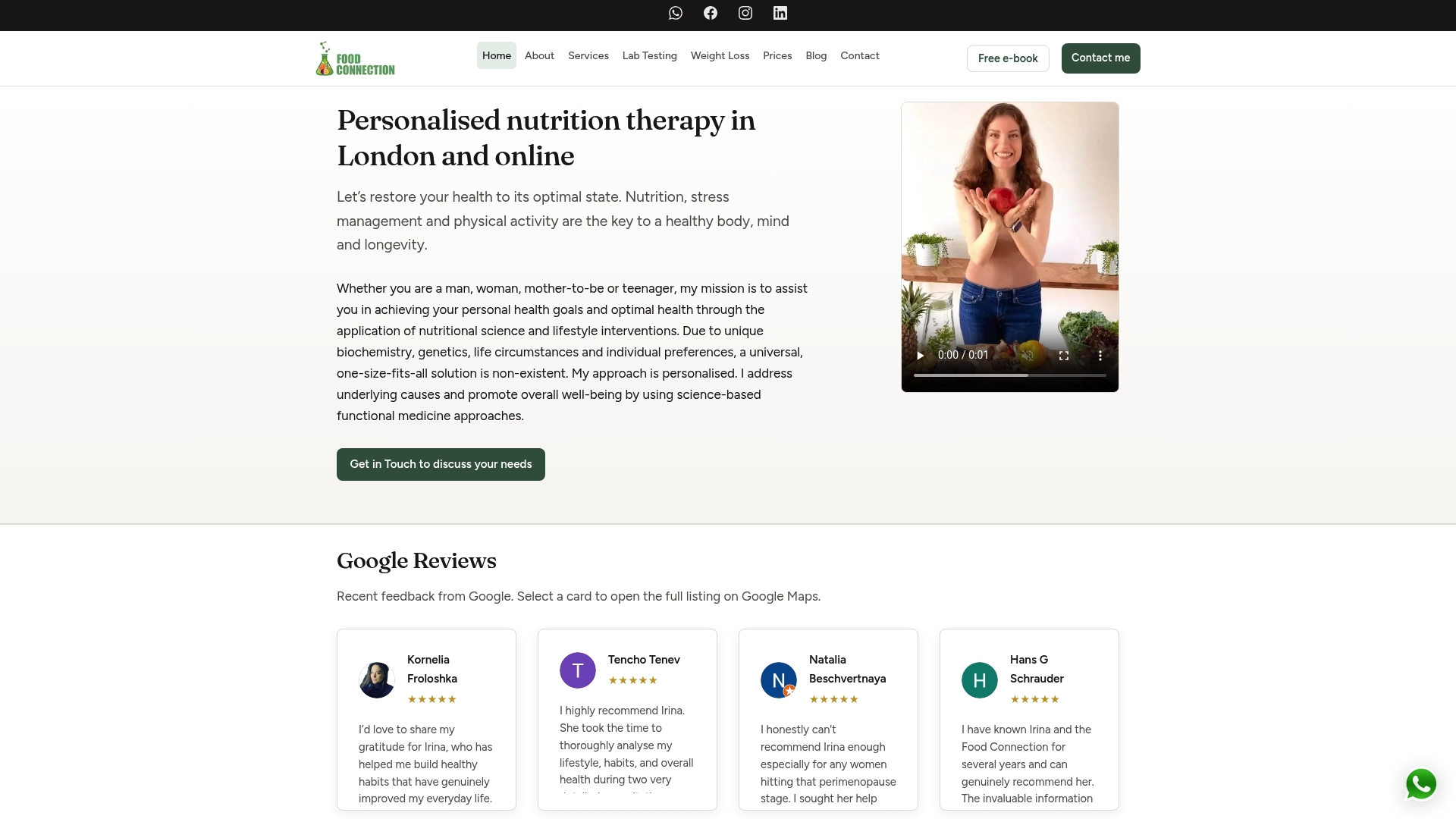
That shape matters because digestive issues, hormonal imbalances and weight management rarely resolve in a single appointment. A structured programme spreads the cost across the weeks where change actually happens, rather than charging a premium for isolated sessions booked as needed. Food Connection also offers laboratory test analysis and interpretation and one-to-one nutrition support as part of a wider service list on its services page, so you can see what’s included before committing.
If you want a clear, upfront breakdown of what a programme involves, visit the Food Connection prices page and book an initial consultation.
This article is general information, not a substitute for advice from a qualified doctor. Consult a qualified healthcare professional about your own circumstances before acting on anything here.
FAQ
How much do nutritionists charge in the UK?
Private nutritionists in the UK typically charge between £100 and £250 for an initial consultation and £60 to £150 for follow-up sessions, with fees varying by experience, session length and location. London-based and specialist practitioners tend to sit at the higher end of that range.
Is it worth paying for a nutritionist?
For people with ongoing issues such as digestive problems, hormonal imbalances or weight management goals, paid support can offer faster access and more tailored guidance than a single GP conversation allows. Whether it’s worth it depends on your specific situation and budget, which our article on paying for a nutritionist or nutritional therapist explores in more depth.
Does the NHS cover nutritionists?
The NHS covers dietetic care for diagnosed medical conditions via GP referral, and this service is free, though waits can run from a few weeks to several months. General nutritionist consultations for lifestyle or wellness goals aren’t typically available on the NHS.
How much should I pay a nutritionist?
What you pay should reflect the practitioner’s registration, experience and the complexity of your case, with typical initial consultations ranging from £100 to £250. Always check what’s included, such as a written plan or follow-up support, before comparing prices between practitioners.
Sources
- Health and Care Professions Council (HCPC)
- Association for Nutrition — what nutritionists do
- Prospects — nutritional therapist job profile