
82% Improved: How Nutrition Coaching Builds Lasting Habits for Adults

Yes, nutrition coaching helps most people who try it properly, and the chief benefit isn’t the meal plan, it’s the behaviour change it builds around you. A systematic review of coaching trials found 82% reported improvement in at least one nutrition-related outcome, from weight to blood pressure to fruit and vegetable intake. Practitioners such as Irina at Foodconnection use that same personalised, accountability-driven model rather than handing out generic diet sheets.
TL;DR:
- Nutrition coaching mainly improves behavior and habit formation, with 82% of trials showing at least one positive nutrition outcome.
- Most programs span eight to twelve weeks, involving initial assessments, regular follow-ups, and measurable progress tracking.
- Coaches focus on personalized plans and techniques like motivational interviewing, SMART goals, and habit stacking to promote lasting change.
- It is most beneficial for individuals managing weight, energy, or lifestyle goals without complex medical conditions.
- Long-term maintenance of results depends on habit automaticity and commitment beyond the coaching window.
Table of Contents
- What is nutrition coaching, and how does it differ from a dietitian?
- What are the main benefits of nutrition coaching?
- Who benefits most from nutrition coaching?
- What should you expect from a coaching programme?
- How does nutrition coaching actually work day to day?
- Is nutrition coaching worth the investment?
- How Foodconnection turns these benefits into a real programme
- Selected evidence and practical resources
- Sources
- FAQ
What is nutrition coaching, and how does it differ from a dietitian?
Nutrition coaching focuses on behaviour change, not medical treatment. A coach helps you build habits around eating, sleep, and stress using structured conversation and goal setting, rather than diagnosing or treating disease. That distinction matters more than most people realise before they book their first session.
Coaches typically draw on training that blends nutrition science with behaviour-change methods, the kind of integrated approach Harvard Medical School’s coaching programme teaches, covering motivational interviewing, goal setting, and habit design. Dietitians and registered nutritionists, by contrast, are trained and regulated to manage medical nutrition therapy, things like diabetes management, renal diets, or eating disorder treatment under clinical supervision. A coach works alongside that world, not inside it.
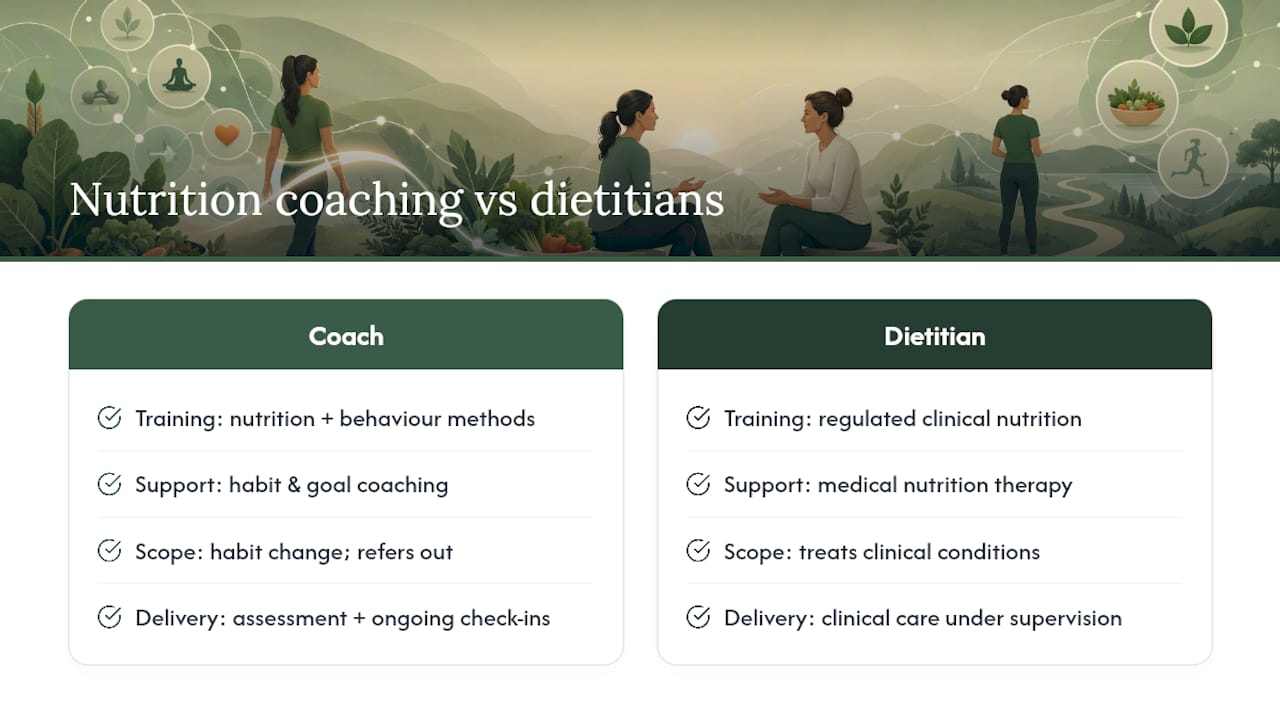
In practice, most programmes start with a longer assessment covering your history, routines, and goals, followed by shorter follow-up sessions delivered in person or online. Foodconnection’s model, for instance, opens with a personalised nutrition plan built from a detailed lifestyle review, then adjusts that plan across ongoing check-ins rather than treating the first meeting as the finish line.
What are the main benefits of nutrition coaching?
The advantages of nutrition coaching cluster around one theme: turning good advice into daily behaviour that sticks. Here’s what tends to shift when the process works.
- Personalisation. Your plan reflects your schedule, food preferences, medical background, and taste, not a template lifted from someone else’s programme.
- Behaviour change that lasts. Coaches use motivational interviewing and SMART goals to build habits gradually, which explains why coaching outperforms one-off advice for sustained change.
- Accountability. Regular check-ins catch slippage early. Missing a week of vegetables matters less when someone notices and helps you adjust before it becomes a pattern.
- Better energy, sleep, and mood. Small changes, spacing meals more evenly, cutting late caffeine, adding protein at breakfast, often show up first as better sleep rather than a lower number on the scale.
- Measurable health outcomes. A 12-week nutritional coaching case report recorded reductions in body weight and fat mass, alongside improved dietary intake, using coaching methods with no fixed diet prescription.
- A calmer relationship with food. Non-prescriptive, flexible plans tend to ease emotional eating better than rigid rules that invite rebellion.
- Performance and recovery gains. Athletes and active clients often use coaching to fine-tune fuelling around training blocks rather than guessing at portion sizes.
- Spillover into other habits. Clients frequently report improved activity levels alongside dietary change, even though nobody set out to fix their exercise routine.
The evidence base backs the pattern rather than any single miracle result. A systematic literature review of health and wellness coaching found consistent improvements in weight, blood pressure, and dietary intake compared with usual care, though it flagged an honest gap: long-term maintenance data beyond a year or two remains thin. Coaching works well within a defined window; whether gains hold five years out depends heavily on whether the habits became genuinely automatic.
Pro Tip: Track one behaviour, not five. Clients who try to overhaul sleep, meals, hydration, and exercise simultaneously tend to abandon all four within a fortnight. Pick the habit with the biggest knock-on effect on the rest, usually meal timing, and let the others follow.
If you’re managing a chronic condition alongside weight goals, a sustainable weight-loss approach built around coaching principles tends to outlast crash diets precisely because it doesn’t rely on willpower alone.
Who benefits most from nutrition coaching?
Coaching suits people whose main obstacle is habit, not diagnosis. If you know roughly what “eating well” looks like but can’t make it stick, or you want to fine-tune performance and energy, coaching is built for exactly that gap.
- You’re managing weight, energy, or lifestyle goals without a complex medical diagnosis.
- You’ve tried diets before and want a sustainable approach instead of another restrictive plan.
- You’re an athlete or active person wanting to optimise fuelling and recovery.
- You want support building habits around stress, sleep, or hydration alongside food.
Medical or dietetic care becomes necessary when the picture is more complicated: diagnosed eating disorders, conditions requiring prescription nutrition (renal disease, certain cancers, severe allergies), or symptoms that suggest an undiagnosed problem, unexplained weight loss, persistent digestive distress, or signs of nutrient deficiency. A good guide on choosing a practitioner explains this scope boundary in more depth, and any competent coach should flag these red cases and refer you onward rather than pushing forward regardless.
What should you expect from a coaching programme?
Most programmes follow a predictable rhythm rather than an open-ended commitment. Knowing the shape in advance stops the process feeling vague.
- Initial assessment. A longer first session, often 60 to 90 minutes, covers history, habits, and goals in depth.
- Structured follow-ups. Shorter sessions, usually 45 to 60 minutes, happen every few weeks to review progress and adjust the plan.
- A defined programme window. Eight to twelve weeks is a common effective span, long enough for measurable change to show up without dragging into an indefinite commitment.
- Tracked outcome measures. Weight, energy, sleep quality, and specific symptom logs give both you and your coach something concrete to review each visit.
- Adaptation after setbacks. A missed goal isn’t failure, it’s data. Good coaches rework the plan around what actually happened rather than repeating instructions that clearly didn’t fit your life.
Cost varies by provider and format, but coaching generally sits below fully clinical dietetic services because it centres on education and accountability rather than prescriptive medical nutrition therapy. Value shows up less in the plan itself and more in whether you’re still following it in month four.
How does nutrition coaching actually work day to day?
Underneath the label, coaching runs on a handful of specific techniques rather than vague encouragement. Motivational interviewing helps you articulate your own reasons for change, which sticks better than being told what to do. SMART goals turn “eat healthier” into something specific, measurable, and time-bound. Self-monitoring, food diaries, symptom logs, or simple habit trackers, gives both client and coach real data instead of guesswork. Habit stacking attaches a new behaviour to one you already do reliably, adding a protein source to a breakfast you already eat, rather than inventing a whole new routine.
The most useful coaching relationships run on a five-step cycle: assess where you are, agree a vision, set small workable goals, monitor progress, and review honestly before adjusting. That loop, more than any single food rule, is what produces lasting change.
Foodconnection builds its programmes around that same cycle. An initial lifestyle analysis feeds into a personalised plan, and where symptoms suggest something deeper, digestive complaints, unexplained fatigue, hormonal shifts, optional functional lab testing adds objective data before recommendations are finalised. A client managing chronic fatigue, for example, might start with a broad habit review, add targeted testing after four weeks reveals a pattern, then refine the plan around what the results actually show, rather than guessing from symptoms alone.
Pro Tip: If a coach never asks about your sleep or stress levels, that’s a gap worth noticing. Food behaviour rarely exists in isolation from the rest of your routine.
Safety practice matters here too. A properly trained coach recognises when a case sits outside their scope, disordered eating patterns, unexplained medical symptoms, or a need for prescription-level intervention, and refers to a GP or registered dietitian rather than continuing regardless.

Is nutrition coaching worth the investment?
Three signals tend to predict whether someone gets real value from coaching: they’ve already tried to change alone and stalled, they can commit to weekly check-ins rather than sporadic ones, and they’re looking for a process rather than a quick fix. Clients missing all three usually drift off after a few sessions, not because coaching failed, but because the fit was wrong from the start.
The biggest misconception is that coaching means being told what to eat. It doesn’t. It means being asked better questions until your own answers become habits. Realistic outcomes look like steadier energy by week three or four, not a transformed body by week two.
If that sounds like where you are, book a proper assessment rather than another round of self-directed research. The conversation itself often clarifies more than another week of reading would.
— Irina
How Foodconnection turns these benefits into a real programme
Foodconnection’s structure mirrors exactly the evidence-backed approach covered above: a 90-minute initial consultation with written personalised recommendations, followed by a follow-up within eight weeks, then further one-hour sessions as needed. For clients wanting deeper structure, 12 weeks of dedicated support gives the accountability window that trials consistently link to measurable change.
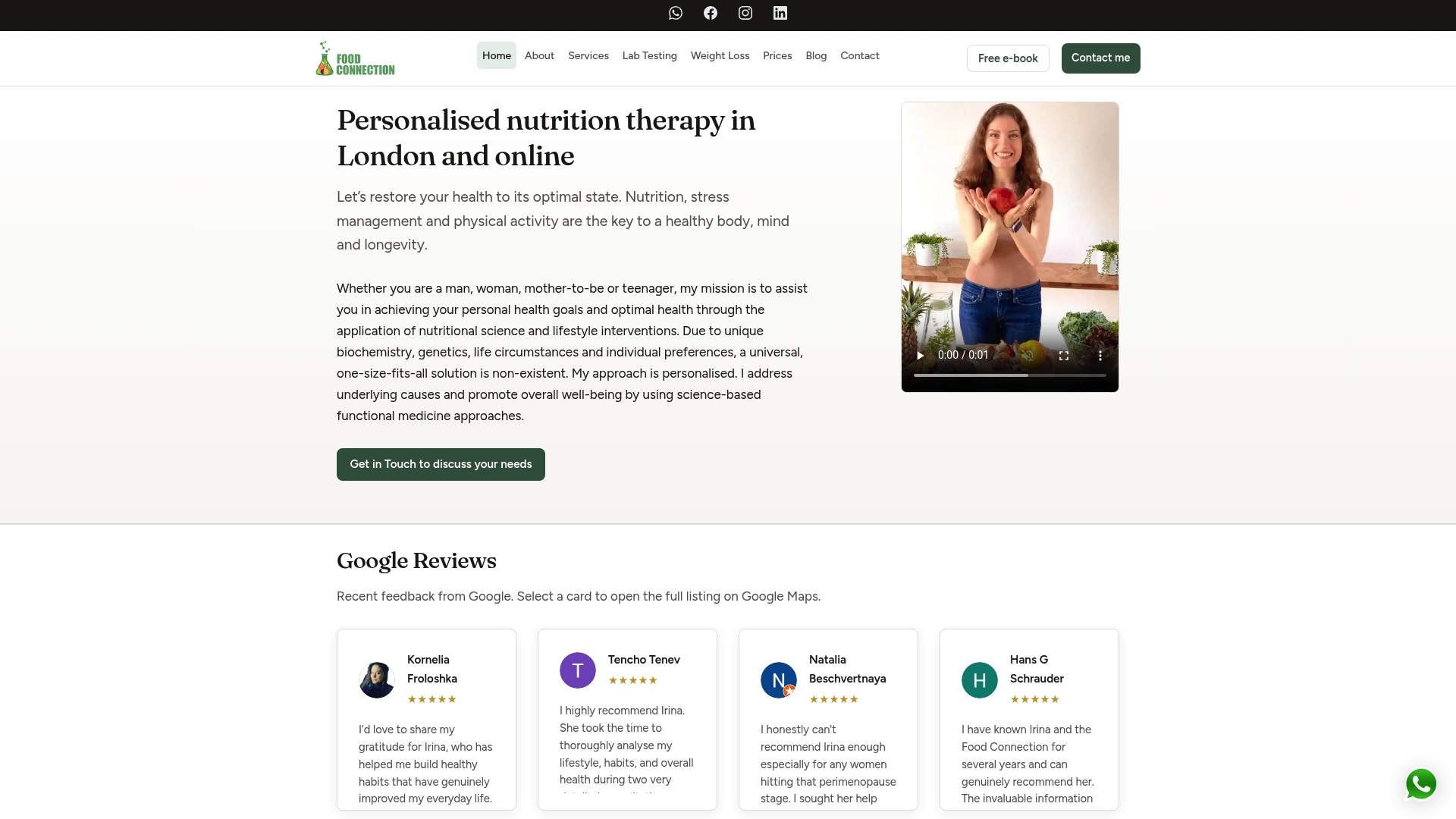
If your goal is weight management, digestive issues, hormonal imbalance, or persistent fatigue, this is exactly where Foodconnection’s one-to-one nutrition support fits best, particularly when paired with optional laboratory test interpretation for cases where symptoms need more than a habit review. Readers focused specifically on sustainable weight change may prefer starting with the dedicated weight loss programme, which follows the same coaching model. First appointments involve a detailed lifestyle and health history discussion, and the services page includes testimonials describing energy improvements and eased symptoms from clients who followed the full programme. Booking starts with choosing your initial consultation slot directly through the pricing page.
Selected evidence and practical resources
- Systematic review: 82% of coaching trials improved a nutrition outcome.
- 12-week case report on coaching without diet prescription.
- Harvard Medical School coaching training reference.
- Holiday eating guide for practical habit maintenance.
This article is general information, not a substitute for advice from a qualified doctor. Consult a qualified healthcare professional about your own circumstances before acting on anything here.
Sources
- Health and wellness coaching improves weight and nutrition behaviours (systematic review)
- Improving nutritional habits with no diet prescription: details of a nutritional coaching process
- Health and wellness coaching for lifestyle behaviour change (systematic literature review)
- Nutrition and wellness coaching learning journey — Harvard Medical School
FAQ
What does a nutrition coach do?
A nutrition coach helps you build sustainable eating habits through personalised goal setting, regular check-ins, and education, rather than prescribing a fixed diet. Coaches such as those at Foodconnection combine lifestyle analysis with ongoing support, adjusting the plan as your circumstances change.
Is it worth getting a nutrition coach?
For most people trying to change habits rather than treat a medical condition, yes. A systematic review found 82% of coaching trials improved at least one nutrition-related outcome, and the value tends to show up most clearly when you commit to a full programme rather than a single session.
How much should you pay for a nutrition coach?
Pricing varies by provider and programme length. Foodconnection’s initial consultation costs £150 one off, with follow-up consultations at £120 within eight weeks and £80 for subsequent sessions, or £250 for 12 weeks of dedicated support.
Do nutrition coaches make money?
Nutrition coaching operates as a fee-for-service model, with practitioners charging for consultations, follow-up sessions, and sometimes bundled services like lab test interpretation. Programmes structured around ongoing support, rather than single sessions, tend to reflect the sustained time and accountability coaching actually requires.