
Methane SIBO diet: what to eat with IMO and what to expect

A methane SIBO diet works best as a personalised, low-fermentation plan that keeps enough fibre in, spaces your meals and is reintroduced in stages, with dietitian-level support. Diet can ease gas, bloating and constipation, but it does not clear the overgrowth by itself. Our programmes, led by a registered nutrition practitioner, are built around exactly this: a plan that fits your life, followed up over weeks, not a generic food list. You can see how we work on our personalised nutrition therapy page.
TL;DR
- “Methane SIBO” is now usually called intestinal methanogen overgrowth (IMO). It tends to show up as constipation and bloating.
- Diet may lessen gas and bloating but is not a cure, so it sits alongside medical assessment.
- With IMO, keep fibre adequate. Cutting it too hard can worsen constipation.
- Restriction is temporary: reintroduction typically begins after 4 to 6 weeks, guided by a dietitian.
- A plan built around your symptoms, test results and food history beats a copied list.
Table of Contents
- What IMO is and why the name changed
- What the evidence says about diet
- What a low-fermentation approach looks like
- Why restriction should be short
- Diet alongside medical care
- Why a personalised plan beats a list
- Working with us
- FAQ
- Sources
What IMO is and why the name changed
IMO is an overgrowth of methane-producing microbes called archaea, mainly Methanobrevibacter smithii. They are not bacteria, and they can overgrow beyond the small intestine, so “methane SIBO” was renamed IMO. It is diagnosed with a breath test, with a methane reading of 10 ppm or higher. If you want to understand your own result, our guide to SIBO breath test interpretation explains the thresholds.
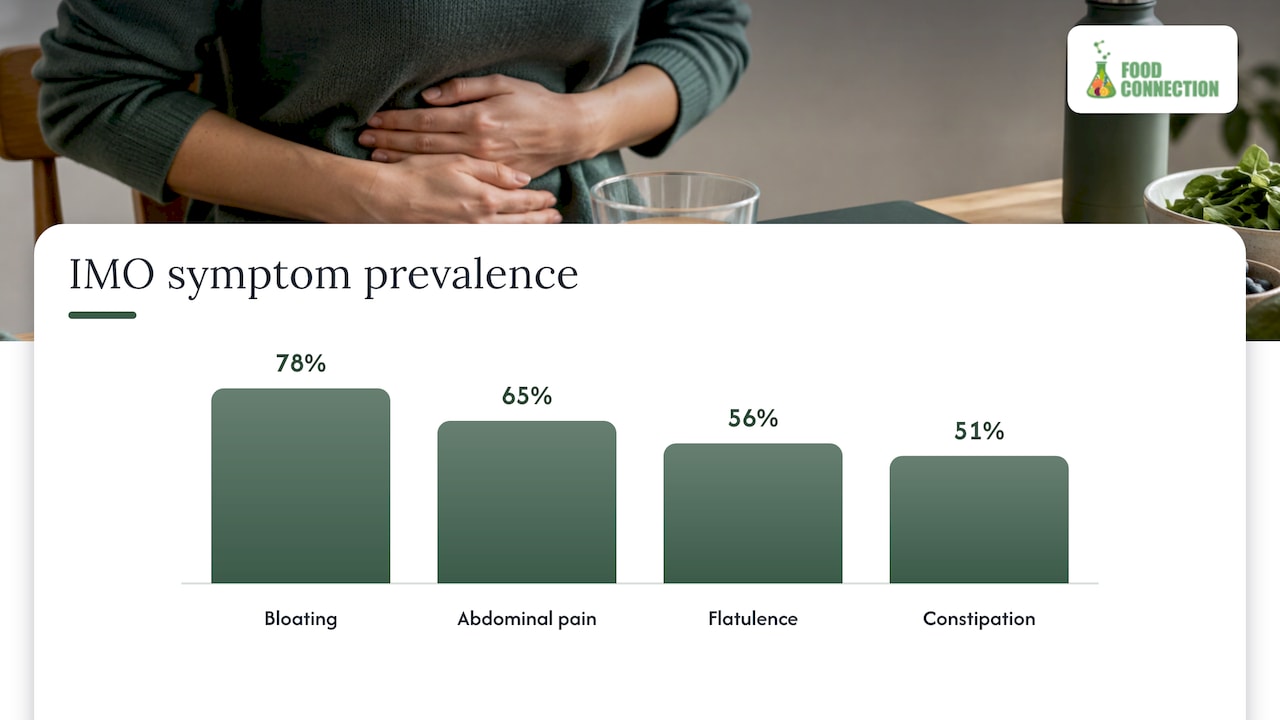
These microbes consume hydrogen to make methane, and methane slows gut motility. That is why IMO so often presents with constipation rather than loose stools. A 2024 meta-analysis of 19 studies found bloating in 78% of people with IMO, abdominal pain in 65%, flatulence in 56% and constipation in 51%.
That shapes the diet: the aim is less fermentation and gas without making a slow gut slower.
What the evidence says about diet
Be wary of anyone promising a food list that fixes methane SIBO. A 2026 UK review found no UK guidelines recommending a low-FODMAP diet for SIBO. It may be considered as a second-line option, with reported symptom relief of 50 to 86%. FODMAPs are fermentable carbohydrates found in foods such as onions, wheat, beans and some fruit. The same review notes that a controlled study saw low-FODMAP eating reduce hydrogen but not methane, and that nutritional therapy alone will not treat SIBO.
So what is diet for? Symptom control. A 2026 survey of 98 people with IBS and/or SIBO/IMO, summarised in an NHS evidence report, found 90.7% of the IBS group reported fewer symptoms on a low-FODMAP diet, with bloating improving most. Only 43.9% completed it, and those who completed both elimination and reintroduction did considerably better. Finishing the process matters as much as starting it.
What a low-fermentation approach looks like
A 2025 Nutrients review describes the practical building blocks for IMO:
- Keep fibre up. Adequate fibre helps prevent constipation getting worse.
- Choose lower-fermentation produce. Citrus fruit, berries, leafy greens, root vegetables and courgette.
- Space your meals. At least 5 hours between meals, and no overnight eating, to let the gut’s cleaning waves (migrating motor complexes) work.
- Trim the usual culprits. A more practical version may involve reducing dairy, high-fructose foods, cauliflower, beans, Brussels sprouts and sugar alcohols.
For a deeper look at the structured version, see our clinician-led SIBO diet plan and our practical low-FODMAP guide.
Elemental diets
An elemental diet replaces normal food with a nutritionally complete liquid, usually for about 2 weeks under healthcare guidance. In a 2025 cohort summarised in a 2026 review, methane fell in 89% of IMO patients over 2 to 3 weeks. It is a short, supervised tool, not an everyday diet. Our elemental diet guide covers what to expect.
Why restriction should be short
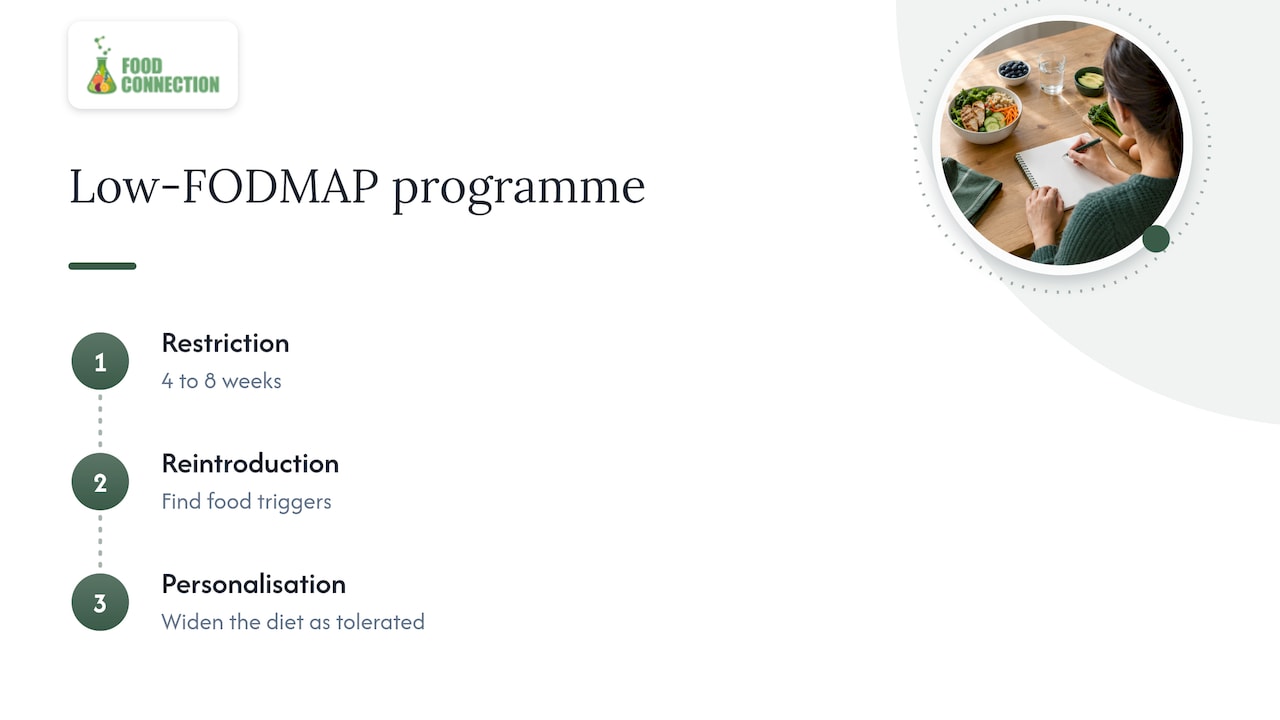
FODMAPs feed beneficial microbes. The Nutrients review warns that long-term restriction can harm the microbiota and that reintroduction should begin after 4 to 6 weeks with dietitian guidance. King’s College London describes a UK low-FODMAP programme in three stages: restriction for 4 to 8 weeks, reintroduction to find triggers, then personalisation. Our FODMAP reintroduction guide walks through the challenge phase.
The goal is the widest, most varied diet your gut tolerates, not the shortest food list.
Diet alongside medical care
IMO treatment depends on your symptoms, history and test results, and often involves prescribed antibiotics. Research suggests methane is harder to clear with a single antibiotic, which is a conversation for your GP or gastroenterologist. Contact them if constipation is not improving, bloating is frequent or your bowel habits are changing. Seek prompt help for unexplained weight loss, blood in your stool, ongoing vomiting or severe abdominal pain.
Some people also explore gut-supportive supplements while changing their diet. This overview of Saccharomyces boulardii benefits covers one example, and any supplement is worth raising with your clinician first.
Why a personalised plan beats a list
If you have tried several diets and nothing has addressed the root cause, the pattern is usually familiar: a generic exclusion list, a few good weeks, then confusion about what to bring back. IMO adds a twist, because the wrong cuts can make constipation worse. Researchers also suggest that future dietary strategies may be tailored to your breath-test gas pattern rather than one diet for everyone.
Our view
We rarely see a gut problem that is only about food. Methane overgrowth sits alongside sluggish motility, stress, sleep, medication and years of dieting, so a plan has to look at the whole person. That is why we work in programmes rather than single appointments: the first plan is only a starting point, and the real progress comes from adjusting it, reintroducing foods and building habits you can keep without stress.
Our approach combines a detailed lifestyle analysis, evidence-based interpretation of functional laboratory tests where they are relevant, and a diet shaped around your symptoms. Registered with BANT and CNHC and holding an MSc in Nutrition, we aim to give you clear steps and a way back to a varied diet.
Irina
Working with us
Your first appointment is a 90-minute initial consultation with written personalised recommendations, at £150. A follow-up within 8 weeks is £120, and later one-hour follow-ups are £80. If you want continuous guidance, 12 weeks of dedicated support is £250. We also offer laboratory test analysis and interpretation. See our prices and services.
FAQ
What is a low-methane diet?
It is usually a low-fermentation diet: fewer rapidly fermentable carbohydrates, regular meal spacing and enough fibre to keep your bowels moving. It aims to ease symptoms rather than remove methane, and it should be temporary and individualised.
Is the IMO diet the same as a low-FODMAP diet?
They overlap, but they are not identical. Low-FODMAP is a three-stage programme for IBS, and the UK review sees it as a possible second-line option for SIBO. A low-fermentation plan for IMO also protects fibre intake because of constipation.
Can diet cure methane SIBO?
No. Diet may lessen gas and bloating, but it is not a cure. Treatment depends on your test results and history, so involve your GP or gastroenterologist as well.
How long should I follow the diet?
Restriction typically lasts 4 to 8 weeks, followed by structured reintroduction. Staying restricted for longer risks reducing the variety your gut microbes rely on.
Sources
- Intestinal methanogen overgrowth (IMO): symptoms, testing, treatment
- Symptom profile of patients with intestinal methanogen overgrowth
- Methane, bacteria, fungi and fermentation
- Dietary and medical management of small-intestinal bacterial overgrowth
- Intestinal methanogen overgrowth, NHS evidence report
- Nutritional approach to small intestinal bacterial overgrowth (PMC)
- Nutritional approach to small intestinal bacterial overgrowth (Nutrients)
- SIBO and intestinal methanogen overgrowth: breath test review
- Modern concepts of small intestinal bacterial overgrowth
- King’s College London FODMAP programme