
Metabolic Syndrome Diet: Evidence Backed Meals and a Personalised Plan

The metabolic syndrome diet worth starting today is a plant-forward Mediterranean or DASH-style pattern, low in refined carbohydrates and added sugars, paired with regular movement. Most people see improvements in blood glucose, cholesterol and blood pressure within weeks to a few months, and losing even a modest amount of weight often shrinks waist circumference and eases insulin resistance further. The right version of this depends on your own labs and lifestyle, so it’s worth building the plan with your GP or a dietitian rather than guessing alone.
TL;DR:
- A plant-forward Mediterranean or DASH-style diet low in refined carbohydrates and added sugars can improve all five markers of metabolic syndrome within weeks to months.
- Prioritizing whole grains, legumes, vegetables, nuts, and healthy fats supports insulin sensitivity and lipid profiles, while reducing processed foods, sugary drinks, and refined grains.
- Regular physical activity, weight loss of 5 to 10 percent, and adequate sleep enhance dietary effects and help lower blood pressure, blood glucose, and triglycerides.
- Sodium reduction, increasing potassium intake, and choosing lower glycaemic index foods further aid blood pressure control and blood sugar regulation.
- Personalized nutrition plans based on lab results and individual factors improve adherence and outcomes more effectively than generic diets.
Table of Contents
- What is metabolic syndrome and why does diet matter so much?
- Which foods and nutrients actually improve metabolic health?
- Which foods and habits make metabolic syndrome worse?
- Mediterranean, DASH, plant-based or low-carb: which pattern fits you?
- What does a metabolic syndrome meal plan actually look like day to day?
- Which lifestyle habits make the biggest difference alongside diet?
- Why does personalised nutrition matter for metabolic syndrome?
- How does sodium and blood pressure fit into a metabolic syndrome diet?
- Why does glycaemic index matter for metabolic syndrome?
- What actually improves insulin sensitivity through food?
- Can intermittent fasting help manage metabolic syndrome?
- A note on realistic expectations
- How Foodconnection supports your metabolic syndrome diet
- Sources
- FAQ
What is metabolic syndrome and why does diet matter so much?
Metabolic syndrome isn’t a single disease. It’s a cluster of five risk markers that, when three or more show up together, sharply raise your odds of type 2 diabetes, heart disease and stroke. The five components are:
- Abdominal obesity — waist circumference above roughly 94cm for men or 80cm for women (thresholds vary slightly by ethnicity and guideline).
- Raised blood pressure — typically 130/85 mmHg or higher.
- High fasting blood glucose — usually 5.6 mmol/L or above, signalling early insulin resistance.
- High triglycerides — generally 1.7 mmol/L or higher.
- Low HDL cholesterol — the “good” cholesterol that normally helps clear fat from the bloodstream.
At the centre of all five sits one mechanism: insulin resistance. When cells stop responding efficiently to insulin, especially in the liver and muscle, the pancreas compensates by pumping out more of it. That excess insulin encourages fat storage around the abdomen, which in turn releases inflammatory compounds that make insulin resistance worse. It’s a feedback loop, and visceral fat, the fat wrapped around your organs rather than sitting under the skin, is both a cause and a consequence of it.
This is exactly why diet sits at the front of treatment rather than as an afterthought. The NHS identifies lifestyle change, weight loss, dietary improvement and physical activity, as the primary strategy for managing metabolic syndrome and reducing the risk of progression to type 2 diabetes and cardiovascular disease. Medication has its place, particularly for blood pressure or cholesterol that won’t budge, but it doesn’t address the underlying insulin resistance the way food choices can.
What makes this encouraging rather than daunting is that the five markers tend to move together. Improve insulin sensitivity through diet and you’ll usually see triglycerides fall, HDL rise a little, and blood pressure ease, often without touching each marker individually. That’s the logic behind every dietary pattern discussed further down this article: change the metabolic environment, and the downstream numbers tend to follow.
Which foods and nutrients actually improve metabolic health?
Diets built around whole grains, legumes, vegetables, fruit, nuts and unsaturated fats consistently improve multiple components of metabolic syndrome at once, rather than just one marker in isolation. That’s the finding running through the strongest reviews of dietary modulation and metabolic health, and it holds up whether the pattern is Mediterranean, DASH, or a sensible plant-forward hybrid of both.
Here’s what to prioritise, and why each one earns its place on your plate:
- Wholegrains, legumes and pulses. Oats, barley, lentils, chickpeas and beans slow glucose absorption thanks to their fibre and resistant starch content, which blunts the insulin spike you’d get from refined versions of the same carbohydrate.
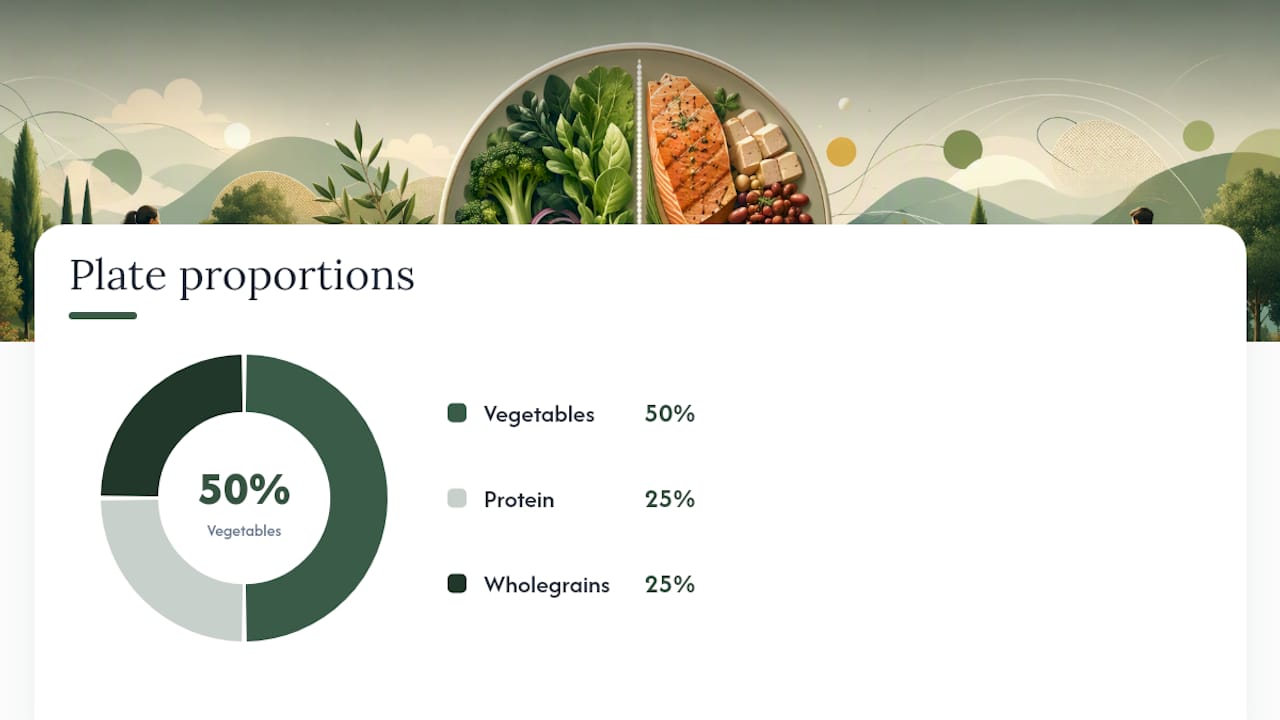
- Non-starchy vegetables in volume. Leafy greens, peppers, broccoli, courgette and similar low-calorie, high-fibre vegetables should fill roughly half your plate. They add bulk and phytonutrients without pushing blood sugar up.
- Whole fruit over juice. Berries, apples and citrus deliver fibre alongside their natural sugars, which matters, because fibre slows the sugar hit that juice or dried fruit delivers unchecked.
- Olive oil, nuts, seeds and oily fish. These supply monounsaturated fat and omega-3s, both linked to improved lipid profiles and reduced inflammation, two of the quieter drivers of metabolic syndrome.
- Lean and plant proteins. Fish, poultry, tofu, tempeh and legumes support satiety and help preserve muscle mass during any weight loss, which matters because muscle is where a large share of glucose disposal happens.
- Fermented foods. Live yoghurt, kefir and sauerkraut support gut bacteria that appear to play a role in glucose regulation, alongside the fibre that feeds them.
Pro Tip: Build meals around the “half plate, quarter plate, quarter plate” rule: half non-starchy vegetables, a quarter lean or plant protein, a quarter wholegrain or legume. It removes the need to count anything and still lands close to the macronutrient balance the evidence supports.
DASH trials specifically show that emphasising fruit, vegetables and reduced sodium can lower systolic blood pressure by roughly 5 to 7 mmHg, a change large enough to matter clinically, alongside modest improvements to lipid profiles. That single number is worth remembering: it’s roughly the effect you’d expect from a low-dose blood pressure medication, achieved through food alone.
None of this needs to happen overnight. Practitioners repeatedly see the same pattern: patients who focus on general food quality, more plants, less processing, rather than obsessing over which specific foods are “allowed”, tend to do better long term than those chasing a rigid list of permitted items. Swapping white bread for oats at breakfast, or nuts for biscuits at 3pm, sounds trivial, but those substitutions compound across weeks into meaningfully better insulin resistance and lipid markers. Adherence beats perfection every time.
Which foods and habits make metabolic syndrome worse?
Added sugar is the single most common saboteur, and it’s rarely obvious. Sugar-sweetened drinks, whether fizzy drinks, sweetened coffees or fruit juices marketed as healthy, deliver a concentrated glucose hit with none of the fibre that would normally slow absorption. Swap them for water, sparkling water with citrus, or unsweetened tea, and you remove one of the biggest daily contributors to insulin resistance without changing anything else about your diet.
Refined grains behave almost identically to sugar once digested. White bread, white rice and most breakfast cereals spike blood glucose quickly because milling strips away the fibre and bran that would otherwise slow that process. The fix isn’t giving up carbohydrates. It’s choosing wholegrain versions, brown rice, wholemeal bread, oats, that deliver the same food in a form your body handles more gradually.
Ultra-processed foods deserve particular caution, not because “processed” is automatically bad, but because the ultra-processed category, ready meals, packaged snacks, cured and processed meats, tends to combine refined carbohydrate, added sugar, excess sodium and saturated fat in one product. That combination is worse than any single ingredient on its own. Cured meats like bacon, salami and sausages carry this burden particularly heavily, pairing high saturated fat with high sodium.
Sodium and alcohol both interact directly with blood pressure, one of the five diagnostic markers. High-sodium foods, tinned soups, sauces, ready meals, and takeaway food, push blood pressure up and can undo the gains from an otherwise good diet. Alcohol adds calories with no nutritional value and disrupts blood sugar regulation, particularly when combined with mixers that are themselves sugar-sweetened.
Here’s what to watch for and swap:
- Sugar-sweetened drinks → water, herbal tea, or sparkling water with fruit slices.
- White bread and white rice → wholemeal bread, oats, brown rice or quinoa.
- Cured and processed meats → grilled chicken, fish, or plant proteins like lentils and tofu.
- Salty ready meals and sauces → home-cooked meals seasoned with herbs, garlic and citrus instead of salt.
- Regular alcohol → alcohol-free alternatives most nights, saving drinks for occasions rather than habit.
Pro Tip: Hidden sugar hides behind names like “maltose”, “dextrose”, “corn syrup” and “fruit concentrate” on ingredient labels. If any of these appear in the first three ingredients, treat the product as a dessert, not a staple, regardless of how it’s marketed.
Mediterranean, DASH, plant-based or low-carb: which pattern fits you?
There is no single best diet for metabolic syndrome. What the evidence does show is that sustainability and overall dietary quality predict long-term success more reliably than any single macronutrient ratio, and that’s precisely why Mediterranean and DASH patterns dominate clinical recommendations: they combine strong outcome data with genuine day-to-day livability.
The Mediterranean pattern emphasises olive oil, fish, vegetables, legumes, nuts and moderate wine, with red meat kept occasional. Trials testing Mediterranean-style interventions have shown substantial regression of metabolic syndrome traits as a group, not just isolated improvements, and meta-analyses report clinically meaningful gains across blood pressure, lipids and blood glucose simultaneously. Its main strength is variety, which tends to support long-term adherence far better than restrictive plans. Its main limitation is that it’s less prescriptive by design, so people who want strict daily targets sometimes find it too loosely structured.
DASH (Dietary Approaches to Stop Hypertension) was originally built to lower blood pressure and remains the strongest evidence base specifically for that marker, with typical reductions of 5 to 7 mmHg systolic alongside modest lipid improvements. It shares much of the Mediterranean pattern’s food list but adds explicit sodium targets and portion guidance for dairy. DASH suits readers whose blood pressure is the most stubborn of their five markers, though its more structured sodium counting can feel like extra admin compared with Mediterranean-style eating.
Plant-forward and plant-based diets push further towards legumes, wholegrains and vegetables while minimising or excluding animal products. Benefits show up most clearly in BMI, insulin sensitivity and markers of inflammation, likely driven by the sheer fibre volume and reduced saturated fat intake. The trade-off is practical: getting enough protein, iron, B12 and omega-3 without animal foods takes more planning, and social or family meals can be trickier to navigate.
Lower-carbohydrate and ketogenic approaches deliver the fastest short-term results of any pattern, meaningful weight loss and glycaemic improvement within weeks. That speed is genuinely appealing if your fasting glucose is high and you want quick movement. The catch is that some people see LDL cholesterol rise on very-low-carbohydrate diets, and the long-term cardiovascular picture remains less settled than it is for Mediterranean or DASH eating. Clinicians tend to treat ketogenic diets as a short-term, supervised tool rather than a lifetime plan, checking lipid panels regularly if someone stays on one beyond a few months.
So how do you choose between them? A few practical signals help:
- If blood pressure is your most stubborn marker, lean towards DASH and its explicit sodium targets.
- If you want the easiest pattern to sustain socially and at family meals, Mediterranean tends to win on flexibility.
- If your fasting glucose is high and you want faster movement, a supervised lower-carbohydrate phase can help, provided lipids are monitored.
- If inflammation markers or BMI are your priority and you’re comfortable planning meals more carefully, a plant-forward approach offers strong results.
- If you have existing high LDL cholesterol or cardiovascular risk, Mediterranean or DASH are the safer long-term default over ketogenic eating.
None of these are mutually exclusive. Many of the people who do best borrow DASH’s sodium discipline, Mediterranean’s variety, and a plant-forward bias towards legumes and vegetables, then adjust based on how their own numbers respond over three to six months.
What does a metabolic syndrome meal plan actually look like day to day?
Theory only helps once it turns into meals you’ll actually cook on a Tuesday evening. Here’s a full sample day that follows Mediterranean and DASH principles without requiring specialist ingredients:
- Breakfast: Porridge oats made with milk or a plant alternative, topped with berries, a tablespoon of chopped walnuts and a sprinkle of cinnamon.
- Mid-morning snack: A small handful of unsalted almonds and an apple.
- Lunch: A grain bowl of quinoa or brown rice, mixed beans, roasted peppers, cucumber, feta and a lemon-olive oil dressing.
- Afternoon snack: Natural yoghurt with a drizzle of honey and a few pumpkin seeds.
- Dinner: Baked salmon or mackerel with a tray of roasted courgette, cherry tomatoes and broccoli, dressed in olive oil and herbs.
Two meal templates make the rest of the week easy to fill in without fresh planning every day:
- The grain-and-legume bowl: any wholegrain base (quinoa, bulgur, brown rice) plus any legume (chickpeas, lentils, black beans), plus two vegetables, plus a citrus or vinegar dressing. Swap the vegetables and legume by season or what’s in the fridge, and the formula never gets boring.
- The vegetable-and-fish tray bake: any white or oily fish, a tray of chopped vegetables tossed in olive oil, one tin foil, one oven, twenty minutes. It scales up easily for family meals and leaves almost no washing up.
A well-stocked pantry does most of the heavy lifting on busy weeks. Keep tinned beans and lentils, wholegrain pasta, brown rice, oats, tinned fish, frozen vegetables, olive oil, nuts, seeds and a good vinegar or lemon on hand, and you can build a reasonable Mediterranean-style meal from what’s already in the cupboard. If you’re comparing grain options for your bowls, it’s worth knowing that quinoa carries roughly 8g of protein per cooked cup, noticeably more than white rice, which matters if you’re trying to keep meals satisfying without leaning on meat every time.
Batch-cooking is where adherence either survives or collapses. Cook a large batch of grains and beans on a Sunday, then portion them into containers for the week, add fresh vegetables and protein daily rather than cooking each component from scratch every evening. Roasting a full tray of mixed vegetables at the same time as your main dish, rather than as a separate step, saves real time without any loss of quality.

Which lifestyle habits make the biggest difference alongside diet?
Diet does the majority of the work, but four other habits either amplify or quietly undo it. Physical activity is the clearest lever: aim for at least 150 minutes of moderate aerobic activity a week, brisk walking, cycling, swimming, plus two sessions of resistance training. Muscle tissue is where a large share of glucose gets cleared from the bloodstream after eating, so building or maintaining muscle mass directly improves insulin sensitivity, independent of any dietary change.
Weight matters, but the target is smaller than most people expect. Losing around 5 to 10% of body weight is enough to produce measurable improvements in waist circumference, insulin sensitivity and several other metabolic syndrome markers simultaneously. For someone weighing 90kg, that’s 4.5 to 9kg, a realistic target over several months rather than a crash-diet number.
Sleep and stress rarely get the credit they deserve here. Poor sleep raises cortisol and disrupts the hormones that regulate appetite and glucose, which is why a few nights of bad sleep can leave blood sugar readings higher even when your food hasn’t changed at all. Aim for a consistent sleep and wake time, and treat seven to nine hours as a target worth protecting, not a luxury.
- Move daily, even a 20 minute walk after meals measurably blunts the post-meal glucose spike.
- Build muscle twice a week, resistance bands or bodyweight exercises count, you don’t need a gym.
- Protect sleep, a consistent bedtime does more for blood sugar than most people assume.
- Cut back on alcohol, it adds empty calories and disrupts glucose regulation, particularly in the evening.
- Stop smoking if you smoke, it independently worsens insulin resistance and cardiovascular risk on top of metabolic syndrome.
Pro Tip: A short walk within 30 minutes of finishing a carbohydrate-heavy meal can meaningfully reduce the blood glucose spike that follows, one of the cheapest interventions available for managing insulin resistance day to day.
Why does personalised nutrition matter for metabolic syndrome?
Two people with an identical five-marker profile can respond completely differently to the same diet. Genetics, gut microbiome composition and existing medication all shape how a given food affects blood glucose or lipids, which is why personalised nutrition is gaining ground as an evidence-backed standard rather than a marketing term. Tailoring macronutrient balance, meal timing and specific food choices to the individual tends to improve both adherence and measurable outcomes compared with a generic template.
A few situations are worth flagging to a GP or dietitian rather than troubleshooting alone:
- No measurable progress after three months of consistent dietary change, despite following a sound pattern.
- Multiple overlapping conditions, such as metabolic syndrome alongside thyroid dysfunction, PCOS or chronic fatigue, where food choices need to account for more than one system at once.
- A recent medication change, since some diabetes or blood pressure medications interact with diet in ways worth reviewing.
- Pregnancy or perimenopause, both of which shift hormonal and metabolic needs significantly.
- A need for lab-guided adjustment, where cholesterol subtypes, insulin levels or inflammatory markers would sharpen the plan.
This is precisely the gap Foodconnection’s programme-based nutrition therapy is built to fill. Rather than a single consultation and a printed sheet, the approach pairs ongoing one-to-one support with a plan built around your own labs, symptoms and daily life, with optional functional lab testing where deeper insight into insulin resistance or hormonal patterns would genuinely change the recommendations.
How does sodium and blood pressure fit into a metabolic syndrome diet?
Raised blood pressure is one of the five diagnostic markers, and sodium is one of the most direct dietary levers you have over it. Most dietary sodium doesn’t come from the salt shaker, it comes from bread, sauces, ready meals, tinned soups and takeaway food, which means cutting back means changing what you buy, not just how much you shake onto your plate at the table.
DASH built its entire framework around this insight, and the results back it up: emphasising fruit, vegetables, low-fat dairy and reduced sodium produces systolic blood pressure reductions of roughly 5 to 7 mmHg, an effect size comparable to a low-dose medication. Aiming for below 6g of salt a day (roughly a teaspoon) is a reasonable practical target for most adults with metabolic syndrome, achieved mainly by cooking from scratch more often and checking labels on sauces and bread, two categories people rarely suspect.
Potassium-rich foods work in the opposite direction, helping the body manage sodium more efficiently. Bananas, potatoes with skin, leafy greens and beans all contribute here, which is another reason the DASH and Mediterranean vegetable emphasis does double duty: more plants means more potassium alongside less processed sodium. If your blood pressure remains stubbornly high despite these changes, that’s a clear signal to loop in your GP rather than push harder on diet alone, since some cases genuinely need medication support alongside food.
Why does glycaemic index matter for metabolic syndrome?
Two foods with identical carbohydrate content can produce very different blood glucose responses, and that difference is what glycaemic index (GI) and glycaemic load (GL) measure. GI ranks how quickly a food raises blood glucose compared with pure glucose; GL adjusts that for the actual portion size you’d realistically eat, which makes it the more useful number day to day.
White bread, white rice and most breakfast cereals sit high on both scales, producing a sharp glucose spike followed by a rebound that can leave you hungry again within an hour or two, a pattern that keeps insulin working overtime. Lentils, oats, most vegetables and whole fruit sit much lower, releasing glucose gradually and avoiding that spike-and-crash cycle entirely.
You don’t need to calculate GI values for every meal to benefit from this. A simpler working rule covers most of the practical ground: choose the wholegrain or minimally processed version of a food over its refined counterpart, and pair carbohydrates with protein, fibre or fat rather than eating them alone. Adding a handful of nuts or a spoon of olive oil to a carbohydrate-heavy meal slows the overall glucose response of the whole plate, even without changing the carbohydrate itself. For anyone tracking fasting glucose alongside dietary changes, this is often the single adjustment that moves the number fastest.
What actually improves insulin sensitivity through food?
Improving insulin sensitivity comes down to a handful of specific nutritional levers rather than one dramatic change. Fibre sits at the top of that list: soluble fibre from oats, beans, lentils and vegetables slows glucose absorption directly, giving insulin more time to do its job efficiently instead of being overwhelmed by a rapid glucose surge.
Protein and healthy fat at every meal matter almost as much, because they slow gastric emptying and blunt the glucose response of whatever carbohydrate sits alongside them. A plate of pasta eaten alone behaves very differently in the bloodstream than the same pasta eaten with grilled chicken, vegetables and olive oil dressing.
Omega-3 fats from oily fish, walnuts and flaxseed appear to reduce the low-grade inflammation that worsens insulin resistance, working alongside rather than instead of the fibre and protein strategies above. Meal timing plays a role too: spacing meals to avoid constant grazing gives insulin levels a chance to fall between meals rather than staying persistently elevated, which is one reason very frequent small snacking can sometimes work against insulin sensitivity despite good food choices.
Finally, consistency beats intensity. A moderately good pattern followed for months produces better insulin sensitivity than a strict regime abandoned after three weeks. This is precisely why food quality and sustainability, not perfection, run through every piece of dietary guidance for metabolic syndrome.
Can intermittent fasting help manage metabolic syndrome?
Intermittent fasting, most commonly 16:8 (eating within an 8 hour window) or the 5:2 pattern, can improve insulin sensitivity and support weight loss for some people with metabolic syndrome, largely because it naturally reduces overall calorie intake and gives insulin levels extended time to fall between meals. For people who find calorie counting tedious, a fixed eating window can feel like an easier rule to follow day to day.
It isn’t the right fit for everyone, though. People on insulin or sulfonylurea medications for diabetes face a real risk of hypoglycaemia if fasting windows aren’t coordinated with medication timing, so this group should never start fasting without medical guidance first. Pregnant or breastfeeding women, anyone with a history of disordered eating, and people who find fasting triggers overeating during the eating window should generally avoid it too.
What matters more than the fasting schedule itself is what happens during the eating window. Intermittent fasting layered on top of a diet still heavy in refined carbohydrates and processed food delivers far weaker results than the same schedule paired with a Mediterranean or DASH-style pattern. Fasting is a timing tool, not a substitute for food quality, and it works best as an addition to good choices rather than a replacement for them.
A note on realistic expectations
Progress with metabolic syndrome rarely looks dramatic week to week. It looks like a waist measurement half a centimetre smaller, a fasting glucose reading two-tenths lower, a blood pressure cuff reading five points better than last month. Those small wins compound faster than most people expect, but only if the underlying pattern is one you can actually sustain past the first fortnight. Whatever changes you make, keep your GP or dietitian in the loop, particularly around medication and lab monitoring, since diet works best as part of a coordinated plan, not a solo experiment.
— Irina
How Foodconnection supports your metabolic syndrome diet
Reading about Mediterranean patterns and glycaemic load is one thing. Translating it into meals that fit your actual schedule, your lab results and your specific combination of the five markers is another, and that’s where a structured programme earns its keep over a generic meal plan downloaded from the internet. Foodconnection builds personalised nutrition programmes around your own bloodwork, symptoms and daily routine, with ongoing one-to-one support rather than a single consultation and a printed sheet you’re left to interpret alone.

An initial consultation typically covers your current diet, relevant lab markers and any comorbidities, thyroid issues, PCOS, chronic fatigue, that shape which dietary pattern will actually work for your body, followed by a tailored plan with functional lab testing available where it would sharpen the recommendations further. If your main goal is shifting the weight that’s driving your waist circumference and insulin resistance, the weight loss programme is built specifically around that 5 to 10% target range. For the fuller picture of what ongoing support includes, the nutrition services page sets out the consultation structure and lab options in detail. Book an initial consultation through the Foodconnection site to get a plan built around your own numbers rather than a generic template.
Sources
- Dietary Modulation of Metabolic Health: From Bioactive Compounds to Personalized Nutrition
- Metabolic syndrome
- Metabolic syndrome — Johns Hopkins Medicine
FAQ
How do you get rid of metabolic syndrome?
There’s no guaranteed cure, but a sustained Mediterranean or DASH-style diet combined with regular activity and a 5 to 10% weight loss often reverses enough of the five markers that a diagnosis no longer applies. Improvement is gradual and depends on consistency over months, not a single dietary change.
How can I reset my metabolic health?
Start with three levers together: cut added sugar and refined carbohydrates, add fibre-rich wholegrains and vegetables at every meal, and build in 150 minutes of weekly activity plus resistance training. Coordinating this with your GP or a dietitian, such as through a personalised nutrition programme, helps track whether the changes are actually moving your specific markers.
What are the five metabolic superfoods?
There’s no official clinical list, but oats, oily fish, leafy greens, legumes and extra virgin olive oil are the foods most consistently linked to improvements across multiple metabolic syndrome markers, thanks to their fibre, omega-3 and unsaturated fat content.
What are the symptoms of a slow metabolism?
Metabolic syndrome itself often has no obvious symptoms, which is part of why it’s frequently caught only through routine blood tests or blood pressure checks. Some people notice increased abdominal weight, persistent fatigue, or skin changes like dark patches around the neck, a sign of insulin resistance, but a formal diagnosis always requires measuring the five markers directly rather than relying on how you feel.
What is the best diet for insulin resistance?
Mediterranean and DASH-style patterns carry the strongest evidence for improving insulin resistance while remaining sustainable long term, largely due to their emphasis on fibre, unsaturated fats and minimal refined carbohydrate. Lower-carbohydrate approaches can work faster short term but need lipid monitoring, making them better suited to supervised, time-limited use than an indefinite plan.