
Cut menopause hot flashes 88% in a 2–4 week diet plan for UK women

Yes. Trials and cohort studies consistently show that dietary changes, particularly a plant-forward or Mediterranean-style pattern with regular soy or flaxseed, reduce hot flash frequency and severity. Start today: swap a snack for ½ cup of edamame or a tablespoon of ground flaxseed on your porridge, and skip the wine or chilli tonight. The evidence runs from randomised controlled trials to large cohort studies, and Nutrition consulting services can help you personalise the approach if you want structured support.
TL;DR:
- Women should aim for daily soy foods like edamame, tofu, or soy milk, which are most effective when consuming between 40mg and 80mg of isoflavones.
- Incorporating ground flaxseed, increasing fruit and vegetable intake, and choosing whole grains over refined carbs can significantly weaken hot flash severity within two weeks.
- Avoiding triggers such as alcohol, spicy foods, caffeine, and irregular meal timing reduces hot flash frequency, especially when dealing with large blood sugar swings.
- A low-fat vegan diet with daily soy can cut moderate-to-severe hot flashes by approximately 88% over 12 weeks, with benefits persisting even after BMI adjustments.
- Personalized, structured support and gradual dietary changes are more effective than quick fixes or sole reliance on supplements for managing menopausal hot flashes.
Table of Contents
- Quick, practical dietary changes to try this week
- Which foods and diets actually improve symptoms?
- Foods and habits that make hot flashes worse
- What do the trials and reviews actually show?
- How to build a 2 to 4 week plan you’ll actually stick to
- Do supplements and herbal remedies actually help?
- When should diet be enough, and when do you need more support?
- What actually changes when women commit to this
- Get personalised support from Foodconnection
- Sources
- FAQ
Quick, practical dietary changes to try this week
You don’t need to overhaul your entire kitchen to see whether diet helps your hot flashes. Small, high-impact swaps tend to produce noticeable change within one to two weeks, and they cost nothing but attention.
Start with these priority additions:
- Soy foods daily: edamame, tofu, tempeh, or unsweetened soy milk.
- Ground flaxseed: 1 to 2 tablespoons stirred into porridge, yoghurt, or smoothies.
- More fruit and vegetables: aim for at least five portions, leaning on berries, leafy greens, and cruciferous vegetables.
- Wholegrains over refined carbs: swap white bread and rice for oats, brown rice, and wholemeal versions.
- Oily fish twice a week, or a plant-based omega-3 source such as walnuts or flaxseed oil if you’re vegetarian.
Then trim what’s working against you: alcohol, particularly red wine and spirits, spicy dishes, and large caffeinated drinks consumed in one sitting. Long gaps between meals seem to matter too. Skipping breakfast then eating a huge lunch can trigger a flash simply because your blood sugar has swung too far.
A simple one-week micro-plan looks like this:
- Breakfast: porridge with ground flaxseed, berries, and a splash of soy milk.
- Mid-morning: a handful of walnuts or an oatcake with houmous.
- Lunch: a big salad with tofu or edamame, wholegrain couscous, and olive oil dressing.
- Afternoon: fruit and a small yoghurt.
- Dinner: grilled salmon or mackerel with roasted vegetables and brown rice, or a lentil and vegetable curry (mild, not fiery).
- Evening: herbal tea instead of a nightcap.
Pro Tip: Batch-cook a big pot of lentil or bean soup on Sunday. It gives you a soy-free plant protein option for lunch across the week and stops you reaching for something quick and spicy when you’re hungry and rushed.
Which foods and diets actually improve symptoms?
The strongest single piece of evidence comes from a randomised controlled trial testing a low-fat vegan diet that included daily cooked soybeans. Over 12 weeks, women in the intervention group saw moderate-to-severe hot flashes drop by roughly 88% compared with controls, and many became free of moderate-to-severe events altogether. Bodyweight in that group also fell by around 3.6kg, but the effect wasn’t just about weight. A secondary analysis found the symptom improvement persisted even after adjusting for BMI changes, pointing to something in the diet itself, likely fibre, phytoestrogens, and a lower inflammatory load, rather than weight loss alone.
The numbers that matter: an 88% reduction in moderate-to-severe hot flashes over 12 weeks on a low-fat vegan diet with daily soybeans, and roughly 20% lower odds of hot flashes and night sweats in women following a Mediterranean-style pattern.
Observational research backs this up from a different angle. A large prospective cohort study found women eating a Mediterranean-style diet, rich in fruit, vegetables, wholegrains, and healthy fats, had about 20% lower odds of experiencing hot flashes and night sweats than women eating more fat and sugar. It’s not proof of cause and effect in the way a trial is, but it’s a consistent, useful signal.
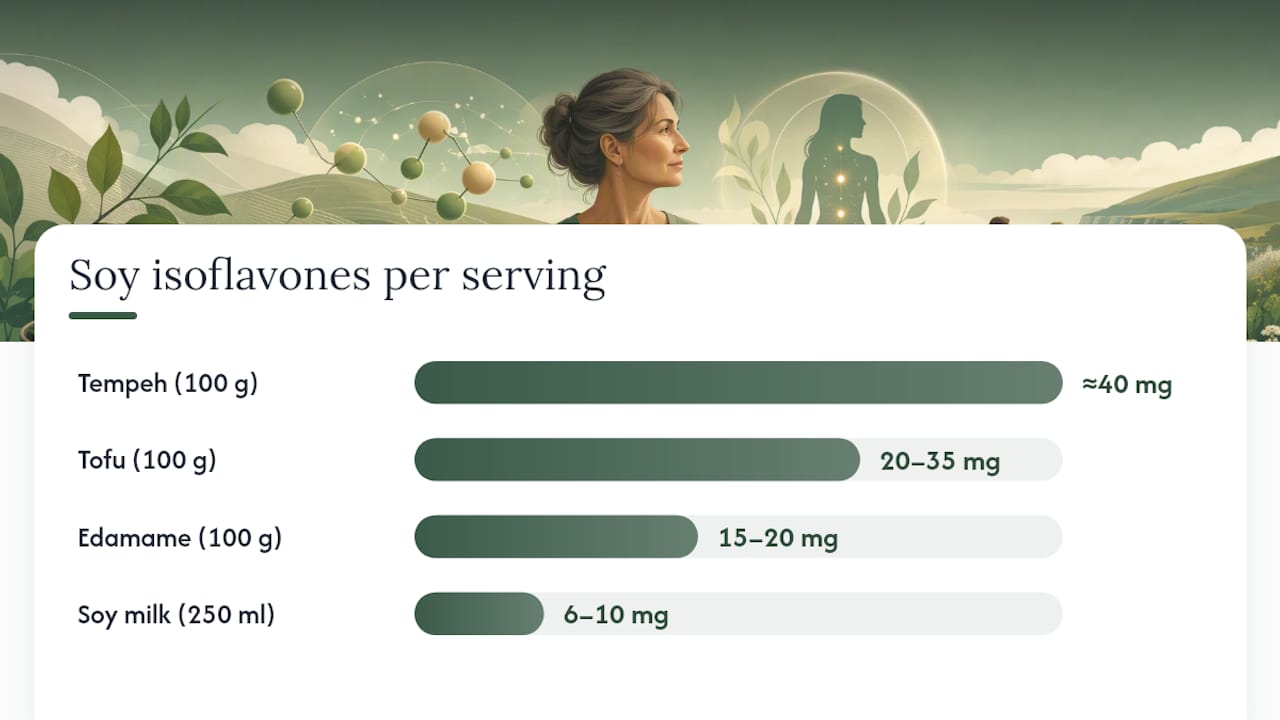
Soy deserves its own mention because the dosing matters. Systematic reviews of soy isoflavones show modest but real reductions in hot flash frequency and severity, with most effective trials using daily isoflavone intakes somewhere between 40mg and 80mg. Translated into food, that’s roughly:
- 100g of tofu (around 20 to 35mg isoflavones, depending on firmness)
- 100g of tempeh (around 40mg)
- 100g of edamame (around 15 to 20mg)
- A 250ml glass of soy milk (around 6 to 10mg)
Two to three soy servings a day gets most women into the range trials have tested.
Flaxseed works through a related mechanism. It’s rich in lignans, plant compounds that behave a little like weak oestrogens in the body, and it adds fibre that supports steadier blood sugar and gut health. A tablespoon or two ground into food daily is a realistic target; whole flaxseed largely passes through undigested, so grind it yourself or buy it pre-milled. Wholegrains and legumes contribute the same fibre benefit, and oily fish brings omega-3s that may help dampen the inflammatory signalling thought to influence vasomotor symptoms.
Foods and habits that make hot flashes worse
Certain triggers show up again and again in both clinical observation and everyday experience. Understanding why they provoke a flash makes it easier to manage them without cutting them out entirely.
- Alcohol, especially red wine and spirits, causes rapid vasodilation, the same blood vessel widening that produces a hot flash, so it often triggers one directly.
- Spicy food raises your subjective sense of heat and can push your body’s already-narrowed thermoregulatory zone over the edge.
- Caffeine, particularly in large or concentrated doses, is linked to worsened symptoms for some women, though sensitivity varies a lot from person to person.
- Smoking is consistently associated with more frequent and more severe vasomotor symptoms.
- Skipping meals or leaving long gaps between eating appears to increase flash frequency, while eating itself seems to create a temporary hot-flash-free window of around 90 minutes.
Mitigation doesn’t have to mean total avoidance. Swap one glass of wine for a spritzer with more soda than wine, choose a mild curry rather than a blistering one, cap coffee at one strong cup before noon, and keep a snack in your bag for the 3pm slump so you’re never running on empty for six hours straight.
Pro Tip: If you know an event, dinner, or hot room is coming, eat something small beforehand rather than arriving hungry. That short eating-related window of relief can buy you comfort exactly when you need it.
The NHS advises cutting down on known triggers like alcohol, caffeine, and spicy foods as a first practical step, alongside a generally balanced diet, and that guidance matches what the clinical literature shows.
What do the trials and reviews actually show?
The honest summary is this: diet has a real, measurable effect on hot flashes for many women, but it isn’t uniform, and it isn’t instant for everyone.
The RCT evidence is the most persuasive piece. The 12-week low-fat vegan trial with daily soybeans produced an 88% reduction in moderate-to-severe hot flashes, alongside meaningful quality-of-life improvements. That’s a genuinely large effect for a dietary intervention, on par with what some pharmacological options achieve, though it was tested in one trial design and hasn’t been replicated at that scale repeatedly.
Meta-analyses of soy isoflavone supplementation show more modest, and more variable, results. Some of that variability comes down to a quirk of human biology: roughly a third of people can convert soy isoflavones into a compound called equol, which appears more biologically active, while the rest cannot. Trials that don’t account for “equol producer” status end up averaging strong responders with non-responders, which flattens the apparent effect. Differences in soy preparation (whole food versus isolated extract), trial length, and baseline symptom severity add further noise.
A 2024 review of molecular mechanisms helps explain why diet plausibly works at all. It points to inflammation, glucose availability, and neurotransmitter signalling, including pathways like kisspeptin-GnRH, as routes through which diet-derived compounds might influence the brain’s temperature regulation. The same review notes some trial support for curcumin and vitamin E, though evidence there is thinner than for soy or overall dietary pattern.
Limitations worth knowing before you set expectations:
- Many trials are small, running into the dozens rather than hundreds of participants.
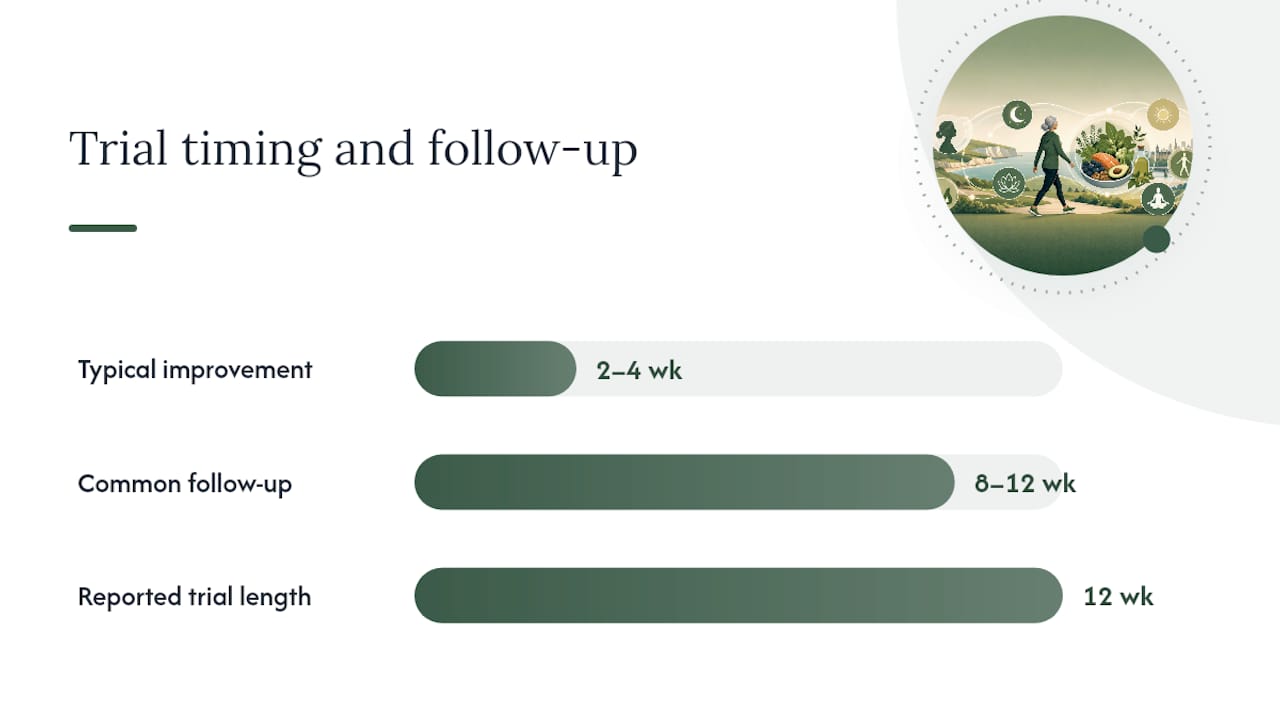
- Follow-up periods are often 8 to 12 weeks, so long-term durability isn’t well established.
- Weight loss frequently accompanies plant-based diet trials, complicating how much credit goes to diet versus weight change, though some analyses show benefits persist after adjusting for BMI.
- Soy forms vary hugely between studies, from fermented tempeh to isolated extract capsules, making direct comparison difficult.
Realistically, expect gradual improvement over 2 to 4 weeks rather than an overnight switch, with the most consistent responders being women who combine several changes at once, more plant foods, regular soy, fewer trigger foods, rather than relying on a single swap.
How to build a 2 to 4 week plan you’ll actually stick to
Turning the research into a routine works best in stages rather than as an abrupt overhaul.
Week 1: stabilise your meals. Focus purely on regular eating, three meals plus one or two snacks, no long gaps. Don’t change what you eat yet, just when. This alone often reduces flash frequency slightly by keeping blood sugar steadier.
Week 2: add soy and flax. Introduce one soy serving and one tablespoon of ground flaxseed daily. Swap one refined carb (white bread, white rice) for a wholegrain version each day.
Week 3: build the plant-forward base. Increase fruit and vegetables toward five-plus portions, add oily fish twice weekly, and start reducing alcohol and spicy food, don’t eliminate, just cut frequency in half.
Week 4 (optional): weight-management phase. If weight loss is also a goal, this is the point to look at portion sizes and overall calorie balance with more structure, ideally with personalised guidance given how individual that process is.
A sample day once you’re at week three or four:
- Breakfast: overnight oats with 1 tbsp ground flaxseed, soy milk, and blueberries.
- Lunch: buddha bowl with ½ cup edamame, quinoa, roasted peppers, and tahini dressing.
- Snack: apple with a small handful of almonds.
- Dinner: grilled mackerel, steamed broccoli, and sweet potato.
- Evening: chamomile tea.
Track your flashes in a simple notes app or a paper diary, noting time, rough severity, and what you’d eaten in the previous few hours. After two weeks you’ll usually see a pattern worth acting on. If nothing has shifted by week four, that’s useful information too, it may be time to bring in more structured, evidence-led support rather than keep adjusting alone.
Pro Tip: Keep changes additive rather than restrictive in the early weeks. Adding soy and flax is easier to sustain than banning wine outright, and sustained change beats a perfect fortnight followed by giving up.
Do supplements and herbal remedies actually help?
Whole foods should come before supplements, and the evidence backs that hierarchy rather than the other way round.
Soy isoflavone supplements have the most trial data behind them, with meta-analyses showing modest reductions in vasomotor symptom frequency at daily doses broadly in the 40 to 80mg range, similar to what whole soy foods provide. But results are inconsistent across studies, partly due to the equol-producer variability mentioned earlier, and partly due to differences in extract purity and formulation.
Trial evidence for curcumin and vitamin E shows some benefit in individual studies, but the overall evidence base is smaller and less consistent than for soy or dietary pattern as a whole.
Omega-3 supplements have weaker, more mixed evidence specifically for hot flashes, even though they’re well supported for general cardiovascular and inflammatory health.
Safety notes worth taking seriously:
- Women with a history of breast cancer or currently on hormone therapy (HRT) should discuss any isoflavone supplement with their GP or oncologist before starting, given the compounds’ oestrogen-like activity.
- Vitamin E supplements above typical dietary levels can interact with blood-thinning medication, so check with a pharmacist or GP if you take anticoagulants.
- Curcumin supplements can also affect blood clotting and may interact with certain medications, so the same clinician check applies.
The practical order is: build the diet first, food sources of soy and flax, then consider supplementation only where diet alone isn’t enough, and always with clinician input if you’re on other medication or have a relevant medical history.
When should diet be enough, and when do you need more support?
For many women, dietary change alone brings meaningful relief within a few weeks. But diet isn’t the right tool for every situation, and knowing when to widen the approach matters.
Consider getting clinical input if:
- Hot flashes are severe and daily, disrupting sleep or daily function significantly.
- Symptoms started suddenly or alongside other changes that might suggest a different cause, such as thyroid dysfunction.
- You’re on medication that could interact with dietary changes or supplements, particularly HRT, blood thinners, or breast cancer treatment.
- You’ve made consistent changes for four to six weeks with no improvement at all.
Weight, blood sugar stability, and gut health all appear to modify how well diet works for individual women, which is part of why personalised approaches tend to outperform generic advice. Functional lab testing, covering markers like thyroid function or gut health, can be useful where symptoms don’t fit the typical pattern, though it isn’t necessary for most straightforward cases. A structured, ongoing programme, rather than a single piece of advice, is usually what turns a promising two-week trial into a lasting habit.
What actually changes when women commit to this
Response to dietary change varies more than people expect. Some women notice a difference within ten days of adding soy and cutting alcohol. Others need the full four weeks, and a smaller group find diet alone isn’t enough and need it combined with other strategies.
That variation is exactly why personalised, supported programmes tend to outperform a leaflet of general advice. Evidence-led plans that consider each woman’s actual eating pattern, medical history, and goals, followed up over weeks rather than leaving her to interpret a single consultation alone, tend to be more effective. The women who see the clearest results are usually the ones who get that structured, ongoing accountability, not just the information itself.
— Irina
Get personalised support from Foodconnection
Reading the research is one thing. Applying it to your own body, your own triggers, your own medication list, is another, and that’s where a structured programme pays off. Foodconnection is built as an alternative to guessing your way through menopause nutrition alone: instead of a single generic diet sheet, you get an initial consultation with written personalised recommendations at £150, followed by structured follow-up.
The initial session runs an hour and a half and covers your symptoms, medical history, and current eating pattern in enough depth to build a plan that actually fits your life. From there, a follow-up consultation within eight weeks (£120) checks progress and adjusts the approach, and if you want sustained accountability through the full 2 to 4 week adaptation period and beyond, the 12-week dedicated support package (£250) keeps you on track with regular contact rather than a one-off session you’re left to interpret alone. For women whose symptoms suggest thyroid involvement or gut imbalance alongside hot flashes, laboratory test analysis and interpretation can add clarity that diet alone can’t answer.
If you’ve read this far and recognise your own hot flashes in the patterns described, book an initial consultation through the Foodconnection prices page and start with a plan built around your actual symptoms, not a generic list.
Sources
- A dietary intervention for vasomotor symptoms of menopause: a randomized, controlled trial - PMC
- Mediterranean diet association with vasomotor symptoms (American Journal of Clinical Nutrition study)
- Systematic review/meta-analysis on soy isoflavones and vasomotor symptoms
- Things you can do to help menopause and perimenopause symptoms - NHS
FAQ
What is the best diet for menopause hot flashes?
The best-supported options are a low-fat, plant-forward diet with daily soy, or a Mediterranean-style pattern rich in fruit, vegetables, and wholegrains. A 12-week trial found the plant-based approach with daily soybeans cut moderate-to-severe hot flashes by around 88%, while Mediterranean-style eating is linked to roughly 20% lower odds of symptoms in cohort studies.
What are some home remedies for hot flashes?
Adding soy foods, ground flaxseed, and more fruit and vegetables while cutting alcohol, caffeine, and spicy food is the most evidence-backed home approach. Eating regularly rather than skipping meals also helps, since a hot-flash-free window of around 90 minutes has been observed after eating.
How long do hot flashes last?
Hot flashes can persist for several years around and after the menopause transition, with duration varying widely between individuals. Dietary changes typically need 2 to 4 weeks of consistent effort before noticeable improvement, based on the trial timelines discussed above.
What foods make menopause hot flashes worse?
Alcohol, particularly red wine and spirits, spicy food, and large amounts of caffeine are the most commonly reported triggers. Alcohol widens blood vessels directly, while spicy food raises your subjective sense of heat, and both can push an already narrow thermoregulatory zone into a flash.