
Menopause gut health: what's changing and what helps

Menopause does affect your gut, and the mechanism is more specific than most guides let on. Falling oestrogen alters the composition of your gut microbiome, slows or disrupts motility, and can weaken the intestinal barrier, producing symptoms that range from persistent bloating to sudden IBS-like flares. The good news is that several evidence-based steps can reduce symptom burden relatively quickly.
Start here, today:
- Drink at least 1.5–2 litres of water daily; dehydration worsens constipation and bloating significantly
- Add one extra portion of soluble fibre (oats, linseed, cooked vegetables) and do it gradually to avoid gas
- Keep a three-day symptom log noting meals, stress, sleep and bowel habits before changing anything else
- Take a 20-minute walk after your main meal; gentle movement stimulates gut motility
- Review any supplements or medications you are taking, as several common ones (iron tablets, antacids, certain antidepressants) directly affect digestion
Acting on these steps matters beyond comfort. Gut symptoms in menopause are not simply a nuisance; they are linked to inflammation, nutrient absorption, and the way your body processes oestrogen itself. Understanding that connection is the first step toward doing something meaningful about it.
Table of Contents
- How falling oestrogen reshapes your gut
- Common digestive symptoms in perimenopause and menopause
- What the research says about microbiome changes in menopause
- Diet: evidence-backed foods and practical swaps for your gut
- Supplements: what the evidence supports for menopausal gut symptoms
- Lifestyle measures that support your gut during menopause
- When to see your GP: tests, red flags, and what to expect
- A two-week starter plan to test what helps your gut
- When personalised nutrition and functional testing make a real difference
- How menopause affects your ability to absorb nutrients
- The link between gut health and menopausal weight changes
- HRT and gut health: what you need to know
- Keeping your gut healthy alongside common menopause medications
- Key takeaways
- Why one-size-fits-all advice keeps falling short for menopausal gut symptoms
- Foodconnection: personalised nutrition support for menopausal gut health
- Selected further reading and UK-relevant resources
How falling oestrogen reshapes your gut
Oestrogen and progesterone receptors are distributed throughout the gastrointestinal tract, from the oesophagus to the colon, so when circulating levels drop during the menopausal transition, the effects on gut physiology are direct and measurable. Sex hormone receptors in the GI tract regulate motility speed, mucus production, intestinal barrier tightness, and the gut-brain signalling axis. When those hormones decline, all four can shift at once.
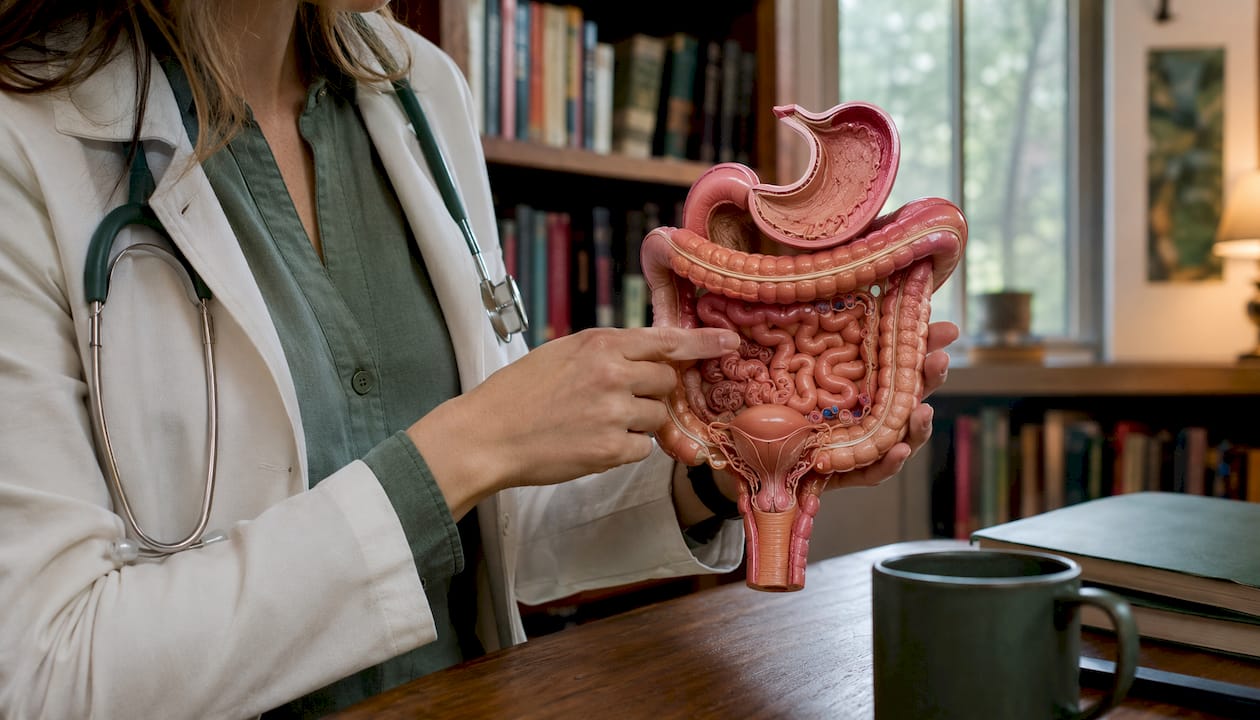
One concept worth knowing is the estrobolome: the collection of gut bacteria responsible for metabolising and recycling oestrogen. These bacteria produce an enzyme called beta-glucuronidase, which deconjugates oestrogen in the gut so it can be reabsorbed into circulation. When the estrobolome is disrupted, circulating oestrogen can fall further, creating a feedback loop where gut dysbiosis deepens the hormonal deficit. This means gut bacteria and oestrogen are not just parallel problems; they are actively influencing each other.
Oestrogen deficiency also increases intestinal permeability, sometimes called “leaky gut,” which allows bacterial fragments to cross the gut lining and trigger low-grade inflammation. That inflammation is now linked to several menopausal symptoms beyond digestion, including joint pain, brain fog, and fatigue. Progesterone loss adds another layer: progesterone normally slows gut transit slightly, so its decline can cause unpredictable swings between constipation and loose stools.
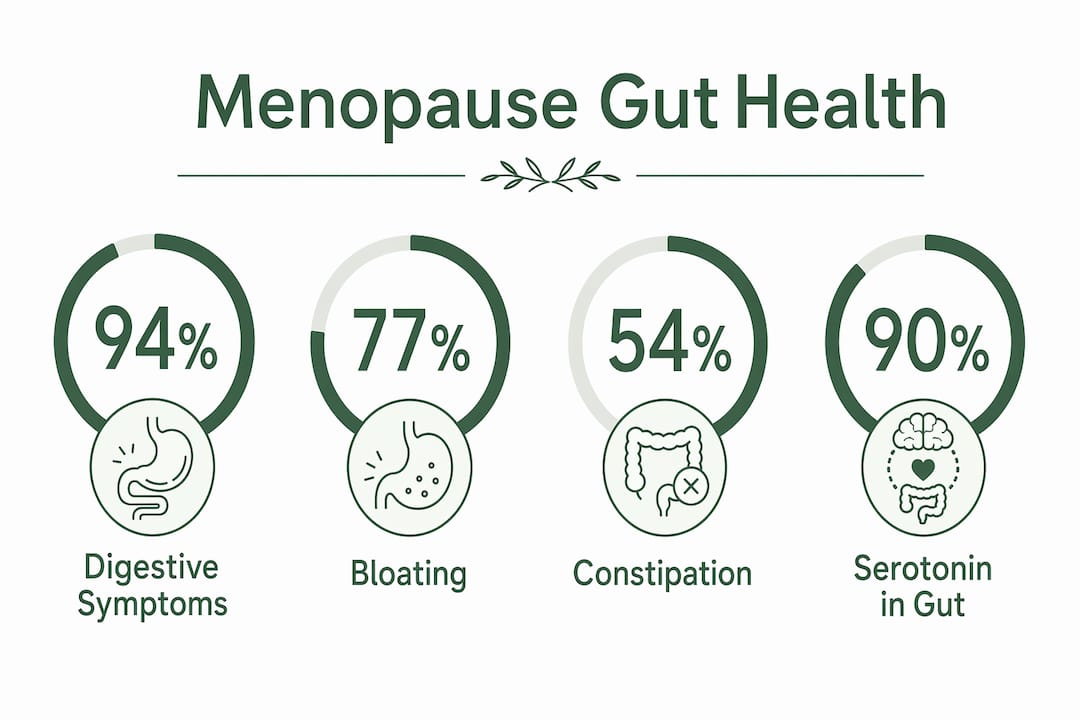
The gut-brain axis compounds everything. Oestrogen modulates serotonin signalling, and roughly 90% of the body’s serotonin is produced in the gut. Reduced oestrogen means altered serotonin availability, which affects both mood and gut motility simultaneously. This is why anxiety and digestive symptoms so often arrive together during perimenopause.
Common digestive symptoms in perimenopause and menopause
Bloating, constipation, loose stools, acid reflux, abdominal cramping, and IBS-like flares are all well-documented features of the menopausal transition. They are not imagined, and they are not rare.
A study presented by The Menopause Society involving a large cohort of women aged 44–73 found that a vast majority reported at least one digestive symptom during perimenopause or menopause. The breakdown is striking:
| Symptom | Prevalence in cohort |
|---|---|
| Any digestive symptom | 94% |
| Bloating | 77% |
| Constipation | 54% |
| Stomach pain | 50% |
| Acid reflux | 49% |
| Formal IBS diagnosis | 33% |
What the table does not show is how many women had no idea these symptoms were hormone-related. Many had been managing them for years without connecting them to perimenopause.
Symptoms and their typical patterns:
- Bloating: often worse in the afternoon or after meals; can fluctuate with the menstrual cycle in perimenopause before periods stop entirely
- Constipation: tends to worsen as oestrogen falls; slow transit is the usual driver
- Loose stools or diarrhoea: can alternate with constipation; stress and cortisol spikes during menopause exacerbate this
- Acid reflux or heartburn: oestrogen influences lower oesophageal sphincter tone; its decline can increase reflux frequency
- Abdominal pain and cramping: often IBS-like in character; may be new-onset or a worsening of pre-existing IBS
- Nausea: less common but reported, particularly in early perimenopause when hormones fluctuate sharply
- Increased food sensitivities: some women find they react to foods they previously tolerated, particularly gluten, dairy, and high-FODMAP foods
These symptoms are not typical of menopause-related gut changes and need prompt medical assessment to rule out serious pathology.
What the research says about microbiome changes in menopause
The research consensus is clear on one point: menopause is associated with reduced gut microbial diversity and compositional shifts. The details are more complicated. Studies consistently report reduced alpha diversity post-menopause and changes in the ratio of Firmicutes to Bacteroidetes, but the specific taxa that shift vary considerably across populations and study designs.
| Study type | Headline finding |
|---|---|
| PMC review | Reduced alpha diversity post-menopause; estrobolome disruption linked to lower circulating oestrogen |
| ASM cohort data | Postmenopausal microbiome shifts toward a male-like profile with potential cardiometabolic implications |
| Frontiers in Microbiology | Cross-talk between gut, vaginal, and urinary microbiomes; gut permeability biomarkers rise across the menopausal transition |
| SAGE Journals review | Prebiotic foods and higher-quality carbohydrate intake associated with reduced somatic menopausal symptoms in observational data |
The male-like microbiome finding deserves a moment. Research published in ASM Journals found that postmenopausal women’s gut profiles can shift toward patterns more commonly seen in men, and those patterns carry associations with less favourable cardiometabolic markers. This is not a trivial cosmetic change; it may partly explain why cardiovascular risk rises after menopause.
Limitations to keep in mind:
- Most studies are observational, so causality is difficult to establish
- Geographic and dietary variation across cohorts makes direct comparison hard
- Distinguishing the effect of menopause itself from the effect of ageing is methodologically challenging
- Sample sizes in intervention studies remain small
For UK readers, the practical implication is this: generic probiotic or dietary advice may help some women and do little for others. The research increasingly points toward individual assessment as the more reliable route.
Diet: evidence-backed foods and practical swaps for your gut
Dietary changes are the most accessible and evidence-supported first step for improving gut health during menopause. The goal is not a restrictive diet; it is a varied, fibre-rich pattern that feeds the estrobolome, supports motility, and reduces inflammation.
Core dietary principles:
- Varied fibre, not just more fibre: aim for both soluble fibre (oats, linseed, psyllium, apples, legumes) and insoluble fibre (wholegrains, leafy greens, root vegetables). The diversity of fibre sources matters as much as the quantity
- Prebiotic foods daily: Jerusalem artichoke, garlic, onion, leek, asparagus, and chicory root feed beneficial bacteria; start with small amounts if you are prone to bloating
- Fermented foods: plain live yoghurt, kefir, sauerkraut, kimchi, and miso introduce beneficial microbes and may support microbial diversity
- Phytoestrogen sources: flaxseed, edamame, tempeh, and tofu contain plant compounds that interact weakly with oestrogen receptors; evidence for symptom relief is modest but consistent in some trials
- Anti-inflammatory foods: oily fish (salmon, mackerel, sardines), walnuts, olive oil, and colourful vegetables help counter the low-grade inflammation linked to gut permeability
Practical meal swaps by symptom:
For constipation: swap white bread for rye or seeded sourdough; add a tablespoon of ground linseed to porridge; replace a biscuit snack with a small handful of dried prunes or figs.

For bloating: reduce raw onion and garlic (cook them instead); swap large portions of beans for smaller amounts of well-rinsed tinned lentils; try cooked rather than raw vegetables at dinner.
For acid reflux: eat smaller, more frequent meals; avoid lying down within two hours of eating; reduce coffee, alcohol, and high-fat meals in the evening.
One-day sample menu (constipation focus):
- Breakfast: porridge with ground linseed, blueberries, and a small pot of live kefir
- Mid-morning: a pear and a small handful of walnuts
- Lunch: lentil and vegetable soup with rye bread; a glass of water
- Afternoon: plain live yoghurt with a teaspoon of honey
- Dinner: baked salmon with roasted courgette, sweet potato, and steamed broccoli; herbal tea
Pro Tip: Increase fibre by no more than 3–5g per week and always pair increases with extra water. Adding too much too quickly is the most common reason women give up on dietary changes — the bloating and gas are temporary, but only if you go slowly.
On hydration, alcohol, and caffeine: aim for 1.5–2 litres of water daily; herbal teas count. Alcohol disrupts the gut microbiome and worsens reflux and hot flushes. Caffeine accelerates gut transit, which helps some women with constipation but worsens urgency and loose stools in others. Portion sizes matter for weight and metabolic health; menopause shifts fat storage toward the abdomen, and large meals worsen reflux and bloating.
Supplements: what the evidence supports for menopausal gut symptoms
Some supplements can genuinely help, but the benefits are strain-specific and symptom-specific. A probiotic that works for one woman may do nothing for another, and the UK supplement market is largely unregulated, so product quality varies enormously.
Probiotic strains with relevant evidence:
- Lactobacillus acidophilus and Lactobacillus rhamnosus GG have the strongest evidence base for IBS-type symptoms and gut barrier support
- Bifidobacterium longum and Bifidobacterium lactis strains show promise for constipation and immune modulation in midlife women
- Small trials in menopausal women report improvements in microbial diversity and metabolic markers with specific Lactobacillus combinations, but larger studies are still needed
- Multi-strain products have not consistently outperformed single-strain products in trials; strain identity matters more than count
Fibre supplements:
- Psyllium husk (e.g. Fybogel, available over the counter in the UK): well-evidenced for constipation and loose stools; take with a full glass of water and build up gradually
- Partially hydrolysed guar gum (PHGG): gentler than psyllium for those prone to bloating; available in powder form
- Inulin and FOS powders: prebiotic rather than bulking agents; can cause significant gas if introduced too quickly
Checklist for choosing a probiotic in the UK:
- The strain name is listed in full (genus, species, and strain code, e.g. Lactobacillus rhamnosus GG)
- CFU count is stated at end of shelf life, not at manufacture
- The product is refrigerated or explicitly shelf-stable with evidence
- The supplier is registered with the Food Standards Agency or carries a recognised quality mark
- No interactions with your current medications (check with your pharmacist, particularly if you take immunosuppressants)
Safety notes:
- If you are immunocompromised, have a central venous catheter, or are recovering from surgery, discuss probiotics with your GP before starting
- Probiotics are generally safe in healthy adults but are not regulated as medicines in the UK
- If symptoms worsen after starting a supplement, stop and seek advice
Lifestyle measures that support your gut during menopause
Diet is not the whole picture. Sleep, movement, and stress management each have direct effects on gut function, and they interact with each other in ways that make addressing all three more effective than tackling any one alone.
Evidence-based lifestyle actions:
- Regular moderate exercise: 30 minutes of brisk walking, cycling, or swimming most days stimulates gut motility, reduces constipation, and supports a more diverse microbiome. High-intensity exercise in excess can temporarily worsen gut permeability, so moderate and consistent beats hard and sporadic
- Sleep hygiene: poor sleep raises cortisol, which disrupts gut motility and increases intestinal permeability. Aim for 7–8 hours; a consistent bedtime and a cool, dark room help more than most supplements
- Stress reduction: the gut-brain axis means chronic stress directly alters gut function. NHS Talking Therapies offers free CBT and mindfulness-based programmes in England; these have evidence for IBS symptom reduction as well as anxiety
- Pelvic floor awareness: pelvic floor dysfunction is common in menopause and can contribute to constipation, urgency, and incomplete evacuation. A pelvic floor physiotherapist can assess and treat this; ask your GP for a referral
- Medication review: several commonly used medicines affect gut function. Iron supplements cause constipation; antacids (particularly PPIs) alter stomach acid and can affect nutrient absorption and microbiome composition; SSRIs and SNRIs affect gut motility; metformin (used for blood sugar management) can cause diarrhoea. If you are on long-term medications and experiencing gut symptoms, a review with your GP is worthwhile
Understanding the hormonal drivers of perimenopause alongside lifestyle factors gives a clearer picture of why symptoms cluster the way they do.
When to see your GP: tests, red flags, and what to expect
See your GP if symptoms are persistent, severe, or alarming, or if lifestyle changes have not produced meaningful improvement after four to six weeks. Digestive symptoms in menopause are commonly under-diagnosed and under-treated; you are entitled to ask for a proper assessment.
Red flags requiring prompt GP contact or A&E:
- Unexplained weight loss
- Rectal bleeding or black, tarry stools
- New or progressive difficulty swallowing
- Persistent vomiting
- Severe abdominal pain, especially if sudden in onset
What your GP may do:
- Blood tests: full blood count (FBC), thyroid function, coeliac serology (tTG-IgA), inflammatory markers (CRP, ESR), and iron studies
- Stool tests: faecal calprotectin to rule out inflammatory bowel disease; faecal immunochemical test (FIT) if bowel cancer is a concern
- Medication review and possible trial of antispasmodics, laxatives, or acid-suppressing therapy
- Referral for colonoscopy if red flags are present or FIT is positive
- Referral to gastroenterology for complex or refractory symptoms
- Referral to pelvic floor physiotherapy for evacuation difficulties
On functional testing: stool microbiome mapping, SIBO breath testing, and comprehensive hormone panels are not routinely available on the NHS but can be accessed privately. Functional lab testing of this kind is most useful when interpreted alongside a full clinical picture by a practitioner who understands menopause. Ordering tests without that context often generates more confusion than clarity.
A two-week starter plan to test what helps your gut
This plan is designed for short experiments, not long-term diagnoses. The aim is to identify what moves the needle for your specific symptoms before committing to bigger changes or seeking specialist input.
Week one: baseline and foundations
- Days 1–3: log every meal, drink, stress event, sleep duration, and bowel habit in a simple notebook or app (Cara Care is a free UK-available gut symptom tracker)
- Day 4: add one tablespoon of ground linseed to breakfast and increase water intake to 1.5–2 litres daily
- Day 5: add a 20-minute walk after your largest meal
- Day 6: introduce one portion of a fermented food (live yoghurt or kefir) at breakfast
- Day 7: review your log. Note any patterns between specific foods, stress days, or sleep quality and symptom severity
Week two: targeted additions
- Days 8–10: add a small prebiotic food (cooked leek, asparagus, or a teaspoon of inulin powder in water) to one meal daily; note any change in bloating or bowel frequency
- Day 11: if constipation remains a problem, try psyllium husk (one teaspoon in a large glass of water before bed)
- Day 12: assess sleep. If poor sleep correlates with worse gut days in your log, prioritise a consistent bedtime this week
- Day 13: if you have been taking a new supplement or medication in the past month, note whether symptoms started or worsened around that time
- Day 14: review the full two-week log and identify your top two or three symptom triggers
What to track:
- Bowel frequency and consistency (the Bristol Stool Chart is a useful reference)
- Bloating severity on a 1–5 scale, morning versus evening
- Sleep hours and quality
- Stress level (1–5)
- Any new foods or supplements introduced
Safety note: stop any dietary experiment and contact your GP if you develop new pain, bleeding, significant weight loss, or symptoms that worsen rather than fluctuate. This plan is a self-assessment tool, not a substitute for medical evaluation.
When personalised nutrition and functional testing make a real difference
Generic advice gets many women part of the way there. When symptoms are persistent, complex, or tied to multiple overlapping issues (gut, hormones, weight, fatigue), a personalised programme tends to move things faster and more reliably.
Foodconnection offers structured nutrition programmes designed specifically for women navigating menopause and perimenopause. The process starts with a thorough assessment of symptoms, diet history, lifestyle, and relevant health history, followed by a tailored plan that addresses the individual drivers rather than applying a standard template.
What a Foodconnection programme typically includes:
- In-depth initial assessment covering gut symptoms, hormonal history, sleep, stress, and current diet
- A personalised nutrition plan with practical meal guidance and phased dietary changes
- Optional functional laboratory tests: stool microbiome mapping, SIBO breath testing, comprehensive hormone panels, thyroid function, and nutrient status
- Detailed interpretation of test results in plain language, with clear next steps
- Ongoing support through follow-up sessions to adjust the plan as symptoms evolve
Pro Tip: If you have already tried the standard advice (more fibre, less caffeine, a probiotic from the chemist) and your symptoms have not shifted after six to eight weeks, that is a strong signal that something more specific is driving them. Functional testing often identifies the underlying pattern that generic approaches miss.
Women with persistent bloating, unpredictable bowel habits, or symptoms that seem to worsen despite dietary changes are often the ones who benefit most from this kind of structured, test-informed approach. You can read more about what to expect from working with a nutritional therapist on the Foodconnection blog.
How menopause affects your ability to absorb nutrients
Nutrient absorption changes during menopause in ways that directly affect gut health and overall wellbeing. Reduced stomach acid production, which becomes more common with age and is worsened by long-term antacid use, impairs the absorption of vitamin B12, iron, calcium, and magnesium. These deficiencies then feed back into gut function: low magnesium worsens constipation; low B12 affects gut nerve signalling; low iron leads to fatigue that reduces physical activity, which in turn slows motility.
Calcium absorption specifically declines after menopause because it depends partly on oestrogen and vitamin D. The NHS recommends 700mg of calcium daily for adults, but many menopausal women fall short. Vitamin D deficiency is widespread in the UK due to limited sunlight, and without adequate vitamin D, calcium absorption from food drops significantly. A blood test from your GP can confirm status.
Zinc and magnesium are also commonly depleted in midlife women, particularly those under chronic stress or eating a restricted diet. Both support gut barrier function and immune regulation. Prioritising magnesium-rich foods (dark leafy greens, pumpkin seeds, dark chocolate) and zinc sources (meat, shellfish, legumes) is a practical starting point before reaching for supplements.
The link between gut health and menopausal weight changes
Weight gain during menopause, particularly around the abdomen, is not simply a matter of eating more. The gut microbiome plays a direct role in how calories are extracted from food, how fat is stored, and how insulin sensitivity is regulated. A less diverse microbiome, which is what menopause tends to produce, is associated with less efficient energy metabolism and a greater tendency toward fat storage.
The shift toward a male-like gut profile post-menopause carries cardiometabolic implications beyond weight, including changes in lipid profiles and blood sugar regulation. This is one reason why women who eat the same diet before and after menopause often find their weight and body composition changing anyway.
Gut health interventions that support microbial diversity, particularly increased dietary fibre and fermented foods, may help modulate these metabolic shifts. They are not a replacement for overall dietary quality and physical activity, but they are a meaningful part of the picture. For women dealing with perimenopause-related weight changes, addressing gut health alongside caloric balance tends to produce better outcomes than either approach alone.
HRT and gut health: what you need to know
Hormone replacement therapy (HRT) can have positive effects on gut health, though this is rarely the primary reason it is prescribed. By restoring circulating oestrogen, HRT may help stabilise gut motility, support the estrobolome, and reduce intestinal permeability. Some women report that bloating and IBS-like symptoms improve after starting HRT, though this varies considerably.
The route of administration matters. Transdermal HRT (patches, gels, sprays) bypasses the gut entirely and does not affect gut bacteria or liver metabolism in the way oral HRT does. Oral oestrogen is processed through the liver and intestine, which can alter bile acid metabolism and, in some women, cause nausea or digestive discomfort in the early weeks of use.
Progesterone-containing HRT (particularly micronised progesterone, such as Utrogestan) tends to be better tolerated digestively than synthetic progestogens. Synthetic progestogens can cause bloating and constipation in some women. If you are on HRT and experiencing new or worsening gut symptoms, it is worth discussing the formulation with your GP or menopause specialist, as switching the type or route can make a significant difference.
HRT does not replace dietary and lifestyle measures for gut health. The two work best together.
Keeping your gut healthy alongside common menopause medications
Several medications commonly used during menopause affect gut function, and managing these interactions is part of maintaining digestive health.
Iron supplements: constipation is the most common side effect. Taking iron with vitamin C improves absorption and may allow a lower dose. Ferrous bisglycinate is generally better tolerated than ferrous sulphate. Taking iron every other day rather than daily has shown similar absorption with fewer side effects in some studies.
Antacids and PPIs (proton pump inhibitors): long-term use reduces stomach acid, which impairs absorption of B12, magnesium, calcium, and iron, and alters the gut microbiome by allowing bacteria to colonise the upper gut. If you have been on a PPI for more than eight weeks, ask your GP whether you still need it and whether a lower dose is appropriate.
SSRIs and SNRIs: these affect serotonin signalling in the gut as well as the brain. Nausea and loose stools are common in the first two to four weeks; they usually settle. If they persist, a different agent or dose may suit you better.
Calcium supplements: calcium carbonate is best taken with food; calcium citrate can be taken without. Large single doses (over 500mg) are less well absorbed than split doses. Calcium supplements can cause constipation; magnesium citrate taken alongside often helps.
Magnesium: often used for sleep and muscle cramps in menopause. Magnesium oxide is poorly absorbed and strongly laxative. Magnesium glycinate or citrate are better absorbed and gentler on the gut.
For a broader picture of how supplements interact with your specific situation, a nutrition services consultation can help you prioritise what is genuinely useful and what can be safely stopped.
Key takeaways
Falling oestrogen is the central driver of menopausal gut changes, and addressing diet, lifestyle, and targeted supplementation together produces better outcomes than any single intervention alone.
| Point | Details |
|---|---|
| Oestrogen drives gut changes | Falling oestrogen disrupts the estrobolome, motility, and gut barrier, causing bloating, constipation, and IBS-like symptoms. |
| Symptoms are very common | In a near-600-person UK-presented cohort, 94% reported at least one digestive symptom during perimenopause or menopause; bloating was reported by 77%, constipation by 54%, stomach pain by 50%, and acid reflux by 49%. Only 33% had a formal IBS diagnosis. |
| Diet is the first lever | Varied fibre, prebiotic foods, and fermented foods support the gut microbiome and may reduce symptom burden; introduce changes gradually. |
| Seek GP review for red flags | Unexplained weight loss, rectal bleeding, progressive swallowing difficulty, or severe pain need prompt medical assessment. |
| Foodconnection | Personalised nutrition programmes with optional functional testing help identify individual drivers when generic advice has not worked. |
Why one-size-fits-all advice keeps falling short for menopausal gut symptoms
The most common mistake I see is treating menopausal gut symptoms as a generic digestive problem. A woman comes in having already tried a high-street probiotic, cut out gluten, and added more fibre, with no meaningful improvement. The issue is rarely that those things are wrong; it is that they were applied without knowing which specific mechanism was driving her symptoms. Was it slow transit? Estrobolome disruption? SIBO? A medication side effect? Each of those needs a different approach, and guessing between them wastes months.
What structured assessment and functional testing do is collapse that guessing period. When you can see the microbiome composition, the hormone panel, and the symptom log together, the pattern becomes clear quickly. The dietary and supplement recommendations that follow are not generic; they are targeted. That is why women who have been struggling for a year often see meaningful change within six to eight weeks of starting a properly tailored programme.
The research increasingly supports this view. Postmenopausal microbiome changes are highly individual, and the evidence for personalised over generic approaches is growing. Generic advice has a place, particularly as a starting point, but it has a ceiling. Knowing where that ceiling is, and when to move beyond it, is the most useful thing a practitioner can offer.
Foodconnection: personalised nutrition support for menopausal gut health
Persistent gut symptoms during menopause often have specific, identifiable drivers that standard advice cannot reach. Foodconnection offers one-to-one nutrition programmes for women with complex or ongoing digestive issues, hormonal imbalances, and weight concerns, combining in-depth assessment with optional functional laboratory testing to build a plan that is genuinely specific to you.
Women who benefit most are those who have already tried the basics and found them insufficient, or those who want to understand what is actually happening in their gut before making further changes. Programmes include a full initial assessment, a personalised nutrition and lifestyle plan, and ongoing support as your symptoms evolve. Where relevant, functional tests covering stool microbiome mapping, SIBO, hormone panels, and thyroid function are available with full interpretation included.
Foodconnection works with clients across the UK, online and in London. To find out which programme fits your situation and to book an initial consultation, visit foodconnection.life/services.html.
Selected further reading and UK-relevant resources
-
PMC review: diet, the gut microbiome, and oestrogen physiology — a peer-reviewed overview of the estrobolome concept and how dietary interventions may influence oestrogen metabolism and menopausal symptoms; supports the dietary strategies and microbiome sections of this article
-
The Menopause Society press release: digestive health in perimenopause and menopause — source of the 94% prevalence figure and the symptom breakdown table; useful for understanding the clinical gap in diagnosis and treatment
-
Frontiers in Endocrinology: sex hormones and functional gastrointestinal disorders — detailed mechanistic review of how oestrogen and progesterone receptors in the GI tract affect motility and barrier function; supports the “how it works” section
-
ASM Journals: spotlight on the gut microbiome in menopause — covers the male-like microbiome shift post-menopause and its cardiometabolic implications; relevant to the evidence review and weight sections
-
Frontiers in Microbiology: postmenopausal microbiome crosstalk — examines gut, vaginal, and urinary microbiome interactions post-menopause and the role of gut permeability; supports the testing and personalised nutrition sections
-
SAGE Journals: the gut microbiota in menopause — prebiotic and probiotic solutions — reviews evidence for prebiotic and probiotic interventions in menopausal women; directly supports the dietary strategies and supplements sections
-
NHS Talking Therapies — free CBT and mindfulness programmes available in England with evidence for IBS and anxiety; referenced in the lifestyle section
-
Nuka Love: understanding perimenopause and menopause symptoms — accessible overview of hormonal symptom patterns during the menopausal transition; useful background reading for women at the start of their research.
This article is for general information only and does not constitute medical or nutritional advice. Please consult your GP or a qualified healthcare professional for assessment and guidance specific to your own situation.
Recommended
- Perimenopause: what’s happening and how food can help | FoodConnection blog
- Why You’re Gaining Weight in Perimenopause (And What Actually Works) | FoodConnection blog
- Struggling With Bloating? How a Gut Health Nutritionist Can Help | FoodConnection blog
- Blog: nutrition, gut health, hormones | FoodConnection