
Low FODMAP diet: a practical guide for IBS relief in the UK

The low FODMAP diet is a clinically supported eating plan that restricts specific fermentable carbohydrates to reduce symptoms of irritable bowel syndrome (IBS) such as bloating, abdominal pain, diarrhoea, and constipation. It is not a general wellness diet or a permanent lifestyle change. It is a structured, three-phase therapeutic tool, developed by researchers at Monash University, designed to help you identify which foods trigger your symptoms so you can eat as freely as possible long-term.
Who should follow it? People with a confirmed IBS diagnosis, or those experiencing persistent gut symptoms that a doctor has investigated. Clinical guidelines position the low FODMAP diet as a second-line therapy, meaning it comes after simpler dietary adjustments have already been tried and have not provided enough relief.
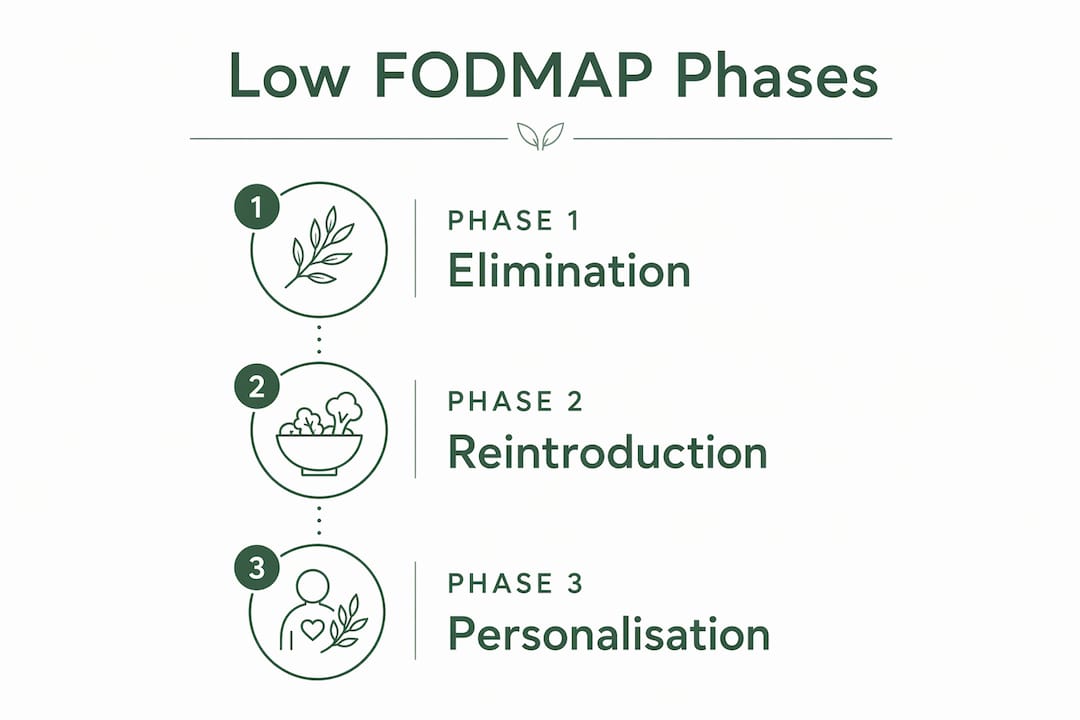
The three phases work like this:
- Elimination (2–6 weeks): All high FODMAP foods are removed to establish a symptom baseline.
- Reintroduction (6–8 weeks): Individual FODMAP groups are reintroduced one at a time to identify your personal triggers.
- Personalisation (ongoing): You build a long-term diet that includes everything you tolerate well, restricting only what genuinely causes problems.
A registered dietitian should guide you through every phase. The diet is nutritionally incomplete during elimination, and without professional support, there is a real risk of unnecessary long-term restriction, nutrient deficiencies, and disruption to your gut microbiome.
Table of Contents
- What are FODMAPs and why do they cause symptoms?
- How to follow the low FODMAP diet safely in the UK
- High FODMAP foods to avoid during elimination
- Low FODMAP foods you can eat freely
- Why dietitian support is essential for managing IBS with this diet
- Holistic support for gut health beyond the diet
- Additional help and support for IBS in the UK
- How Foodconnection can support your low FODMAP journey
- Key takeaways
What are FODMAPs and why do they cause symptoms?
FODMAP stands for Fermentable Oligosaccharides, Disaccharides, Monosaccharides, and Polyols. These are short-chain carbohydrates that the small intestine absorbs poorly. Instead of being digested normally, they travel into the colon, where gut bacteria ferment them rapidly, producing gas and drawing in water.
The five FODMAP groups are:
- Oligosaccharides: Fructans (found in wheat, rye, garlic, onion) and galacto-oligosaccharides (found in legumes, lentils, chickpeas)
- Disaccharides: Lactose, found in cow’s milk, soft cheeses, and yoghurt
- Monosaccharides: Excess fructose, found in apples, pears, honey, and high-fructose corn syrup
- Polyols: Sugar alcohols such as sorbitol and mannitol, found in stone fruits, avocados, mushrooms, and some artificial sweeteners
For people with IBS, the gas and water produced during fermentation stretch the intestinal wall, triggering pain, bloating, altered bowel habits, and urgency. Not everyone reacts to every FODMAP group. Tolerance is highly individual, which is exactly why the reintroduction phase matters so much.
How to follow the low FODMAP diet safely in the UK
The three phases are sequential and time-limited. Skipping ahead or staying in elimination indefinitely are the two most common mistakes.
Phase 1: Strict elimination
Remove all high FODMAP foods for 2–6 weeks. The goal is not to eat this way forever. It is to create a clean baseline from which you can assess whether FODMAPs are genuinely driving your symptoms. If your symptoms do not improve within a few weeks, the diet is unlikely to be the right tool for you, and your dietitian should explore other options.

Phase 2: Systematic reintroduction
Reintroduce one FODMAP group at a time, testing a representative food over three days while keeping everything else low FODMAP. For fructans specifically, it is worth testing wheat, rye, onion, and garlic separately, because differences in fermentation characteristics mean your tolerance to one does not predict your tolerance to another.
Phase 3: Personalisation
This is where the diet pays off. You build a long-term eating pattern that includes all the foods you tolerated well during reintroduction, restricting only your confirmed triggers. Persistent strict adherence without reaching this phase risks microbiome diversity loss and nutritional deficiencies.
Practical tips for following the diet in the UK
- Use the Monash FODMAP app alongside a food diary to track symptoms, bowel habits, portion sizes, and stress levels. Dietitian-led use of the app significantly improves the accuracy of your reintroduction challenges.
- Watch for the stacking effect. A single low FODMAP food may be fine, but eating several together can push your total FODMAP load over your personal threshold and trigger symptoms. Portion size and meal composition both matter.
- Read ingredient labels carefully. Garlic powder, onion powder, inulin, chicory root extract, and high-fructose corn syrup appear in many UK processed foods, from stock cubes to protein bars.
- Many UK supermarkets now stock clearly labelled gluten-free and lactose-free products that are useful during elimination, though gluten-free does not automatically mean low FODMAP.
Pro Tip: When eating out in the UK, ask for sauces and dressings on the side, request dishes without onion and garlic, and choose plain grilled proteins with rice or potatoes. Most restaurants are accommodating when you explain a medical dietary requirement.
High FODMAP foods to avoid during elimination
The following foods are high in FODMAPs and should be avoided or significantly reduced during the elimination phase. This is not a permanent ban. Most will be tested during reintroduction.
| FODMAP type | Foods to avoid |
|---|---|
| Fructans | Wheat, rye, barley, onion, garlic, leeks, shallots, spring onion (white part) |
| Galacto-oligosaccharides | Chickpeas, lentils, kidney beans, baked beans, soya beans |
| Lactose | Cow’s milk, goat’s milk, soft cheeses (ricotta, brie, cream cheese), yoghurt, custard, ice cream |
| Excess fructose | Apples, pears, mangoes, watermelon, honey, agave syrup |
| Polyols | Stone fruits (peaches, plums, cherries), avocados, mushrooms, cauliflower, artificial sweeteners ending in “-ol” |
Beyond the obvious whole foods, hidden sources are worth knowing about:
- Marinated or processed meats, sausages, and salami often contain garlic and onion powder.
- Many stock cubes, gravies, and ready meals use onion or garlic as a base flavour.
- Cashews and pistachios are high FODMAP nuts; swap them for walnuts, macadamia nuts, or peanuts.
- Some herbal teas, including chamomile, fennel, and oolong, are high FODMAP.
The temporary nature of this avoidance is the point. Removing these foods is a diagnostic step, not a verdict on whether you can ever eat them again.
Low FODMAP foods you can eat freely
The low FODMAP foods list is broader than most people expect. Variety is genuinely possible during elimination, and with good planning, meals can be nutritious and satisfying.
Vegetables:
- Carrots, courgettes, cucumber, green beans, spinach, kale, lettuce, tomatoes, potatoes, bell peppers, aubergine, spring onion (green tops only), chives
Fruits:
- Oranges, kiwi, strawberries, blueberries, raspberries, grapes, pineapple (in small portions), lemon, lime
Proteins:
- Plain cooked beef, chicken, lamb, pork, turkey, fresh fish, seafood, eggs, canned fish (check ingredients for added onion or garlic)
Grains:
- Oats, rice, quinoa, corn, spelt sourdough (in small portions), gluten-free pasta and bread
Dairy alternatives and low-lactose options:
- Lactose-free milk and yoghurt, almond milk, rice milk, aged hard cheeses (cheddar, parmesan, brie rind removed)
Nuts and seeds:
- Peanuts, walnuts, macadamia nuts, pumpkin seeds, sunflower seeds
For low FODMAP snacks, think rice cakes with peanut butter, a small handful of walnuts, lactose-free yoghurt with strawberries, or plain popcorn. These are all straightforward to find in UK supermarkets such as Tesco, Sainsbury’s, and Waitrose.
Pro Tip: Batch-cook a pot of plain rice or quinoa at the start of the week. It forms the base of quick low FODMAP meals and removes the temptation to reach for high FODMAP convenience foods when you are tired.
Eating a wide variety of permitted foods during elimination supports nutritional adequacy and keeps the gut microbiome as diverse as possible during a period when prebiotic intake is naturally reduced.
Why dietitian support is essential for managing IBS with this diet
The low FODMAP diet is one of the more complex dietary interventions used in clinical practice. Without professional guidance, most people either restrict too much for too long or fail to complete the reintroduction phase, which defeats the purpose entirely.
What a registered dietitian does for you
- Confirms that IBS is the right diagnosis before starting, ruling out conditions such as coeliac disease, inflammatory bowel disease, or colorectal cancer that require different management.
- Tailors the elimination phase to your existing diet, identifying practical UK food swaps rather than leaving you with a generic list.
- Guides reintroduction challenges systematically, helping you interpret mixed results and adjust portion sizes.
- Monitors for nutritional deficiencies in calcium, iron, dietary fibre, and B vitamins, which are common during elimination.
- Addresses food-related anxiety, which is common in people with IBS and can complicate adherence.
How to find a dietitian in the UK
- Ask your GP for a referral to an NHS dietitian with experience in IBS and the low FODMAP diet. Waiting times vary by area.
- Search the British Dietetic Association’s (BDA) Find a Dietitian directory for registered practitioners offering private appointments.
- Look for dietitians who specifically list IBS or functional gut disorders as a specialist area.
The interprofessional picture matters too. Your GP or gastroenterologist handles diagnosis and rules out organic disease. A behavioural health specialist can address the psychological dimension of IBS, particularly if anxiety or stress are significant drivers of your symptoms. A dietitian coordinates the dietary work within that broader care team.
Holistic support for gut health beyond the diet
The low FODMAP diet addresses one piece of a larger puzzle. Several other factors influence IBS symptoms, and managing them alongside the diet tends to produce better outcomes than diet alone.
- Stress and the gut-brain axis: The gut and brain communicate directly via the vagus nerve. Psychological stress reliably worsens IBS symptoms for many people, independent of what they eat. Techniques such as gut-directed hypnotherapy, mindfulness-based stress reduction, and cognitive behavioural therapy have good evidence behind them for IBS. You can read more about the gut-brain connection and how it shapes digestive symptoms.
- Fat and caffeine: High-fat meals and caffeine stimulate gut motility and can trigger symptoms even on a low FODMAP diet. Keeping fat intake moderate and limiting coffee to one or two cups per day is worth trialling.
- Fibre timing: Soluble fibre (oats, psyllium husk) tends to be better tolerated in IBS than insoluble fibre (wheat bran). Introducing fibre gradually avoids sudden changes in bowel habit.
- Physical activity: Regular moderate exercise, such as walking or swimming, supports gut motility and reduces stress. It does not need to be intense to make a difference.
- Sleep: Poor sleep increases gut sensitivity and pain perception. Prioritising consistent sleep hygiene is a legitimate part of IBS management.
- Functional lab testing: For people whose symptoms persist despite dietary changes, functional testing can provide deeper insight. SIBO (small intestinal bacterial overgrowth) testing, stool microbiome analysis, and hormone panels can reveal underlying drivers that diet alone cannot address. Hormonal fluctuations, particularly around perimenopause, can significantly worsen gut symptoms and may warrant specific investigation.
Additional help and support for IBS in the UK
If the low FODMAP diet does not relieve your symptoms within six weeks, that is useful information. It means FODMAPs are not the primary driver, and other approaches deserve attention.
- Gut-directed hypnotherapy has strong clinical evidence for IBS and is available through some NHS services and private practitioners across the UK.
- Cognitive behavioural therapy (CBT) adapted for IBS addresses the psychological component of gut symptoms and is recommended in NHS clinical guidelines.
- Medications: Your GP can prescribe antispasmodics (such as mebeverine or hyoscine), laxatives for constipation-predominant IBS, or loperamide for diarrhoea-predominant IBS. Low-dose antidepressants are sometimes used for pain modulation.
- Fibre supplements: Ispaghula husk (Fybogel) is widely available in UK pharmacies and can help regulate bowel habit in both constipation and diarrhoea-predominant IBS.
- NHS resources: The NHS IBS support page lists further help including self-referral routes to psychological therapies and patient support groups such as The IBS Network.
Integrated care produces the best outcomes. A GP managing medication, a dietitian overseeing the dietary work, and a therapist addressing the psychological dimension is the gold standard, even if you access these services at different times rather than simultaneously.
How Foodconnection can support your low FODMAP journey
Managing IBS through diet is rarely straightforward. The low FODMAP approach works best when someone who understands both the clinical evidence and your individual circumstances is guiding the process, not just handing you a food list.
Foodconnection offers personalised nutrition programmes specifically designed for people dealing with digestive disorders, including IBS. Rather than a one-off consultation, the programme-based approach means you receive continuous support through every phase of the diet: elimination, reintroduction, and long-term personalisation. Where relevant, Foodconnection can also arrange functional lab testing including SIBO diagnostics, stool microbiome analysis, and hormone panels, with full interpretation included, so that dietary recommendations are grounded in your actual physiology rather than guesswork.
The approach combines in-depth lifestyle analysis with tailored dietary guidance, addressing not just what you eat but how stress, sleep, hormones, and activity interact with your gut. Sessions are available in London and online across the UK.
If you are ready to move beyond generic advice and get a plan built around your specific symptoms and life, explore Foodconnection’s nutrition services and book an initial consultation.
Key takeaways
The low FODMAP diet is a structured, three-phase therapeutic tool that works best when guided by a registered dietitian and combined with broader lifestyle support for IBS.
| Point | Details |
|---|---|
| Three-phase structure | Elimination (2–6 weeks), reintroduction, and personalisation are all required for the diet to work properly. |
| Dietitian guidance is non-optional | Professional support prevents nutritional deficiencies and ensures you complete the reintroduction phase. |
| Stacking effect matters | Multiple low FODMAP foods eaten together can exceed your personal threshold and trigger symptoms. |
| Diet is a discovery process | The goal is dietary freedom, not permanent restriction. Personalisation restores variety based on your actual tolerances. |
| Foodconnection | Offers programme-based IBS nutrition support with optional functional lab testing, available in London and online across the UK. |