
Low ferritin diet: practical food plan for raising iron stores

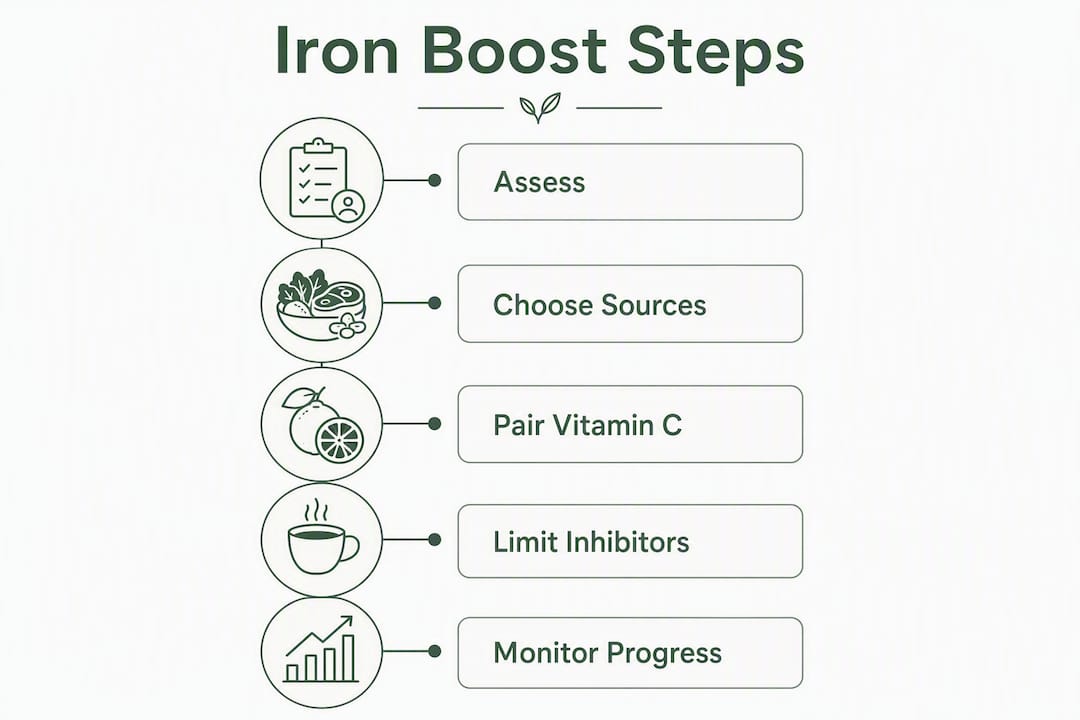
To raise low ferritin, prioritise consistent daily servings of bioavailable iron, pair every plant-based source with vitamin C, and time tea or coffee away from meals. That combination moves the dial. What it cannot do is replace a blood test: serum ferritin below 30 µg/L confirms iron deficiency, and below 10 µg/L suggests iron deficiency anaemia, so ask your GP for a ferritin test before reaching for supplements.
Start today:
- Add a serving of haem iron (such as red meat, liver, shellfish, oily fish) or a substantial portion of non-haem sources (such as lentils, fortified cereal, tofu) to at least two meals.
- Pair every plant iron source with roughly 50 mg of vitamin C — a medium orange, half a red pepper, or a handful of cherry tomatoes.
- Move your tea or coffee to at least one hour after an iron-rich meal.
- Book a GP appointment if you have fatigue, breathlessness, or hair loss; ask for serum ferritin and a full blood count.
Rebuilding ferritin is measured in months, not days. Diet is the foundation, but moderate to severe deficiency usually needs supervised supplementation alongside it. Test first, then act.
Table of Contents
- What to eat on a low ferritin diet: UK iron sources
- How much iron do you actually need?
- How to increase iron absorption at every meal
- A simple iron-smart meal plan
- When do you need supplements or medical treatment?
- Why does ferritin become low, and when should you get tested?
- How long does it take to rebuild ferritin stores?
- When diet alone is not enough: the case for personalised assessment
- Key takeaways
- The part most articles skip
- Foodconnection’s personalised support for low ferritin
- Useful sources
What to eat on a low ferritin diet: UK iron sources
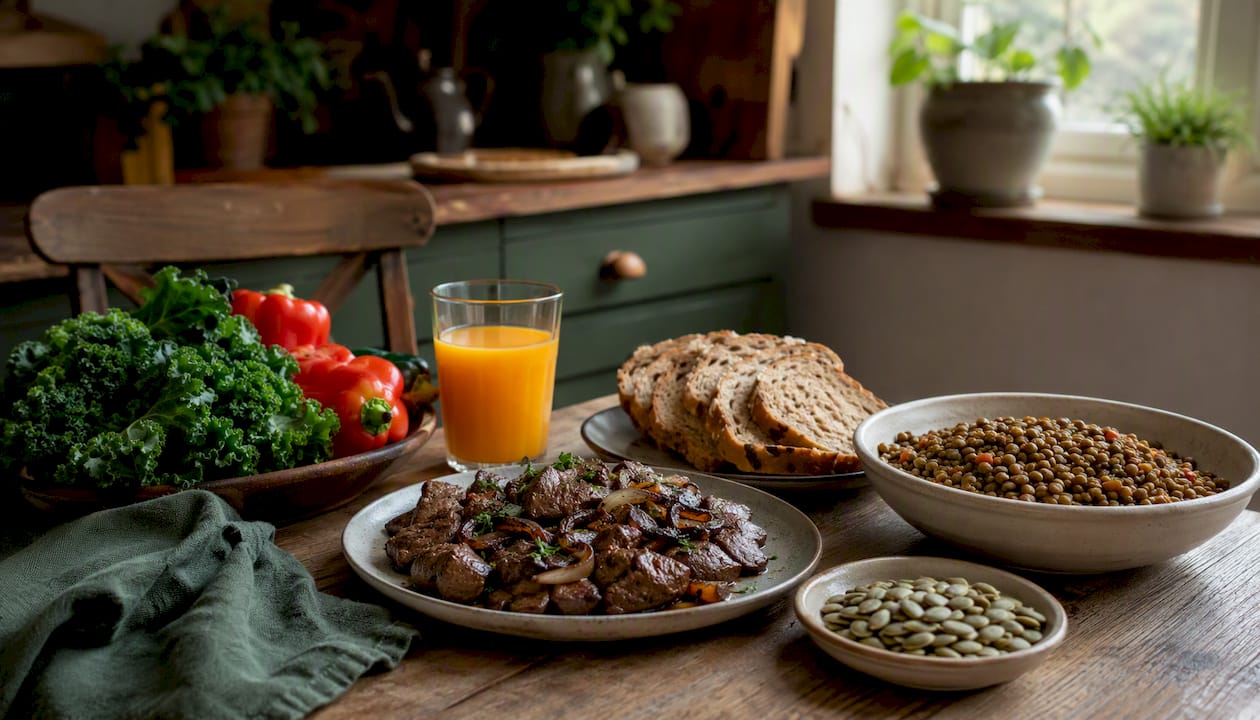
Iron comes in two forms, and the difference matters. Haem iron, found in meat, poultry, and fish, is absorbed at roughly 15–35%. Non-haem iron, from plant foods, eggs, and fortified products, absorbs at only 2–20% depending on what else is on the plate. That gap explains why vegetarians and vegans need to be more deliberate about both quantity and pairing.
| Food | Typical UK portion | Approx. iron (mg) | Type |
|---|---|---|---|
| Chicken liver (cooked) | — | significant | Haem |
| Beef (lean, cooked) | 100 g | moderate | Haem |
| Cockles / mussels | 90 g | significant | Haem |
| Sardines (tinned) | 100 g | moderate | Haem |
| Fortified breakfast cereal | 30–40 g | notable | Non-haem |
| Cooked lentils | — | moderate | Non-haem |
| Firm tofu | 100 g | moderate | Non-haem |
| Spinach (cooked) | 90 g | moderate | Non-haem |
| Dried apricots | 30 g | modest | Non-haem |
| Tinned chickpeas | — | moderate | Non-haem |
| Egg (whole, boiled) | 1 large | modest | Non-haem |
Figures are approximate and vary by cooking method and brand.
Practical swaps by eating pattern:
- Omnivores: swap chicken breast for chicken thigh or a small portion of beef mince twice a week; add cockles to pasta instead of prawns.
- Pescatarians: sardines on wholegrain toast with sliced tomato is one of the most iron-efficient quick meals available.
- Plant-based eaters: fortified oat or soy milk replaces dairy without losing iron; tinned lentils and chickpeas are faster than dried and lose little nutritional value.
Reading UK food labels: look for “iron” in the per-100 g column. A product providing 15% or more of the reference intake (RI) per serving is a useful contributor. Fortified grain products account for a substantial share of population iron intake in Western diets, making them a pragmatic daily option even for people who eat meat.
How much iron do you actually need?
The NHS recommends the following daily intakes for adults in the UK:
- Men (19–64): 8.7 mg per day
- Women (19–49, premenopausal): 14.8 mg per day
- Women (50+, postmenopausal): 8.7 mg per day
- Pregnant women: speak to a midwife or GP; requirements increase and supplementation is often advised from the outset.
The gap is significant: a premenopausal woman needs 14.8 mg of iron daily, nearly double the male requirement, largely because of menstrual losses.
Vegetarians and vegans face an additional challenge. Because non-haem iron absorbs so poorly, plant-based eaters may need approximately 1.8 times the standard intake to achieve the same absorbed amount. That means a premenopausal vegan woman would need to carefully plan dietary iron intake to meet her needs — a target that requires careful planning rather than simply eating more vegetables.
How to increase iron absorption at every meal
The food you eat matters less than the iron your body actually absorbs. Two people eating identical meals can absorb very different amounts depending on what else they consume alongside them.

Vitamin C is your most reliable lever. Around 50 mg at a meal — roughly a medium orange, half a red pepper, or a large tomato — meaningfully increases non-haem iron uptake. The effect is dose-dependent, so more is better up to a point, but 50 mg is a practical, achievable target at most meals.
What reduces absorption — and when to time it:
- Tea and coffee: tannins and polyphenols bind iron in the gut. Separate them from iron-rich meals by at least one hour, ideally two. This single change is where most people recover the most lost iron.
- Calcium: reduces both haem and non-haem iron absorption. Avoid large dairy portions (milk, cheese, yoghurt) at the same sitting as your main iron source.
- Phytates: found in wholegrains, legumes, and nuts. Soaking dried pulses overnight, sprouting seeds, or choosing sourdough bread (where fermentation breaks down phytates) all modestly improve the iron available from plant foods.
Cooking tips that help:
- Cast iron pans transfer small amounts of iron into acidic foods like tomato sauce — a minor but real contribution.
- Cooking pulses with a splash of lemon juice or tomato creates an acidic environment that slightly improves non-haem iron release.
Pro Tip: The most common absorption mistake is drinking tea with lunch. If you eat a plant-based diet and have a habitual midday cup of tea, shifting it to 90 minutes after eating is the single easiest change you can make — no new foods required.
Pairing examples:
- Lentil soup + squeeze of lemon + glass of orange juice (not milk)
- Fortified cereal + sliced strawberries + water or herbal tea (not builder’s tea)
- Beef stir-fry + broccoli + red pepper (the peppers double as vitamin C)
- Tofu scramble + cherry tomatoes + spinach + no dairy at that meal
A simple iron-smart meal plan
This three-day plan demonstrates the principles in practice: haem and non-haem choices, vitamin C pairing, and inhibitor timing. Vegetarian swaps are noted in brackets.
Day 1
- Breakfast: Fortified bran flakes with sliced strawberries and fortified oat milk; herbal tea or water (save builder’s tea for mid-morning, not now).
- Lunch: Sardine and tomato open sandwich on wholegrain bread; side of raw red pepper strips.
- Dinner: Beef and lentil stew with spinach, finished with a squeeze of lemon. [Vegan: swap beef for extra lentils and add tofu cubes.]
- Snack: Handful of dried apricots + small glass of orange juice.
Day 2
- Breakfast: Scrambled eggs on sourdough toast with sliced tomatoes.
- Lunch: Chickpea and roasted red pepper salad with lemon dressing; no cheese in this meal.
- Dinner: Chicken liver pâté on rye crackers as a starter, then grilled salmon with broccoli and new potatoes. [Vegetarian: replace liver with a large portion of cooked spinach and tofu.]
- Snack: Brazil nuts and a kiwi fruit.
Day 3
- Breakfast: Fortified porridge made with fortified soy milk, topped with pumpkin seeds and blueberries.
- Lunch: Lentil and vegetable soup with a slice of sourdough; glass of diluted orange juice.
- Dinner: Lamb mince with kidney beans, tinned tomatoes, and peppers (a natural vitamin C source built in).
- Snack: Edamame beans with a squeeze of lemon.
Batch-cook notes:
- Cook a large pot of lentils or chickpeas on Sunday; portion into containers for three lunches.
- Roast a tray of peppers and tomatoes — they keep for four days and add vitamin C to any meal quickly.
- Fortified cereals and tinned pulses require no preparation and are the most practical fallback when time is short.
When do you need supplements or medical treatment?
Diet is the right starting point, but it has limits. Clinical evidence shows that supplementation improves ferritin more quickly than dietary change alone, and for moderate to severe deficiency it is usually necessary alongside dietary work, not instead of it.
When to consider oral iron supplements:
- Confirmed ferritin below 30 µg/L with symptoms (fatigue, breathlessness, poor concentration, hair loss).
- Ferritin below 10 µg/L regardless of symptoms — this level suggests iron deficiency anaemia.
- Dietary changes have been consistent for 8–12 weeks with no improvement on re-testing.
Common oral iron forms include ferrous sulphate, ferrous fumarate, and ferrous gluconate. Ferrous sulphate is the most widely prescribed on the NHS. Side effects — constipation, nausea, dark stools — are common; taking iron with food reduces side effects but also reduces absorption slightly. Start under GP supervision, particularly if ferritin is very low or symptoms are severe.
Re-test after 8–12 weeks of supplementation to confirm ferritin is rising and adjust the dose if needed.
Intravenous iron is reserved for people who cannot tolerate oral supplements, have ongoing losses that outpace oral replacement, or have malabsorption conditions. This is a hospital or clinic procedure, arranged through GP referral to haematology or gastroenterology.
Red flags requiring urgent GP review:
- Black or tarry stools (possible GI bleeding)
- Rectal bleeding
- Unexplained, rapid weight loss alongside iron deficiency
- Ferritin very low with haemoglobin also falling
- Symptoms that worsen despite supplementation
Never self-prescribe high-dose iron. Excess iron is toxic, and iron overload (haemochromatosis) is a real clinical risk when supplementing without confirmed deficiency.
Why does ferritin become low, and when should you get tested?
Low ferritin rarely has a single cause. Common contributors include:
- Insufficient dietary intake: common in restrictive diets, plant-based eating without planning, or simply low red meat consumption over years.
- Menstrual blood loss: the leading cause in premenopausal women; heavy periods can deplete stores faster than diet replaces them.
- Gastrointestinal blood loss: ulcers, polyps, or colorectal cancer can cause slow, invisible blood loss that only shows up on testing.
- Malabsorption: coeliac disease, H. pylori infection, and inflammatory bowel disease all impair iron uptake even when intake is adequate.
- Frequent blood donation: each donation removes a meaningful amount of iron; regular donors should monitor ferritin annually.
- Pregnancy: increased demand in the second and third trimesters depletes stores rapidly.
When to ask your GP for a ferritin test:
Ask for serum ferritin and a full blood count if you have unexplained fatigue, hair thinning, breathlessness on mild exertion, restless legs, or difficulty concentrating. Routine testing is also worth requesting if you follow a vegan diet, have heavy periods, or have a known malabsorption condition.
One important caveat: ferritin is an acute-phase protein, meaning it rises during infection or inflammation even when iron stores are genuinely low. If your result comes back “normal” but you have ongoing symptoms, ask your GP to also check CRP (a marker of inflammation) and transferrin saturation. A ferritin of 40 µg/L in someone with active inflammation may still represent functional iron deficiency.
How long does it take to rebuild ferritin stores?
Longer than most people expect. Ferritin measures stored iron, not circulating iron, and stores are the last thing to fill. Haemoglobin often normalises before ferritin recovers, so you may start feeling better weeks before your stores are actually replenished.
With dietary changes alone and no ongoing losses, meaningful movement in ferritin typically takes several months. With supervised oral supplementation, clinical evidence indicates that rebuilding ferritin stores commonly takes months even with supplements, and the timeline extends further when the underlying cause has not been addressed.
A practical monitoring schedule:
- Baseline test: before starting any intervention.
- First re-test: 8–12 weeks after starting supplements or a structured dietary plan.
- Ongoing: every 3–6 months until ferritin is consistently above 50 µg/L and symptoms have resolved.
Track symptoms alongside blood results. Energy, hair shedding, and exercise tolerance often improve before ferritin numbers fully recover, which can be misleading. Keep the dietary habits going even when you feel better.
When diet alone is not enough: the case for personalised assessment
Some people do everything right dietarily and still see ferritin stall. The gut adapts to low ferritin by increasing non-haem iron absorption, but that compensatory mechanism fails when there is an underlying absorption problem. If ferritin stays low despite consistent dietary effort, the question shifts from “what am I eating?” to “why isn’t my body absorbing it?”
Signs that personalised assessment is warranted:
- Ferritin remains below 30 µg/L after 3–4 months of consistent dietary change.
- Digestive symptoms (bloating, loose stools, reflux) suggest possible malabsorption.
- You have a diagnosed condition such as coeliac disease, Crohn’s, or hypothyroidism.
- You are on medications that affect absorption (proton pump inhibitors, for example, reduce stomach acid and impair iron uptake).
- Chronic inflammation is suspected (elevated CRP, persistent fatigue, autoimmune history).
Functional lab testing — including stool analysis, SIBO testing, thyroid panels, and nutrient profiles — can identify the root cause that a standard GP blood test misses. A stool test might reveal H. pylori or intestinal permeability issues; a thyroid panel might show subclinical hypothyroidism slowing metabolism and impairing nutrient uptake. Without that information, dietary adjustments are educated guesswork.
Personalised nutrition counselling also changes adherence. Generic advice to “eat more red meat” is often unrealistic for vegetarians, people with digestive intolerances, or those managing hormonal health alongside iron deficiency. A tailored plan that works within actual food preferences, cooking habits, and health history is far more likely to be sustained.
Foodconnection offers personalised nutrition programmes that combine detailed dietary assessment, functional lab testing with clinical interpretation, and ongoing support — directly addressing the gap between generic dietary advice and the root-cause investigation that persistent low ferritin often requires.
Key takeaways
A low ferritin diet works best when it combines bioavailable iron sources, consistent vitamin C pairing, and inhibitor timing — with blood testing to confirm progress and guide supplementation.
| Point | Details |
|---|---|
| Test before you supplement | Ask your GP for serum ferritin and a full blood count; ferritin below 30 µg/L confirms deficiency. |
| Prioritise haem iron where possible | Haem iron absorbs at 15–35%; non-haem iron absorbs at only 2–20%, so source matters. |
| Pair plant iron with vitamin C | Around 50 mg of vitamin C at a meal meaningfully increases non-haem iron uptake. |
| Time inhibitors away from meals | Separate tea, coffee, and large dairy portions by at least one hour from iron-rich meals. |
| Foodconnection for persistent cases | If ferritin stalls despite dietary effort, Foodconnection’s personalised programmes and functional lab testing identify root causes. |
The part most articles skip
There is a pattern worth naming. People discover their ferritin is low, read a list of iron-rich foods, start eating more spinach and lentils, and feel frustrated three months later when their blood results barely move. The foods were right. The effort was real. So what went wrong?
Usually, one of three things: they were drinking tea with every meal and neutralising half the iron they consumed; they had an underlying gut issue quietly blocking absorption; or their ferritin was so depleted that diet alone was never going to be fast enough without supplementation.
The conventional framing of “eat more iron” misses the absorption side almost entirely. Non-haem iron is genuinely unreliable without deliberate pairing and inhibitor management. And the idea that a few dietary tweaks will resolve years of depletion in a few weeks sets people up to abandon a strategy that was actually working, just slowly.
What I see repeatedly is that the people who recover well are not necessarily eating the most iron. They are the ones who understand the absorption mechanics, test regularly to track progress, and get help identifying whether something else is going on when the numbers stall. That combination of knowledge, monitoring, and personalised support is what actually moves ferritin in the long run.
Foodconnection’s personalised support for low ferritin
Dietary guidance for low ferritin is only as useful as it is specific to you. Foodconnection’s one-to-one nutrition programmes go beyond a generic food list: each programme includes a detailed lifestyle and dietary assessment, a tailored meal plan built around your food preferences and tolerances, and the option to add functional laboratory testing with full clinical interpretation.
For clients where ferritin remains stubbornly low, Foodconnection offers access to stool analysis, thyroid panels, SIBO testing, and nutrient profiles that identify the root causes standard GP tests often miss. Support is available in London and online across the UK.
If you are ready to move from generic advice to a plan that actually fits your life, book a consultation with Foodconnection or browse the full range of nutrition services and lab packages to find the right starting point.
Useful sources
- NHS: Iron — vitamins and minerals — UK reference intakes, food sources, and when to see a GP; the primary UK public health guidance on iron.
- NIH Office of Dietary Supplements: Iron — Health Professional Fact Sheet — detailed clinical data on ferritin thresholds, absorption, and supplementation; used for testing thresholds in this article.
- StatPearls / NCBI Bookshelf: Dietary Iron — peer-reviewed clinical reference covering haem vs non-haem bioavailability, vegetarian multipliers, and malabsorption mechanisms.
- Medical News Today: How to increase ferritin — practical summary of inhibitors (tea, coffee, phytates, calcium) and timing advice.
- Foodconnection: Functional lab testing — details of the functional laboratory packages available for clients with persistent low ferritin or suspected malabsorption.
This article provides general nutritional information and is not a substitute for medical advice. If you have symptoms of iron deficiency or are considering supplementation, consult your GP or a registered healthcare professional.
Recommended
- Insulin resistance diet: why personalisation changes everything | FoodConnection blog
- Fatty liver diet: what to eat, avoid, and change | FoodConnection blog
- Prediabetes diet: managing blood sugar with complex health needs | FoodConnection blog
- Cholesterol diet plan: what actually works for UK adults | FoodConnection blog