
Insulin resistance diet: why personalisation changes everything

An insulin resistance diet is not a single eating plan you follow from a printout. It is a tailored dietary strategy designed to improve how your cells respond to insulin, and the evidence is clear that metabolic phenotype-tailored plans consistently outperform generic diets in both adherence and metabolic outcomes. If you have a complex or chronic health condition alongside insulin resistance, a one-size-fits-all approach is not just ineffective. It can be actively harmful.
The dietary patterns with the strongest evidence base include Mediterranean-style eating, low-glycaemic-index (low-GI) diets, and the DASH approach. The Mediterranean diet reduces type 2 diabetes incidence by 31% in high-risk populations, according to the PREDIMED-Plus trial. Low-GI and DASH diets show particular benefit for women with PCOS, improving postprandial insulin dynamics where other approaches fall short. Yet none of these patterns works universally. Insulin sensitivity is shaped by your gut microbiome, hormonal status, ethnicity, age, and comorbidities, which is why functional testing and expert dietetic input matter so much before you commit to any plan.
Insulin resistance severity is typically measured using HOMA-IR (a fasting glucose-to-insulin ratio calculation) or, in specialist settings, the hyperinsulinemic-euglycaemic clamp. These tools tell a clinician how significant the resistance actually is. For people with severe forms such as lipodystrophy, NHS England guidelines explicitly warn that standard healthy-eating advice can cause dyslipidaemia and pancreatitis. Specialist dietetic input is not optional in those cases.
Key factors in personalising your insulin resistance diet:
- Your metabolic phenotype (fasting insulin, HbA1c, lipid profile, body composition)
- Comorbidities: PCOS, thyroid disorders, chronic fatigue, or digestive conditions all shift the dietary priorities
- Ethnicity: South Asian and Black African/Caribbean populations carry higher insulin resistance risk at lower BMIs, requiring adjusted thresholds
- Hormonal status: perimenopause and menopause alter insulin sensitivity significantly
- Adherence potential: a plan you can sustain for 12 months beats a “perfect” plan you abandon in six weeks
- Functional lab testing to identify gut dysbiosis, hormonal imbalances, or thyroid dysfunction affecting glucose regulation
Table of Contents
- Practical meal planning tips that actually work
- How dietary needs differ across age, gender, and ethnicity
- Foodconnection’s personalised approach to managing insulin resistance
- Key takeaways
Practical meal planning tips that actually work
Structure your plate around non-starchy vegetables (half the plate), quality protein (a quarter), and a small portion of low-GI carbohydrate such as lentils, oats, or sweet potato. NICE guidance recommends high-fibre, low-GI carbohydrate sources and oily fish as dietary cornerstones for type 2 diabetes management, and the same principles apply to a prediabetes meal plan.
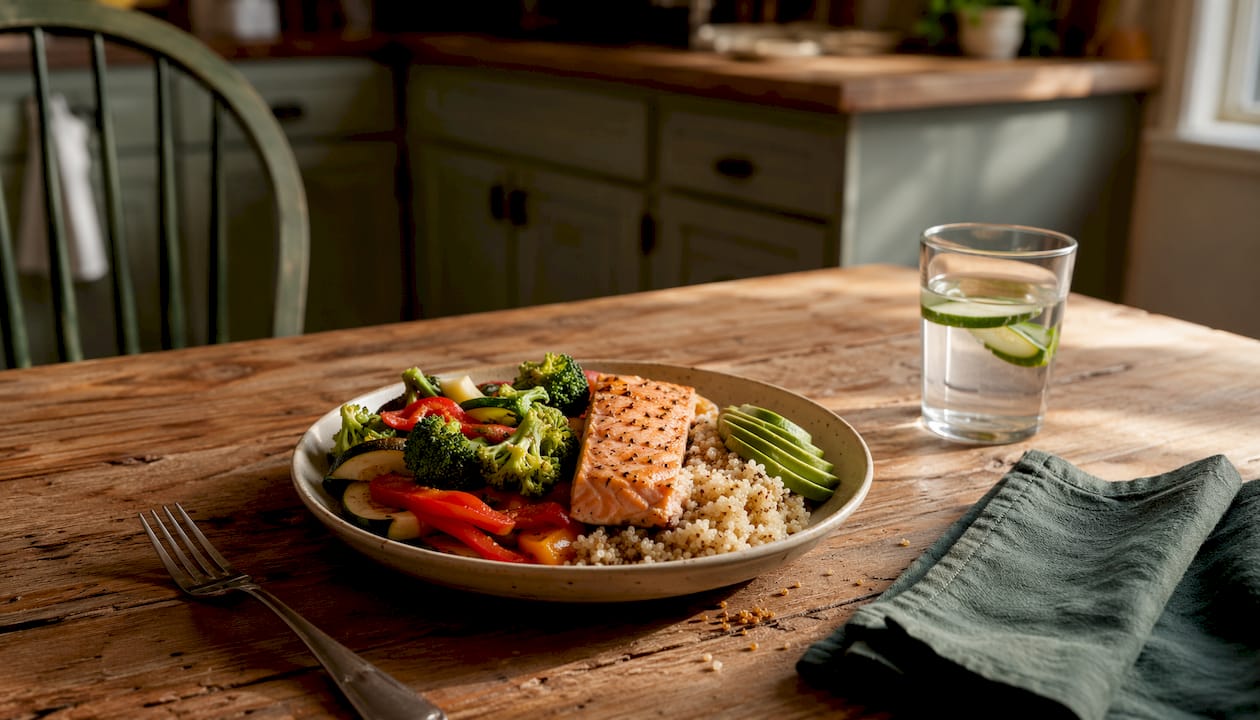
Eat within a consistent window. Skipping breakfast and eating a large evening meal worsens postprandial glucose spikes. Aim for three structured meals rather than grazing, unless your medication or blood glucose patterns require otherwise.
Sample day on an insulin resistant meal plan:
- Breakfast: Scrambled eggs with spinach and half an avocado on one slice of rye bread
- Lunch: Grilled salmon with a large mixed salad, olive oil dressing, and a small portion of chickpeas
- Dinner: Chicken thighs with roasted courgette, broccoli, and a small serving of brown rice
- Snack (if needed): A small handful of walnuts with a few berries
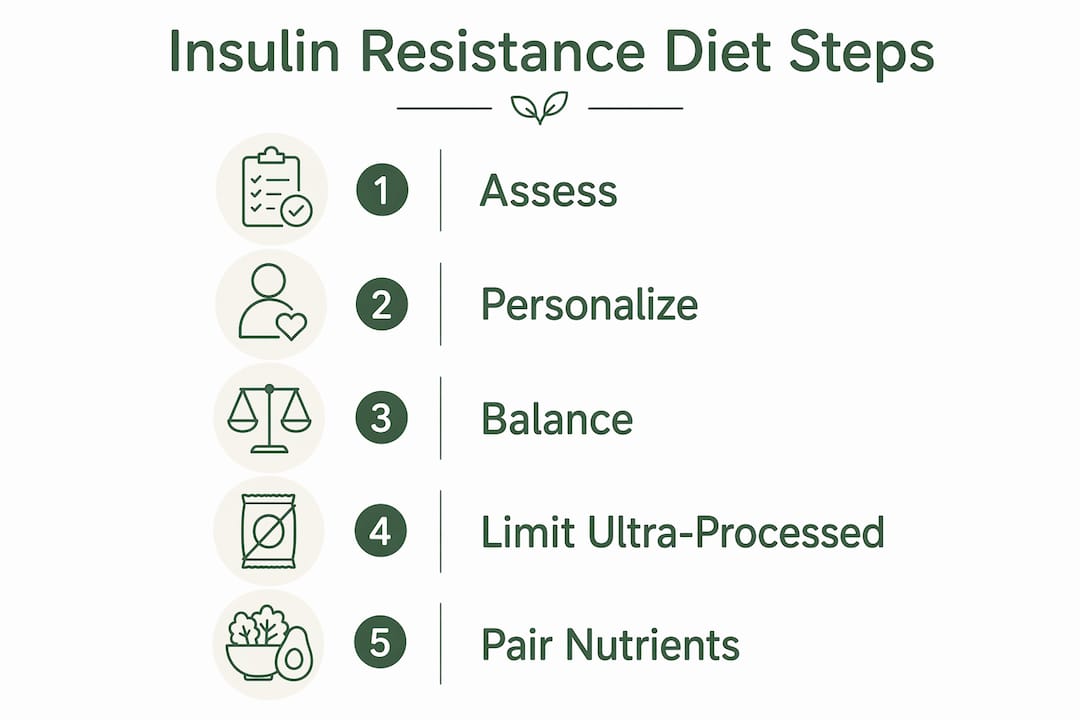
Limit ultra-processed foods, sugary drinks, white bread, and refined cereals. These drive rapid glucose spikes and worsen insulin resistance over time. Alcohol deserves attention too: even moderate intake disrupts overnight glucose regulation.
Pro Tip: Pair carbohydrates with fat or protein at every meal. This slows gastric emptying and blunts the glucose response without eliminating carbohydrates entirely.
How dietary needs differ across age, gender, and ethnicity
Women in perimenopause and menopause experience a measurable decline in insulin sensitivity as oestrogen falls. This is the period when many women first develop prediabetes without any change in diet or weight. A prediabetes diet plan for this group needs to account for cortisol reactivity, sleep disruption, and the tendency for visceral fat redistribution, not just carbohydrate quantity.
Younger women with PCOS face a different picture. Their insulin resistance is often driven by androgen excess and ovarian dysfunction, and the low-GI and DASH approaches show the clearest clinical benefit here. Caloric restriction alone tends to be counterproductive; the quality and timing of carbohydrates matter more than the total.
Ethnicity shapes risk in ways that UK dietary guidelines are only beginning to reflect. South Asian adults develop insulin resistance and type 2 diabetes at significantly lower BMIs than white European populations, meaning standard weight-based thresholds can miss the problem entirely. Dietary patterns high in refined rice and white bread, common in some South Asian households, compound this. A culturally sensitive meal plan that preserves familiar foods while shifting to lower-GI alternatives is far more sustainable than one built around unfamiliar ingredients.
Older adults face a different challenge: muscle mass loss (sarcopaenia) reduces glucose uptake independent of diet. Protein intake becomes a higher priority, and resistance exercise alongside dietary change is particularly important for this group. Energy metabolism and ageing are closely linked, and dietary strategies that support mitochondrial function become increasingly relevant from midlife onwards.
Foodconnection’s personalised approach to managing insulin resistance
If you have been reading this and thinking “but which of these applies to me?”, that is precisely the problem a generic article cannot solve. Foodconnection works with adults navigating complex health pictures, including insulin resistance alongside hormonal imbalances, thyroid disorders, digestive conditions, and chronic fatigue, through structured personalised nutrition programmes that go well beyond a single consultation.

Every programme begins with a thorough assessment of your metabolic phenotype, health history, and lifestyle. Tailored meal plans are built around what your body actually needs, not a template. Where relevant, Foodconnection offers optional functional laboratory testing, covering stool analysis, hormonal panels, thyroid function, and SIBO, with full interpretation included. This means dietary recommendations are grounded in your actual biochemistry, not educated guesswork.
Continuous programme-based support means your plan is adjusted as your markers improve, your symptoms shift, or your life changes. UK personalised nutrition regulations require providers to operate within functional health claims rather than disease treatment, and Foodconnection works within this framework while delivering genuinely clinical-grade depth. For those where weight management is part of the picture, improving insulin sensitivity and losing weight are addressed together as the interconnected issues they are. Book a consultation to find out which programme fits your situation.
Key takeaways
An insulin resistance diet works only when it is matched to your individual metabolic phenotype, comorbidities, and adherence capacity.
| Point | Details |
|---|---|
| Personalisation is non-negotiable | Phenotype-tailored plans consistently outperform generic diets in adherence and metabolic outcomes. |
| Mediterranean diet has the strongest evidence | The PREDIMED-Plus trial found a 31% reduction in type 2 diabetes incidence with Mediterranean diet adherence. |
| Population differences matter | South Asian adults, menopausal women, and those with PCOS each need adjusted dietary priorities, not the same plan. |
| Severe cases require specialist input | NHS England warns that standard dietary advice can cause serious harm in conditions such as lipodystrophy. |
| Foodconnection | Offers structured personalised nutrition programmes with functional lab testing and continuous expert support for complex insulin resistance cases. |