
See Real Change in 4–6 Weeks: Low FODMAP First IBS Diarrhea Diet

Try targeted dietary changes first: cut back on high-FODMAP foods, lean on soluble fibre like oats, and drink 1.5 to 2 litres of water daily. Avoid sorbitol and other polyols, ease off caffeine and fatty foods while symptoms are active, and get dietitian support before attempting a structured reintroduction. Contact your GP if you notice blood in your stool, unexplained weight loss, or night-time symptoms.
TL;DR:
- A low FODMAP diet can significantly reduce IBS-D symptoms within six weeks when followed in a structured, three-phase process with dietitian support.
- Portion control is crucial, as even small amounts of “safe” foods like low-FODMAP fruits or rice can trigger symptoms if consumed in excess.
- Hydration should prioritize 1.5 to 2 liters of water daily, while soluble fiber helps firm stools, and insoluble fiber can worsen diarrhea.
- Drinking less caffeine and alcohol reduces gut irritation and speed, which can alleviate urgency and loose stools.
- Gradual dietary changes, meal timing, and careful food prep help prevent flare-ups and improve long-term symptom management.
Table of Contents
- IBS diarrhoea diet: what to eat and what to avoid
- What is the low FODMAP diet and how does it work for IBS-D?
- How much water should you drink to manage IBS diarrhoea?
- Cooking and meal prep swaps that reduce trigger risk
- Do probiotics and anti-diarrhoea medicines help with IBS-D?
- How to change your diet without triggering a flare-up
- Eating out and travelling without losing control of symptoms
- Does caffeine or alcohol make IBS-D worse?
- The Foodconnection view: why personalisation beats permanent restriction
- How Foodconnection supports your IBS-D diet, step by step
- Sources
IBS diarrhoea diet: what to eat and what to avoid
Getting the day-to-day choices right matters more than any single “superfood” claim you’ll see online. The pattern that actually calms diarrhoea-predominant IBS (IBS-D) comes down to swapping fermentable carbohydrates for gentler alternatives and leaning on soluble fibre wherever you can.
Foods that tend to sit well:
- Low-FODMAP fruits in modest portions: firm bananas, blueberries, strawberries, oranges
- Soluble-fibre staples: porridge oats, peeled and boiled potatoes, white rice
- Lean proteins: chicken, turkey, firm tofu, eggs, most fish
- Lactose-free milk or hard cheeses (naturally low in lactose), and plant milks such as oat or almond
- Nuts and seeds in small handfuls: walnuts, pumpkin seeds, sesame seeds (large amounts of cashews and pistachios are worth avoiding)
Foods to limit or avoid while symptomatic:
- High-FODMAP vegetables: garlic, onion, leeks, mushrooms
- Fruits high in fructose or sorbitol: apples, pears, cherries, mango
- Pulses and beans in large servings: chickpeas, lentils, kidney beans
- Wheat and rye based bread and pasta, if you notice a personal reaction
- Sugar alcohols in “sugar-free” gum, mints, and diet drinks (sorbitol, mannitol, xylitol)
- Fried and very fatty foods, plus excess caffeine and fizzy drinks
Portion size does a lot of the heavy lifting here. One piece of low-FODMAP fruit per sitting is usually fine; two or three stacked together can tip you over into symptoms even if each one is technically “safe” on its own. Fruit juice concentrates the sugars without the fibre that would normally slow digestion, so a small glass goes further than it looks. Dried fruit is worse still. A handful of dried apricots can contain more FODMAP load than the whole fresh fruit would.
For swaps that make meals easier: white rice and gluten-free pasta replace wheat pasta without much adjustment to a recipe, and rice cakes or plain crackers work as safer snacks than flapjacks or biscuits loaded with high-fructose syrups.
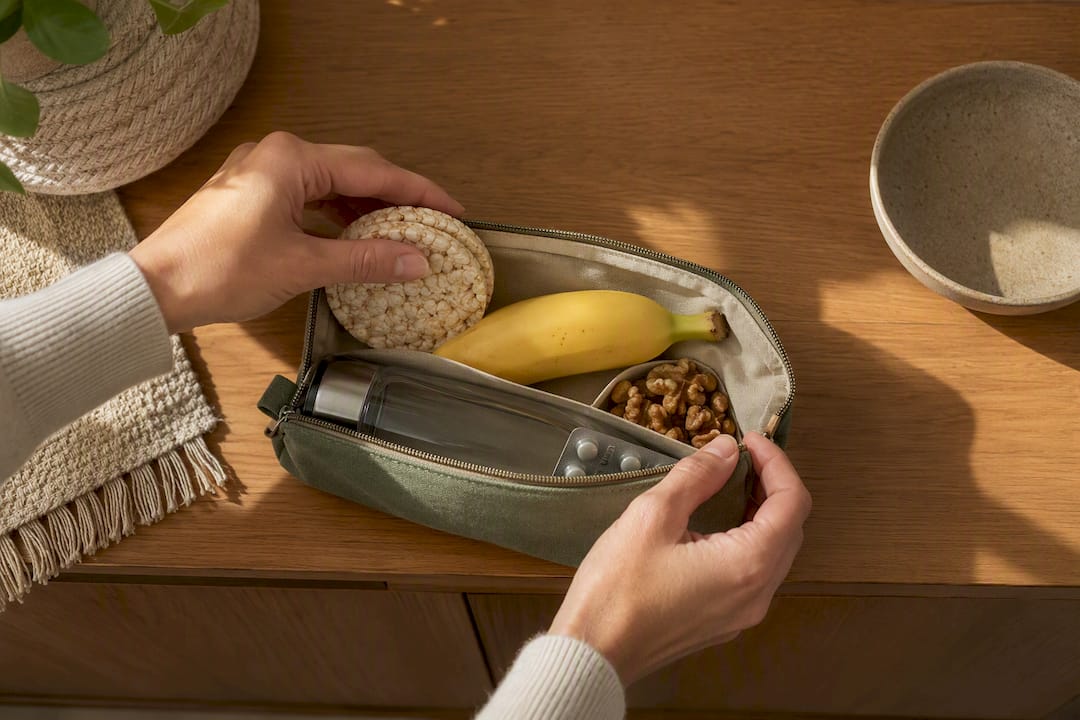
Pro Tip: Keep a small stash of “safe” snacks (rice cakes, a few walnuts, a firm banana) in your bag or desk drawer. Being caught hungry with no good option is when most people reach for the trigger food they were trying to avoid.
What is the low FODMAP diet and how does it work for IBS-D?
FODMAPs are a group of fermentable short-chain carbohydrates found in wheat, onion, garlic, certain fruits, dairy, and pulses. They draw extra water into the bowel and get fermented by gut bacteria, producing gas and often triggering the loose, urgent stools typical of IBS-D. Reducing them lowers that osmotic and fermentative load directly, which is why the approach outperforms vague “just eat healthy” advice for this specific symptom.
The low FODMAP diet is delivered in three distinct phases, and skipping the structure is the most common reason people give up on it too early:
- Elimination (2 to 6 weeks): strip out high-FODMAP foods almost entirely to calm symptoms and establish a baseline. Success looks like a noticeable drop in urgency and stool frequency, not necessarily perfection.
- Systematic reintroduction: bring back one FODMAP group at a time in controlled portions, waiting a few days between each to isolate reactions rather than reintroducing everything at once.
- Personalisation: build a long-term diet based on what you’ve actually learned about your own tolerances, expanding variety wherever it’s safe to do so.
Clinical evidence shows symptomatic improvement for many patients within roughly the first six weeks when the three-phase framework is followed properly, rather than treated as a single indefinite restriction.
That last point matters more than people expect. Self-prescribing the elimination phase without dietitian input commonly leads to two problems: staying overly restricted for months because reintroduction feels risky, and never actually pinning down which specific foods are the real triggers. A dietitian trained in the method turns it into a genuine discovery process instead of a diet you’re stuck on forever. Keeping a simple food and symptom diary throughout reintroduction, noting what you ate, the portion, and how you felt over the following 24 hours, gives you and your dietitian the pattern you need to move to personalisation with confidence.
How much water should you drink to manage IBS diarrhoea?
Frequent loose stools drain fluid and electrolytes faster than most people realise, and dehydration will make fatigue and cramping worse on top of the IBS itself. NHS guidance recommends 1.5 to 2 litres, roughly 8 to 10 cups, of fluid a day, favouring water and non-caffeinated herbal teas over caffeinated or fizzy drinks that can irritate the gut further.
Fibre needs the same nuance most diet advice skips. Soluble fibre, found in oats, peeled root vegetables, and psyllium, absorbs water and helps firm up loose stools. Insoluble fibre from wholegrains, bran, and seeds moves through the gut faster and can worsen diarrhoea in people already prone to it, so the standard “eat more fibre” advice can actually backfire here.
Meal timing plays its own role through something called the gastrocolic reflex, the gut’s natural tendency to contract and move waste along shortly after food enters the stomach. It’s why a large or fatty meal can trigger urgency within minutes.
- Eat smaller, more regular meals rather than one or two large ones
- Slow down. Eating quickly increases air swallowing and can intensify the reflex
- Avoid skipping meals, which often leads to overeating later and a bigger gastrocolic response
Cooking and meal prep swaps that reduce trigger risk
How you cook matters almost as much as what you cook. Freshly prepared, warm food is generally better tolerated than reheated or cold starches, because resistant starch forms as starchy foods cool and can increase gas and bloating in sensitive guts. Poaching, steaming, and baking are gentler than frying.
- Swap creamy mayo-and-onion sandwich fillings for mashed egg, tuna, or turkey with a low-FODMAP spread
- Rebuild curries with a garlic-and-onion-free base (asafoetida works as a garlic substitute), coconut milk, and infused oils
- Choose infused garlic or onion oil, which carries flavour without the FODMAP content of the bulb itself
- Batch-cook and freeze portions in labelled containers, then reheat only what you’ll eat that day rather than storing cooled rice or pasta salads for later
- Stock safe ready-to-eat staples: plain rice cakes, hard cheese, tinned tuna
Pro Tip: Label frozen batch-cooked meals with the date and main ingredients. It sounds obvious, but it’s the easiest way to avoid accidentally reheating a three-day-old rice dish that’s now higher in resistant starch than you’d like.
Do probiotics and anti-diarrhoea medicines help with IBS-D?
Probiotics work on a trial basis, not a guarantee. If you try one, give it a full four weeks before judging the result, and if that strain doesn’t help, switching to a different one is worth trying before writing off probiotics altogether. Effects are strain-specific, so one disappointing product doesn’t mean the whole category is useless for you.
Loperamide can control acute urgency and looseness in the short term, but it’s meant for occasional use, not a daily long-term fix. Check with a pharmacist or your GP before relying on it regularly, particularly if you take other medication.
Certain symptoms are never something to manage through diet alone. See your GP promptly if you notice:
- Unexplained weight loss
- Blood in your stool
- Symptoms that wake you at night
- Signs of anaemia, such as persistent fatigue or pallor
Any of these warrants proper investigation, and a referral to a dietitian for FODMAP work should generally happen alongside that assessment, not instead of it.
How to change your diet without triggering a flare-up
Ripping out entire food groups overnight is the single most common reason people abandon dietary change for IBS-D within a fortnight. The gut doesn’t respond well to abrupt shifts, and a sudden jump in fibre or a sudden crash in familiar carbohydrates can trigger the very symptoms you’re trying to avoid.
Change one meal at a time. Start with breakfast, get comfortable with a low-FODMAP version for a few days, then move to lunch, then dinner. This staggered approach means that if a symptom flares, you know almost exactly what caused it, rather than facing a full day of new foods and no way to isolate the culprit.
Introduce fibre changes slowly too. Jumping from a low-fibre diet straight to large bowls of oats and psyllium can cause bloating even though oats themselves are well tolerated long-term. Build up over a week or two rather than a single day.
Expect some fluctuation regardless of how careful you are. Stress, sleep, hormonal cycles, and minor infections all influence gut sensitivity independently of diet, so one bad day doesn’t mean your new approach has failed. Judge progress over two to three weeks, not day by day, and keep the food and symptom diary running throughout so genuine patterns are easier to separate from noise.
Eating out and travelling without losing control of symptoms
Restaurants and travel are where most low-FODMAP progress gets tested, and often undone, because you lose control over exactly what’s in the pan. A few habits make it manageable rather than something to avoid entirely.
Scan menus for simply grilled or steamed proteins with vegetables and rice or potatoes on the side, and ask for sauces separately since most restaurant sauces are built on onion and garlic bases. Most kitchens can leave a sauce off or serve it separately if you ask plainly rather than apologetically.
Eating a small, safe snack before you leave the house reduces the pressure to eat whatever’s put in front of you when you’re already hungry. Carrying rice cakes, a firm banana, or a small pack of walnuts in your bag covers you if options at your destination turn out to be limited.
For travel specifically, pack a compact kit: a few low-FODMAP snacks, any medication you use for flare management, and a card or translated note describing your dietary needs if you’re abroad and language is a barrier. Bottled water becomes non-negotiable in places where tap water quality is uncertain, since gut infections layered on top of IBS-D are considerably harder to untangle. Buffet and self-catering options give you more control than set menus, so where you have a choice of accommodation, self-catering can be worth the extra planning.
Does caffeine or alcohol make IBS-D worse?
Caffeine speeds up gut motility directly, which is exactly the mechanism you don’t want if urgency and loose stools are already your main problem. A morning coffee that seems harmless can be the difference between a calm commute and a frantic search for a bathroom, and the effect tends to be dose-related rather than all-or-nothing.
Alcohol works against you on two fronts. It irritates the gut lining directly, and many drinks, particularly beer, sweet wines, and cocktails mixed with fruit juice or sugary syrups, carry a meaningful FODMAP load on top of the alcohol itself. Spirits mixed with soda water, or a small glass of dry wine, tend to be better tolerated than beer or dessert wines, though “better tolerated” doesn’t mean unlimited.
Neither has to be eliminated forever, but it is one of the clearest, most direct symptom levers available to you. Cutting caffeine to one drink before midday, or switching to decaf during a bad patch, is a low-effort change that many people notice within days rather than weeks. Alcohol is worth testing carefully during the personalisation phase of low FODMAP work rather than guessing, since tolerance genuinely varies from one person to the next.
The Foodconnection view: why personalisation beats permanent restriction
Too many people treat the low FODMAP diet as a destination rather than a diagnostic tool, and that’s where long-term problems creep in: nutrient gaps, social isolation around food, and a diet that’s more restrictive than it needs to be years later. A holistic assessment, staged reintroduction, and genuine ongoing support are what separate a diet that heals from one that just suppresses symptoms while quietly narrowing what you eat.
Most clients notice meaningful change within the first four to six weeks, tracked through food and symptom logs rather than guesswork, with reintroduction paced against what those logs actually show rather than a fixed calendar. That data-led pacing is the difference between guessing your triggers and knowing them.
— Irina
How Foodconnection supports your IBS-D diet, step by step
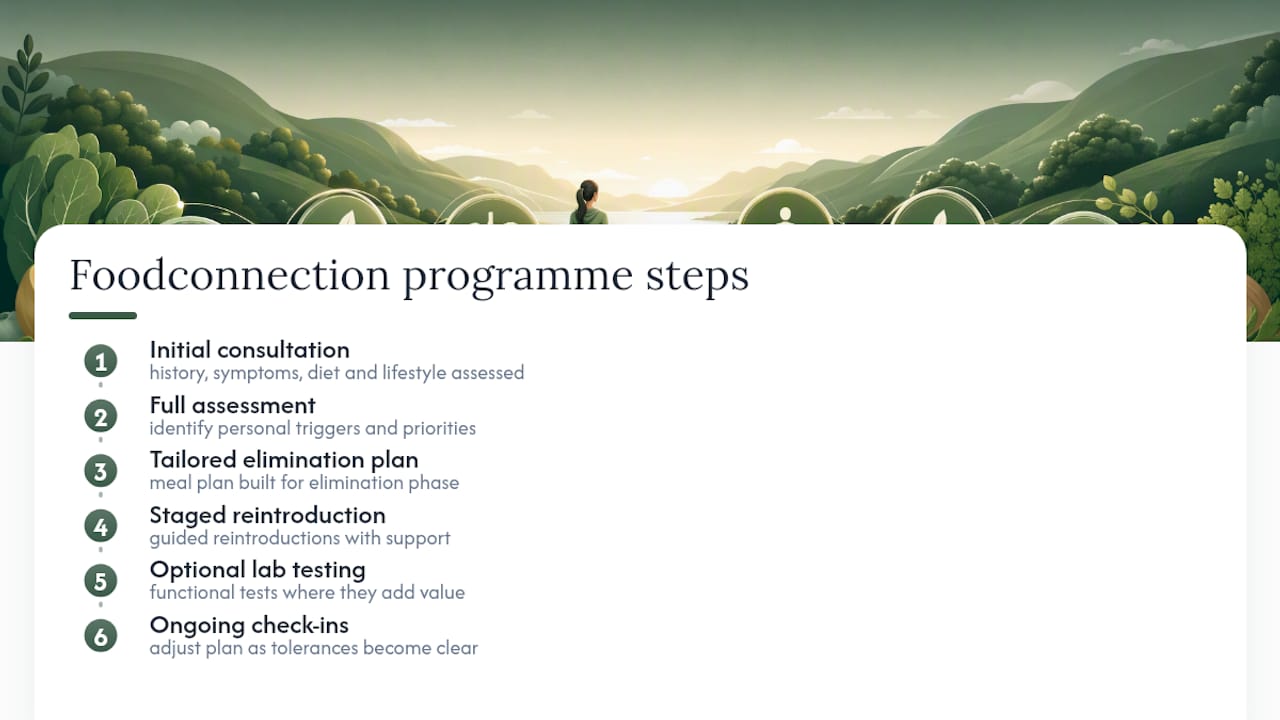
A structured programme beats a generic food list because your triggers aren’t identical to anyone else’s. A typical Foodconnection programme for IBS-D starts with a full assessment of your symptoms, current diet, and lifestyle, then builds a tailored meal plan around the elimination phase before guiding you through staged reintroduction with proper support at each step. Functional lab testing is available where it adds useful information, alongside ongoing check-ins to adjust the plan as your tolerances become clear.
This suits anyone who has tried cutting foods on their own, seen partial improvement, and then got stuck, unsure what to reintroduce or how to do it without triggering another flare. It also suits anyone who wants to skip months of trial and error entirely. The first step is a consultation where your history and symptoms are assessed properly before any plan is written, which is the part a generic online diet sheet simply can’t offer.
If you’re ready to move past guesswork, visit Foodconnection’s nutrition programmes to see how a personalised plan is built, or explore the full range of one-to-one support and lab testing options available before booking your initial consultation.
This article is general information, not a substitute for advice from a qualified doctor. Consult a qualified healthcare professional about your own circumstances before acting on anything here.
Sources
- Diet, lifestyle and medicines for IBS (irritable bowel syndrome) - NHS
- The Low-FODMAP Diet in Clinical Practice: Evidence-Based Indications, Implementation, and Interprofessional Care - NCBI Bookshelf
- FODMAP diet: what you need to know - Johns Hopkins Medicine
- Irritable Bowel Syndrome (IBS): Diarrhoea - Royal Berkshire NHS leaflet