
Gut healing diet: practical 7-day plan for symptom relief

A gut healing diet is a food-first plan that supplies prebiotic fibre, regular fermented foods, and anti-inflammatory whole foods while removing common irritants — its goal is to restore microbiome diversity, support the gut lining, and reduce chronic inflammation.
Start here:
- Add at least one fermented food daily (live yoghurt, kefir, sauerkraut, or kimchi)
- Increase plant variety across the week, aiming for 30 or more different plants
- Swap ultra-processed snacks for whole-food alternatives
- Limit alcohol intake, ideally less during recovery
- Keep a brief symptom diary: note what you ate, bloating, stool consistency, and energy
- Drink at least 1.5–2 litres of water daily to support fibre transit
Pro Tip: Start with just two or three of these changes in week one. Trying to overhaul everything at once is the fastest route to giving up.
Red flag: If you have rectal bleeding, unexplained weight loss, persistent vomiting, or severe abdominal pain, contact your GP before making any dietary changes.
Key takeaways
A gut healing diet built on plant variety, daily fermented foods, and reduced ultra-processed intake produces measurable improvements in most people within 2–6 weeks, with more stable changes by 3 months.
| Point | Details |
|---|---|
| Prioritise plant variety | Aim for 30 different plant foods per week to support microbiome diversity. |
| Hit the fibre target gradually | The NHS recommends 30 g of fibre daily; increase by 3–5 g per week to avoid bloating. |
| Add fermented foods daily | Frequency matters more than quantity — a small daily serving of live yoghurt, kefir, or kimchi outperforms occasional large doses. |
| Track symptoms and adjust | A symptom diary and the Bristol Stool Chart help identify triggers and measure real progress. |
| Know the red flags | Rectal bleeding, unexplained weight loss, or persistent vomiting warrant a GP appointment before dietary changes. |
| Foodconnection for complex cases | Persistent or complex symptoms benefit from a personalised programme with lab testing and ongoing one-to-one support. |
Table of Contents
- What does a gut healing diet actually do?
- What to eat on a gut healing diet
- What to limit or avoid
- A sample 7-day gut reset menu
- Lifestyle factors that speed up gut recovery
- How long does gut healing take?
- When should you see a GP?
- Practical tips and troubleshooting
- Who benefits most from personalised nutrition support?
- The part most guides skip
- Foodconnection’s personalised nutrition programmes
- Sources
What does a gut healing diet actually do?
The mechanism is straightforward once you see it laid out. Prebiotic fibre — found in foods like oats, garlic, leeks, and Jerusalem artichokes — feeds the bacteria already living in your colon. Those bacteria ferment the fibre and produce short-chain fatty acids (SCFAs), particularly butyrate, propionate, and acetate. Butyrate is the primary fuel for colonocytes, the cells lining your gut wall. More butyrate means a better-maintained mucosal barrier, which in turn means less “leakiness” and reduced systemic inflammation.
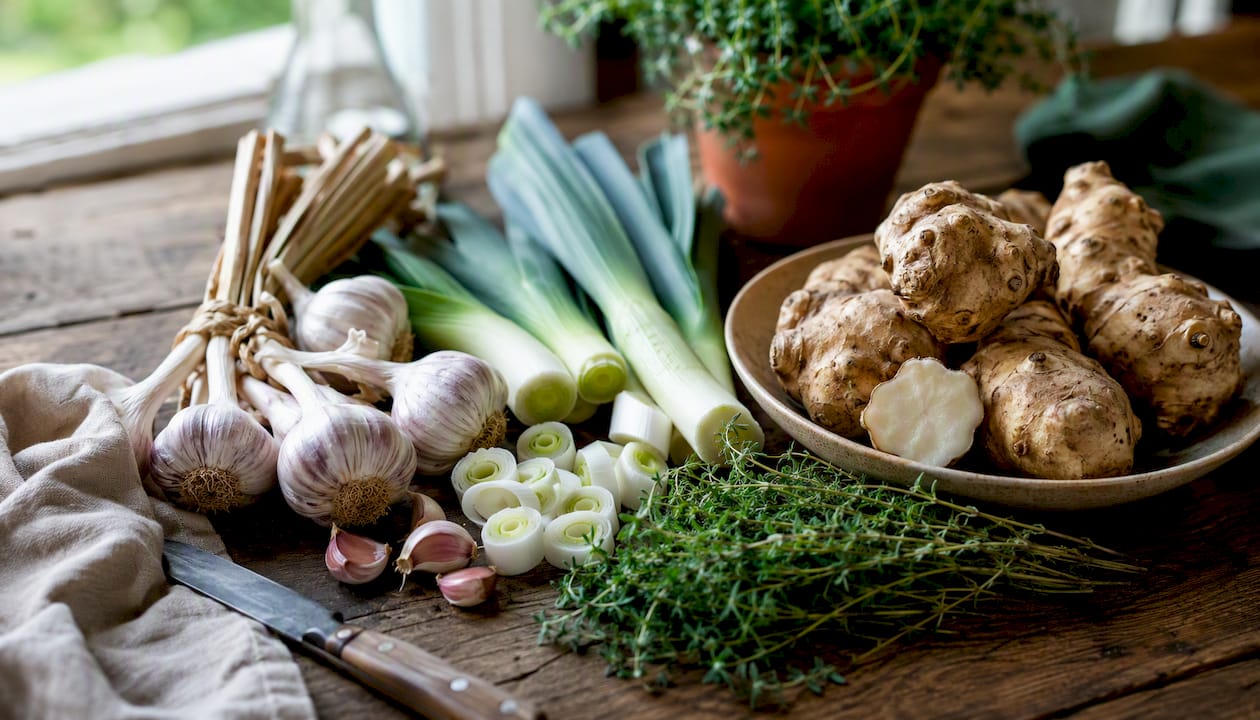
Probiotic foods introduce live beneficial organisms directly. The food-first approach combining prebiotic fibre and regular fermented foods supports microbiome diversity and reduces inflammation in the gut environment. Both components matter: prebiotics without probiotics leaves fewer organisms to feed; probiotics without prebiotics gives those organisms nothing to thrive on.
The British Dietetic Association (BDA) and the NHS both recognise that dietary changes are the foundation of gut health management, ahead of supplements. That matters because it sets the right order of priority.
Where it gets more complicated is in conditions like irritable bowel syndrome (IBS), small intestinal bacterial overgrowth (SIBO), or histamine intolerance. In these cases, some high-fibre prebiotic foods can worsen symptoms rather than improve them. Prebiotics like inulin have been linked to improved gut markers, but individual responses vary considerably — which is why personalisation matters more than following a generic plan.
What to eat on a gut healing diet
The single most impactful change you can make is increasing the variety and quantity of plants you eat. Plant diversity correlates with greater microbiome diversity, and diets low in ultra-processed foods tend to support better microbial profiles. Aim for 30 different plant foods per week — that includes vegetables, fruits, wholegrains, legumes, nuts, seeds, and herbs.
Prebiotic-rich foods
- Vegetables: garlic, onions, leeks, asparagus, Jerusalem artichokes, chicory root
- Fruits: bananas (slightly underripe), apples, pears
- Wholegrains: oats, barley, rye bread
- Legumes: lentils, chickpeas, black beans, kidney beans
- Other: flaxseeds, dandelion greens
Aim for some portions of legumes daily and rotate your vegetables across the week rather than eating the same three repeatedly.
Fermented and probiotic foods
- Live natural yoghurt (look for “live cultures” on the label)
- Kefir (dairy or water-based)
- Sauerkraut and kimchi (unpasteurised, from the chilled aisle)
- Miso paste (stir into soups after cooking to preserve cultures)
- Kombucha (low-sugar varieties)
- Tempeh
One portion daily is a reasonable starting point. Frequency matters more than quantity — a small daily serving beats an occasional large one.
Pro Tip: On UK supermarket labels, “live cultures” or “contains live and active cultures” is the phrase to look for. “Probiotic” on packaging is a marketing term with no regulated definition in the UK. Pasteurised sauerkraut or heat-treated kefir contains no live organisms — always buy from the chilled section and check the label carefully.
Fibre-rich wholegrains and legumes
Brown rice, quinoa, wholemeal bread, oats, and buckwheat all provide soluble and insoluble fibre. The NHS recommends adults aim for 30 g of dietary fibre per day, yet most UK adults do not reach the recommended fibre intake. Swapping white bread for wholemeal and adding a portion of lentils to a soup or stew gets you a meaningful way towards that target.
Anti-inflammatory fats
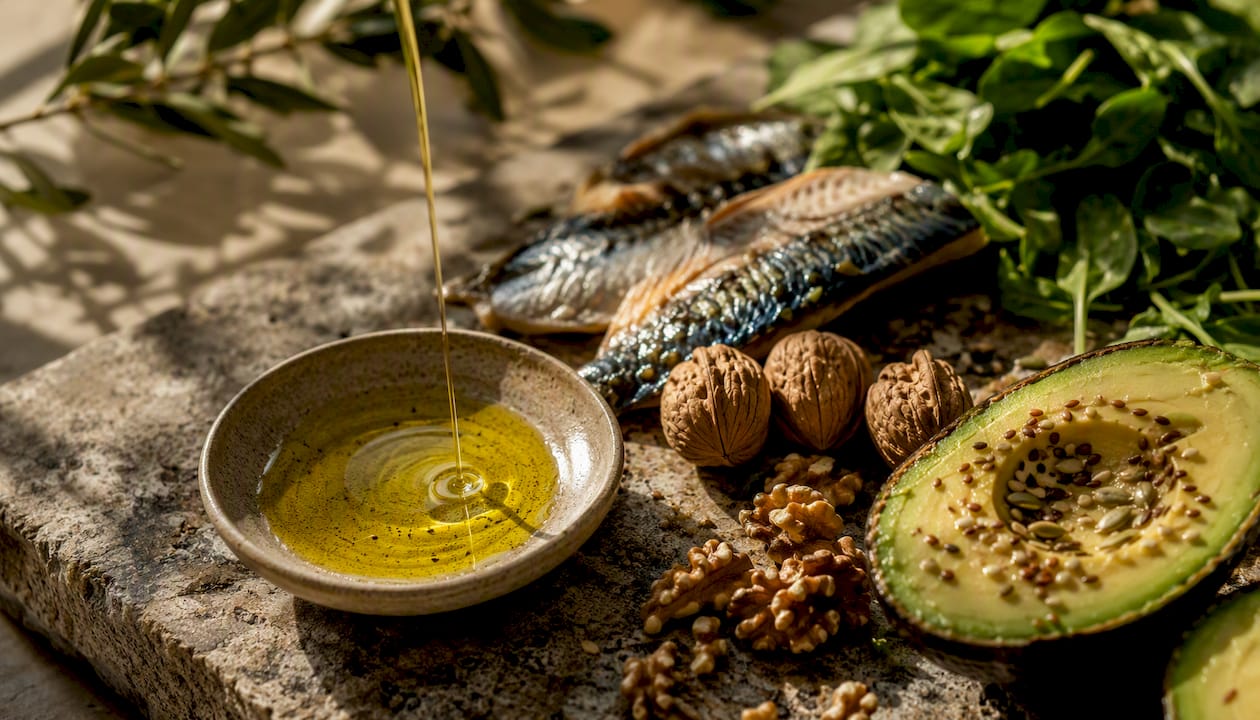
Extra-virgin olive oil, oily fish (salmon, mackerel, sardines, herring), walnuts, and avocado all provide omega-3 fatty acids and monounsaturated fats that support the gut’s anti-inflammatory environment. These also pair well with an anti-inflammatory dietary approach more broadly.
Polyphenol-rich plants
Herbs, spices, and polyphenol-rich foods support microbial diversity and are particularly useful during microbiome recovery. Turmeric, garlic, oregano, ginger, and rosemary are practical daily additions. Berries (blueberries, raspberries, blackberries), dark chocolate (70%+), green tea, and red onions are among the richest polyphenol sources available in UK supermarkets.
A quick reference: food categories and examples
| Category | UK examples | Daily target |
|---|---|---|
| Prebiotic vegetables | Garlic, leeks, onions, asparagus | 2–3 portions |
| Fermented/probiotic foods | Live yoghurt, kefir, kimchi, miso | 1 portion |
| Fibre-rich wholegrains | Oats, wholemeal bread, brown rice | 3–4 portions |
| Legumes | Lentils, chickpeas, kidney beans | 1–2 portions |
| Anti-inflammatory fats | Olive oil, oily fish, walnuts | 1–2 portions |
| Polyphenol-rich plants | Berries, turmeric, green tea | Varied daily |
What to limit or avoid
Ultra-processed foods are the clearest target. They tend to be low in fibre, high in additives and emulsifiers, and associated with reduced microbiome diversity. That does not mean a single biscuit derails your recovery — but a diet built around ready meals, crisps, and fizzy drinks gives your gut bacteria very little to work with.
The main categories to restrict:
- Ultra-processed foods: ready meals, processed meats, packaged snacks, fast food
- Excess added sugar: soft drinks, sweets, pastries, sweetened cereals
- Alcohol: disrupts the mucosal barrier and alters microbial balance; limit significantly during active recovery
- High-fat fried foods: chips, battered fish, deep-fried snacks — these slow gastric emptying and can worsen reflux and bloating
- Artificial sweeteners: some evidence suggests certain sweeteners (particularly saccharin and sucralose) may alter gut bacteria, though research is still developing
Simple swaps:
- Fizzy drink → sparkling water with a slice of lemon or cucumber
- Crisps → a small handful of mixed nuts and a piece of fruit
- White pasta → wholemeal pasta or lentil pasta
- Sweetened breakfast cereal → porridge with berries and a tablespoon of ground flaxseed
- Processed meat sandwich → wholegrain bread with hummus, roasted vegetables, and feta
The FODMAP caveat
If you have IBS or suspect SIBO, some of the highest-fibre prebiotic foods — garlic, onions, wheat, legumes — are also high in fermentable carbohydrates (FODMAPs) that can trigger bloating, cramping, and diarrhoea. The low FODMAP diet is an evidence-based option for IBS symptom relief, but it requires supervised reintroduction because prolonged restriction reduces fibre variety and may affect long-term microbiome diversity. It is a short-term diagnostic tool, not a permanent eating pattern. A registered dietitian can guide you through the elimination and reintroduction phases properly — see the practical low FODMAP guide for a UK-focused walkthrough.
A sample 7-day gut reset menu
The week is structured around three principles: at least one fermented food daily, a wide variety of plant foods across the week, and no two consecutive days with the same fibre sources. Vegetarian and vegan swaps are noted in brackets. Days marked with (L) can be adjusted for low-FODMAP needs.
| Day | Breakfast | Lunch | Dinner | Snacks |
|---|---|---|---|---|
| Monday | Porridge with blueberries, ground flaxseed, and a drizzle of honey | Lentil and vegetable soup with wholemeal bread | Baked salmon with roasted asparagus and brown rice | Live yoghurt with walnuts |
| Tuesday (L) | Kefir smoothie with banana and oats | Quinoa salad with cucumber, feta, olives, and olive oil | Grilled chicken with courgette, carrots, and new potatoes (tofu for vegan) | Rice cakes with almond butter |
| Wednesday | Wholemeal toast with avocado and a poached egg (scrambled tofu for vegan) | Chickpea and spinach curry with brown rice | Mackerel with roasted beetroot and green salad | Apple with a small handful of mixed nuts |
| Thursday | Overnight oats with raspberries and chia seeds | Miso soup with tofu, seaweed, and soba noodles | Lamb and lentil stew with kale (chickpea stew for vegan) | Sauerkraut on rye crispbread |
| Friday (L) | Lactose-free live yoghurt with strawberries and pumpkin seeds | Rice noodle salad with prawns, cucumber, carrot, and sesame dressing (tempeh for vegan) | Baked cod with sweet potato and green beans | Blueberries and a small piece of dark chocolate |
| Saturday | Buckwheat pancakes with berries and a dollop of kefir | Roasted vegetable and hummus wrap in wholemeal tortilla | Chicken and vegetable stir-fry with brown rice and tamari (tempeh for vegan) | Carrot sticks with tahini |
| Sunday | Eggs with sautéed mushrooms, spinach, and wholemeal toast (tofu scramble for vegan) | Butter bean and tomato soup with seeded bread | Slow-cooked beef and root vegetable casserole (lentil casserole for vegan) | Live yoghurt with ground flaxseed and a few walnuts |
Shopping checklist
Fresh produce: garlic, leeks, onions, asparagus, courgette, kale, spinach, beetroot, carrots, sweet potatoes, green beans, mushrooms, cucumber, mixed salad leaves, blueberries, raspberries, strawberries, banana, apple, lemon
Chilled items: live natural yoghurt, kefir, kimchi or sauerkraut (unpasteurised), miso paste, feta, eggs, salmon fillets, mackerel, cod, chicken thighs
Cupboard staples: oats, brown rice, quinoa, wholemeal bread, rye crispbread, buckwheat flour, lentils (dried or tinned), chickpeas (tinned), butter beans (tinned), extra-virgin olive oil, ground flaxseed, chia seeds, walnuts, almonds, pumpkin seeds, turmeric, ginger, tamari, dark chocolate (70%+)
Lifestyle factors that speed up gut recovery
Diet is the foundation, but sleep, stress, movement, and medication habits all materially affect how quickly your gut responds. Treating diet in isolation and ignoring the rest is a common reason people plateau after a few weeks.
Sleep: Poor sleep alters the composition of gut bacteria within days. Aim for 7–9 hours. A consistent sleep and wake time matters more than the total hours alone. Avoid large meals within two hours of bed.
Stress management: The gut-brain axis is real and bidirectional — chronic stress raises cortisol, which increases gut permeability and disrupts motility. Short daily practices help: 5–10 minutes of diaphragmatic breathing, a brief walk after meals, or a simple body-scan before sleep. These are not luxuries; they are part of the protocol.
Movement: Regular moderate exercise — brisk walking, cycling, swimming — supports gut motility and microbial diversity. You do not need a gym membership. A 20–30 minute walk after dinner is one of the most consistent habits associated with better digestive function.
Smoking: Smoking damages the mucosal lining and alters microbial balance. If you smoke, stopping is one of the highest-impact changes you can make for gut health, independent of diet.
Medication review: Non-steroidal anti-inflammatory drugs (NSAIDs) like ibuprofen, proton pump inhibitors (PPIs), and antibiotics all affect gut bacteria and the mucosal barrier. This does not mean stopping prescribed medication — it means discussing with your GP whether any long-term medications could be reviewed, and being mindful of unnecessary antibiotic use.
Pro Tip: Adopt one lifestyle change per week rather than all at once. Week one: consistent sleep time. Week two: a daily post-meal walk. Week three: a brief stress-reduction practice. Small, specific steps compound faster than ambitious overhauls that collapse by day four.
How long does gut healing take?
Realistic expectations prevent two common mistakes: abandoning the plan too early because nothing dramatic happened in week one, or assuming that feeling better after a fortnight means the work is done.
Days 1–7: Some people notice reduced bloating and improved energy within the first week, particularly after cutting ultra-processed foods and alcohol. Bowel habits may shift — sometimes temporarily looser as fibre increases.
Weeks 2–6: Measurable improvements in bloating, stool consistency, and energy are common in this window. Microbiome composition begins to shift with consistent dietary changes.
Weeks 6–12: More stable improvements in bowel habit regularity, reduced abdominal discomfort, and often better sleep and mood. This is when the changes start to feel like a new normal rather than an effort.
Beyond 3 months: Sustained dietary patterns produce lasting microbiome changes. Reverting to old habits reverses gains within weeks, which is why building sustainable habits matters more than a short-term “reset.”
The NHS recommends 30 g of fibre daily for adults. Most UK adults are eating less fibre than recommended. Increase gradually — adding 3–5 g per week — to avoid the bloating and wind that comes from a sudden fibre surge.
Milestone tracker
Milestone Typical timeframe Reduced bloating and wind 2–6 weeks Improved stool consistency 2–4 weeks Bowel habit normalisation 4–12 weeks Sustained energy improvement 6–10 weeks Reduced abdominal discomfort 4–8 weeks
Track your progress with:
- A symptom diary (date, meals, symptoms, stool type using the Bristol Stool Chart)
- A photographic meal log for the first two weeks to spot patterns
- Objective markers: energy levels on waking, sleep quality, frequency and urgency of bowel movements
When should you see a GP?
A gut healing diet is appropriate for general digestive improvement and mild-to-moderate symptoms. It is not a substitute for medical investigation when symptoms suggest something more serious.
Red flags — contact your GP promptly
- Rectal bleeding or blood in your stool
- Unexplained weight loss of 5% or more of body weight
- Persistent vomiting
- New, severe, or worsening abdominal pain
- Difficulty swallowing
- Symptoms that began after age 50 with no prior history
- Fever alongside digestive symptoms
- Nocturnal symptoms that wake you from sleep
Common NHS tests
- Blood tests: full blood count, CRP (inflammation marker), coeliac serology, thyroid function, B12 and folate
- Stool tests: faecal calprotectin (to distinguish IBS from inflammatory bowel disease), stool culture, H. pylori breath test
- Imaging: abdominal ultrasound for structural issues
- Colonoscopy or sigmoidoscopy: for persistent bleeding, suspected IBD, or colorectal cancer screening
Asking for a referral
You can ask your GP for a referral to a registered dietitian (RD) on the NHS, particularly for IBS, coeliac disease, or inflammatory bowel disease. Waiting times vary by trust. For SIBO testing, most NHS trusts do not routinely offer hydrogen breath testing — this is more commonly available privately.
When speaking to your GP, specific language helps: “My bloating has worsened over the past three months and I’ve lost weight without trying — can we check inflammatory markers and coeliac serology?” is more likely to prompt action than a general complaint about digestion.
Functional laboratory testing — including comprehensive stool analysis, SIBO breath testing, and hormone panels — is available privately and can provide detail that standard NHS tests do not cover. Understanding what each test actually measures is important before spending money on it; see what the evidence says about food sensitivity tests before ordering a panel.
Therapeutic diets prescribed in clinical settings — such as low-residue diets before colonoscopy or elemental diets for Crohn’s disease — have specific indications and should not be self-prescribed or prolonged without dietetic oversight.
Practical tips and troubleshooting
Week-by-week introduction plan
Week 1: Add one fermented food daily. Swap white bread for wholemeal. Drink an extra glass of water with each meal.
Week 2: Add a portion of legumes to one meal daily. Introduce two new vegetables you do not normally eat. Start a symptom diary.
Week 3: Review your diary for patterns. Identify one or two foods that consistently correlate with worse symptoms and reduce them. Add a polyphenol-rich spice (turmeric, ginger) to cooking daily.
Troubleshooting common setbacks
- Increased bloating: Usually caused by a sudden fibre increase. Slow down. Add one new high-fibre food per week rather than several at once. Chew food thoroughly and eat slowly.
- Constipation: Increase water intake first. Add ground flaxseed (1 tablespoon daily) to porridge or smoothies. Gentle movement after meals helps.
- Diarrhoea: Temporarily reduce raw vegetables and very high-fibre foods. Cooked vegetables are easier to tolerate. Check whether a new fermented food is the trigger — introduce one at a time.
- Mood or sleep changes: Common in the first two weeks as the gut-brain axis adjusts. Usually settles. If it persists beyond three weeks, discuss with your GP.
- Symptom plateau: After 6–8 weeks with no improvement, consider whether an underlying condition (IBS, SIBO, coeliac disease) needs investigation rather than further dietary adjustment.
Probiotic supplements: when they help and when to be cautious
Probiotic supplements can be useful after a course of antibiotics, during travel, or when fermented foods are genuinely not accessible. However, after antibiotics, a food-first recovery using high-fibre plants and fermented foods is often preferable to immediate high-dose probiotic supplements, which may delay natural recolonisation in some cases.
Evidence for specific supplements marketed for gut repair — including L-glutamine and zinc carnosine — is variable and many require professional oversight. Avoid self-prescribing based on social media recommendations. If you are immunosuppressed, have a central line, or are critically ill, discuss any probiotic use with your doctor first.
Eating out and meal prep
- Choose restaurants with grilled or baked options rather than fried; ask for dressings on the side
- Batch-cook lentils, brown rice, and roasted vegetables on Sundays for easy weekday assembly
- Keep a small bag of mixed nuts, a piece of fruit, and a pot of live yoghurt as default snacks
- At supermarkets, shop the perimeter first (fresh produce, fish, dairy) before the central aisles
Who benefits most from personalised nutrition support?
A general gut healing diet works well for many people. But for persistent or complex symptoms, a one-size approach has real limits.
Personalised nutrition is most appropriate when:
- Symptoms have persisted for more than 8–12 weeks despite dietary changes
- You have a confirmed diagnosis of IBS, IBD, SIBO, or coeliac disease and need condition-specific guidance
- You have multiple food intolerances or allergies that make standard plans difficult to follow
- You have recently completed a course of antibiotics and are experiencing post-antibiotic dysbiosis
- You have complex comorbidities (thyroid disorders, hormonal imbalances, chronic fatigue) where gut symptoms are one part of a larger picture
- You want functional laboratory testing interpreted in the context of your full health history
A quality personalised programme should include a thorough initial assessment (diet history, symptom timeline, medical history), an individualised plan with clear rationale, and ongoing support to adjust as you progress. Lab interpretation — whether for stool analysis, SIBO breath testing, or nutrient panels — should be provided by a qualified practitioner who can contextualise results, not just hand over a report.
When checking credentials, look for a Registered Dietitian (RD) registered with the Health and Care Professions Council (HCPC), or a registered nutritionist with the Association for Nutrition (AfN). British Dietetic Association membership is a further mark of professional standing. Be cautious of practitioners offering expensive test panels without a clear clinical rationale.
NHS dietitian referrals are available for conditions like IBS and coeliac disease, though waiting times vary. Private personalised nutrition support is a reasonable option when NHS waiting times are long or when the complexity of your case warrants more frequent contact and functional testing. If bloating is a persistent issue, how a gut health nutritionist can help is worth reading before booking any service.
The part most guides skip
There is a version of gut health advice that treats the microbiome like a garden you plant once and then harvest forever. Add some kefir, eat more fibre, and you’re done. The reality is messier and, honestly, more interesting.
The gut is not static. It responds to sleep deprivation within 48 hours. It shifts with a single course of antibiotics. It reflects stress in ways that show up in your stool before you consciously register that you are anxious. What this means practically is that a gut healing diet is not a two-week project — it is a set of habits that need to hold up across a normal life, including bad weeks, travel, illness, and the inevitable periods when cooking from scratch is not happening.
The people who see lasting improvement are rarely the ones who followed the plan perfectly. They are the ones who kept the two or three core habits — a daily fermented food, a wide variety of plants, minimal ultra-processed food — even when everything else slipped. Consistency on the fundamentals beats perfection on the details every time.
One habit worth starting today: add one extra vegetable to your dinner. Not a new recipe, not a meal plan overhaul. Just one more vegetable. Do it for a week and it becomes automatic. That is how lasting change actually works.
Foodconnection’s personalised nutrition programmes
Persistent gut symptoms rarely resolve on generic advice alone. Foodconnection offers one-to-one personalised nutrition programmes designed specifically for people with complex or ongoing digestive issues — including IBS, SIBO, post-antibiotic dysbiosis, and multiple food intolerances — where a tailored approach makes a measurable difference.
Unlike a one-off consultation, Foodconnection’s programme-based model means you receive an in-depth initial assessment, an individualised meal plan with clear clinical rationale, and ongoing support as your symptoms evolve. Functional laboratory testing — comprehensive stool analysis, SIBO breath testing, hormone panels — is available as part of the programme, with full interpretation provided in the context of your health history. Programmes are available online across the UK and in person in London.
If you have been managing symptoms for months without a clear answer, book a consultation with Foodconnection or explore the full range of nutrition services and lab options to find the right starting point.
Sources
The following sources underpin this guide and are worth consulting directly for further reading.
- Good foods to help your digestion - NHS
- Feed your gut - Harvard Health
- Repair your gut slowly with whole foods | UCLA Health
- Therapeutic diets (clinical context) - NCBI Bookshelf
- Transforming your gut health: Simple steps for a healthier you - Mayo Clinic Press
- PubMed entry (supplement evidence summary)
- Gut Health Diet: A Dietitian’s Complete Guide - EA Stewart
Recommended
- Low FODMAP diet: a practical guide for IBS relief in the UK | FoodConnection blog
- Anti-inflammatory diet: what to eat and why it works | FoodConnection blog
- Post-viral fatigue diet: what to eat for Long Covid recovery | FoodConnection blog
- Menopause gut health: what’s changing and what helps | FoodConnection blog