
Gestational diabetes diet: your practical UK guide

Managing gestational diabetes through diet comes down to one core habit: eat three regular meals a day, each containing a measured portion of low-GI starchy carbohydrate, paired with protein and plenty of non-starchy vegetables, and avoid sugary drinks entirely. That single pattern, recommended by NHS clinical guidance and reinforced across UK hospital diet sheets, is the foundation everything else builds on.
Your first 48 hours: what to do right now
- Eat at regular times: breakfast, lunch, and dinner, spaced evenly throughout the day.
- At each meal, include one portion of low-GI starchy carbohydrate, a palm-sized portion of lean protein, and fill at least half your plate with non-starchy vegetables.
- Swap sugary drinks, fruit juice, and smoothies for water, sparkling water, or unsweetened tea.
- If you have a blood glucose monitor, test one hour after each meal and record the result.
- Contact your diabetes midwife or maternity team this week to confirm your personal blood glucose targets and get a referral to a dietitian.
NHS guidance and Diabetes UK are the two most authoritative UK sources for gestational diabetes nutrition guidelines. Both emphasise that the goal is not to cut carbohydrates out entirely, but to choose the right ones and spread them evenly through the day.
Key takeaways
A gestational diabetes diet built on three regular meals, measured low-GI carbohydrate portions, and consistent post-meal monitoring gives you the clearest path to stable blood glucose and a healthy pregnancy.
| Point | Details |
|---|---|
| Eat three regular meals | Space meals 4–5 hours apart with roughly 40 g low-GI carbohydrate at each, paired with protein and vegetables. |
| Test one hour post-meal | Record readings alongside what you ate; use patterns to adjust portions in 10 g increments. |
| Avoid sugary drinks entirely | Replace juice, smoothies, and sugary drinks with water or unsweetened tea from day one. |
| Contact your diabetes team early | Confirm your personal blood glucose targets and request a dietitian referral at your first appointment. |
| Foodconnection for personalised support | One-to-one nutrition programmes with ongoing monitoring are available for women needing tailored carbohydrate targets or postnatal follow-up. |
Table of Contents
- ## Choosing the right carbohydrates and easy swaps
- Portion sizes and a pregnancy plate model
- Planning meals, snacks, and a sample day
- Foods and drinks to limit or avoid
- What glycaemic index (GI) and glycaemic load (GL) actually mean for you
- Monitoring blood glucose: when to test and what to do with the results
- How exercise helps blood glucose and what is safe in pregnancy
- What happens if diet and activity are not enough
- After the birth: does gestational diabetes go away?
- When to ask for personalised dietetic help
- A note from Irina
- Personalised nutrition support for gestational diabetes
- Sources
## Choosing the right carbohydrates and easy swaps
The type of carbohydrate you eat matters as much as the amount. Low-GI, high-fibre starchy foods release glucose more slowly into the bloodstream, which means smaller post-meal spikes and steadier readings throughout the day.
Favour these starchy foods:
- Wholegrain or granary bread (seeded loaves, rye bread)
- Rolled oats or plain porridge (not instant sachets with added sugar)
- Wholewheat pasta or egg noodles
- Brown rice, basmati rice, or bulgur wheat
- Sweet potato, new potatoes (with skin), or lentils
Simple everyday swaps
| Instead of | Choose |
|---|---|
| White sliced bread | Seeded granary or rye bread |
| Instant porridge sachets | Rolled oats soaked overnight |
| White rice | Basmati or brown rice |
| Cornflakes or rice puffs | Plain porridge with no added sugar |
| Mashed potato | New potatoes with skin, or sweet potato |
Pairing any starchy food with protein, healthy fat, or fibre lowers the effective glycaemic response of the whole meal. A slice of granary toast eaten alone will spike blood glucose faster than the same slice eaten with eggs and spinach. That combination effect is one reason the plate model (covered in the next section) works so well in practice.
Pro Tip: Try one swap at a time and test your blood glucose one hour after that meal. If the reading is within your target, the swap works for you. If it is still high, reduce the portion by roughly 10 g of carbohydrate and retest the following day. This trial-and-adjust method, recommended in NHS-linked hospital diet sheets, takes the guesswork out of personalising your plan.
Portion sizes and a pregnancy plate model
Knowing what to eat is only half the picture. Knowing how much is where most women find the real difference in their readings.
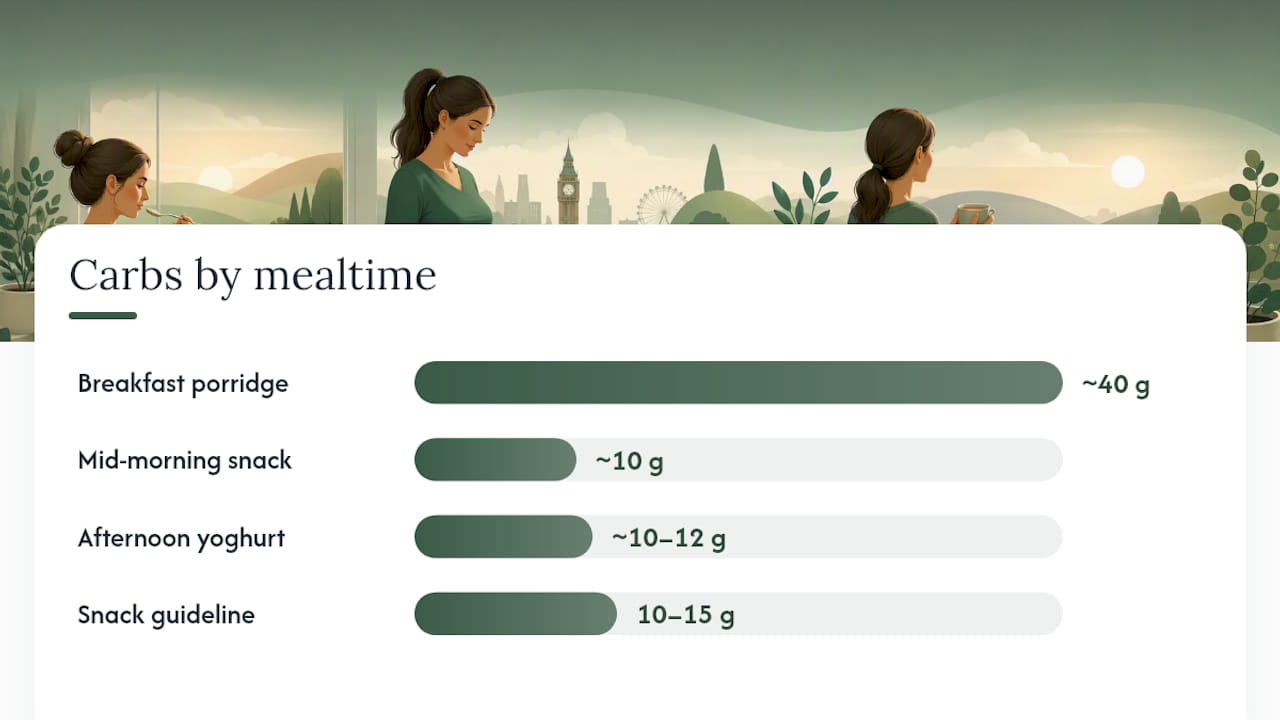
NHS hospital diet sheets recommend starting at approximately 40 g of carbohydrate per main meal as a practical target, with 10–15 g for snacks. The rationale is consistency: similar carbohydrate amounts at each meal keeps glucose patterns predictable and makes it easier to spot which meal is causing a problem.
What does 10 g of carbohydrate look like?
| Food | Approximate portion for 10 g carbohydrate |
|---|---|
| Bread | ½ slice medium-cut granary |
| Cooked pasta or rice | 1 medium tablespoon (heaped) |
| Milk | 200 ml (a standard glass) |
| Plain yoghurt | 150 g pot (check label) |
| Oats (dry) | 2 level tablespoons |
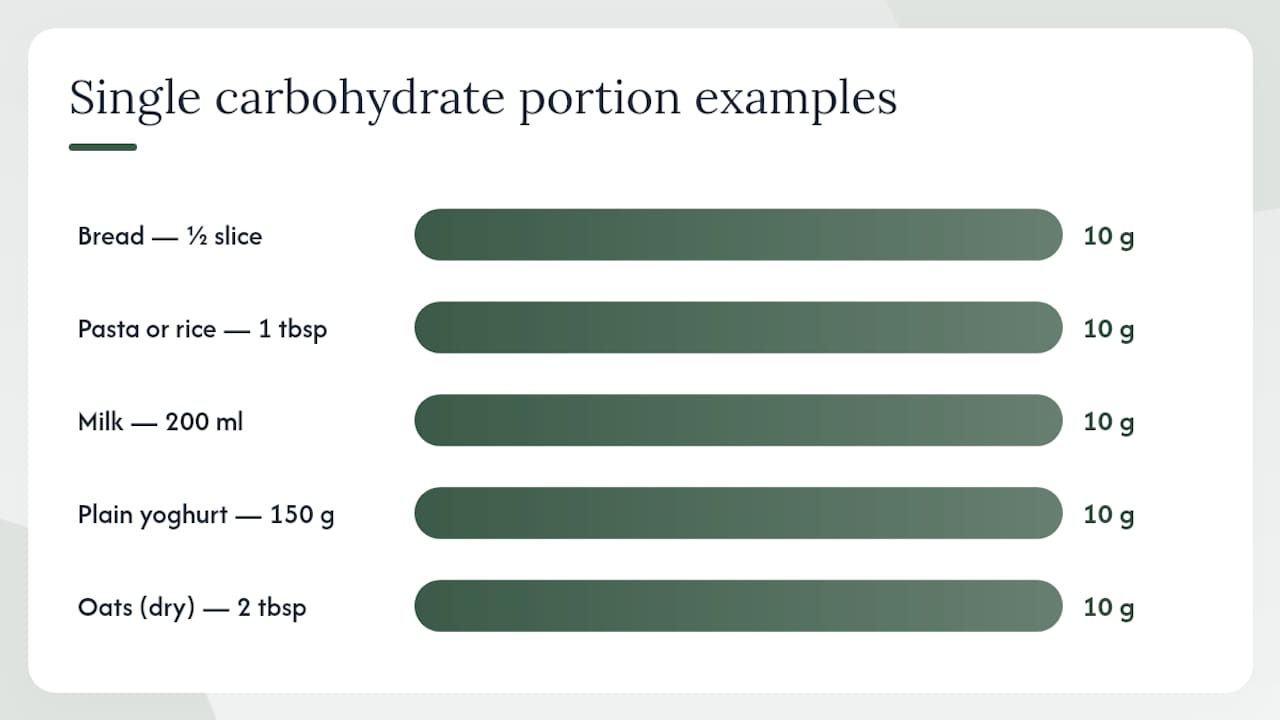
So a 40 g carbohydrate meal might be two slices of granary bread (30 g) plus a small glass of milk (10 g), or four tablespoons of cooked brown rice alongside a chicken and vegetable stir-fry.
The pregnancy plate model
The American Diabetes Association’s sample meal plans use a Diabetes Plate approach that translates to gestational diabetes management:
- ½ plate: non-starchy vegetables
- ¼ plate: lean protein
- ¼ plate: low-GI starchy carbohydrate portion
In the early days after diagnosis, or whenever readings are consistently high, weigh or measure your starchy portions precisely. Once you have a reliable sense of what 40 g looks like on your plate, estimating becomes easier. Most women find that within two weeks they can portion by eye with reasonable accuracy.
- Avoid skipping meals: a long gap followed by a large meal causes a sharper glucose spike than three moderate meals.
- Pregnancy is not a time to eat for two. Diabetes Australia’s guidance confirms that nutrient needs only increase modestly during pregnancy; the priority is nutrient density, not extra calories.
Planning meals, snacks, and a sample day
Regular meal timing is one of the most underrated tools in a gestational diabetes meal plan. Skipping breakfast, eating a small lunch, then a large dinner creates the kind of carbohydrate imbalance that pushes evening readings up. Spreading carbohydrates evenly across the day keeps glucose steadier and makes monitoring patterns much easier to interpret.
Sample day plan
| Time | Meal/snack | Approximate carbohydrate |
|---|---|---|
| 7:30 AM | Porridge (40 g dry oats) with milk, topped with a few berries | ~40 g |
| 10:30 AM | Small handful of unsalted nuts + 1 oatcake | ~10 g |
| 1:00 PM | Granary sandwich (2 slices) with chicken, salad, and avocado | a standard carbohydrate portion |
| 4:00 PM | Plain Greek yoghurt (150 g) with 2 strawberries | ~10–12 g |
| 7:00 PM | Brown rice (3 tablespoons cooked) with salmon and roasted vegetables | a standard carbohydrate portion |
| 9:00 PM | Small oatcake with nut butter (if hungry) | a low carbohydrate portion |
MedlinePlus guidance recommends three small-to-moderate meals and one or more snacks, with carbohydrate counting as a core skill. The evening snack is optional but can help prevent fasting glucose from rising overnight.
Good gestational diabetes snack ideas (10–15 g carbohydrate or less):
- Plain oatcakes (1–2) with hummus or nut butter
- A small apple with a piece of cheese
- A boiled egg with a few oatcakes
- Plain Greek yoghurt (no added sugar)
- A small handful of mixed nuts and seeds (virtually no carbohydrate)
- Celery, cucumber, or pepper sticks with guacamole
If your one-hour post-breakfast reading is repeatedly high, try splitting the breakfast carbohydrate: eat half the portion at 7:30 AM and the other half as a mid-morning snack at 10:00 AM. Many women find breakfast the most challenging meal because insulin resistance tends to be highest in the morning. Splitting the carbohydrate load often brings that reading into range without eliminating breakfast entirely.
Pro Tip: Keep a simple log of what you ate, the time, and your one-hour reading. After three or four days, patterns become obvious: you will see which meals consistently push readings up and which are fine. That log is also the most useful thing you can bring to a dietitian or diabetes team appointment.
Foods and drinks to limit or avoid
The NHS is direct on this: sugary foods and drinks cause rapid blood glucose spikes and should be avoided. That includes items that are often marketed as healthy.
Limit or avoid these:
- Sugary drinks: cola, lemonade, energy drinks, cordials with sugar
- Fruit juice and smoothies (even 100% fruit juice spikes blood glucose quickly)
- Confectionery, chocolate bars, sweets, and biscuits
- Cakes, pastries, doughnuts, and sweet muffins
- Sugary breakfast cereals (cornflakes, frosted wheat, granola with honey)
- Flavoured yoghurts with added sugar or fruit compote
- Foods labelled “diabetic” (these often contain sorbitol, which can cause digestive problems and still affects blood glucose)
- White bread, white rice, and instant mashed potato in large portions
Practical swaps:
- Flavoured yoghurt → plain Greek yoghurt with a small handful of fresh berries
- Fruit juice → sparkling water with a slice of lemon or lime
- Sugary cereal → plain rolled oats with milk and cinnamon
- Biscuits as a snack → oatcakes with nut butter or a boiled egg
Hidden sugars: what to look for on labels
Check the “total carbohydrate” figure per 100 g on the nutrition label, not just the “of which sugars” line. A food can be low in added sugar but still high in starch, which converts to glucose just as quickly. Foods labelled “no added sugar” or “reduced sugar” can still be high in total carbohydrate. Aim for foods with under 10 g total carbohydrate per 100 g where possible for snacks, and check the portion size the label refers to.
Alcohol and caffeine: The UK’s guidance on alcohol in pregnancy is clear: the safest approach is to avoid it entirely. For caffeinated drinks, the NHS recommends keeping caffeine under 200 mg per day during pregnancy, which is roughly two mugs of instant coffee or four cups of tea.
Pro Tip: The MKUH gestational diabetes diet sheet advises limiting fruit to two small portions a day and avoiding fruit juice and smoothies entirely. Whole fruit is always preferable to juice because the fibre slows glucose absorption.
What glycaemic index (GI) and glycaemic load (GL) actually mean for you
GI is a ranking of how quickly a carbohydrate-containing food raises blood glucose compared to pure glucose. Foods with a GI below 55 are considered low-GI; those above 70 are high-GI. For gestational diabetes management, low-GI choices are preferable because they produce a slower, smaller glucose rise after eating.
Low-GI choices to prioritise:
- Rolled oats, barley, and rye bread
- Basmati rice, brown rice, and pasta (especially al dente)
- Lentils, chickpeas, and kidney beans
- Sweet potato and new potatoes (with skin)
- Most non-starchy vegetables (GI is negligible)
Higher-GI foods to moderate:
- White bread, white rice, and instant mashed potato
- Rice cakes and corn-based cereals
- Watermelon and pineapple (in large portions)
- Baked potato (especially without the skin)
Glycaemic load (GL) accounts for both the GI of a food and the portion size. A food can have a high GI but a low GL if you eat a small amount. Watermelon has a high GI, for example, but a small slice has a low GL because the portion contains relatively little carbohydrate. In practice, this means portion control and meal composition matter more than avoiding any single food entirely.
The most practical rule: pair every carbohydrate with protein, fat, or fibre. That combination consistently lowers the glycaemic response of the whole meal, regardless of the individual GI of the starchy component. NHS guidance supports this approach as the foundation of a gestational diabetes diet, rather than rigid food elimination.
When GI matters less: if your portions are consistent and your readings are within target, you do not need to obsess over GI scores. Consistent portion control and regular monitoring are more powerful tools than memorising GI tables.
Monitoring blood glucose: when to test and what to do with the results
Most UK diabetes teams ask women with gestational diabetes to test fasting (first thing in the morning, before eating) and one hour after the start of each main meal. Royal Devon NHS patient information gives example targets used by some units: fasting below 5.3 mmol/L and two-hour post-meal below 7.0 mmol/L. Your own team may use slightly different targets, so always confirm your personal thresholds at your first appointment.
What to record each time you test:
- Date and time of the test
- Whether it was fasting or post-meal (and which meal)
- What you ate and an estimate of the carbohydrate grams
- The blood glucose reading
- Any symptoms (headache, shakiness, unusual thirst)
- Any medication taken
How to use your readings to adjust your diet:
- If a post-meal reading is above target, reduce the carbohydrate portion at that meal by approximately 10 g the following day.
- Retest after the same meal the next day.
- If the reading comes down into range, keep the lower portion.
- If it is still high, reduce by a further 10 g and retest again.
- If fasting readings are consistently above target despite dietary changes, contact your diabetes team promptly.
When to contact your diabetes or maternity team:
- Repeated readings above your target range over two or more days
- A single very high reading (your team will give you a threshold, often above 11 mmol/L)
- Symptoms of hyperglycaemia: extreme thirst, frequent urination, blurred vision, or fatigue
- Symptoms of hypoglycaemia: shakiness, sweating, confusion, or feeling faint (rare on diet alone but possible if meals are skipped)
- Any concern about reduced foetal movements
How exercise helps blood glucose and what is safe in pregnancy
Physical activity is the most underused tool in gestational diabetes management. When muscles contract during exercise, they take up glucose directly from the bloodstream, independent of insulin. That effect is immediate: a 15-minute brisk walk after a meal can meaningfully reduce the one-hour post-meal reading.
NHS guidance recommends regular moderate activity as a core part of gestational diabetes treatment alongside diet. Safe, pregnancy-appropriate options include:
- Brisk walking (particularly after meals, even 10–15 minutes helps)
- Swimming or aqua aerobics
- Prenatal yoga or Pilates
- Stationary cycling at a comfortable pace
- Light resistance training with appropriate modifications
A realistic weekly goal is 30 minutes of moderate activity on most days, broken into shorter sessions if needed. Three 10-minute walks after meals achieves the same glucose-lowering effect as one 30-minute session and fits more easily into a busy day.
Safety note: Before starting or changing your activity level, check with your midwife or obstetrician, particularly if you have any obstetric complications such as placenta praevia, cervical incompetence, or a history of preterm labour. Stop exercising and seek medical advice if you experience unusual pain, vaginal bleeding, breathlessness at rest, or dizziness.
What happens if diet and activity are not enough
Diet and physical activity control gestational diabetes in many women, but not all. If your blood glucose readings remain above target consistently despite dietary changes, your diabetes team will review your self-monitoring logs and discuss the next steps.
Typical NHS escalation pathway:
- Dietitian review to identify any remaining dietary adjustments
- Review of monitoring logs to identify patterns (e.g. consistently high fasting readings vs. post-meal spikes)
- Introduction of medication if targets are persistently exceeded
The most commonly used first-line medication is metformin, which is taken orally and helps the body use insulin more effectively. If metformin is not sufficient or not suitable, insulin injections may be recommended. Both are used safely in pregnancy under clinical supervision, and your team will explain the dose, timing, and how to adjust.
Reassurance: Needing medication does not mean you have failed or that your diet has not worked. Gestational diabetes involves hormonal changes driven by the placenta that can make blood glucose harder to control as pregnancy progresses, regardless of how carefully you eat. Medication is a clinical tool to protect your baby’s growth and your own health when diet alone reaches its limit. Many women who start insulin or metformin in the third trimester find they no longer need it within days of giving birth.
When to seek urgent help: contact your maternity unit or diabetes team the same day if you have a single very high reading, symptoms of severe hyperglycaemia, or any concern about your baby’s movements.
After the birth: does gestational diabetes go away?
For most women, blood glucose returns to normal within hours or days of delivery. The placental hormones that caused insulin resistance are gone, and the condition resolves. However, having had gestational diabetes significantly increases the risk of developing type 2 diabetes later in life, and of gestational diabetes recurring in a future pregnancy.
NHS guidance recommends a postnatal oral glucose tolerance test (OGTT) at 6–13 weeks after birth to confirm that blood glucose has returned to normal. After that, annual fasting blood glucose or HbA1c checks are advised, as the risk of type 2 diabetes remains elevated for years.
Practical steps to reduce long-term risk:
- Maintain a healthy weight after pregnancy (even modest weight loss reduces risk substantially)
- Continue eating a diet rich in fibre, low-GI carbohydrates, and lean protein
- Stay physically active: 150 minutes of moderate activity per week is the standard recommendation
- Breastfeeding, where possible, has been associated with improved insulin sensitivity in the postnatal period
- Attend your annual blood glucose check without fail
If you are referred to the NHS Diabetes Prevention Programme after a gestational diabetes diagnosis, take it. The programme provides structured support for lifestyle changes that genuinely reduce the risk of progression to type 2 diabetes. Foodconnection’s postnatal nutrition programmes can also provide personalised support for women navigating this transition, particularly those with complex dietary needs or ongoing metabolic concerns.
When to ask for personalised dietetic help
Not every woman with gestational diabetes needs one-to-one dietitian support beyond the standard NHS appointment. But some situations make personalised help genuinely important rather than optional.
Triggers to request a referral or consider private dietitian support:
- Readings remain above target despite following general dietary advice for two or more weeks.
- You have complex dietary needs: vegetarian or vegan diet, food allergies, or significant food aversions in pregnancy.
- You are carrying twins or multiples (calorie and nutrient needs differ).
- You have a language barrier that makes standard written diet sheets difficult to use.
- You have a history of disordered eating and need careful, non-restrictive guidance.
- You are managing gestational diabetes alongside another condition such as coeliac disease, hypothyroidism, or inflammatory bowel disease.
What a dietitian appointment involves:
A registered dietitian will review your blood glucose log and your typical meals, set a personalised carbohydrate target (which may differ from the standard 40 g starting point), teach you label reading and portion estimation, and plan follow-up appointments to adjust the plan as pregnancy progresses.
What to bring to your first appointment:
- Your blood glucose log (at least three to five days of readings)
- A list of your typical meals and snacks
- Your current medication list
- Any questions you have written down in advance
- Realistic goals: what is hardest for you right now (breakfast readings, evening snacks, eating out)?
The insulin resistance diet principles that underpin personalised carbohydrate management are directly relevant here. Understanding why individual responses to the same food vary so much is what makes one-to-one support more effective than a generic diet sheet for women whose readings are not responding as expected.
A note from Irina
The thing I notice most when women come for support after a gestational diabetes diagnosis is the anxiety that arrives alongside it. The diagnosis feels sudden, the dietary information can feel contradictory, and the pressure to get readings right for the baby’s sake is real and heavy.
What I want you to hear is this: gestational diabetes is common, it is manageable, and the dietary changes that make the biggest difference are not dramatic. Three regular meals, a measured portion of the right kind of carbohydrate, protein alongside it, and a short walk after eating. That is genuinely most of it.
The monitoring can feel relentless at first. But within a week or two, most women find that their readings become predictable and that they know which meals to watch. Small, steady adjustments work far better than trying to overhaul everything at once. Share your log with your diabetes team, ask questions at every appointment, and do not wait two weeks before flagging a pattern that is not improving.
You are not doing this alone, and you do not have to figure it out by trial and error without support.
Personalised nutrition support for gestational diabetes
Managing a gestational diabetes diet with a generic diet sheet works for many women, but for those with persistently high readings, complex dietary needs, or a need for ongoing postnatal support, one-to-one guidance makes a measurable difference.
Foodconnection offers personalised nutrition programmes designed around your blood glucose logs, your food preferences, and your stage of pregnancy. Rather than a one-off appointment, the programme-based approach means you have ongoing support as your carbohydrate tolerance changes across trimesters and into the postnatal period. Remote appointments mean you can access support from home, which matters when you are managing a busy pregnancy schedule.
Women who benefit most are those who need a personalised carbohydrate target rather than the standard starting point, those managing gestational diabetes alongside another condition, or those who want structured postnatal support to reduce their long-term risk of type 2 diabetes. Functional laboratory testing, where relevant, can add further clarity.
To find out more or book an initial consultation, visit the Foodconnection services page and bring your blood glucose log, your typical meal list, and your questions. The first session is where the personalised plan begins.
Sources
The following UK and international clinical resources underpin the guidance in this article. Where your own diabetes or maternity team’s advice differs from anything here, follow your team: they have access to your individual readings, pregnancy history, and clinical context.
- Dietary advice for diabetes during pregnancy (gestational diabetes) — WSH NHS patient leaflet
- Gestational diabetes — treatment — NHS
- Gestational diabetes diet — MedlinePlus Medical Encyclopedia
- Sample meal plan and menu ideas for pregnancy with gestational diabetes — American Diabetes Association (ADA) PDF
- Eating well with gestational diabetes — Royal Devon NHS patient information
This article provides general nutritional information and does not replace advice from your midwife, obstetrician, or registered dietitian. Always confirm blood glucose targets and dietary changes with your own diabetes or maternity team.
This article is general information, not a substitute for advice from a qualified doctor. Consult a qualified healthcare professional about your own circumstances before acting on anything here.
Recommended
- Prediabetes diet: managing blood sugar with complex health needs | FoodConnection blog
- Insulin resistance diet: why personalisation changes everything | FoodConnection blog
- Low FODMAP diet: a practical guide for IBS relief in the UK | FoodConnection blog
- Cholesterol diet plan: what actually works for UK adults | FoodConnection blog