
Eat to Avoid Gallbladder Attacks: NHS Aligned Diet After Surgery

No food or diet will dissolve gallstones once they’ve formed. What diet does control is symptoms and future risk: a high-fibre, balanced diet with moderate fat, eaten at regular intervals, cuts the chances of an attack. If you need to lose weight, do it slowly, around 0.5 to 1kg a week, and speak to your GP or a dietitian if you’re unsure where to start.
TL;DR:
- Consuming at least five portions of fruits and vegetables daily and choosing whole grains, pulses, lean proteins, and low-fat dairy can help prevent gallstone attacks.
- Limiting intake of fried, greasy meats, full-fat dairy, and processed snacks reduces the risk of triggering pain caused by large bile releases.
- Eating smaller, regular meals within 12 hours slows bile thickening and minimizes the chance of gallstone symptoms or attacks.
- Gradual weight loss at a rate of 0.5 to 1kg per week lowers the risk of forming new stones, especially when supervised by health professionals.
- After gallbladder removal, adjusting to a low-fat diet and reintroducing fats slowly helps manage looser stools and digestive discomfort.
Table of Contents
- What foods help gallbladder health?
- Which foods trigger gallbladder attacks?
- How often should you eat with gallstones?
- How fast should you lose weight with gallstones?
- What can you eat after gallbladder removal?
- What does a gallbladder-friendly day of eating look like?
- When should you get personalised nutrition support?
- A short note on sustainable change
- Personalised support from Foodconnection
- Where this guidance comes from
- Sources
What foods help gallbladder health?
Fibre does the heavy lifting here. Oats, brown rice, wholemeal bread, and pulses like lentils and chickpeas slow digestion and help bind bile acids, which takes pressure off the gallbladder. Aim for at least five portions of fruit and vegetables a day, in line with the Eatwell Guide, and build meals around a fist-sized portion of wholegrains alongside a palm-sized portion of lean protein.
Good protein choices include skinless chicken, white fish, and pulses, plus low-fat dairy such as skimmed milk or reduced-fat yoghurt. Bake, grill, or steam rather than fry.
- Wholegrains: oats, brown rice, wholemeal pasta
- Pulses: lentils, chickpeas, kidney beans
- Vegetables and fruit: at least five portions daily
- Lean protein: skinless poultry, white fish, tofu
- Low-fat dairy: skimmed milk, cottage cheese, reduced-fat yoghurt
Don’t strip out fat entirely, though. A small amount, such as a teaspoon of olive oil or a portion of oily fish twice a week, helps stimulate normal bile flow rather than leaving it stagnant in the gallbladder.
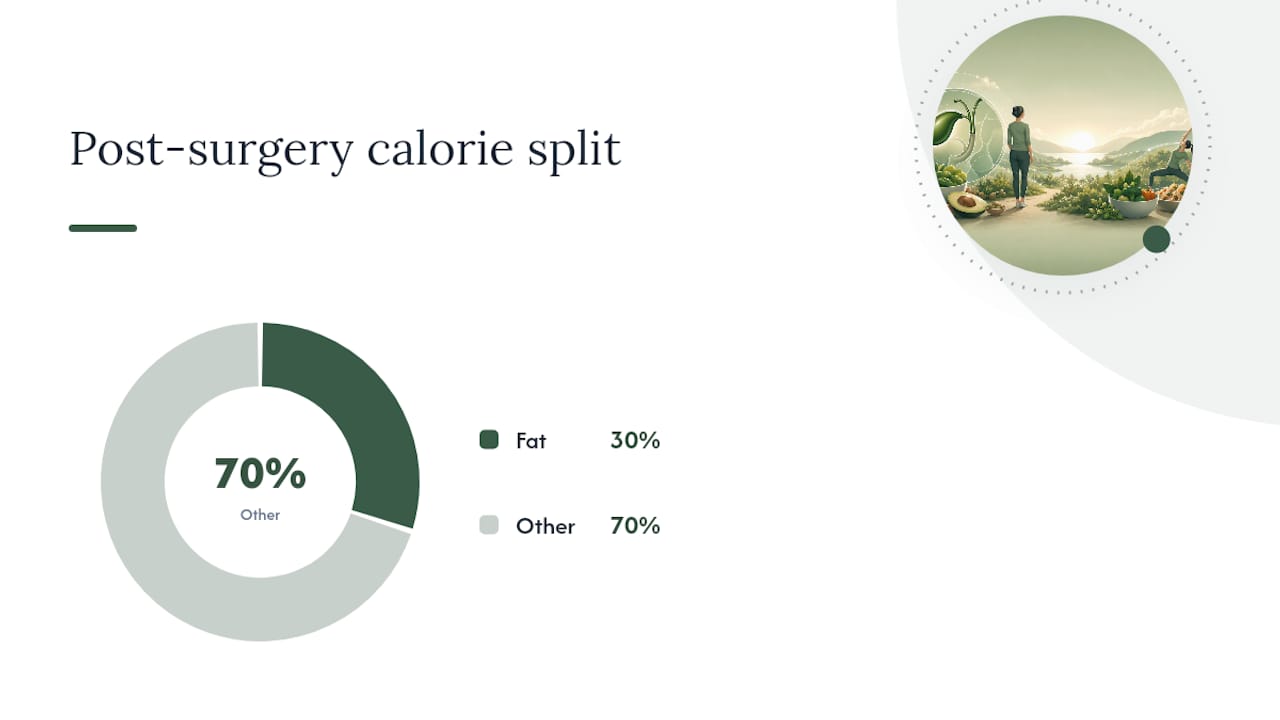
Post-surgery fat target: if you’ve had your gallbladder removed, fat intake is often recommended at around or below 30% of daily calories, which works out to roughly 60g of fat on an 1,800 kcal diet.
Which foods trigger gallbladder attacks?
Fatty and fried food is the usual culprit. Anything heavy in saturated fat asks the gallbladder to release a large dose of bile in one go, and that’s often when pain strikes. Ultra-processed snacks, pastries, and takeaways tend to combine that fat load with refined carbohydrate and salt, which makes them worth cutting back on rather than banning outright.
Foods to limit include:
- Fried food: chips, battered fish, doughnuts
- Fatty meats: sausages, bacon, lamb, meat pies
- Full-fat dairy: cream, hard cheese, whole milk
- Butter, lard, and rich sauces or gravies
- Sugary, ultra-processed snacks and large portions of white bread or pastry
Caffeine and alcohol don’t cause gallstones directly, but both can aggravate digestive discomfort in some people, so notice how your body responds. Swapping is easier than cutting: grill mince instead of frying it, use a reduced-fat cheese in cooking, and choose wholemeal bread over white. None of this means eating bland food forever, just choosing the lower-fat version of what you already enjoy.
How often should you eat with gallstones?
Long gaps between meals let bile sit and thicken in the gallbladder, which raises the chance of an attack. The fix is straightforward:
- Eat breakfast within an hour or two of waking, and don’t go longer than 12 hours between your evening meal and the next morning’s food.
- Space three balanced meals through the day, adding a light snack if you’re prone to symptoms.
- Use your palm for protein portions and a cupped hand for carbohydrate as a simple size guide.
- Cook with around one teaspoon of oil per person, favouring baking, steaming, or grilling over frying.
How fast should you lose weight with gallstones?
Weight loss can help if you’re carrying excess weight, but speed matters more than most people realise. Losing weight too quickly forces the liver to release extra cholesterol into bile, which can trigger new stones to form. The safe pace is 0.5 to 1kg a week, achieved through a modest calorie deficit rather than crash dieting.
Supervised programmes that pair a moderate deficit with resistance exercise tend to protect against this risk better than fast, unsupervised diets. If you’re not sure how to set a realistic target, ask your GP for a referral to a dietitian rather than following an extreme plan you found online.
What can you eat after gallbladder removal?
Without a gallbladder to store it, bile drips continuously into the small intestine instead of arriving in a concentrated burst after meals. That change catches some people out in the first few weeks, showing up as looser stools, bloating, or discomfort after a rich meal.
The early advice is to keep things simple:
- Start with small, low-fat meals rather than your usual portions
- Reintroduce fibre gradually if you notice bloating
- Add fats back in slowly, watching how your body responds to each one
- Keep a rough note of what you’ve eaten if symptoms flare
Most people return to a fairly normal diet within a few weeks, though some need a longer, gradual reintroduction. If diarrhoea or pain persists beyond that, it’s worth discussing with your GP rather than assuming it will settle on its own.
What does a gallbladder-friendly day of eating look like?
Small changes across the day add up faster than one big overhaul.
- Breakfast: porridge oats with berries, or scrambled eggs made with minimal butter on wholemeal toast
- Lunch: jacket potato with cottage cheese and salad, or a lentil soup with wholemeal bread
- Dinner: grilled chicken or white fish, brown rice, and a large portion of steamed vegetables
- Snacks: a handful of unsalted nuts, fruit, or plain rice crackers
Pro Tip: Eating out doesn’t have to derail things. Ask for sauces and dressings on the side, choose a grilled option over fried, and eat a small low-fat snack before a big social meal so you’re not tempted to overeat once you sit down.
When should you get personalised nutrition support?
Diet sheets work for many people, but not everyone. If symptoms persist despite following the guidance above, if you’re managing gallstones alongside another condition like diabetes or a thyroid disorder, or if you’ve struggled to lose weight safely on your own, tailored support tends to get better results than trial and error.
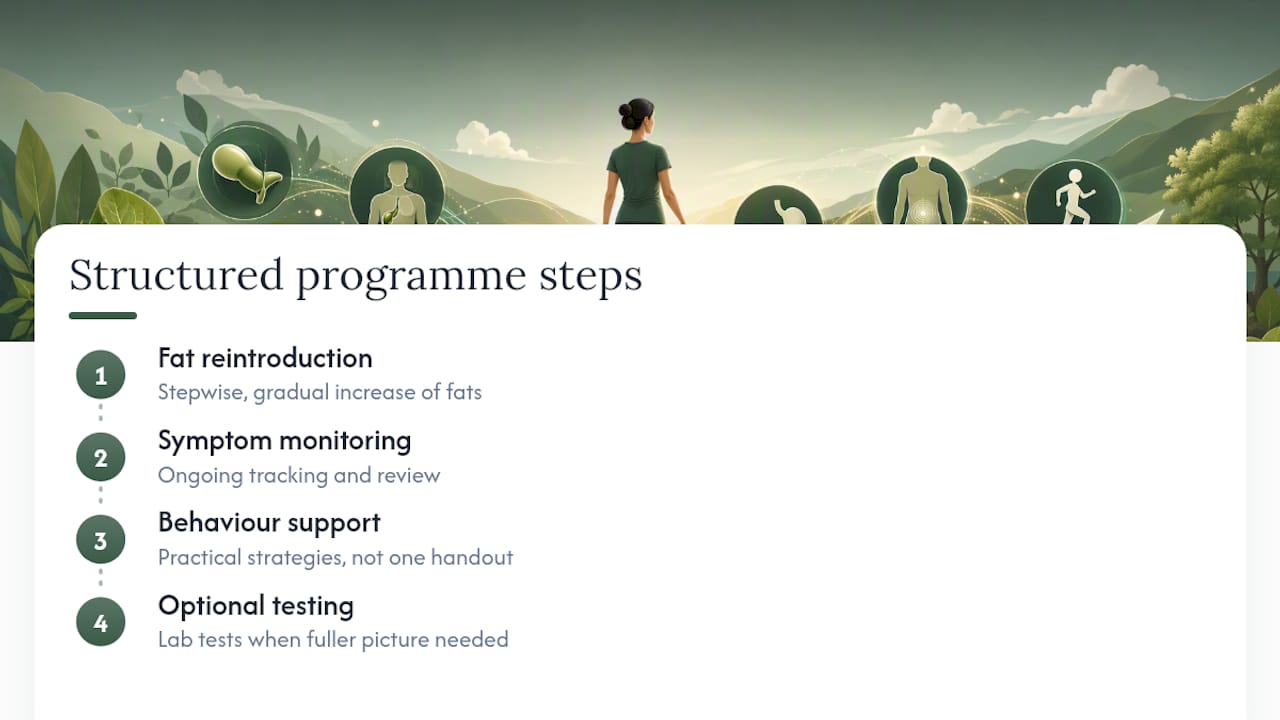
A structured programme typically involves stepwise reintroduction of fats, ongoing monitoring of symptoms, and practical behaviour support rather than a single handout. Foodconnection builds personalised plans around exactly this kind of complexity, combining dietary guidance with optional lab testing where a fuller picture is useful.
A short note on sustainable change
Restriction rarely lasts. What works is swapping fried for grilled, white bread for wholemeal, and noticing patterns rather than banning entire food groups overnight. Try a simple food diary for two weeks, jotting down what you ate and how you felt afterwards. If a pattern emerges, or if pain keeps returning, that’s your cue to see a dietitian rather than keep guessing.
— Irina
Personalised support from Foodconnection
Personalised nutrition support can offer an alternative to generic diet sheets for gallstone symptoms by providing an ongoing programme built around your own triggers, symptoms, and any other conditions you’re managing alongside your gallbladder.
That means a personalised meal plan, the option to add lab testing where it would genuinely help, and continued support as your body adjusts, whether you’re managing symptoms before surgery or reintroducing food afterwards. It suits anyone who has tried the general advice and still gets flare-ups, or who wants a safe, supervised approach to weight loss rather than a crash diet that risks forming new stones. For more details on tailored programmes, please visit the relevant nutrition consulting services. If that sounds like where you are, visit Foodconnection to find out how a tailored programme works and get started.
Where this guidance comes from
- Nhs
- Dietary advice for people with cholecystitis or gallstones (Royal Devon NHS)
- Gallstones and diet (Imperial NHS patient leaflet)
- Foods To Eat and Avoid on a Gallbladder Diet (Cleveland Clinic)
This article is general information, not a substitute for advice from a qualified doctor. Consult a qualified healthcare professional about your own circumstances before acting on anything here.
Sources
- Dietary advice for people with cholecystitis or gallstones (Royal Devon NHS)
- Foods To Eat and Avoid on a Gallbladder Diet (Cleveland Clinic)
- Gallstones and diet (Imperial NHS patient leaflet)
- Nhs