
Functional lab testing: your UK root-cause guide

Functional lab testing is clinical-grade testing that looks for subtle, upstream imbalances across hormones, gut microbiome, nutrients, and toxins by using narrower “optimal” ranges and pattern analysis rather than simple disease/no-disease thresholds. The immediate next step is to identify your key symptoms, discuss them with a qualified nutritionist or functional clinician, and choose targeted tests rather than ordering a broad, untargeted battery.
Three things to know before you start:
- Functional testing assesses diverse systems, including hormone panels (sex, thyroid, adrenal), gut microbiome, micronutrient levels, and toxicity or heavy metal exposure, aiming to uncover root causes before diagnosable disease develops.
- Tests such as the DUTCH hormone panel or GI-360 stool analysis are most useful when ordered to answer a specific clinical question, not as a general health screen.
- Clinician review is not optional. Results measure complex metabolic patterns, and misreading them without clinical context can lead to inappropriate decisions.
Pro Tip: Before booking any test, write down your three most persistent symptoms and how long you have had them. That list shapes which tests are worth ordering and which are not.
Table of Contents
- What functional lab testing is and how it differs from conventional testing
- Common functional lab tests used in the UK: what they measure and when they help
- How tests are ordered and how sample collection works in the UK
- What tests cost and how long results take in the UK
- How results are interpreted and what their limitations are
- How a practitioner decides which tests you actually need
- Research-backed tips for getting the most from your tests
- Key takeaways
- Why I think most people approach functional testing the wrong way
- Foodconnection’s practitioner-led testing service
- Further reading and authoritative sources
What functional lab testing is and how it differs from conventional testing
Conventional diagnostics are designed to detect disease. Functional testing is designed to find the conditions that precede it. That single distinction explains almost everything about how the two approaches differ.
Standard NHS blood tests use population reference ranges, which are built from statistical averages across a large, mixed population. A result is flagged only when it falls outside the outer edges of that distribution. Functional clinicians use narrower “optimal” windows instead, so a thyroid TSH reading that sits comfortably within the NHS reference range might still prompt investigation if it sits at the high end of the functional optimal band. The difference is not that one approach is wrong; it is that they are answering different questions.
Pattern analysis is the other key distinction. A functional clinician looks at a cluster of markers together: thyroid function alongside iron, ferritin, and cortisol, for example, rather than each in isolation. That systems-level reading is what allows a practitioner to spot a subclinical trend that individual markers would not flag on their own.
Body systems typically assessed through functional testing include:
- Endocrine: thyroid (TSH, free T3, free T4, antibodies, reverse T3), sex hormones, adrenal/cortisol
- Gut and microbiome: microbial diversity, pathogens, inflammation markers, digestive function
- Nutritional status: micronutrients, amino acids, fatty acids
- Detoxification and heavy metals: toxin load, methylation capacity
- Metabolic markers: blood sugar regulation, organic acids, mitochondrial function
- Immune markers: food sensitivities, intestinal permeability
Functional testing complements conventional medicine: standard tests rule out acute disease while functional tests explore upstream drivers of chronic, low-grade dysfunction.
Common functional lab tests used in the UK: what they measure and when they help
Not everyone needs every test. The principle of biochemical individuality means that the right panel for one person may be entirely irrelevant for another. The table below covers the tests most commonly ordered in UK functional practice.
| Test | What it measures | Sample type | Who can order | Typical UK cost | Turnaround | When to choose it |
|---|---|---|---|---|---|---|
| GI Effects (Genova Diagnostics) | Microbial diversity, pathogens, inflammation, digestive enzymes | Stool | Clinician-led; some DTC | £300–£450 | 2–3 weeks | Persistent bloating, IBS, loose stools, suspected dysbiosis |
| GI-360 (Doctor’s Data) | Gut microbiome composition, pathogens, parasites, short-chain fatty acids | Stool | Clinician-led | £250–£400 | 2–3 weeks | Similar to GI Effects; useful second-line or when parasite screening is a priority |
| DUTCH Complete (Precision Analytical) | Sex hormones, adrenal cortisol curve, melatonin, metabolites | Dried urine | Clinician-led; some DTC | £250–£350 | 2–3 weeks | Cyclical symptoms, PMS, perimenopause, fatigue, poor sleep |
| Organic Acids Test (OAT) | Metabolic byproducts, mitochondrial function, B-vitamin status, yeast/bacterial markers | Urine | Clinician-led | £200–£350 | 2–3 weeks | Chronic fatigue, brain fog, poor recovery, suspected dysbiosis |
| SIBO breath test | Hydrogen and methane gas after substrate challenge | Breath | Clinician-led; some DTC | £150–£250 | 1–2 weeks | Bloating after meals, early satiety, suspected small intestinal bacterial overgrowth |
| Full thyroid panel | TSH, free T3, free T4, thyroid antibodies, reverse T3 | Blood | Clinician-led; some DTC | £80–£200 | 3–7 days | Fatigue, weight changes, cold intolerance, hair loss |
| Cyrex food sensitivity panels | IgG/IgA antibody reactions to multiple food antigens | Blood | Clinician-led | £300–£600 | 2–3 weeks | Suspected food reactivity, autoimmune conditions, gut permeability |
| Hair Tissue Mineral Analysis (HTMA) | Mineral ratios, heavy metal burden | Hair | Some DTC | £80–£150 | 1–2 weeks | Suspected heavy metal exposure, mineral imbalances, fatigue |
| Lifecode Gx genomic panels | Methylation, detoxification, hormone metabolism gene variants | Saliva | Clinician-led | £200–£400 | 3–4 weeks | Persistent symptoms despite dietary changes; family history of hormone-related conditions |
| Intestinal permeability / leaky gut | Lactulose/mannitol ratio or antibody markers | Urine or blood | Clinician-led | £150–£300 | 1–2 weeks | Autoimmune conditions, food sensitivities, chronic gut symptoms |
| Toxin / heavy metal panel | Urinary or blood levels of lead, mercury, arsenic, cadmium | Urine or blood | Clinician-led | £150–£350 | 1–2 weeks | Occupational exposure history, neurological symptoms, unexplained fatigue |
Cost ranges are typical estimates for UK private/functional practice; individual lab pricing varies. Always confirm current pricing with the ordering clinician or lab.
Quick decision rules:
- Persistent bloating, loose stools, or suspected dysbiosis → GI Effects or GI-360 stool microbiome panel
- Cyclical symptoms, PMS, infertility, or perimenopausal changes → DUTCH hormone panel
- Chronic fatigue with poor recovery and brain fog → Organic Acids Test
- Bloating that worsens after eating, early satiety → SIBO breath test
- Hair loss, cold intolerance, or unexplained weight gain → full thyroid panel including antibodies
- Suspected food reactivity alongside autoimmune markers → Cyrex array
How tests are ordered and how sample collection works in the UK
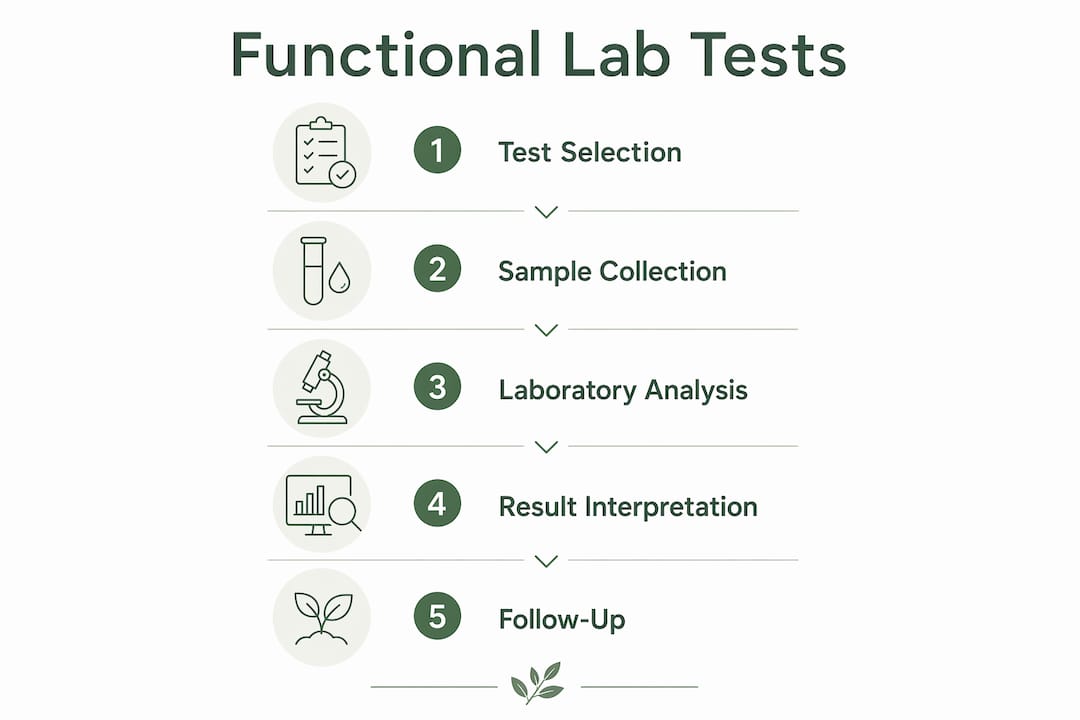
Most reputable functional tests should be ordered with practitioner support in the UK. Some are available direct-to-consumer, but clinician support is strongly recommended regardless of the ordering route, because results require clinical context to be useful.

Ordering routes in practice: many Genova Diagnostics panels (including GI Effects) are clinician-only. DUTCH tests and some thyroid blood panels are available through UK-based DTC platforms, though interpretation without a practitioner is a common source of misreading. Lifecode Gx genomic panels are practitioner-led by design.
Sample collection requirements vary considerably by test type:
- Stool tests (GI Effects, GI-360): stop antibiotics and antimicrobials at least two weeks before sampling; pause probiotics for the window specified by the lab; follow the kit’s collection sequence carefully; courier the sample promptly using the pre-paid packaging provided.
- DUTCH dried urine: collect at four to five specific time points across one day, including a waking sample and a late-evening sample; timing must follow the clock precisely because the cortisol curve is what gives the test its clinical value.
- Saliva cortisol: collect at waking, 30 minutes post-waking, midday, and evening; avoid eating, drinking, or brushing teeth immediately before each sample.
- Blood panels (thyroid, Cyrex, minerals): most require a fasting morning draw; home phlebotomy services are available across the UK and can be arranged through the ordering clinician or directly with the lab.
- SIBO breath test: follow a specific low-fermentation diet for 24 hours beforehand; fast overnight; avoid antibiotics and prokinetics for the specified window.
- Hormone tests with menstrual timing: certain sex hormone panels should be collected on specific days of the cycle (typically day 19–21 for a luteal-phase progesterone reading).
Cortisol testing requires strict adherence to sample collection windows; incorrect timing produces invalid or unusable data.
Always confirm collection instructions with the ordering clinician or lab before you begin. A single timing error on a DUTCH or cortisol panel can invalidate the entire sample set.
Pro Tip: Set phone alarms for each DUTCH or saliva collection window the night before. Missing even one time point by more than 30 minutes can skew the cortisol curve enough to make the result uninterpretable.
What tests cost and how long results take in the UK
Costs and turnaround times vary widely. Expect modest blood panels to be quicker and cheaper, and specialised stool or genomic tests to cost more and take longer.
Typical UK cost and turnaround by category:
- Standard blood panels (thyroid, iron, vitamins): £80–£200; results in 3–7 days
- Stool microbiome panels (GI Effects, GI-360): £250–£450; 2–3 weeks
- DUTCH hormone panel: £250–£350; 2–3 weeks
- Organic Acids Test: £200–£350; 2–3 weeks
- SIBO breath test: £150–£250; 1–2 weeks
- Genomic panels (Lifecode Gx): £200–£400; 3–4 weeks
- Food sensitivity panels (Cyrex): £300–£600; 2–3 weeks
Budget separately for practitioner interpretation. A results review session with a qualified nutritionist or functional clinician generally adds an additional fee on top of the lab cost, and that session is where the real clinical value sits.
On retesting: functional medicine practice often recommends follow-up testing several months after interventions to track progress and adjust care plans. Factor that second-round cost into your planning from the start. Longitudinal comparisons, baseline against follow-up, are what turn a one-off snapshot into genuinely useful clinical data.
Some clinics bundle multiple tests with an interpretation consultation, combining stool, hormone, mineral, and toxin panels alongside a follow-up session. Bundled packages can offer better value than ordering each test separately, provided every test in the bundle is clinically indicated for your presentation.
How results are interpreted and what their limitations are
Always review functional lab results with a qualified clinician. Values are patterns that require context; a number sitting outside an optimal range means nothing without knowing your symptoms, history, medications, and the rest of your panel.
Common limitations to understand before you test:
- Optimal-range variability: different labs and practitioners use slightly different optimal windows, so the same result can look different depending on who interprets it.
- Snapshot nature: a single test captures one moment in time. Stress, illness, travel, and recent diet all influence results. One abnormal reading is a signal to investigate, not a diagnosis.
- False positives in food sensitivity panels: broad IgG food panels, in particular, are prone to producing long lists of “reactive” foods that do not all represent genuine clinical intolerances. Cyrex arrays are more specific than many generic IgG panels, but even these require careful clinical interpretation.
- Timing errors: as noted above, cortisol and DUTCH results are highly sensitive to collection timing. A misread result here can lead to unnecessary hormone supplementation.
- Lab-method variability: results from different laboratories are not always directly comparable. Use the same lab for longitudinal tracking wherever possible.
Safety matters here too. Avoid self-prescribing hormone treatments, chelation protocols, or high-dose supplements based on raw results alone. If findings suggest an actionable condition, coordinate with your GP. Expert guidance is clear that interpreting complex metabolic data without clinical context risks misinterpretation and inappropriate decisions.
Pro Tip: Apply the “test to answer a question” principle rather than “test everything.” Before ordering any panel, ask: if this result comes back abnormal, what will I actually do differently? If the answer is unclear, hold off until you have a clearer clinical rationale.

How a practitioner decides which tests you actually need
Test selection is driven by a clear clinical question, not by curiosity or a desire for completeness. Symptoms, history, current medications, and prior test results all shape which panels are worth ordering.
Selection criteria a good practitioner will apply:
- Symptom-driven indication: is there a specific, persistent symptom cluster that points to a particular system?
- Prior test gaps: what has already been ruled out by conventional testing, and what remains unexplained?
- Cost-effectiveness: will this result meaningfully change the treatment plan?
- Ability to retest: is there a realistic plan to retest after intervention to measure change?
- Biochemical individuality: does this person’s history, genetics, or medication use make a particular test more or less relevant?
Questions worth asking your practitioner before agreeing to any test:
- What specific clinical question will this test answer?
- How will the result change my treatment plan?
- Who interprets the results, and what does the follow-up process look like?
- Is this the most cost-effective test for this question, or is there a simpler starting point?
- When will we retest to measure whether the intervention worked?
Red flags to watch for: practitioners or vendors who encourage “test everything” packages without a clear clinical rationale; promises that a test will diagnose or cure a condition; and any service that provides results without a qualified clinician available for interpretation. Not every specialty test is validated for every use, and ordering without a clear plan can produce incidental findings that complicate rather than clarify care.
If you are unsure whether a nutritionist is the right starting point, reading about choosing a nutritional therapist can help you understand what to look for before booking.
Pro Tip: Start with a targeted baseline panel that addresses your primary symptom cluster. Add further tests only when the first round raises a specific new question. Shotgun batteries are expensive, time-consuming, and often produce more noise than signal.
Research-backed tips for getting the most from your tests
These are pragmatic steps that improve reliability and clinical usefulness, drawn from how functional practitioners approach testing in practice.
- Confirm collection windows in writing before your sample arrives. Verbal instructions are easy to misremember; ask the lab or clinician to send written prep instructions.
- Pause interfering substances when instructed: stop antibiotics and antimicrobials at least two weeks before stool testing; pause probiotics for the lab-specified window; check whether any supplements or medications affect hormone or organic acid readings.
- Use the same laboratory for longitudinal tracking. Reference ranges and methodologies differ between labs, and comparing results across different providers introduces variability that has nothing to do with your health.
- Schedule retesting 3–6 months after interventions to assess whether the plan is working. A baseline result without a follow-up is a single data point; two results over time tell a story.
- Keep copies of your raw lab reports. Practitioners change; having your own records means you can share full context with any future clinician without starting from scratch.
- Prioritise tests that will change treatment. The targeted testing principle is that a test is only worth ordering when the result will genuinely influence what you do next.
Clinician-led interpretation reduces the risk of misreading results and acting on false positives, particularly for broad panels like food sensitivity arrays or multi-marker stool tests. The investment in a proper results review session pays for itself in avoided unnecessary supplements and dietary restrictions.
Pro Tip: Trend your results over time in a simple spreadsheet: date, test, key markers, and what changed in your protocol between rounds. Patterns across two or three rounds of testing are far more informative than any single result.
Key takeaways
Functional lab testing is most useful when it is targeted, clinician-interpreted, and followed up with a retest 3–6 months after any intervention.
| Point | Details |
|---|---|
| Target your tests | Choose panels based on a specific clinical question, not as a general health screen. |
| Clinician interpretation is non-negotiable | Complex metabolic patterns require clinical context; raw results alone risk misreading and inappropriate action. |
| Preparation affects validity | Follow collection rules precisely: timing, fasting, and medication pauses all affect result accuracy. |
| Plan for retesting | Budget for a follow-up panel 3–6 months after intervention; longitudinal data is where the real value lies. |
| Foodconnection offers practitioner-led testing | Foodconnection orders and interprets functional tests, including stool, hormone, thyroid, and SIBO panels, within personalised nutrition programmes. |
Why I think most people approach functional testing the wrong way
The most common mistake I see is not ordering the wrong test. It is ordering the right test at the wrong time, without a clear plan for what to do with the result.
Functional testing has genuine power. A well-timed DUTCH panel or a GI-360 stool analysis can explain years of unexplained fatigue or digestive symptoms in a way that standard bloods simply cannot. But that power depends entirely on the clinical framework around the test: the questions asked before ordering, the preparation followed before sampling, and the interpretation done afterwards.
What concerns me is the growing market for DTC panels sold with the implicit promise that the test itself is the answer. It is not. A 40-marker stool report or a genomic methylation panel is raw data. Without a practitioner who understands how those markers interact, what the optimal ranges mean for your specific presentation, and how to translate findings into a practical nutrition and lifestyle plan, you are left with a document that is more likely to cause anxiety than clarity.
The other thing worth saying plainly: functional testing is not a replacement for conventional medicine. It sits alongside it. If your results suggest something that needs medical investigation, that conversation belongs with your GP. The role of a functional nutritionist is to use testing to build a more precise, personalised nutrition plan, not to diagnose or treat disease.
Used well, with a clear clinical question, proper preparation, and qualified interpretation, these tests are among the most useful tools available for understanding chronic, complex health presentations. Used poorly, they are expensive noise.
Foodconnection’s practitioner-led testing service
If you have read this far, you are probably sitting with a list of symptoms and wondering which tests are actually worth your money. That is exactly the conversation Foodconnection is built for.
Rather than handing you a results PDF and leaving you to interpret it alone, Foodconnection provides a fully supported testing pathway: test selection based on your symptom picture, written preparation guidance, home phlebotomy coordination where needed, and a dedicated interpretation session that translates your results into a personalised nutrition programme. Tests covered include stool microbiome panels, DUTCH hormone analysis, full thyroid panels, SIBO breath testing, and more.
The difference from ordering a DTC panel yourself is the clinical framework around the test. Every result is read in the context of your full health history, current diet, and treatment goals, and retesting is built into the programme from the start.
If you are ready to move from guessing to knowing, explore Foodconnection’s functional lab testing services or view the full range of nutrition programmes and lab packages to find the right starting point for your situation.
Further reading and authoritative sources
The sources below underpin the clinical claims in this article and are worth consulting for deeper reading.
- A beginner’s guide to functional medicine lab testing (Fullscript): covers optimal versus reference ranges, the main test categories, and the principle of longitudinal retesting. A solid starting point for anyone new to this area.
- 11 commonly ordered functional medicine lab tests (Fullscript): practical descriptions of OAT, DUTCH, stool microbiome, SIBO breath, and other commonly used panels, including sample preparation rules.
- Functional medicine lab testing: a clinical overview (Empire Medical Training): a clinician-focused overview of test selection principles, timing sensitivity, and the targeted testing framework.
- Your functional lab work explained: what standard tests miss (Hopkins MD): explains the complementary relationship between conventional and functional testing and the importance of clinician-led interpretation.
- Functional lab testing at Foodconnection: details the tests Foodconnection offers, how sample collection is handled, and how results are integrated into personalised nutrition plans.
“Functional testing is most powerful when used longitudinally: compare baseline to follow-up after intervention to objectively track progress and adjust care.” — Fullscript, beginner’s guide to functional medicine lab testing
This article is general information, not medical or clinical advice. Confirm current testing options, preparation requirements, and clinical suitability with a qualified practitioner or your GP before ordering any functional lab test.
Recommended
- Functional lab testing — stool, hormones, thyroid, SIBO | FoodConnection
- How to Choose the Right Nutritionist in London (And Avoid Costly Mistakes) | FoodConnection blog
- What Causes IBS? (And Why It’s Not Just About Food) | FoodConnection blog
- Thinking of working with a nutritional therapist? Read this first | FoodConnection blog