
Managing fructose malabsorption with a targeted elimination diet

Manage fructose malabsorption by cutting concentrated, high-free-fructose foods for a few weeks, then reintroducing items one at a time to map your personal tolerance. Most people don’t need lifelong avoidance of fruit and honey. They need a structured trial, careful portioning, and a plan for what happens if symptoms creep back. See a registered dietitian if bloating persists or your diet narrows too far.
TL;DR:
- Most people can reintroduce small amounts of fructose gradually after an elimination phase, rather than avoiding fruit and honey permanently.
- Foods with a high concentration of free fructose, such as fruit juice, honey, HFCS, and dried fruit, should be avoided during the initial two to six weeks.
- Pairing fructose with glucose-rich foods and spreading intake across meals can significantly reduce symptoms and improve tolerance.
- Reintroduction should be done with one food at a time over several days, carefully monitoring and recording symptoms to identify personal triggers.
- Long-term management relies on a personalized map of tolerated foods, portioning, and pairing strategies learned during structured reintroduction, rather than blanket restrictions.
Table of Contents
- What is fructose malabsorption and how does it differ from hereditary fructose intolerance?
- Elimination phase: what to cut and how to read labels
- Foods that are usually well tolerated, plus simple meal ideas
- Stepwise reintroduction: a practical protocol
- How do you protect nutrition on a low-fructose plan?
- When should you get tested or see a dietitian?
- The Foodconnection perspective on managing fructose malabsorption
- How do you reduce your total daily fructose load without cutting everything?
- Managing bloating and diarrhoea while you eliminate
- Eating out and social situations during elimination and reintroduction
- Long-term strategies once you’ve completed reintroduction
- Why food-first management beats blanket restriction
- Get personalised support for fructose malabsorption
- Sources
What is fructose malabsorption and how does it differ from hereditary fructose intolerance?
Fructose malabsorption happens when the small intestine cannot efficiently absorb fructose, so unabsorbed sugar ferments in the colon and produces gas, bloating, cramping pain, and diarrhoea. It’s a functional absorption limit, not organ damage, and it frequently overlaps with irritable bowel syndrome.
This is entirely different from hereditary fructose intolerance (HFI), a rare inherited enzyme deficiency in the liver that makes fructose genuinely dangerous, sometimes life-threatening, and requires strict lifelong avoidance. Fructose malabsorption is dose-dependent instead: small amounts often pass without issue, while a large glass of apple juice on an empty stomach might not.
The ratio of fructose to glucose in a food matters as much as the total amount. Glucose actively helps transport fructose across the gut wall, which is why pairing the two often prevents symptoms that fructose alone would trigger.
Elimination phase: what to cut and how to read labels
The first stage of any diet for fructose intolerance is a short, deliberate elimination, typically two to six weeks, long enough to calm symptoms without dragging on indefinitely.
During this window, avoid foods that deliver a concentrated fructose hit:
- Fruit juice, smoothies, and dried fruit, where fructose is stripped of the fibre that would normally slow absorption
- Honey, agave syrup, and high-fructose corn syrup (HFCS), all of which contain far more fructose than glucose
- Apples, pears, watermelon, mango, and cherries, plus tinned fruit in syrup
- Fruit concentrates used in yoghurts, cereal bars, and “no added sugar” sauces that still rely on fruit purée for sweetness
Hidden sources catch people out more than obvious ones. Barbecue sauce, ketchup, salad dressings, some breakfast cereals, protein bars, and even certain oral medicines and supplements use fructose or HFCS as a sweetener or excipient. Checking ingredient labels for the words “fructose,” “high-fructose corn syrup,” “fruit juice concentrate,” or “invert sugar” catches most of them, and a quick word with your pharmacist about syrup-based medicines closes the remaining gap.
Diet sheets used in clinical practice suggest aiming for under 3g of total fructose and no more than 0.5g of free fructose per serving where you can, and spreading any fructose-containing food across the day rather than eating it all at once.
Pro Tip: Keep the actual food packaging rather than just noting “cereal bar” in your diary. Two bars from the same brand can have completely different fructose content depending on the flavour, and you’ll want to know exactly which one caused trouble.
Foods that are usually well tolerated, plus simple meal ideas
Avoiding fructose doesn’t mean a bland or restrictive plate. Most people manage well on:
- Lean proteins: chicken, fish, eggs, tofu, plain meat with no fruit-based glaze
- Plain dairy: milk, natural yoghurt, hard cheese (lactose is a different sugar entirely)
- Most fats and oils, nuts, and seeds
- Tolerated vegetables: carrot, courgette, green beans, lettuce, spinach, potato
- Lower-risk fruits in modest portions: banana, strawberries, and blueberries, depending on individual tolerance
A simple template: breakfast could be plain porridge with a few berries and a spoon of nut butter; lunch a rice bowl with grilled chicken, courgette, and olive oil; snacks a handful of nuts or a small banana with yoghurt; dinner salmon, mashed potato, and green beans.
The pairing strategy is worth repeating here in practical terms: a small amount of fruit eaten alongside protein or a starch (rather than on its own, on an empty stomach) tends to sit better, because the mixed meal slows gastric emptying and gives the gut more time and more glucose to work with.

Stepwise reintroduction: a practical protocol
Reintroduction is where most people go wrong, either rushing it or never attempting it at all and staying needlessly restricted for years. A structured approach fixes both problems.
- Pick one food at a time. Start with something lower in free fructose, such as a small amount of banana or a specific vegetable, rather than jumping straight to apple juice.
- Test it for three to seven days at a consistent, modest portion, keeping everything else in your diet stable so you can isolate the effect.
- Watch for symptoms for up to 48 hours after each new exposure. Gas, bloating, or altered bowel habit can appear with a delay, not just immediately.
- If symptoms return, drop back to the last level you tolerated comfortably, let things settle, and retry that same food again in a few weeks rather than abandoning it permanently.
- Write everything down. A food and symptom log covering the whole day, not just the last meal you ate, is the single most useful tool in this entire process, because symptoms often appear two to eight hours after eating.
Progress through lower-risk foods before testing concentrated sources like honey or apple juice, and expect the full reintroduction process to take several weeks, not days.
How do you protect nutrition on a low-fructose plan?
Fibre, vitamin C, and potassium are the nutrients most likely to slip during elimination, since many of their richest sources happen to be high-fructose fruits.
Substitute deliberately rather than by accident. Vegetables such as spinach, peppers (in tolerated amounts), and potatoes carry meaningful vitamin C and potassium without the fructose load of an orange or a mango. Oats, wholegrain bread, and vegetables cover fibre reasonably well without fruit. Fortified products, some breakfast cereals and plant milks, can help plug gaps too.
Keep an eye on appetite, weight, and energy levels through the elimination weeks. A dietitian can arrange blood tests or suggest a targeted supplement if intake looks genuinely short in any area, which is a more sensible route than guessing.
When should you get tested or see a dietitian?
Persistent symptoms despite a careful elimination trial, unexplained weight loss, blood in stool, or symptoms that don’t budge with dietary change all warrant a proper clinical review rather than more self-experimentation.
The hydrogen breath test involves drinking a fructose solution and measuring breath hydrogen over the following hours; a rise suggests malabsorption, though the test has recognised limitations and some clinicians will run a supervised dietary trial instead of, or alongside, testing. If you’re weighing up a commercial food intolerance test, it’s worth reading an independent comparison of what these tests actually measure before paying for one.
A registered dietitian earns their keep in the reintroduction phase specifically: they can sequence which foods to test first, interpret a stalling symptom diary, and stop you from restricting further than necessary if broader FODMAP sensitivities turn out to be part of the picture.
The Foodconnection perspective on managing fructose malabsorption
Foodconnection combines lifestyle analysis with a structured reintroduction plan rather than handing over a generic avoidance list. That distinction matters in practice: clients get a sequence tailored to their own trigger pattern, not a one-size list of banned fruits.
Programme-based follow-up means someone reviews your symptom diary week by week, adjusts pace, and can add lab testing where nutritional adequacy is genuinely in question.
How do you reduce your total daily fructose load without cutting everything?
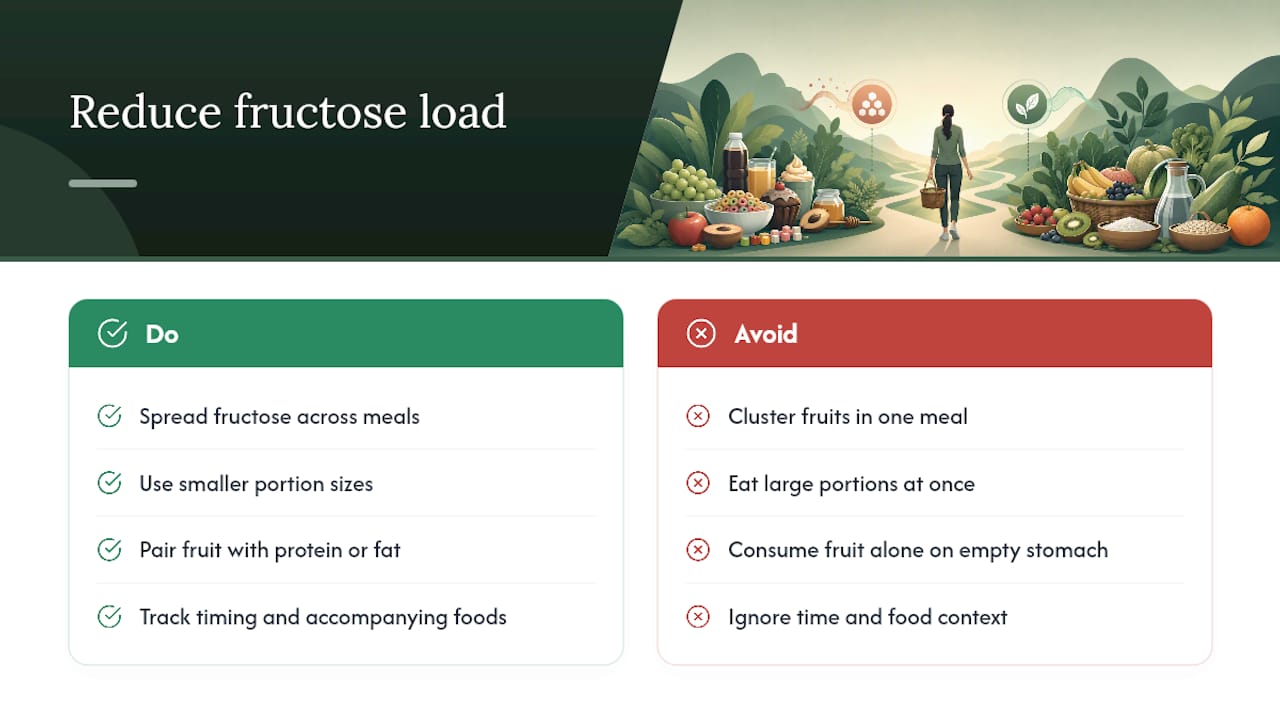
Total load matters more than any single food. Two apples eaten together stress the gut far more than half an apple eaten at breakfast and the other half at dinner, even though the daily total is identical.
Spread fructose-containing foods across your meals rather than clustering them. A piece of fruit with breakfast, a different one mid-afternoon, and none in the evening spreads the burden your gut has to process at any one time, rather than asking it to absorb a full day’s fructose in one sitting.
Portion size does more work than most people expect. Half a banana rather than a whole one, a small handful of berries rather than a bowl, a teaspoon of honey rather than a generous drizzle: these adjustments often mean the difference between comfort and a rough afternoon, without requiring full removal of the food.
Pairing remains the other lever. Fruit eaten alongside protein, fat, or a starchy food tends to cause fewer symptoms than fruit eaten alone on an empty stomach, because glucose from the mixed meal supports fructose absorption. A slice of apple with peanut butter behaves differently in your gut to a glass of apple juice on its own, even though both contain fructose.
If you’re tracking intake closely, note not just what you eat but what it’s eaten with and when. Two identical snacks at different times of day, or with different accompanying foods, can produce noticeably different results, and that pattern is exactly what a longer food diary is designed to catch.
Managing bloating and diarrhoea while you eliminate
Symptoms don’t vanish the moment you cut trigger foods. Gas and bloating from fermentation already under way can linger for several days even after you’ve removed the source, so patience matters more than panic in week one.
Eating smaller, more frequent meals rather than three large ones tends to ease bloating during this adjustment period, since it reduces the volume the gut has to process at once. Gentle movement after eating, a short walk rather than sitting still, can help shift trapped gas.
If diarrhoea is the dominant symptom, keep hydration and electrolytes in mind, and be cautious with very high-fibre foods introduced suddenly alongside the fructose changes, since a sudden fibre increase can aggravate loose stools independently of fructose itself. Introduce fibre-rich swaps gradually rather than all at once.
Peppermint, ginger, and warm (not fizzy) drinks are commonly used to settle cramping and bloating, though they’re a comfort measure rather than a fix for the underlying malabsorption. If bloating is severe, doesn’t ease within the first two weeks of elimination, or comes with pain that wakes you at night, that’s a signal to bring in a clinician rather than persist alone.
Eating out and social situations during elimination and reintroduction
Restaurants are where elimination plans usually get tested hardest, because sauces, dressings, and marinades are the most common hiding places for fructose, and menus rarely list ingredient detail.
Grilled or roasted proteins with a plain side, meat, fish, rice, or potatoes without a sweet glaze, are close to universally available and low risk. Asking for dressing or sauce on the side, rather than mixed through, gives you control without an awkward conversation about your diagnosis.
Ordering before anyone else at the table sometimes helps too, since it means your choice isn’t influenced by what looks appealing on someone else’s plate before you’ve had a chance to check what’s actually in it.
During reintroduction, social meals can double as useful test opportunities, provided you’re strategic. Sharing a dessert to test a small, known portion of a food you’re reintroducing is more useful than an unplanned exposure to a completely unknown sauce. Bring your symptom log mentally into the evening; you don’t need to write at the table, but note the timing and portion as soon as you can afterwards.
Alcohol deserves a mention here too. Some cocktail mixers and dessert wines carry meaningful fructose loads, so a spirit with soda water is generally a safer choice than a sweet liqueur while you’re still mapping your tolerance.
Long-term strategies once you’ve completed reintroduction
The goal after reintroduction isn’t permanent vigilance. It’s a settled, personal map of what you can eat, in what amount, and in what combination, that you no longer have to think about consciously.
Most people land somewhere between “eat anything” and the strict elimination phase: a diet that includes moderate fruit, the occasional honey-sweetened food, and normal social eating, with a handful of specific foods kept to smaller portions or avoided outright. That’s a reasonable, sustainable outcome, not a failure to “cure” the condition.
Revisit tolerance periodically. Gut sensitivity can shift with stress, illness, or changes in overall gut health, so a food that caused problems a year ago is worth retesting occasionally rather than assuming the verdict is permanent. Equally, a food you tolerate well now may need a smaller portion during a stressful period or after a stomach bug.
Keep the portioning and pairing habits from the elimination phase as background good practice rather than active rules; spreading fruit across the day and eating it with other food costs nothing and keeps risk low without feeling restrictive. If new or unexplained symptoms appear later, a brief return to a food diary is usually enough to spot the cause quickly, rather than restarting the whole elimination process from scratch.
Why food-first management beats blanket restriction
The conventional advice on fructose malabsorption tends to stop at “avoid high-fructose foods,” which is only half the story and, frankly, the easier half to write. The harder, more useful half is teaching someone how to reintroduce with confidence, because permanent avoidance of fruit and honey carries its own cost in fibre, vitamin C, and quality of life.
What’s overrated in most generic guidance is the idea that stricter is always safer. Clinical evidence points the other way: managing total load and pairing fructose with glucose usually gets people further than blanket exclusion ever does, and it’s kinder to actually follow long-term.
What the reader should prioritise first is the diary, not the food list. A detailed symptom log, kept for the whole elimination and reintroduction period, tells you more about your personal tolerance than any generic “foods to avoid” table ever will, because your gut’s threshold is yours alone, not the average patient’s.
— Irina
Get personalised support for fructose malabsorption
Working through elimination and reintroduction alone is manageable for some people, and genuinely difficult for others, particularly when nutrition starts to feel thin or symptoms won’t settle. Foodconnection runs this as a structured programme rather than a single appointment: personalised meal plans built around your actual tolerance, supervised reintroduction so you’re not guessing which food caused what, and optional lab testing with interpretation if nutrient shortfalls or overlapping conditions need ruling out.
That ongoing structure is the practical difference between a leaflet and real support. You get someone checking your symptom diary, adjusting the reintroduction pace, and catching issues like unnecessary long-term restriction before they become habit. If you’d rather not map your own tolerance from scratch, book a consultation with Foodconnection and start with a proper assessment of where you actually stand, or browse the full range of nutrition services and lab options available first.
This article is general information, not a substitute for advice from a qualified doctor. Consult a qualified healthcare professional about your own circumstances before acting on anything here.
Sources
- Dietary advice for children with fructose malabsorption — Cambridge University Hospitals NHS Foundation Trust
- NHS — patient guidance on low‑fructose diets
- Eating foods with less fructose — Alberta Health Services
- Review on fructose malabsorption and FODMAPs — PMC
Recommended
- Low FODMAP diet: a practical guide for IBS relief in the UK | FoodConnection blog
- Bile acid diarrhoea diet: a practical low-fat plan that works | FoodConnection blog
- Histamine intolerance diet: your practical UK guide | FoodConnection blog
- Low ferritin diet: practical food plan for raising iron stores | FoodConnection blog