
Food sensitivity tests: what the evidence actually says

What food sensitivity tests are, and why most get it wrong
Food sensitivity tests, sold widely across the UK, typically measure IgG antibody levels in your blood against a panel of foods. The problem is that IgG antibodies indicate normal immune exposure to food proteins, not intolerance or allergy. Higher IgG to a food usually means you eat it regularly, nothing more.
Major medical bodies are unambiguous on this. The European Academy of Allergy and Clinical Immunology (EAACI) does not recognise IgG panels as valid diagnostic tools for food sensitivity. IgG4 specifically, which some commercial kits measure, is increasingly understood as a marker of tolerance rather than reaction.
Key limitations to understand before spending money on a commercial kit:
- No diagnostic validity: IgG food panels are not recommended by NHS, EAACI, or any major UK allergy body.
- Normal results misread as problems: A positive IgG result to eggs or wheat likely means you eat them often, not that they harm you.
- Misdiagnosis risk: Commercial IgG tests risk misdiagnosis and can delay identification of real conditions such as coeliac disease or IBD.
- First steps that actually work: The NHS recommends starting with your GP or a registered dietitian, a detailed dietary history, and a symptom diary.
Foodconnection’s personalised nutrition approach starts exactly here: clinical history, symptom patterns, and structured investigation rather than a single unreliable panel.
Table of Contents
- Which testing methods are actually available in the UK?
- Why commercial food sensitivity testing can cause real harm
- How personalised nutrition consulting actually identifies your triggers
- Foodconnection: personalised nutrition for complex health concerns
- Key takeaways
Which testing methods are actually available in the UK?
Not all food intolerance tests are equal. The table below summarises the main approaches used in UK clinical and commercial settings.
| Method | What it measures | Recommended by NHS/EAACI? | Best used for |
|---|---|---|---|
| Supervised elimination diet | Symptom response to food removal and reintroduction | Yes | Identifying specific food triggers accurately |
| Hydrogen breath test | Lactase deficiency, SIBO | Yes (for specific conditions) | Lactose intolerance, small intestinal bacterial overgrowth |
| IgE blood test | Immediate allergic response | Yes (for allergy diagnosis) | Confirmed food allergy investigation |
| IgG/IgG4 panel | Immune exposure to food proteins | No | Not recommended for any diagnostic purpose |
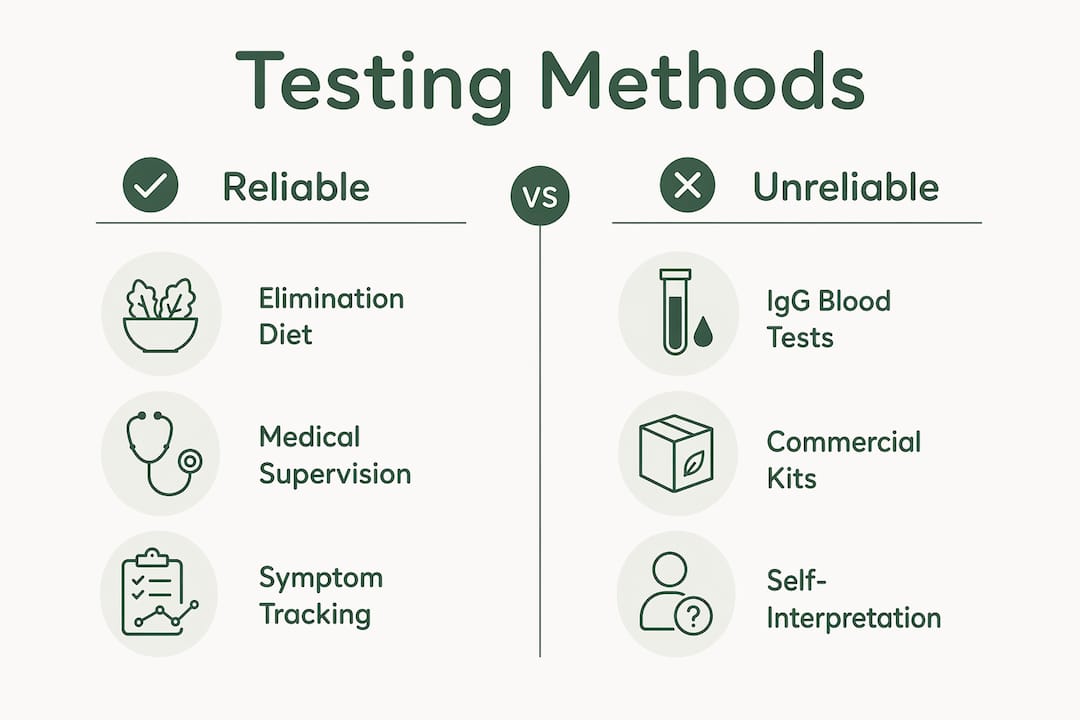
The gold standard for food intolerance remains a supervised elimination diet lasting 2–6 weeks, followed by phased reintroduction under dietitian guidance. This approach identifies triggers accurately without the nutritional risk of blanket food avoidance. Understanding clinical pathology testing helps clarify which blood tests carry genuine diagnostic weight.
Why commercial food sensitivity testing can cause real harm
The risks go beyond wasted money. Persistent digestive symptoms are multifactorial and cannot be resolved by a single IgG panel, however comprehensive it looks.
- Nutritional deficiency: Eliminating multiple food groups based on unvalidated results removes nutrients without clinical justification.
- Anxiety and food fear: Receiving a list of 30 “reactive” foods creates psychological distress, particularly for those already managing chronic illness.
- Delayed proper diagnosis: Coeliac disease, IBD, and SIBO all require specific clinical testing. An IgG panel delays that path.
- Financial cost: Commercial kits typically vary in price and lack evidence of therapeutic benefit.
Pro Tip: If you suspect a food trigger, keep a detailed symptom and food diary for two weeks before any appointment. A good clinician will find this far more useful than an IgG report.
Foodconnection’s approach integrates functional lab testing, including stool analysis, SIBO testing, and hormonal panels, alongside nutritional assessment and ongoing support, giving you a clinically grounded picture rather than a commercial shortcut.
How personalised nutrition consulting actually identifies your triggers
- Detailed health and lifestyle assessment covering symptoms, medical history, stress, sleep, and dietary patterns before any testing is ordered.
- Functional lab testing where indicated, including stool microbiome analysis, thyroid panels, and SIBO breath testing, selected to match your specific symptom profile.
- Supervised elimination diet following NHS-aligned protocols: 2–6 weeks of structured food removal, then systematic reintroduction to pinpoint genuine triggers.
- Nutritional balance maintained throughout, with meal planning that prevents deficiency during elimination phases.
- Ongoing support and interpretation, so results are contextualised within your full health picture rather than handed to you as a list to act on alone.
Recent research suggests test-guided elimination diets may help certain IBS subtypes, but only under medical supervision. For those with IBS-D or IBS-C, probiotics for IBS and dietary modification guided by a registered nutritional therapist consistently outperform self-managed elimination based on commercial test results.
Foodconnection: personalised nutrition for complex health concerns

If you have chronic digestive symptoms, hormonal imbalances, or unexplained fatigue, a commercial food sensitivity kit is unlikely to give you the answers you need. Foodconnection offers structured, programme-based personalised nutrition consulting for adults with exactly these concerns, combining in-depth lifestyle assessment with functional lab testing and continuous support.
Rather than handing you a report and leaving you to interpret it alone, Foodconnection works through your results with you, builds a realistic dietary plan, and adjusts it as your health improves. Sessions are available in London and online across the UK. To find out which programme fits your situation, visit Foodconnection’s services page and book a consultation.
Key takeaways
Commercial IgG food sensitivity tests are not validated diagnostic tools; the most reliable approach combines supervised elimination diets with personalised nutrition consulting and targeted functional lab testing.
| Point | Details |
|---|---|
| IgG tests lack validity | Major bodies including EAACI do not recognise IgG panels as diagnostic tools for food sensitivity. |
| Elimination diet is gold standard | NHS-recommended supervised elimination lasts 2–6 weeks with phased reintroduction to identify triggers safely. |
| Commercial tests carry real risks | Misdiagnosis, nutritional deficiency, anxiety, and delayed diagnosis of conditions like coeliac disease are documented risks. |
| Functional labs add genuine insight | Stool analysis, SIBO testing, and hormonal panels provide clinically grounded data that IgG panels cannot. |
| Foodconnection offers structured support | Programme-based nutrition consulting with integrated functional lab testing and ongoing guidance, available in London and online. |
Recommended
- Perimenopause: what’s happening and how food can help | FoodConnection blog
- Functional lab testing — stool, hormones, thyroid, SIBO | FoodConnection
- What Causes IBS? (And Why It’s Not Just About Food) | FoodConnection blog
- Is it worth paying for a nutritionist or nutritional therapist? | FoodConnection blog