
UK Food Cravings Control: One Week Plan, Urge Surfing and Plate Method

Pause for five minutes and ride out the urge with a technique called urge surfing, then fix the underlying pattern by eating three balanced meals plus one or two snacks daily. Cravings are a normal, well-documented response, not a willpower failure, according to both the NHS Eatwell Guide and a 2024 review in PMC. Right now, drink a glass of water, name the trigger out loud, and set a timer for ten minutes before deciding whether to eat.
TL;DR:
- Cravings are often caused by disrupted hormone signals, reward pathway activation, conditioned cues, or stress, rather than willpower failure.
- Proper meal timing and composition, including half non-starchy vegetables, a quarter lean protein, and a quarter high-fiber carbs, help stabilize blood sugar and prevent cravings.
- Addressing lifestyle factors like sleep, stress, and environment plays a crucial role in long-term craving management, especially when habitual tactics fail.
Table of Contents
- What causes food cravings, and why do they happen?
- Is it hunger or a craving? Quick checks to use in the moment
- Immediate coping tactics: what works in the first ten minutes
- Preventive nutrition: meal timing and the plate method
- Sleep, stress, and exercise: the lifestyle drivers behind cravings
- A simple one-week craving plan you can start today
- When cravings signal something more than habit
- How Irina applies this with clients
- Getting personalised support for persistent cravings
- Sources
- FAQ
What causes food cravings, and why do they happen?
A craving is a specific, often intense desire for one food or flavour, distinct from general hunger. It runs on a mix of biology and conditioning, and understanding which lever is pulling matters more than most people realise, because the fix is different depending on the cause.
Four mechanisms dominate the research:
- Hormonal signalling — ghrelin rises when the stomach is empty and signals hunger, while leptin should tell the brain you’re full; both can be disrupted by poor sleep or irregular eating.
- Reward circuitry and dopamine — sugar, fat, and salt-heavy foods trigger a dopamine response in the brain’s reward pathway, similar to other pleasurable stimuli, which is why one biscuit rarely feels like enough.
- Memory and cue conditioning — the smell of popcorn near a cinema, or biscuits appearing every time you sit down to work, wires a craving to a context rather than to actual need.
- Stress and sleep debt — both interfere with appetite-regulating hormones and push you towards quick, calorie-dense reward.
A 2024 PMC review on craving regulation found that top-down cognitive strategies, things like distraction, reappraisal, and deliberate suppression, reduce craving intensity in the moment, while bottom-up approaches such as repeated cue exposure without giving in reduce overall intake over weeks and months. That’s a useful distinction: one set of tools helps you survive the next ten minutes, the other retrains the pattern long term.
Highly processed foods make this harder to unpick. An earlier PMC analysis on the mechanisms behind food craving found that foods engineered to be high in sugar, fat, and salt simultaneously activate reward pathways more strongly than whole foods do, and repeated exposure conditions the brain to expect and want them in specific settings. A packet of crisps kept by the sofa isn’t just tempting because it’s tasty. It’s tempting because your brain has learned “sofa equals crisps.”
Is it hunger or a craving? Quick checks to use in the moment
Hunger and cravings feel similar but behave differently, and telling them apart in the moment changes what you should actually do.
True physiological hunger tends to build gradually, comes with physical signs (a rumbling stomach, low energy, mild irritability), and is satisfied by almost any food. A craving usually arrives suddenly, targets one specific food, and often persists even after a full meal.
Run through this quick sequence when the urge hits:
- Check the clock. If it’s been more than four hours since you last ate, some of what you’re feeling is likely genuine hunger.
- Drink water and wait ten minutes. Mild dehydration mimics hunger signals; a proper glass of water sometimes resolves the urge on its own.
- Ask if any food would do. If a plain apple or a handful of almonds would satisfy you, it’s probably hunger. If only chocolate will do, it’s a craving.
- Rate the urgency. Genuine hunger rarely feels frantic. A craving that demands instant satisfaction is usually driven by reward-seeking rather than need.
- Notice your emotional state. Boredom, stress, or a bad meeting are common craving triggers with no physical hunger behind them at all.
If the checks point to hunger, eat something balanced. If they point to a craving, move to the coping tactics below rather than reaching straight for food.
Immediate coping tactics: what works in the first ten minutes
Cravings are time-limited. Most peak and fade within 15 to 20 minutes if you don’t act on them immediately, which is exactly why delay-based tactics work so well. Here’s what to use, and when.
Urge surfing is the most evidence-grounded tool for the acute moment. Originally developed in dialectical behaviour therapy, it treats the craving as a wave rather than a command:
- Observe it. Notice where you feel the craving physically, in your stomach, your mouth, a restless feeling in your hands.
- Label it. Say to yourself, “This is a craving for chocolate,” rather than “I need chocolate.” Naming it creates distance.
- Breathe through it. Slow, deliberate breaths for 60 to 90 seconds while you stay with the sensation instead of fighting it.
- Let it crest and fall. Most urges lose intensity within five to ten minutes once you stop resisting or feeding them.
Practising this technique on milder cravings first, a passing thought about biscuits rather than a full-blown 9pm chocolate emergency, builds confidence for when a stronger urge shows up later.
Distraction and delay work through a simpler mechanism: they buy time for the urge to pass. A ten to thirty minute delay before allowing yourself to eat is often enough. Fill that window with something that occupies your hands or attention: a short walk, texting a friend, tidying one drawer, or five minutes of stretching.
Smart substitution matters when a craving is specific rather than general. Swapping like for like, sensory-matched rather than nutritionally matched, tends to satisfy the urge better than a random “healthy” alternative. Craving something crunchy and salty? Roasted chickpeas or lightly salted nuts land closer to the mark than a rice cake. Craving something sweet and rich? Greek yoghurt with a spoon of nut butter and berries hits the same texture and reward notes as a dessert without the sugar crash.
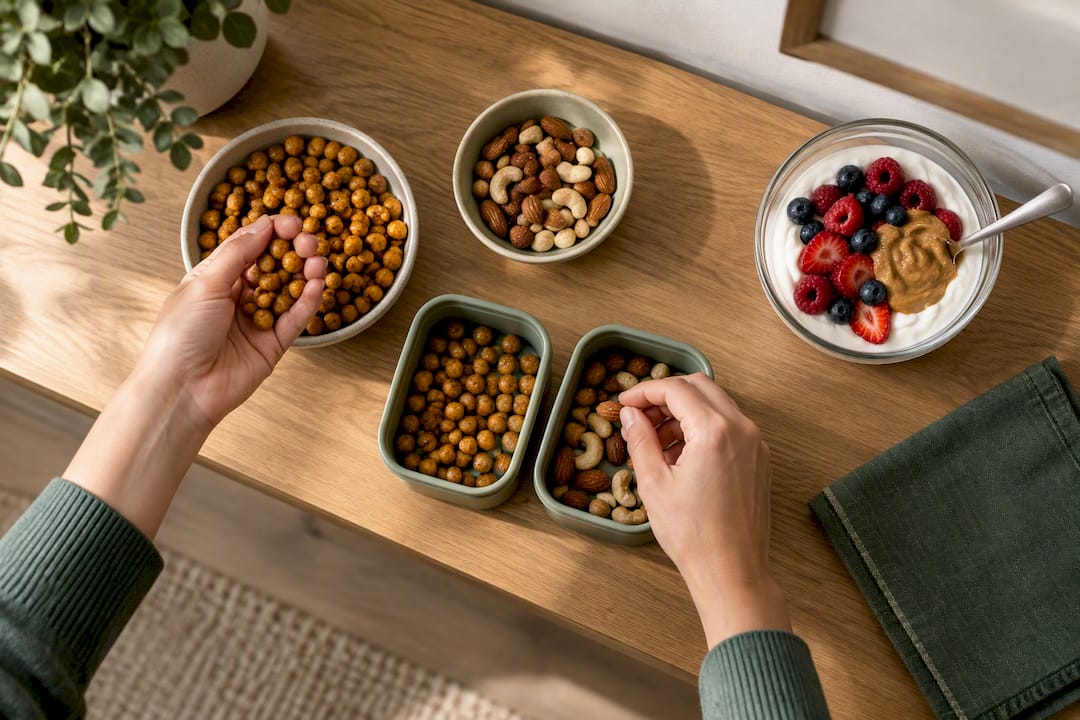
Pro Tip: Keep your substitution ready before the craving hits, not after. A pre-portioned tub of nuts in your bag beats trying to negotiate with yourself in a petrol station queue.
None of these tactics work in isolation for everyone, and they’re not meant to. A 2024 review found that combining cognitive strategies with structural changes, adjusting what’s available in your kitchen or workplace, produces better results than relying on willpower-based tactics alone. If you find yourself using distraction five times a day for the same craving, that’s a signal to look at prevention instead of firefighting.
Preventive nutrition: meal timing and the plate method
Most cravings that show up mid-morning or mid-afternoon trace back to blood sugar swings from the previous meal, not weak discipline. Fixing meal structure prevents a large share of cravings before they start.
The NHS Eatwell Guide recommends eating breakfast soon after waking, then spacing subsequent meals at regular intervals of a few hours, aiming for a typical pattern of balanced meals with one or more snacks across the day. Skipping breakfast or leaving five hours between lunch and dinner is one of the most reliable ways to trigger a strong craving by mid-afternoon, because blood sugar has dropped low enough to push ghrelin up sharply.
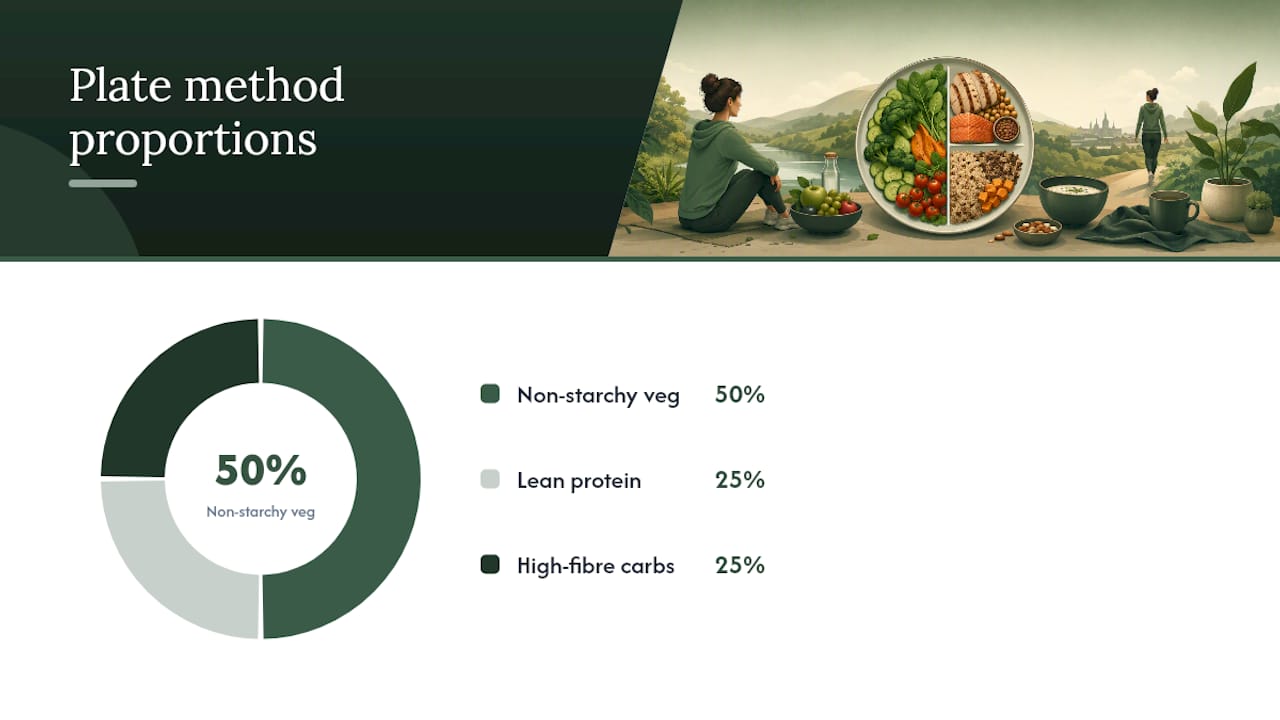
The plate method translates this into something you can actually build a meal around without weighing anything:
- Half the plate: non-starchy vegetables. Broccoli, peppers, spinach, courgette, salad leaves.
- A quarter: lean protein. Chicken, fish, tofu, eggs, or legumes.
- A quarter: high-fibre carbohydrates. Wholegrain rice, sweet potato, oats, or wholemeal bread.
This ratio slows glucose absorption, which is the mechanism behind fewer blood-sugar crashes and, by extension, fewer reward-seeking cravings a few hours later.
Three nutrient categories do the heaviest lifting for satiety:
- Protein slows stomach emptying and supports fullness hormones more than carbohydrate or fat alone.
- Fibre, from vegetables, pulses, and wholegrains, adds bulk and slows digestion, keeping you satisfied for longer.
- Healthy fats, from olive oil, avocado, nuts, and oily fish, add staying power to a meal and help you feel genuinely finished eating rather than just full.
Hydration deserves a specific mention because it’s so often overlooked. Mild dehydration produces symptoms nearly identical to hunger, fatigue, low concentration, a vague unsettled feeling, and it’s one of the cheapest experiments available. Before assuming a craving needs food, have a glass of water and wait ten minutes.
If afternoon energy dips are a recurring problem for you specifically, it’s worth reading about what’s actually causing that afternoon crash, since the fix usually lives in the meal three hours earlier, not the snack itself. For a broader list of foods that genuinely extend fullness, Foodconnection has covered appetite control foods in more depth.
Sleep, stress, and exercise: the lifestyle drivers behind cravings
Cravings rarely exist in isolation from the rest of your day. Sleep debt, chronic stress, and a sedentary routine all shift appetite hormones in the same unhelpful direction, and fixing any one of them tends to reduce cravings even before you change a single meal.
Sleep has one of the strongest links of the three. Getting less than six hours a night increases cravings for high-calorie, sugary foods, and research on the topic points to a range of adequate sleep duration supports appetite regulation and impulse control, according to The Independent Pharmacy. If you’re routinely running on five or six hours, no amount of meal planning will fully offset that gap. Foodconnection has written more on fixing sleep and appetite if that’s the piece worth tackling first.
Chronic stress raises cortisol, which in turn increases appetite and specifically drives preference towards high-fat, high-sugar foods. The Mayo Clinic notes that combining mindfulness or urge-surfing style strategies with practical steps, choosing healthier snacks in advance, building in short activity breaks, works better for managing stress-driven eating than trying to white-knuckle through it. A five-minute walk between meetings often does more for a stress craving than any snack would.
Exercise supports appetite regulation in its own right, largely by improving insulin sensitivity and mood, both of which reduce reward-driven eating. Timing matters less than consistency here; a short walk after a meal is a reasonable, low-effort habit to build.
Environment is the quietest of the four but arguably the easiest to fix. Research on cue modification found that simply removing tempting foods from immediate sight and reach at home lowers exposure to cues and cuts down on the sheer number of decisions you have to resist across a day. Practical steps worth adopting:
- Shop with a list, and avoid browsing the biscuit aisle when hungry.
- Store trigger foods out of sight, ideally out of the kitchen entirely.
- Pre-portion snacks rather than eating from the packet.
- Keep healthier substitutes visible on the counter instead.
If cravings tend to spike specifically around your menstrual cycle or during perimenopause, that’s worth naming rather than lumping in with general stress. Adjusting protein and fibre earlier in the day can blunt the late-afternoon reward-seeking that often shows up around PMDD, and Foodconnection has written specifically about this.
A simple one-week craving plan you can start today
The point of a structured plan isn’t complexity, it’s measurability. Trying to change everything at once tends to produce less adherence than picking a handful of specific tweaks and tracking whether they work.
- Identify your two or three most common triggers. Look for a pattern, boredom at 3pm, stress after work, low blood sugar mid-morning, rather than treating every craving as random.
- Set a fixed meal and snack schedule. Breakfast within 90 minutes of waking, then a meal or snack every three to four hours, following the NHS Eatwell structure.
- Choose three immediate tactics in advance. Pick from urge surfing, a ten-minute delay, and one sensory-matched substitution, and decide now which you’ll reach for.
- Change one environmental cue. Move the biscuit tin out of the kitchen, or stop keeping crisps in the car. One change is enough to start.
- Keep a one-line daily log. Note the time, the trigger, and what you did about it. Nothing more elaborate than a single sentence in your phone’s notes app.
A short checklist to copy for each day of the week:
Fill this in loosely for seven days; it doesn’t need to be neat. After a week, read back through the log and look for the trigger that shows up most often. That’s the one worth solving properly in week two, whether that means adjusting a meal, changing an environmental cue, or accepting that a particular stressor needs a different kind of support altogether. If the plan isn’t reducing craving frequency by the end of the week, the most common reason is meal timing rather than willpower, so check that first before abandoning the approach.
When cravings signal something more than habit
Most cravings respond well to the tactics above. Some don’t, and it’s worth knowing the difference rather than assuming more willpower is the answer.
Contact a GP, a registered dietitian, or a mental health specialist if you notice: regular episodes of eating a large amount of food in a short time with a feeling of loss of control (binge eating), cravings for non-food items such as chalk or ice (a pattern known as pica), cravings that cause significant distress or interfere with daily life, or rapid, unexplained weight change alongside the cravings.
A GP can rule out underlying causes and refer you onward. A registered dietitian can assess whether the pattern is nutritional in origin, while a mental health specialist can address the psychological side, sometimes through cognitive behavioural therapy, occasionally alongside medication, both of which are worth discussing directly with a clinician rather than self-managing.
How Irina applies this with clients
In practice, the plan above is a starting template, not a finished prescription. Every client who comes in describing “constant cravings” turns out to have a different root cause once we look closely: some are running on five hours’ sleep, some are skipping lunch entirely and paying for it at 4pm, and some are dealing with hormonal shifts that no amount of meal timing alone will fully resolve.
The most common barrier isn’t knowledge, it’s that people try to fix everything simultaneously and abandon the whole approach within a few days. Personalising which single lever to pull first, sleep, meal structure, or a specific hormonal pattern, is what actually makes the difference between a plan that sticks and one that gets forgotten by Thursday. That’s the part a generic list of tips can’t do, and it’s where structured, ongoing support tends to outperform a one-off conversation.
— Irina
Getting personalised support for persistent cravings
If you’ve worked through the one-week plan and cravings are still running the show, that usually points to something the general advice above can’t fully reach, a hormonal pattern, a chronic digestive issue, or a metabolic picture that needs proper investigation rather than another tweak to meal timing.
Foodconnection’s Initial Consultation runs for an hour and a half and includes written personalised recommendations, at £150 one-off, built around your specific triggers rather than a generic template. Follow-up consultations (£120 within eight weeks, then £80 for subsequent sessions) keep the plan adjusted as patterns shift, and the 12-week dedicated support package suits anyone whose cravings are tangled up with a longer-running issue like hormonal imbalance, chronic fatigue, or weight management. For readers who suspect something metabolic or hormonal is driving the pattern, laboratory test analysis and interpretation can identify what a food diary alone never will. Book the initial consultation through the prices page to get a plan built around your own triggers rather than a generic checklist.
Sources
- The eatwell guide NHS
- Regulating food craving: from mechanisms to interventions PMC (2024-09-25)
- Dealing with food cravings Cambridge University Hospitals (CUH)
- Weight loss: Gain control of emotional eating Mayo Clinic
This article is general information, not a substitute for advice from a qualified doctor. Consult a qualified healthcare professional about your own circumstances before acting on anything here.
FAQ
How can I suppress hunger without eating?
Drink a glass of water and wait ten minutes, since dehydration often mimics hunger signals. If the feeling persists, distraction techniques like a short walk or a task that occupies your hands can carry you through until your next scheduled meal.
How do I stop a craving once it starts?
Use urge surfing: name the craving, breathe through it for 60 to 90 seconds, and let the intensity crest and fall rather than fighting it, a technique with roots in dialectical behaviour therapy. Combining that with a ten to thirty minute delay before eating gives most urges enough time to pass on their own, as outlined in NHS patient guidance on food cravings.
How do I reduce carb and sugar cravings long term?
Stabilise blood sugar with the plate method, half non-starchy vegetables, a quarter protein, a quarter high-fibre carbohydrate, and stick to the NHS Eatwell meal rhythm of three meals plus one or two snacks. Reducing exposure to processed, sugar-heavy foods at home also weakens the cue-conditioned response that drives repeat cravings, per PMC research on craving mechanisms.
What is the root cause of food cravings?
Cravings stem from a mix of hormonal signalling (ghrelin and leptin), dopamine-driven reward pathways, learned cue associations, and disrupted sleep or stress levels, rather than a single cause. If cravings persist despite consistent meal timing and lifestyle changes, a structured nutrition assessment can help identify whether a hormonal or metabolic factor is involved.
Is emotional eating the same as a physiological craving?
No. Emotional eating is triggered by mood states like stress, boredom, or sadness rather than physical need, and it often persists even after a full meal. The Mayo Clinic recommends distraction, planned healthy snacks, and stress management as practical steps for reducing emotional eating episodes specifically.