
FODMAP Eating Out: How to Order Safely in the UK

You can eat out on a low FODMAP diet, and the method is simple: choose plain protein, potato, rice or suitable vegetables, ask for sauces on the side, and tell the kitchen your triggers before you order. Restaurant menus are where the diet gets hard, because onion and garlic hide in stocks, sauces and coatings. Personalised guidance from a dietitian or registered nutrition professional makes it easier, because the right choices depend on which FODMAPs affect you. At Food Connection we build that into our one-to-one programmes.
TL;DR
- Order simple: grilled or roasted fish, poultry or meat with potatoes, rice or plain vegetables, and sauces or gravy on the side.
- Tell staff about your triggers on arrival, or look at the menu online and phone ahead for complicated requests.
- Avoid heavily sauced dishes, curries, stock-based soups and risottos made with stock, and anything battered or coated.
- Symptoms after a meal out can come from large portions and alcohol, not only ingredients.
- Eating out gets easier when your own triggers are known, which is what a structured reintroduction phase tells you.
Table of Contents
- Why restaurants are the hardest part of the diet
- What to order
- What to ask before you order
- Dishes that cause trouble
- Portions and alcohol
- Planning ahead for days out and travel
- Eating out gets easier after reintroduction
- Our perspective
- How we can help
- FAQ
- Sources
Why restaurants are the hardest part of the diet
High FODMAP ingredients are often hidden in menus and packaged foods, which is why King’s College London describes the diet as complex and treats learning to make sensible choices when eating out as a core part of dietitian-led education, not a simple food list. The same university’s clinical review lists limited options outside the home as a common barrier to sticking with the diet, and says dietitians should address it during counselling.
That matters if you are in the restriction phase and want to keep your social life. If you are new to the diet, our practical guide to the low FODMAP diet explains the phases first.
What to order
The NHS low FODMAP diet sheet from Gloucestershire Hospitals (January 2022) lists suitable restaurant mains:
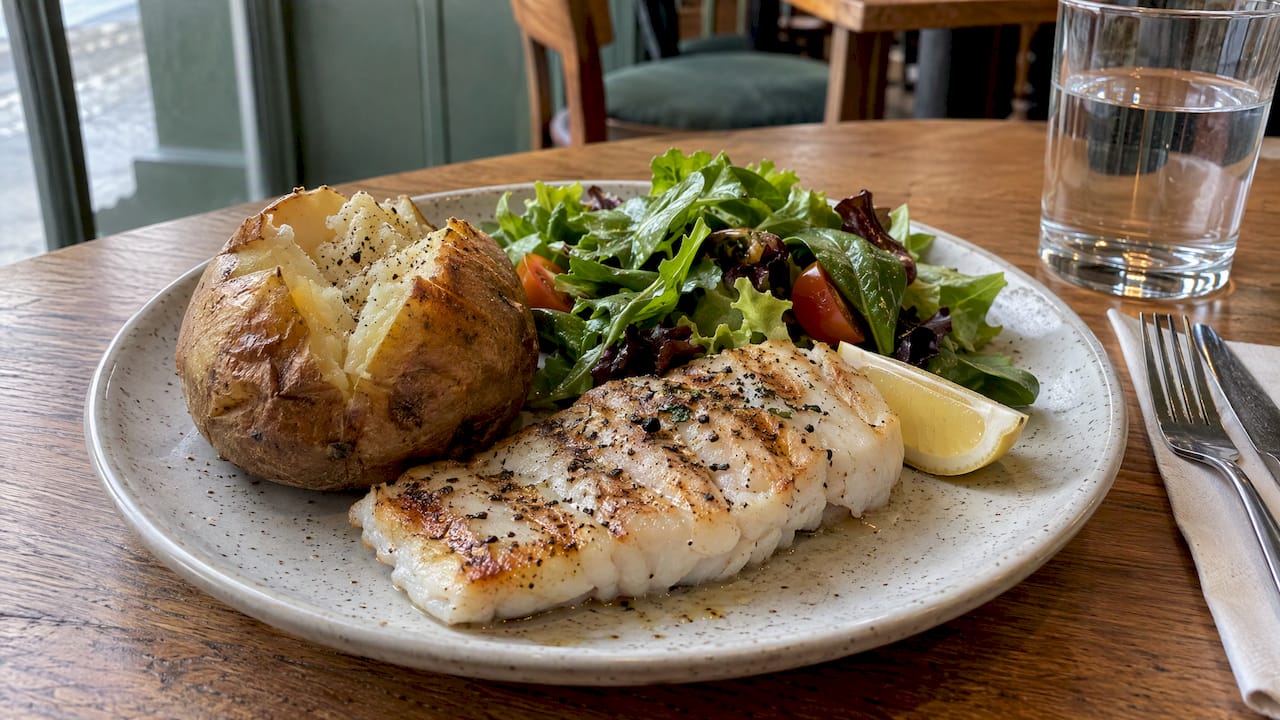
- fish, poultry or meat with potatoes, salad or vegetables, such as steak or fish and chips;
- risotto made without onion or leek;
- a baked potato with salad and a suitable filling;
- Asian-style rice or rice noodle dishes, checking the vegetables;
- sushi;
- gluten-free pizza with toppings you choose yourself.
The same sheet advises avoiding coatings, batter and sauces, and asking for gravy or sauce on the side.
Monash University dietitian Dr Jane Varney gives similar advice: pick protein-based meals with vegetables, salad, potato, rice or rice noodles rather than bread or pasta. She also suggests ordering from the gluten-free menu, as long as the dish leaves out your own triggers. A patient account on the British Dietetic Association website describes doing just that: choosing meat, vegetables and potatoes without sauces from the gluten-free menu. One restaurant even prepared a dish that was not on the menu to suit the diner.
A simple order template
- Pick a protein: grilled or roasted chicken, fish or steak.
- Pick a plain starch: new potatoes, chips, rice or a baked potato.
- Pick vegetables or salad you already know you tolerate.
- Ask for dressing, gravy or sauce separately, so you decide how much to use.
What to ask before you order
The NHS sheet says to explain your requirements when you arrive, or to check online menus in advance. Dr Varney adds a few habits that make this smoother:
- Look at the menu online before you go.
- Know your worst trigger foods and ask for them to be left out.
- For complicated requests, phone the restaurant outside busy hours.
Keep requests specific. “No onion or garlic, and no stock-based sauce” is easier for a kitchen to act on than a general list of foods. If you only react to certain FODMAPs, you can be much more specific, which is one reason personalised guidance helps.
Dishes that cause trouble
Dr Varney advises avoiding rich, heavily sauced dishes such as curries, because they are hard to modify and often start with garlic and onion. She also flags dishes made with stock, such as soups and risottos. If a menu offers only these, build a meal from sides: a plain protein, a baked potato and a simple salad.
Coatings and batter are a second hazard, as the NHS sheet notes. Ask for fish or chicken grilled, not breaded.
Portions and alcohol
The NHS sheet points out that some people get symptoms when eating out because the meal is larger than usual or comes with alcohol. It also says eating out should be a nice experience, and that the benefits usually outweigh the symptoms. So if you reacted after a meal where every ingredient looked safe, think about how much you ate and what you drank, not only what was in the dish.
A sensible habit is to keep portions close to what you eat at home, and to treat a restaurant meal as a normal meal, not a feast.
Planning ahead for days out and travel
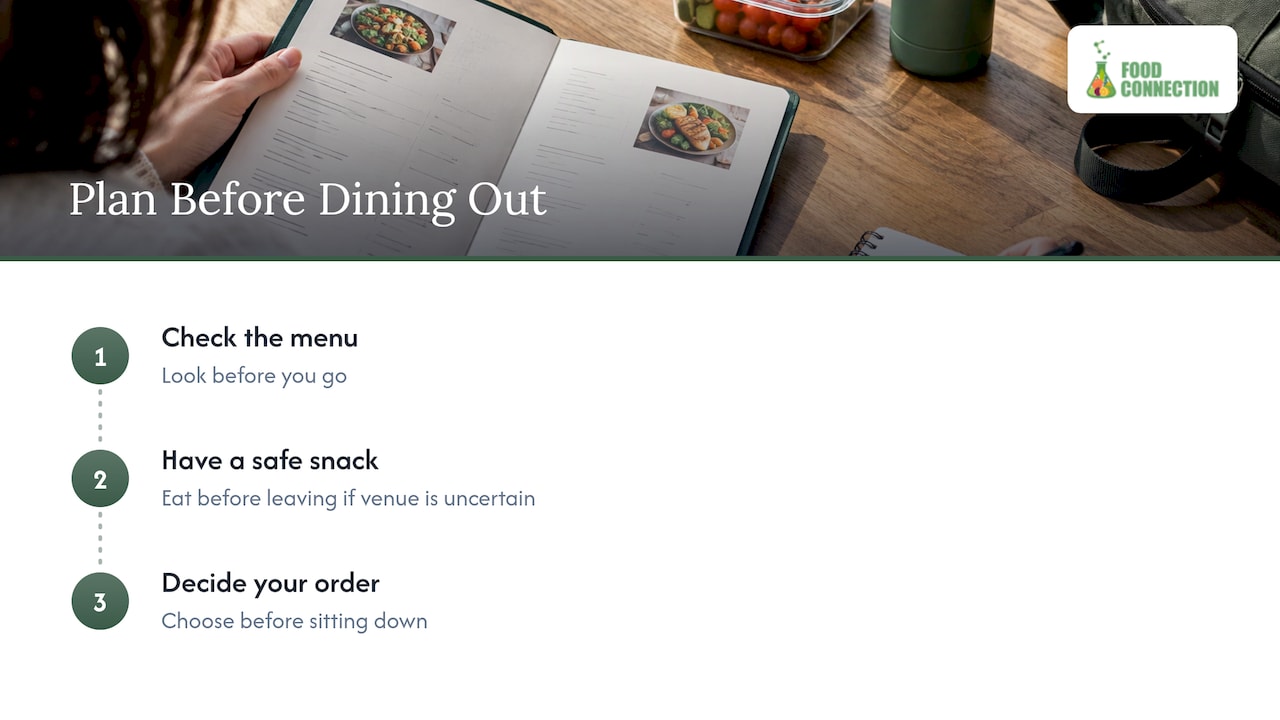
Most slips happen when you are hungry and have no plan. Check the menu in advance, eat a safe snack before you leave if the venue is uncertain, and decide your order before you sit down. Building meal routines in advance, as this guide on practical meal planning shows for another group, reduces the number of decisions you make under pressure.
If you are having a flare, stick to your home plan rather than testing restaurant food; our flare food checklist covers that.
Eating out gets easier after reintroduction
The restriction phase is not meant to last. The NHS says 4 to 6 weeks is usually long enough to see whether symptoms respond, and that if there is no improvement after 6 weeks you should contact your doctor or dietitian. Once you test foods one group at a time, you learn which ones you tolerate, and restaurant menus open up again. Our guide to the FODMAP reintroduction challenge walks through that phase step by step.
King’s College London reports that the diet was developed at Monash University, adapted for the UK by its own researchers and implemented at Guy’s and St Thomas’ NHS Trust. It advises asking your GP or gastroenterologist for a referral to a trained registered dietitian. Its clinical review also finds that detailed counselling, including practical information on eating out, is linked to better adherence, and that online resources alone are not enough.
Our perspective
A restaurant list can only tell you what is usually lower in FODMAPs. It cannot tell you what suits your gut, your energy, your hormones or your week.
That is why we work in programmes, not single sessions. We look at your lifestyle, your symptoms and your food in detail, then write recommendations that fit how you actually live, including the dinners out, the work lunches and the family occasions.
Our aim is for you to eat out without stress, because you know which foods work for you and which do not. Nobody should have to read every menu with dread.
Irina
How we can help
Our initial consultation lasts one and a half hours and comes with written personalised recommendations, for £150. A follow-up consultation within 8 weeks of the first costs £120, and later one-hour follow-ups are £80. If you want continuous guidance through restriction and reintroduction, 12 weeks of dedicated support is £250. Our practitioner holds an MSc in Nutrition and is BANT and CNHC registered. You can see everything on our prices page, or learn about our nutrition services, including laboratory test analysis and interpretation.
FAQ
Can I eat out in the UK on a low FODMAP diet?
Yes. Choose plain grilled or roasted protein with potatoes, rice or tolerated vegetables, and ask for sauces on the side. Tell staff your triggers when you arrive or phone ahead. The NHS sheet says the benefits of eating out usually outweigh any symptoms.
Which restaurant dishes should I avoid?
Avoid heavily sauced dishes and curries, stock-based soups and risottos, and anything battered or coated. These often contain onion and garlic and are hard for a kitchen to modify.
Why do I get symptoms even when I ordered carefully?
Larger portions and alcohol can trigger symptoms on their own, according to the NHS sheet. Hidden ingredients in sauces and stocks are another possibility. Keeping a note of what you ate, how much and what you drank helps you see the pattern.
Should I stay on the restriction phase for long?
No. The NHS says 4 to 6 weeks is usually enough to see whether symptoms respond. If they have not improved after 6 weeks, speak to your doctor or dietitian.
Sources
- The Low FODMAP diet, Gloucestershire Hospitals NHS, January 2022
- Low FODMAP diet sheet, Gloucestershire Hospitals NHS
- Eating Out Tips for Low FODMAP Diet, Monash FODMAP
- My experience with the low FODMAP diet, British Dietetic Association
- FODMAPs, King’s College London
- FODMAPs in clinical practice, King’s Research Portal