
Fibroids diet: what to eat, what to avoid, and why

Diet cannot shrink an existing fibroid on its own, but it can measurably lower your risk of new growth and ease symptoms like bloating, heavy bleeding and pelvic pressure. That is the honest, evidence-based verdict, and it sits between two extremes you have probably already encountered online: the claim that “clean eating” cures fibroids, and the opposite claim that nutrition is irrelevant to a hormone-driven condition.
The three moves worth making first: eat more fruit, vegetables and fibre; get your vitamin D and iron checked rather than guessing; and cut back on red or processed meat, refined sugar and alcohol. None of these require a total lifestyle overhaul, and none of them replace a gynaecology referral if your symptoms are severe.
Do: increase cruciferous vegetables and citrus fruit, ask your GP for a vitamin D and ferritin blood test, add oily fish once or twice a week.
Don’t: rely on green tea extract or supplements as a substitute for medical monitoring, ignore very heavy bleeding because “diet will fix it,” assume all fats or all carbs are equally harmful.
Red flag: soaking through pads hourly, fainting, or sudden severe abdominal pain warrants same-day medical attention, not a dietary adjustment.
Key Takeaways
Diet can lower fibroid-related risk factors and ease symptoms through fibre, vitamin D correction and reduced inflammatory load, but it does not reliably shrink existing fibroids.
| Point | Details |
|---|---|
| Diet modifies risk, not a cure | Increasing fruit, vegetables and fibre while cutting red meat and alcohol supports symptom control and lower risk, but will not guarantee fibroid shrinkage. |
| Test before supplementing | Request 25-OH vitamin D and ferritin/haemoglobin blood tests before starting supplements, since deficiency, not guesswork, should guide dosing. |
| Watch the glycaemic and inflammatory load | Limiting refined sugar, trans fats and processed foods addresses the insulin and inflammation pathways linked to fibroid growth. |
| Weight management matters | Reducing excess body fat lowers peripheral oestrogen production via aromatisation, directly affecting fibroid-sensitive tissue. |
| Know your red flags | Heavy soaking bleeding, fainting or severe pain need same-day medical assessment, not a dietary fix. |
| Personalised nutrition adds precision | Foodconnection’s programmes combine lab testing and tailored plans to target your specific deficiencies alongside your existing medical care. |
Table of Contents
- Fibroids diet foods to eat for symptom relief and lower risk
- Fibroids foods to avoid or limit
- How diet affects fibroids: what the evidence actually shows
- Supplements and testing for fibroid management
- Weight, exercise and fibroid risk
- Building a practical fibroid-friendly meal plan
- When diet isn’t enough: signs you need medical care
- How personalised nutrition support fits into fibroid care
- Why realistic, incremental change works better than a “fibroid cure” diet
- Getting personalised support for your fibroids diet
- Frequently asked questions about the fibroids diet
- Sources
Fibroids diet foods to eat for symptom relief and lower risk
The strongest dietary pattern linked to lower fibroid risk in the research looks a lot like the plate a dietitian would draw for almost any hormonal condition: colourful, plant-heavy, and high in fibre. A narrative review from the National Institutes of Health found that women with lower intakes of fruit and green vegetables, alongside vitamin D deficiency, showed a higher risk of uterine myomas. That is an association, not proof of cause, but it is consistent enough across studies to act on.
Here is what to prioritise, and why each one earns its place on your plate.
- Citrus fruit. Oranges, grapefruit and lemons bring vitamin C, which supports collagen and helps you absorb iron from plant foods, something that matters if fibroids are causing heavy periods.
- Cruciferous and leafy vegetables. Broccoli, kale, cabbage and spinach contain compounds thought to support how your body processes oestrogen, and they are central to the diets linked with lower fibroid risk in clinical reviews.
- Wholegrains and high-fibre foods. Oats, brown rice, quinoa and wholemeal bread slow glucose absorption and help your body clear excess circulating oestrogen through the gut rather than reabsorbing it.
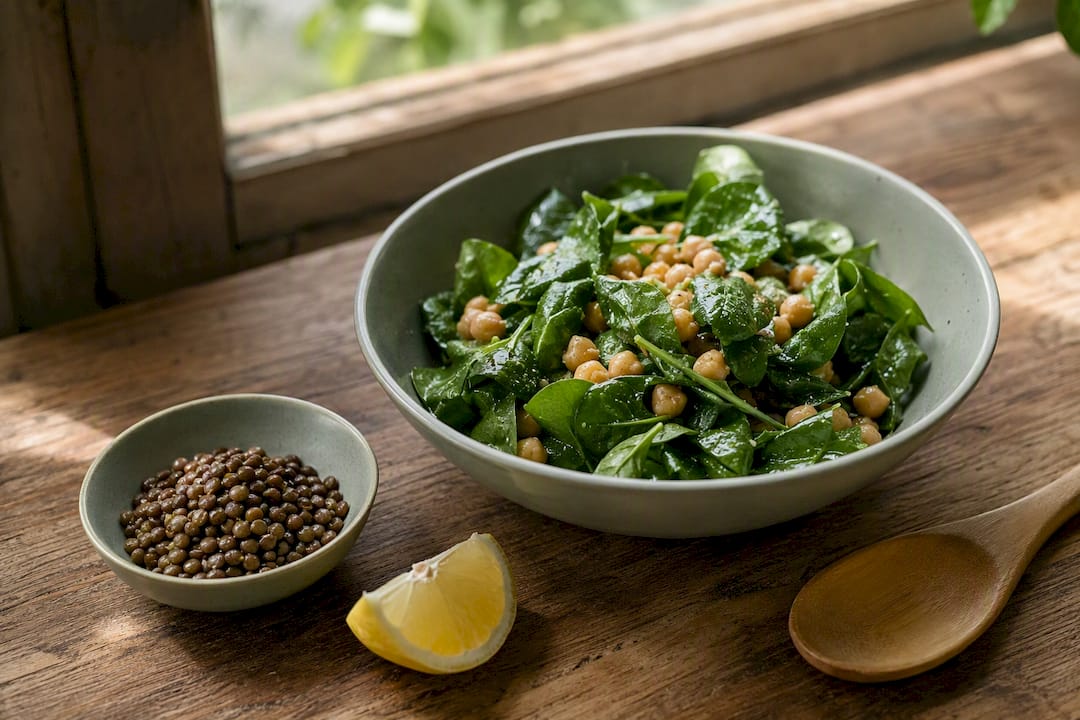
- Legumes. Lentils, chickpeas and beans deliver fibre and plant protein without the saturated fat load of red meat.
- Oily fish, in moderation. Salmon, mackerel and sardines provide omega-3s that support an anti-inflammatory pattern, though see the caveat on fish below.
- Low-fat dairy. A useful, accessible source of calcium and, where fortified, vitamin D.
- Green tea. Regularly cited for its polyphenol content, particularly EGCG, discussed further in the supplements section.
A serving is smaller than most people picture: a fist-sized portion of vegetables, a cupped handful of berries, a thumb-sized piece of oily fish. If you are starting from a low baseline, the easiest swap is not a dramatic overhaul, it is adding one extra vegetable to dinner and swapping white rice for brown three nights a week.
The evidence strength varies by food group, and it is worth being honest about that rather than presenting every recommendation as equally proven.
Statistic Callout: The NIH review covering three decades of observational and epidemiological research (1990 to 2020) found consistent associations between low fruit and vegetable intake, vitamin D deficiency, and higher myoma risk, but called explicitly for controlled trials to confirm which specific dietary changes drive the effect.
Fruit and vegetable intake sits at “moderate” evidence strength: multiple cohort studies point the same direction, but confounding factors like overall diet quality and socioeconomic status make it hard to isolate cause. Fibre’s role in oestrogen clearance is biologically plausible and observationally supported, but not tested in large randomised trials specifically on fibroids. Green tea has the weakest evidence base of the group, backed mainly by small pilot studies.
Pro Tip: Pair plant-based iron sources, like lentils or spinach, with a vitamin C food in the same meal, think lemon-dressed salad or a squeeze of lime over beans, since vitamin C can significantly improve non-haem iron absorption, which matters if fibroids are causing heavier periods than usual.
Fibroids foods to avoid or limit
If the “eat more” list reads like standard healthy-eating advice, the “eat less” list is more specific to fibroid biology, and it is worth understanding the mechanisms rather than just memorising a blacklist.
Red and processed meat tops this list. Clinical reviews link higher red meat consumption with greater fibroid risk, likely through a combination of saturated fat intake, inflammatory load, and the hormone residues present in some conventionally farmed meat. You do not need to eliminate it. Shifting from daily red meat to two or three servings a week, with the gap filled by poultry, fish or legumes, is a realistic target.
High-glycaemic foods and refined sugar are next. White bread, sugary cereals, pastries and sweetened drinks spike blood glucose and insulin, and elevated insulin is thought to interact with insulin-like growth factor pathways that may influence fibroid tissue growth. Swapping sugary breakfast cereal for porridge with fruit, or fizzy drinks for sparkling water with citrus, removes most of the damage without demanding willpower you do not have on a Tuesday morning.
Alcohol, particularly beer, has been associated with increased fibroid risk in observational studies, plausibly through effects on liver oestrogen metabolism (the liver is where much of your circulating oestrogen gets broken down and cleared). Cutting back to occasional drinking, rather than daily habit, is the realistic goal here rather than total abstinence for most people.
Trans fats and heavily processed foods round out the list. Packaged snacks, fried fast food and processed baked goods combine inflammatory fats with the refined carbohydrates already flagged above, a double hit rather than a single mechanism.
One nuance worth flagging: the data on fish and omega-3s is genuinely mixed, and some research suggests pollutant contamination in fish, mercury and PCBs among them, may be confounding the results, making certain marine fats look worse than they actually are in isolation. This is not a reason to avoid fish; it is a reason to choose smaller, lower-mercury species like sardines and mackerel over large predatory fish such as swordfish.
- Swap red meat for poultry, tofu or legumes on at least half your usual meat nights.
- Replace sugary drinks with water, herbal tea or sparkling water with fruit.
- Choose smaller oily fish (sardines, mackerel, anchovies) over large predatory species.
- Cook from scratch three or four nights a week to cut processed food exposure without a strict “ban.”
Pro Tip: Do not try to remove all four categories at once. Pick the one you eat most often, probably sugary drinks or processed snacks, and fix that first. Behaviour change sticks better when it is sequential rather than simultaneous.
How diet affects fibroids: what the evidence actually shows
Most of what we know about diet and fibroids comes from observational cohort and case-control studies, not randomised controlled trials. That distinction matters more than it might sound. Observational studies can show that women who eat more vegetables tend to have fewer fibroids; they cannot prove the vegetables caused the difference, because women who eat more vegetables also tend to differ in dozens of other ways, exercise, smoking status, income, healthcare access, that could independently affect fibroid risk.
The Nutrition and Uterine Fibroids review synthesises data from cohorts including the Black Women’s Health Study, alongside multiple smaller case-control studies, and finds a fairly consistent pattern: high fruit, vegetable and fibre intake correlates with lower risk, while high glycaemic load, red meat and alcohol correlate with higher risk. Small randomised or pilot trials on green tea extract (EGCG) have reported reductions in fibroid size and symptom severity over several months, but sample sizes in the range of 30 to 90 participants mean these results need replication before anyone can call EGCG a reliable treatment.
Grading the evidence honestly:
- Moderate evidence: fruit, vegetable and fibre intake associated with lower risk (large observational cohorts, consistent direction across studies).
- Moderate evidence: red meat, alcohol and high glycaemic load associated with higher risk (multiple case-control studies).
- Weak but promising evidence: green tea/EGCG reducing fibroid size or symptoms (small trials, short duration, unreplicated).
- Weak evidence, plausible mechanism: fish/omega-3 effects, muddied by pollutant confounding.
The biological story connecting diet to fibroid growth runs through three overlapping pathways. Fibre helps your gut excrete oestrogen metabolites rather than reabsorbing them, so a low-fibre diet may leave more circulating oestrogen available to stimulate fibroid tissue, which is oestrogen-sensitive by nature. High glycaemic load diets raise insulin and insulin-like growth factor (IGF-I), a pathway implicated in cell proliferation generally, including in fibroid tissue. And chronic low-grade inflammation, driven partly by saturated and trans fats, is increasingly treated as a contributing factor rather than a bystander. Environmental pollutants, including PCBs and mercury that can accumulate in certain fish, add a fourth, messier variable that complicates some of the fish-related findings.
Picture it as a chain: what you eat shapes your metabolic and inflammatory environment, that environment shapes hormone availability and cell signalling, and that signalling influences whether fibroid tissue grows, stays static, or (occasionally) shrinks slightly. Diet sits at the start of that chain, not the end of it, which is exactly why it modifies risk without guaranteeing outcomes.
Supplements and testing for fibroid management
Before reaching for a supplement, get tested. Guessing which nutrient you are short of wastes money and occasionally causes harm, particularly with iron and high-dose green tea extract.
Vitamin D deficiency shows up repeatedly in the fibroid literature. Healthline’s clinical summary notes it as the most consistently associated nutrient deficiency, and the NIH review reaches the same conclusion. A simple 25-OH vitamin D blood test, requestable through your GP, tells you whether supplementation is actually warranted rather than a shot in the dark.
Iron and haemoglobin matter enormously if fibroids are causing heavy periods. Ferritin (iron stores) and haemoglobin levels should be checked if you are experiencing prolonged or heavy bleeding, since fibroid-related blood loss can tip into iron-deficiency anaemia gradually enough that fatigue becomes your “normal” before anyone flags it.
| Supplement | Evidence strength | Typical dose in studies | Safety notes |
|---|---|---|---|
| Vitamin D | Moderate (deficiency strongly associated with fibroids) | Guided by blood test result, often 1,000 to 2,000 IU/day for correction | Test before supplementing; excess vitamin D can cause toxicity over time |
| Iron | Strong for correcting confirmed deficiency, not fibroid growth itself | Guided by ferritin/haemoglobin results | Pair with vitamin C for absorption; avoid unsupervised high-dose iron, which can cause constipation and GI upset |
| Green tea extract (EGCG) | Weak, based on small trials | Varies by study, generally standardised extract capsules | Linked to rare liver toxicity at high doses; discuss with a clinician before starting |
| Calcium | Weak to moderate, mostly via dairy intake studies | Dietary intake preferred over supplements | Space apart from iron supplements, as calcium can inhibit iron absorption |
- Ask your GP specifically for 25-OH vitamin D and ferritin/haemoglobin tests if you have fibroids with heavy bleeding.
- Do not start green tea extract capsules without discussing dose and duration with a clinician, given the liver toxicity signal at high intakes.
- Thyroid or broader hormone testing is worth raising if you have additional symptoms like unexplained weight change or fatigue, since thyroid dysfunction can independently worsen menstrual heaviness.
Supplements are a targeted correction for a confirmed deficiency, not a general-purpose fibroid treatment. If a blood test comes back normal, taking the supplement anyway offers no proven benefit and, in the case of iron, carries real downside.
Weight, exercise and fibroid risk
Body weight is one of the more underappreciated levers in fibroid management, and the mechanism is straightforward once you see it. Fat tissue converts androgens into oestrogen through a process called aromatisation, meaning higher body fat translates into higher circulating oestrogen, independent of ovarian function. Since fibroids are oestrogen-sensitive, this gives excess weight a direct biological route to larger fibroid volume and more pronounced symptoms.
This is not a call for aggressive weight loss. Even modest, sustainable reductions, in the region of 5 to 10% of body weight for those who are above a healthy range, are associated with measurable metabolic improvement in most people. Movement matters as much as the number on the scale: regular activity improves insulin sensitivity independently of weight change, which loops back to the glycaemic pathway discussed earlier.
- Aim for 150 minutes of moderate activity weekly, walking counts, rather than chasing an intense gym regime you will not sustain.
- Reduce exposure to endocrine-disrupting chemicals where practical, swap plastic food containers for glass, choose fragrance-free personal care products.
- Prioritise consistent sleep and moderate alcohol intake, both of which affect hormone regulation and appetite control.
Pro Tip: Track activity in minutes, not miles or calories. “20 minutes today” is a target you will actually hit on a bad week, and consistency beats intensity for the hormonal benefits that matter here.
Building a practical fibroid-friendly meal plan
Theory is easy. Tuesday lunch is hard. Here is what a realistic day looks like when you apply everything above.
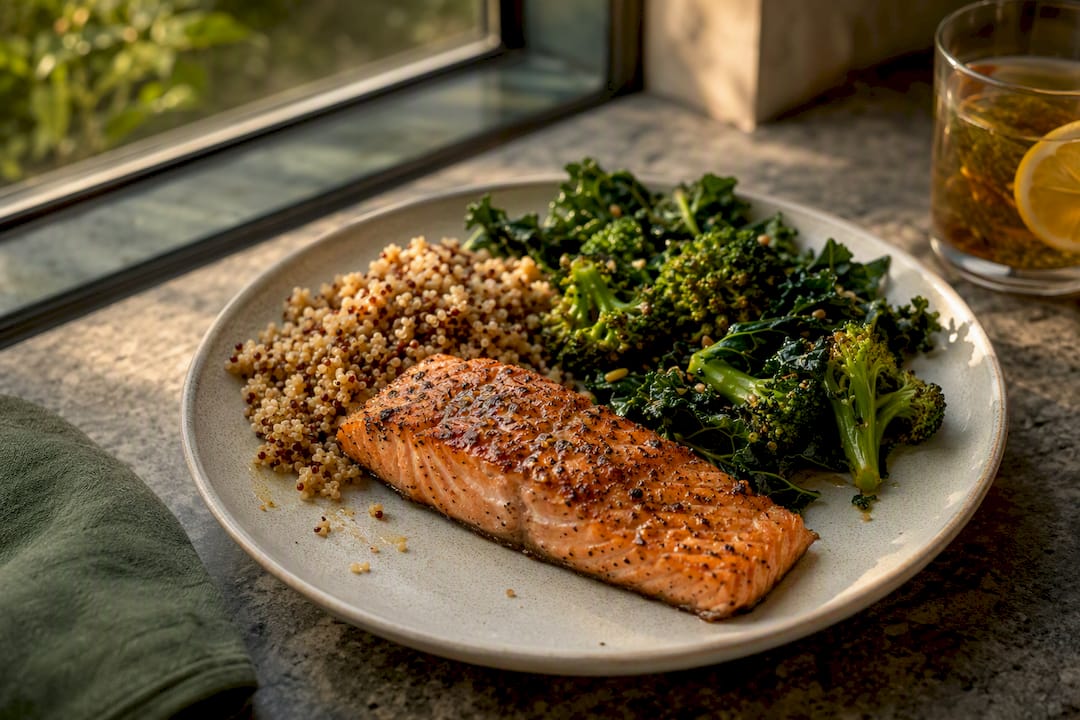
Breakfast: porridge oats with berries, a spoonful of ground flaxseed and a splash of fortified milk. Lunch: a large salad with mixed leafy greens, chickpeas, roasted vegetables, and a citrus-based dressing (the vitamin C helps you absorb the iron from the chickpeas). Snack: an orange and a small handful of almonds. Dinner: grilled salmon or mackerel, quinoa, and steamed broccoli or kale.
Keep your kitchen stocked with a short list of staples so healthy choices require less daily decision-making: tinned lentils and chickpeas, frozen mixed vegetables, oats, brown rice or quinoa, tinned sardines or mackerel, citrus fruit, and a good olive oil.
| Instead of | Try |
|---|---|
| White rice | Brown rice or quinoa |
| Sugary breakfast cereal | Porridge with fruit |
| Processed snack bars | Nuts and fresh fruit |
| Fizzy drinks | Sparkling water with lemon or lime |
| Beer several nights a week | Alcohol-free alternatives most nights |
Pro Tip: If you have heavy periods, take iron-rich meals with a vitamin C source and leave a two-hour gap before or after any calcium-rich food or supplement, since calcium competes with iron for absorption in the gut. If you are on hormonal treatment for fibroids, such as a GnRH agonist or hormonal IUD, mention any significant dietary changes to your prescriber, particularly around calcium and vitamin D intake, since some treatments affect bone density over time.
When diet isn’t enough: signs you need medical care
Diet supports symptom management; it does not replace investigation when symptoms escalate. Certain signs mean you should see a doctor promptly rather than waiting to see if dietary changes help first.
- Soaking through a pad or tampon every hour for several consecutive hours, or passing large clots.
- Fainting or severe dizziness, particularly during your period.
- Rapidly increasing abdominal girth or a fibroid that seems to be growing quickly.
- Severe or persistent pelvic pain that does not respond to over-the-counter pain relief.
- Difficulty urinating or a sense of incomplete bladder emptying.
Statistic Callout: Iron-deficiency anaemia from heavy menstrual bleeding is one of the most common, and most under-diagnosed, consequences of fibroids, which is exactly why ferritin and haemoglobin testing is a standard first step rather than an optional extra.
The typical pathway is straightforward: start with your GP, who can order haemoglobin and ferritin bloods and arrange a pelvic ultrasound. If the ultrasound confirms fibroids and symptoms are significant, or if bleeding has caused anaemia, your GP will refer you to gynaecology for further discussion of treatment options. Severe symptoms, heavy sudden bleeding, fainting, or acute pain, warrant same-day or emergency assessment rather than a routine appointment booked weeks out.
How personalised nutrition support fits into fibroid care
A generic “fibroids diet” article can only take you so far, because your starting point, your labs, and your symptom pattern are specific to you. This is where structured, one-to-one nutrition support earns its place alongside medical care rather than instead of it.
A typical programme runs through several stages:
- Initial assessment: a detailed review of your symptoms, current diet, medical history and any existing lab results.
- Symptom and labs review: identifying gaps, is vitamin D actually low, is ferritin borderline, is glycaemic control an issue, rather than guessing.
- Tailored plan: dietary recommendations built around your specific deficiencies, food preferences and lifestyle constraints, not a generic template.
- Follow-up and adjustment: revisiting the plan as symptoms, energy levels and lab markers change over subsequent weeks.
What should you realistically expect? Energy improvements and reduced bloating are often reported within four to eight weeks of consistent dietary change, while lab markers like ferritin typically take longer, often two to three months, to shift meaningfully. Fibroid size itself is the slowest-moving marker of all, and diet alone should not be expected to shrink an existing fibroid substantially.
Pro Tip: Ask any nutrition practitioner you work with how they handle the boundary between nutrition support and medical care. A good programme will explicitly recommend gynaecology referral or repeat ultrasound when symptoms suggest it, rather than trying to manage everything through diet alone.
Why realistic, incremental change works better than a “fibroid cure” diet
Fibroid symptoms disrupt daily life in ways that rarely get taken seriously enough, the exhaustion of heavy bleeding, the discomfort of pressure and bloating, the anxiety of not knowing whether a fibroid is growing. It is tempting, in that context, to reach for anything promising a fast fix, and the internet is full of them.
The honest position is less dramatic and more useful: nutrition changes the terrain fibroids grow in, gradually, through inflammation, hormone metabolism and blood sugar control, rather than attacking the fibroid directly. That means results build over months, not days, and the biggest predictor of success is not which specific food list you follow, it is whether the changes are sustainable enough that you are still doing them in six months.
Diet works best as one piece of a coordinated plan that includes appropriate medical monitoring, not as a replacement for it. If you take one thing from this article, let it be that combination, evidence-informed eating alongside proper testing and clinical follow-up, rather than either extreme on its own.
Getting personalised support for your fibroids diet
Reading a general guide gets you started. Working out what your body actually needs, whether that is correcting a vitamin D deficiency, rebuilding iron stores after heavy bleeding, or restructuring meals around a busy week, takes a tailored plan built from your own data rather than a one-size-fits-all list.
Foodconnection’s nutrition services include one-to-one consultations, functional lab testing for markers like vitamin D and iron, and ongoing follow-up as your plan evolves, rather than a single session and a printed handout. If weight management is part of your picture, given the link between body fat and circulating oestrogen discussed earlier, the weight loss support programme folds that into the same personalised approach.
Foodconnection does not provide gynaecological surgery, ultrasound scans or hormonal treatment, and works alongside your existing medical care rather than replacing it. If you are ready to move from general advice to a plan built around your own labs and symptoms, book a consultation to get started.
Frequently asked questions about the fibroids diet
Can a fibroids diet actually shrink fibroids? Diet is unlikely to shrink an existing fibroid substantially. It can reduce inflammation, support hormone balance and ease symptoms like bloating and heavy bleeding, which is meaningfully different from reversing fibroid growth itself.
What foods should I avoid completely with fibroids? No food needs total elimination for most people. Reducing red and processed meat, refined sugar, alcohol and heavily processed snacks, rather than banning them outright, is the realistic and evidence-supported approach.
Is vitamin D deficiency really linked to fibroids? Yes, it is one of the most consistently reported associations in fibroid research. Testing your levels through a simple blood test is worth doing before assuming supplementation is needed.
Does green tea help with fibroids? Small trials suggest EGCG, a green tea compound, may reduce fibroid size or symptoms modestly, but the studies involved small numbers of participants over short periods. Talk to a clinician before using concentrated green tea extract, given a rare liver toxicity risk at high doses.
How does weight affect fibroid growth? Higher body fat increases oestrogen production through a process called aromatisation, and fibroids are oestrogen-sensitive tissue, so weight management can be a meaningful part of a broader management plan.
This article is general information, not a substitute for advice from a qualified doctor. Consult a qualified healthcare professional about your own circumstances before acting on anything here.
Sources
For readers who want to go deeper, the NIH narrative review covers three decades of observational research, the MDPI clinical review details mechanisms and cohort data, and Cleveland Clinic’s patient guidance offers accessible clinical context on realistic expectations.
- Uterine Fibroids and Diet - PMC - NIH
- Nutrition and Uterine Fibroids: Clinical Impact and Emerging Therapeutic Perspectives
- Fibroids Diet: Foods to Eat and Limit, and When to See a Doctor - Healthline
Recommended
- Fatty liver diet: what to eat, avoid, and change | FoodConnection blog
- Low FODMAP diet: a practical guide for IBS relief in the UK | FoodConnection blog
- Anti-inflammatory diet: what to eat and why it works | FoodConnection blog
- Perimenopause: what’s happening and how food can help | FoodConnection blog