
Rehydrate first: UK diarrhoea diet with clinic grade steps

If you have diarrhoea right now, rehydrate first, then stick to bland, low-fibre foods and skip anything greasy, sugary or caffeinated. Follow NHS and NIDDK guidance on fluid replacement, watch for red flags like blood in your stool or a fever that won’t shift, and get medical help within 48 to 72 hours if things aren’t improving.
TL;DR:
- Rehydration is essential, with NHS recommending 8 to 10 cups of fluid daily, and about one cup per loose stool, focusing on oral rehydration solutions or electrolyte drinks.
- Avoid sugary, caffeinated, alcoholic, high-fat, or high-lactose foods during symptoms, as they can worsen dehydration and irritate the gut.
- Initial solid food should be gentle and bland, such as bananas, rice, or boiled potatoes, gradually expanding to include soluble fiber and easily digestible proteins.
- Eating small, frequent meals and not fasting supports gut healing, while skipping meals can prolong recovery rather than shorten it.
- Seek medical help if diarrhoea persists beyond 48 to 72 hours, if there is blood in stool, high fever, or if unable to keep fluids down, especially in vulnerable populations.
Table of Contents
- Hydration and rehydration: how much to drink and what to choose
- Foods to eat while you have diarrhoea: safe, gentle options
- Foods and drinks to avoid while symptomatic
- Meal timing and portions: pacing your recovery
- Probiotics and short-term supplements: what actually helps
- When to seek medical help: red flags and time limits
- When personalised nutrition helps: Foodconnection’s approach for recurrent or complex diarrhoea
- Quick checklist: what to do in the next 6 hours
- Get personalised support for ongoing digestive issues
- Sources
- FAQ
Hydration and rehydration: how much to drink and what to choose
Fluid comes before food. The NHS recommends 8 to 10 cups (2 to 2.5 litres) of fluid a day while you’re symptomatic, with an additional modest amount of fluid after every loose stool. That target sounds like a lot until you realise how much a single bout of diarrhoea drains from you.
Fast fact: Replace roughly one cup (240 ml) of fluid after each loose bowel movement, on top of your normal daily intake, to keep pace with what your gut is losing.
What you drink matters as much as how much. Good choices:
- Oral rehydration solution (ORS) sachets dissolved in water, which replace salts and sugar in the right ratio
- Low-sugar electrolyte drinks
- Clear broths and stock
- Weak, caffeine-free tea
Avoid sugary fizzy drinks and concentrated fruit juice. Their high sugar content can actually pull more water into the bowel and worsen symptoms, and alcohol dehydrates you further, so it’s off the menu until you’ve recovered. If nausea makes it hard to drink much in one go, small sips or ice chips every few minutes tend to work better than trying to down a full glass.
Foods to eat while you have diarrhoea: safe, gentle options
Once you can tolerate liquids, ease into solid food rather than jumping straight back to a normal plate. The old BRAT diet (banana, rice, applesauce, toast) still has a place here: these foods are bland, low in fibre, and can help firm up loose stools in the short term. They’re not a long-term plan, though, because none of them carry much protein, fat, or the wider nutrients your body needs to actually heal.
Beyond BRAT, build meals around:
- Soluble fibre foods: porridge oats, peeled boiled potatoes, cooked and peeled carrots
- Low-fat, easy-to-digest protein: poached eggs, skinless chicken, white fish, plain tofu
- Smooth, warming comfort food: clear soups, congee, mashed vegetables
Pro Tip: Cook vegetables until soft and peel away the skins first. Soluble fibre binds loose stool, but insoluble fibre (raw skins, husks, seeds) can aggravate an already irritated gut.
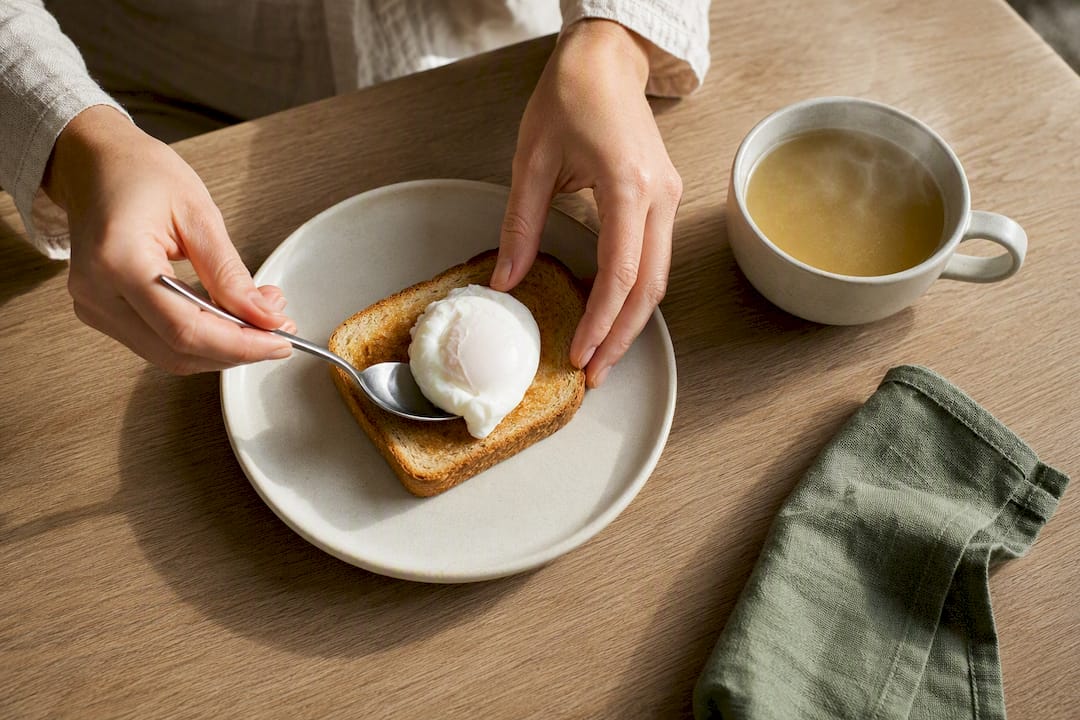
A poached egg on plain toast with a mug of broth on the side is a genuinely solid meal for day one or two. It’s unglamorous, but it works.
Foods and drinks to avoid while symptomatic
Certain everyday foods actively work against you during a flare. Caffeine and alcohol both increase intestinal fluid secretion, which is the opposite of what you want when you’re already losing fluid fast. High-fat and fried food slows digestion and tends to increase stool frequency in an already sensitive gut.
Cut these out for now:
- Coffee, energy drinks, and other caffeinated drinks
- Alcohol of any kind
- Fried and fatty foods, including takeaways and creamy sauces
- Fruit juice, fizzy drinks, and anything sweetened with sugar alcohols like sorbitol or xylitol
- Regular milk and high-lactose dairy
That last one deserves a note. Lactose intolerance can linger for weeks after a bout of infectious diarrhoea, even in people who normally tolerate dairy fine. Yoghurt is often the exception, since it contains less lactose and some live cultures, but a milky latte or a bowl of cereal with cow’s milk is worth skipping until things settle. The NHS lists caffeine, alcohol, sugar alcohols, fatty food and lactose as the main dietary triggers to avoid during an active episode.
Meal timing and portions: pacing your recovery
How you eat matters almost as much as what you eat. A few adjustments make the whole process gentler on your gut:
- Eat 5 to 6 small meals or snacks instead of three large ones, spreading the digestive workload across the day.
- Eat slowly, and sit or rest quietly for a few minutes afterwards rather than rushing straight back to activity.
- As symptoms ease, widen your food choices gradually over several days rather than snapping back to a normal diet overnight.
- Don’t fast for long periods. Medical guidance generally advises against strict fasting during diarrhoea, since your gut lining needs a steady supply of nutrients to repair itself.
Skipping meals to “rest the gut” is one of the most persistent myths around diarrhoea. It usually does the opposite of what people intend.
Probiotics and short-term supplements: what actually helps
Certain probiotic strains have a genuine, if modest, evidence base. Lactobacillus rhamnosus GG and Saccharomyces boulardii show benefit for some acute diarrhoeal episodes, but strain and dose both matter, and results aren’t uniform across every type of diarrhoea. Treat them as a supporting measure, not a replacement for fluids.
- Choose a product listing the specific strain and dose on the label, not a generic “probiotic blend”
- Routine zinc supplementation isn’t standard practice for UK adults; only take it if a clinician recommends it
- If trying a soluble fibre supplement such as partially hydrolysed guar gum, start low
Pro Tip: Start any fibre supplement at around one teaspoon and drink an extra 250 to 500 ml of fluid with each dose. Too much fibre too fast, without enough water, can bloat you further rather than help.
If your diarrhoea followed a course of antibiotics, a short, evidence-based probiotic course is worth discussing with a pharmacist rather than continuing indefinitely.
When to seek medical help: red flags and time limits
Most cases of diarrhoea settle within a couple of days on fluids and bland food alone. A few signs mean you shouldn’t wait that out.
Watch for: dizziness, a rapid heartbeat, very dark or minimal urine, or fainting. These point to significant dehydration and need urgent attention.
Get in touch with a clinician if any of these apply:
- Diarrhoea lasts beyond 48 to 72 hours with no sign of easing
- There’s blood in your stool, a high fever, or severe abdominal pain
- You cannot keep any fluids down at all, however small the sips
- The person affected is a young child, an older adult, or someone with a chronic health condition, in which case seek advice earlier rather than later
If you can’t hold down fluids, that’s an emergency, not a “wait and see.”
When personalised nutrition helps: Foodconnection’s approach for recurrent or complex diarrhoea
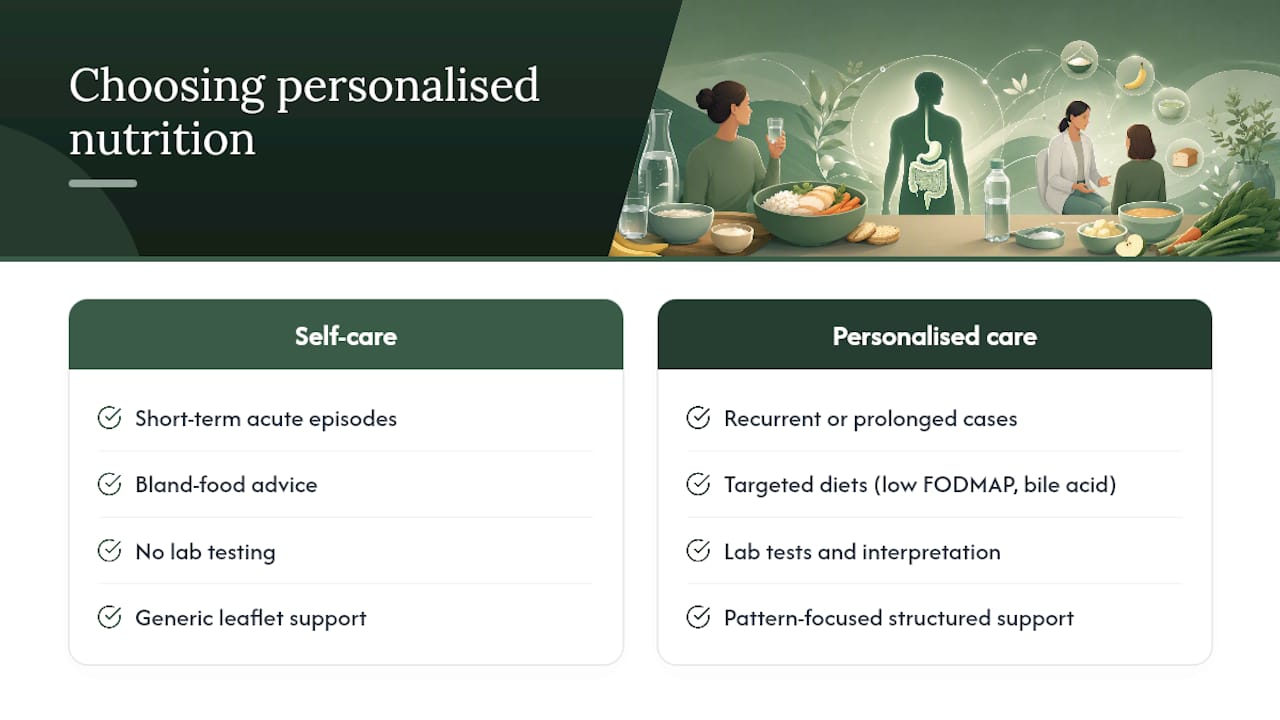
Short-term dietary steps sort out most acute episodes within a few days. When diarrhoea keeps returning, or drags on for weeks, that pattern usually needs proper investigation rather than another round of bland food. Targeted approaches like low FODMAP or bile acid diarrhoea diets, alongside personalised assessment, tend to outperform generic self-care in these cases.
This is where Certain nutrition programmes come in, covering IBS-D, suspected bile acid diarrhoea, and post-infectious gut changes with lab test interpretation and structured support built around your specific pattern rather than a one-size-fits-all leaflet. If symptoms persist past the timelines above, that’s the point to consider bringing in professional support.
Quick checklist: what to do in the next 6 hours
Sip an ORS or clear broth now, replacing 240 ml after each loose stool. Have a small plate of white rice, banana, and toast, with a poached egg or a bowl of soup alongside. Skip coffee, alcohol, and fizzy drinks, rest, and keep an eye on your urine colour. Worried it’s not settling? Call NHS 111 or your GP.
— Irina
Get personalised support for ongoing digestive issues
Professional nutrition services can be an alternative to guesswork when diarrhoea keeps coming back and self-care alone hasn’t cracked it. Where a generic diet sheet stops at bland food and fluids, personalised nutrition plans can be built around your actual pattern, backed by lab test interpretation and ongoing follow-up rather than a single one-off chat.
An initial consultation runs ninety minutes and includes written personalised recommendations, with follow-up sessions available within eight weeks to track progress and adjust your plan. If you’re dealing with recurring symptoms and want a proper look at what’s actually driving them, book that first consultation and get a plan built around your gut, not a generic leaflet. Readers dealing specifically with IBS-related loose stools may also find the low FODMAP approach to IBS diarrhoea a useful starting point before booking.
This article is general information, not a substitute for advice from a qualified doctor. Consult a qualified healthcare professional about your own circumstances before acting on anything here.
Sources
FAQ
What is the best diet for diarrhoea?
The best approach combines steady rehydration with bland, low-fibre foods like rice, bananas, and poached eggs, moving on to a wider variety of foods within a few days as symptoms ease.
Why is the BRAT diet no longer recommended as a long-term plan?
BRAT foods can firm stool in the short term, but bananas, rice, applesauce, and toast together lack enough protein, fat, and overall nutrition to support recovery beyond a day or two.
What stops diarrhoea fast naturally?
Nothing works instantly, but steady rehydration with an ORS, small bland meals, and cutting out caffeine, alcohol, and fatty food gives your gut the best conditions to settle quickly.
Do scrambled or poached eggs help diarrhoea?
Yes. Eggs cooked simply, poached or lightly scrambled, are low in fat and easy to digest, making them a reliable source of protein while your gut recovers.
When should I see a doctor about diarrhoea that won’t stop?
Contact a clinician if diarrhoea lasts beyond 48 to 72 hours, or sooner if you notice blood in your stool, a high fever, severe abdominal pain, or an inability to keep fluids down.