
Crohn's diet: practical, evidence-based guidance

There is no single Crohn’s diet that works for everyone. The ECCO consensus and Crohn’s & Colitis UK agree on the same starting point: what you eat should be personalised, phase-specific, and worked out with an IBD-specialist dietitian rather than copied from a generic list.
That doesn’t mean you’re stuck without a plan while you wait for a referral. A few principles hold regardless of where you are in the disease course:
- Keep your diet as varied and expansive as you can tolerate. Restriction should be the exception, not the default.
- During a flare, lean towards low-residue, easily digested foods rather than cutting entire food groups long-term.
- Clinical options like Exclusive Enteral Nutrition (EEN) or the Crohn’s Disease Exclusion Diet (CDED) exist for inducing remission, but they need medical supervision, not DIY experimentation.
- Watch for signs that this is bigger than diet alone, such as unexplained weight loss or persistent blood in your stool.
Pro Tip: Start a simple food and symptom diary today, even before your next appointment. Note what you ate, when symptoms appeared, and how severe they were. Bring it with you to your dietitian or gastroenterology clinic. Patterns usually take a few weeks of consistent logging to emerge, so the sooner you start, the more useful the data will be by the time you’re sat in front of a specialist.
Key Takeaways
Managing Crohn’s disease through diet works best as a phased, personalised strategy built with an IBD-specialist dietitian rather than a fixed list of foods to eat or avoid.
| Point | Details |
|---|---|
| No universal diet exists | Personalise your approach by disease phase, working with an IBD-specialist dietitian rather than following generic food lists. |
| Match the tool to the goal | Use EEN or CDED + PEN for inducing remission under supervision, and Mediterranean-style eating for long-term maintenance. |
| Texture beats elimination | Cook, peel, and blend high-fibre foods rather than cutting them out permanently; tolerance often improves outside flares. |
| Watch for red flags | Unexplained weight loss, persistent bleeding, or signs of obstruction need urgent medical review, not just dietary tweaks. |
| Get structured, ongoing support | Foodconnection offers phased nutrition programmes and lab testing to build a Crohn’s plan that adapts as your disease activity changes. |
Table of Contents
- What does the evidence actually say about diet and Crohn’s disease?
- Foods worth adding back into your diet
- Foods that commonly trigger symptoms, and why
- How to eat through a flare, step by step
- Making it practical: meal prep and planning that actually fits real life
- When it’s time to bring in an IBD-specialist dietitian
- Supplements, vitamins, and probiotics: what’s worth considering
- What ultra-processed food and emulsifiers might mean for your gut
- How a nutrition consultant actually works through a Crohn’s case
- Getting structured support from Foodconnection
- Frequently asked questions
- Sources
What does the evidence actually say about diet and Crohn’s disease?
Diet in Crohn’s disease splits into two distinct jobs, and mixing them up is where most self-directed diets go wrong. One job is inducing remission during active disease. The other is maintaining health and reducing flare risk once you’re in remission. Very few dietary approaches do both, and the evidence supporting each differs sharply.
EEN has the strongest evidence for inducing remission. Exclusive Enteral Nutrition means replacing all normal food with a nutritionally complete liquid formula, typically for several weeks. It’s a validated induction therapy, particularly in children and adolescents, and it works partly by resting the gut and partly by reshaping the gut microbiome. It requires supervision to make sure you’re getting adequate calories and nutrients throughout.
The Crohn’s Disease Exclusion Diet (CDED), usually paired with Partial Enteral Nutrition (PEN), is the newer alternative built for people who find a liquid-only diet unmanageable. It combines a structured whole-food plan with partial formula support, phased over several weeks to reduce dietary antigens thought to drive inflammation while still allowing some solid food. CD-TREAT is a related whole-food diet designed to mimic the effects of EEN using ordinary ingredients rather than formula, an approach still being researched but promising for people who want food-based options with a comparable mechanism.
Once remission is achieved, the picture changes. The Mediterranean diet is the pattern with the best support for long-term health in Crohn’s disease, built around vegetables, oily fish, olive oil, and legumes, with red meat, processed meat, and refined sugar kept low. A PMC review on diet and Crohn’s aetiology notes this pattern is associated with healthier disease trajectories, while high intake of ultra-processed food correlates with greater Crohn’s risk.
Low-FODMAP diets sit in a different category entirely. They’re not an induction or maintenance therapy for Crohn’s itself. They’re a tool for managing IBS-like symptoms, such as bloating and erratic bowel habits, that can persist even when inflammation is quiet. If that’s your situation, a structured low-FODMAP approach may help, but it should be time-limited and reintroduced systematically, not adopted as a permanent restriction.
ECCO’s consensus is explicit that these are clinician-led protocols, not patient-led restrictive experiments. That distinction matters practically: EEN and CDED work because they’re structured, monitored, and nutritionally complete. A self-designed elimination diet copied from a forum post rarely has any of those three properties.
Foods worth adding back into your diet
Once you’re past an acute flare, the goal shifts from restriction to rebuilding a varied diet that supports weight, energy, and gut healing. Most people tolerate more than they expect, provided the preparation is right.
Foods that tend to work well for people in remission or recovering from a flare:
- Well-cooked vegetables — carrots, courgettes, and squash cooked until soft, with skins removed where fibre is coarse.
- Peeled, cooked or ripe soft fruit — bananas, stewed apples, tinned peaches in juice rather than syrup.
- Oily fish — salmon, mackerel, and sardines, which supply omega-3s alongside easily absorbed protein.
- Lean proteins — poultry, eggs, tofu, and well-cooked white fish.
- Soluble fibre sources — oats, peeled potatoes, and well-cooked porridge, which tend to be gentler than insoluble fibre from bran or raw vegetable skins.
- Fortified dairy or dairy alternatives — useful for calcium and vitamin D if lactose isn’t an issue; swap to lactose-free or plant-based versions if it is.
- Easily digested starches — white rice, plain pasta, and sourdough or well-toasted bread.
The trick that unlocks a lot of this isn’t the ingredient list. It’s texture. Peeling, deseeding, slow-cooking until fork-tender, and blending soups or stews all reduce the mechanical irritation that raw, fibrous food can cause, while keeping the nutrients on the plate. You don’t have to give up vegetables; you often just have to change how you cook them.
Three simple examples of how this looks in practice:
- Snack: A ripe banana with a spoonful of smooth peanut butter, or plain oatcakes with mashed avocado.
- Light lunch: Blended vegetable soup (carrot, sweet potato, well-cooked lentils) with a slice of toasted white bread.
- Dinner: Grilled salmon, mashed potato with the skin removed, and steamed courgette cooked until soft.
Pro Tip: Don’t judge a food as “off-limits” forever just because it caused trouble once during a flare. Reintroduce it later, in a small portion, cooked softly, and log the result. Tolerance shifts as inflammation settles.
Foods that commonly trigger symptoms, and why
Certain food categories show up again and again as flare triggers across patient guidance from Crohn’s & Colitis UK and the Crohn’s & Colitis Foundation, though the intensity of the reaction varies wildly from one person to the next.
Foods that tend to cause problems, particularly during or near a flare:
- Raw, high-fibre vegetables — think raw broccoli, cabbage, or salad leaves with tough stalks.
- Seeds and nuts — their small size and hard structure make them mechanically irritating, especially with any narrowing (stricture) in the bowel.
- Some dairy products — only relevant if you’re lactose intolerant, which is more common in Crohn’s than in the general population.
- Fried and high-fat foods — these can worsen diarrhoea and bloating for many people.
- Spicy food — a common but individual trigger, not universal.
- Alcohol and caffeine — both can speed gut transit and irritate an already inflamed lining.
- Sugar-sweetened drinks and ultra-processed snacks — linked with less favourable outcomes and generally low in the nutrients you need to prioritise.
The honest caveat here is that this list is a starting point, not a prescription. Individual variability in Crohn’s disease is genuinely wide: one person’s trigger is another’s safe food. The only reliable way to sort out what applies to you is a structured elimination and reintroduction process, ideally with a dietitian guiding the pace and sequence rather than trial and error on your own.
Long-term, unsupervised restrictive eating carries real risk in Crohn’s disease. Clinical guidance from the Crohn’s & Colitis Foundation warns that cutting food groups indefinitely, without professional oversight, raises the risk of nutrient deficiency, unplanned weight loss, and disordered eating patterns that can be harder to unwind than the original symptom you were trying to manage.
Pro Tip: If you’ve eliminated more than three or four food groups on your own and you’re still symptomatic, that’s a sign to get dietitian input rather than eliminate further. More restriction isn’t automatically more relief, and it’s often the opposite.
How to eat through a flare, step by step
An active flare calls for a different approach than remission, temporary rather than permanent, and focused on reducing mechanical and digestive load while protecting nutrition.
- Shift towards low-residue eating for the first few days. Choose well-cooked, low-fibre foods: white rice, peeled and cooked vegetables, skinless poultry or fish, and smooth soups. The aim is to reduce the volume of undigested material passing through an inflamed gut.
- Eat smaller portions, more often. Five or six small meals tend to sit better than three large ones when appetite and tolerance are both reduced. Patient leaflets from NHS trusts consistently recommend this pattern as first-line advice.
- Prioritise fluids and electrolytes. Diarrhoea during a flare drains fluid and salts faster than thirst alone will tell you. Water, oral rehydration solutions, and diluted squash all help; large amounts of caffeine or alcohol work against you here.
- Track how you feel daily, not just symptoms but appetite, energy, and weight if you have access to scales. Sustained decline in any of these is your cue to escalate.
- Discuss clinical nutrition options with your team if symptoms persist. This is where EEN or CDED + PEN come in. EEN typically runs for several weeks under supervision and is offered more often in children, though adults can be candidates too, particularly when steroid use needs to be minimised. CDED + PEN offers a solid-food alternative for people who can’t sustain formula-only intake.
There is a meaningful difference between “eating carefully during a flare” and “starting a clinical induction diet.” The first you can largely manage yourself with low-residue choices. The second needs a dietitian and gastroenterologist involved from day one, because getting the formula composition, duration, and monitoring wrong undermines the whole point of the therapy.
Some signs mean you shouldn’t wait for a routine appointment. Persistent rectal bleeding, severe or worsening abdominal pain, recurrent vomiting, or rapid, unintentional weight loss all warrant urgent medical review, since they can point towards complications like obstruction that diet alone won’t resolve.
Making it practical: meal prep and planning that actually fits real life
Clinical advice is only useful if it survives contact with a Tuesday evening when you’re tired and not sure what’s safe to cook. A few techniques make the difference between following the guidance and giving up on it.
Cooking methods matter more than ingredient lists. Steaming and slow-cooking break down fibrous structures without destroying nutrients the way boiling in excess water can. Blending turns a vegetable you can’t tolerate whole into a soup you can. Sieving stewed fruit removes skins and pips while keeping the flesh’s nutritional value.

Batch cooking solves the low-energy problem that flares create. A big pot of blended vegetable soup or a slow-cooked chicken and rice dish, frozen in single portions, means you’re never choosing between “cook something difficult” and “eat nothing.” Keep pantry staples on hand for exactly this: tinned fish, plain rice, stock, and a jar of nut-free, smooth nut-butter alternative.
Here’s a simple three-day skeleton with flare and remission swaps:
- Day one — Breakfast: smooth porridge with mashed banana. Lunch: blended carrot and lentil soup. Dinner: steamed white fish, mashed potato, well-cooked green beans (swap for raw salad once tolerance improves).
- Day two — Breakfast: scrambled eggs on toasted white bread. Lunch: chicken and rice, slow-cooked until tender. Dinner: pasta with a smooth tomato sauce and grated cheese if dairy is tolerated.
- Day three — Breakfast: smoothie with ripe fruit and lactose-free yoghurt. Lunch: leftover soup or stew from batch cooking. Dinner: grilled salmon with mashed sweet potato and steamed courgette.
If low appetite or fatigue is the bigger obstacle than tolerance itself, small nutrient-dense snacks between meals, like strategies used to manage energy dips, help close the calorie gap without forcing large meals you can’t face.
When it’s time to bring in an IBD-specialist dietitian
Diet self-management has limits, and Crohn’s disease has a genuine capacity to cause malnutrition even when you feel like you’re eating reasonably well. Knowing the red flags means you escalate before things get harder to reverse.
Get in touch with your IBD team, urgently if needed, if you notice:
- Unexplained or continuing weight loss, particularly if it’s more than a few kilograms over a short period.
- Persistent blood loss, whether visible in stool or picked up through unexplained anaemia symptoms like fatigue and breathlessness.
- Signs of bowel obstruction — severe cramping, bloating, vomiting, or an inability to pass stool or wind.
- Recurrent vomiting that stops you keeping food or fluids down.
- Severe dehydration — dizziness, dark urine, or reduced urination.
Certain lab tests come up repeatedly in nutrition assessments for Crohn’s, and it’s worth knowing why. Iron studies pick up the anaemia that chronic blood loss or poor absorption can cause. Vitamin B12 and vitamin D are commonly deficient in Crohn’s, particularly with small bowel involvement, since that’s where much of their absorption happens. Markers of general nutritional status help your team catch malnutrition before it becomes visible on the outside.
Turning up to your first dietitian appointment with a food and symptom diary, your current medication list, and any recent blood results from your GP or gastroenterologist turns a vague conversation into a targeted one. It’s the single biggest thing you can do to make that first session useful.
Supplements, vitamins, and probiotics: what’s worth considering
Crohn’s disease interferes with nutrient absorption in ways that vary depending on which part of the bowel is affected, which means supplementation isn’t a blanket recommendation, it’s a targeted response to specific deficiencies.
Iron, vitamin B12, and vitamin D are the three most commonly monitored nutrients. Iron deficiency often follows chronic low-grade blood loss or reduced intake during flares. B12 absorption depends on a healthy terminal ileum, a site frequently affected in Crohn’s, so previous surgery or active inflammation there raises deficiency risk. Vitamin D deficiency is common across the general population but appears more often in Crohn’s due to reduced dietary intake, malabsorption, and lower sun exposure during flare-related fatigue. NIDDK guidance recommends discussing a tailored eating and supplementation plan with your care team rather than guessing at doses.
Probiotics are a genuinely mixed picture. The evidence for any specific strain helping Crohn’s disease specifically is limited and inconsistent, unlike some other gut conditions where the data is firmer. Self-prescribing high-dose probiotics during active, severe disease, or if you’re on immunosuppressant medication, carries some risk of infection and isn’t something to do without checking with your team first.
A few practical rules of thumb:
- Get tested before you supplement. Guessing at iron or vitamin D doses without a baseline blood result risks overcorrection.
- Discuss any supplement with your gastroenterologist or dietitian if you’re on biologics or immunosuppressants, since interactions and infection risk both need consideration.
- Choose dietitian-recommended formulations over generic multivitamins where a specific, confirmed deficiency exists. It’s more effective and cheaper in the long run.
What ultra-processed food and emulsifiers might mean for your gut
New research presented at ECCO points to something worth knowing even though the evidence is still developing: certain emulsifiers commonly used in processed foods appear to alter the gut microbiome in ways relevant to Crohn’s disease mechanisms. That builds on a broader pattern already seen in reviews on Crohn’s aetiology, where higher intake of ultra-processed food correlates with higher Crohn’s risk.
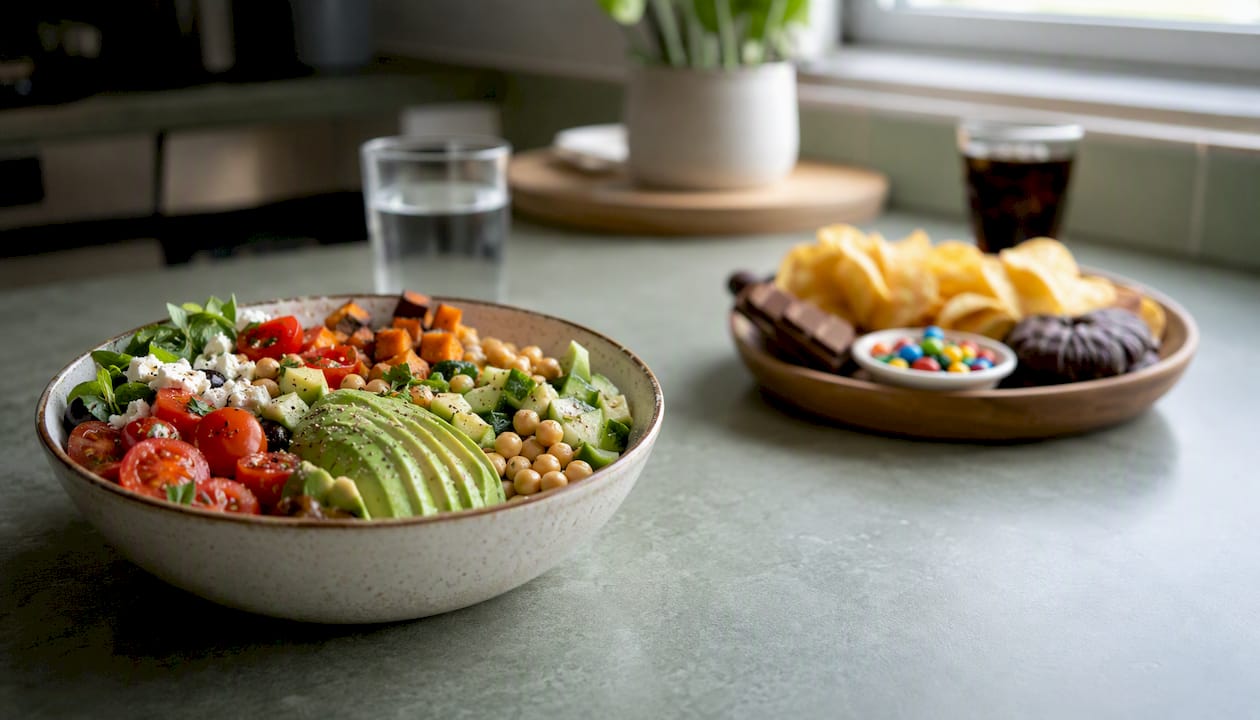
None of this means you need to audit ingredient labels for specific emulsifier codes. The practical takeaway is simpler: leaning towards whole, minimally processed food, the same Mediterranean-style pattern already recommended for maintenance, does double duty here. You’re not chasing a single villain ingredient; you’re shifting the overall balance of what reaches your gut. The trials needed to confirm exactly how much emulsifier exposure matters clinically are still ongoing, so treat this as a sensible direction rather than a strict rule.
How a nutrition consultant actually works through a Crohn’s case
In practice, building a workable Crohn’s diet starts with listening before it starts with lists. A detailed food and symptom diary, reviewed alongside recent bloods and a proper history of flares versus remission, tells you far more than any generic “foods to avoid” sheet ever could.
Phased planning matters as much as food choice. What someone needs in week one of a flare looks nothing like what they need three months into stable remission, and a plan that doesn’t shift with disease activity will eventually fail on one end or the other.
The outcomes worth measuring aren’t dramatic. They’re steady weight, fewer and shorter flares, and energy that doesn’t collapse by mid-afternoon. Getting there usually means working alongside your gastroenterologist, not instead of them, with diet as one lever among several. If you’re weighing up whether a personalised nutrition plan is worth pursuing, that collaborative structure is what actually makes the difference.
Getting structured support from Foodconnection
Working out what to eat with Crohn’s disease on your own, especially while trying to interpret blood results or decide whether a symptom is a trigger or a coincidence, is genuinely hard to do alone. Foodconnection is built around exactly that gap: ongoing, programme-based nutrition support rather than a single one-off consultation, so your plan can shift as your disease activity does.
A typical first step is an in-depth assessment covering your symptom history, current diet, and any relevant lab markers, followed by a phased plan built around where you actually are, flare, recovery, or stable remission, rather than a generic template. Foodconnection also offers functional laboratory testing with interpretation, useful if you and your gastroenterologist want a clearer picture of iron, B12, or vitamin D status before deciding on supplementation. For anyone whose Crohn’s diagnosis sits alongside weight changes, weight-focused support is available as part of the same programme structure rather than a separate service bolted on afterwards.
If you want a plan that adapts as your disease does, rather than a static list you’ll outgrow in a month, book an initial consultation with Foodconnection to talk through what a phased, personalised programme would look like for you.
Frequently asked questions
Is there one best Crohn’s diet everyone should follow? No. Evidence from ECCO and patient charities both point to personalised, phase-specific dietary strategies rather than one universal plan.
What should I eat during a Crohn’s flare-up? A low-residue approach works for most people: well-cooked, low-fibre foods in smaller, more frequent portions, with attention to fluid and electrolyte intake. Clinical options like EEN or CDED + PEN are available for more significant flares under medical supervision.
Can I eat fibre with Crohn’s disease? Yes, but the type and preparation matter. Soluble fibre from oats or peeled cooked vegetables is usually gentler than insoluble fibre from raw vegetable skins, seeds, or nuts, particularly during a flare or if you have any bowel narrowing.
Do I need to avoid dairy with Crohn’s disease? Only if you’re lactose intolerant, which is more common in Crohn’s than in the general population. If you tolerate dairy fine, there’s no need to cut it, and it’s a useful source of calcium and vitamin D.
Should I take probiotics for Crohn’s disease? Evidence for probiotics in Crohn’s disease specifically is limited and strain-dependent. Avoid unsupervised high-dose use during active severe disease or if you’re on immunosuppressants, and check with your dietitian first.
When should I see a specialist about my diet? Seek review if you notice unexplained weight loss, persistent blood loss, signs of obstruction, recurrent vomiting, or severe dehydration. These warrant medical attention beyond dietary adjustment alone.
This article is general information, not a substitute for advice from a qualified doctor. Consult a qualified healthcare professional about your own circumstances before acting on anything here.
Sources
- Dietary management of inflammatory bowel disease: an ECCO consensus
- Food and Crohn’s or Colitis
- Eating, diet, & nutrition for Crohn’s disease - NIDDK
- The role of diet in Crohn’s disease: from etiology to … - PMC
- New research presented at ECCO congress on low‑emulsifier diet and Crohn’s disease
Recommended
- Low FODMAP diet: a practical guide for IBS relief in the UK | FoodConnection blog
- Anti-inflammatory diet: what to eat and why it works | FoodConnection blog
- Prediabetes diet: managing blood sugar with complex health needs | FoodConnection blog
- Cholesterol diet plan: what actually works for UK adults | FoodConnection blog