
Cortisol and weight: what's really driving your belly fat

Cortisol is the hormone most people associate with stress, but its influence on your body goes well beyond a racing heart or a sleepless night. Chronically elevated cortisol actively promotes fat storage, particularly around the abdomen, slows your metabolism, and disrupts the hunger signals that help you regulate what you eat. If you have been eating carefully and still watching your waistline expand, cortisol may be a significant part of the picture.
Here is what elevated cortisol does to your body weight:
- Drives visceral fat accumulation around the abdomen and internal organs
- Increases appetite, especially for high-fat, high-sugar foods
- Promotes insulin resistance, making it harder for cells to use glucose efficiently
- Disrupts leptin signalling, the hormone that tells your brain you are full
- Slows resting metabolic rate over time
- Disrupts sleep, which in turn raises cortisol further and compounds weight gain
Understanding these mechanisms is the first step. The second is knowing what you can actually do about them.
Table of Contents
- How cortisol affects body weight and metabolism
- Common myths about cortisol, and why you need a doctor not a social media feed
- Practical ways to manage cortisol-related weight gain through diet and lifestyle
- Why women face a higher risk from cortisol-driven weight gain
- How to tell if your weight gain might be cortisol-related
- How Foodconnection approaches cortisol-related weight concerns
- Foodconnection’s personalised programmes for stress-related weight
- Key takeaways
How cortisol affects body weight and metabolism
Cortisol is a steroid hormone produced by the adrenal glands, sitting above your kidneys. Under normal conditions, it follows a circadian rhythm: highest in the morning to help you wake and mobilise energy, then tapering off through the day. That daily pattern is healthy and necessary. The problem arises when chronic stress keeps cortisol elevated well beyond its useful window.

What happens physiologically when cortisol stays high
Elevated cortisol tells the liver to release glucose into the bloodstream, preparing the body for a perceived threat. When that threat is a work deadline rather than a physical danger, the glucose goes unused and insulin is released to manage it. Over time, repeated cortisol spikes contribute to insulin resistance, a state where cells become less responsive to insulin’s signal. The result is higher circulating blood sugar, increased fat storage, and a growing tendency to deposit that fat in the abdomen.
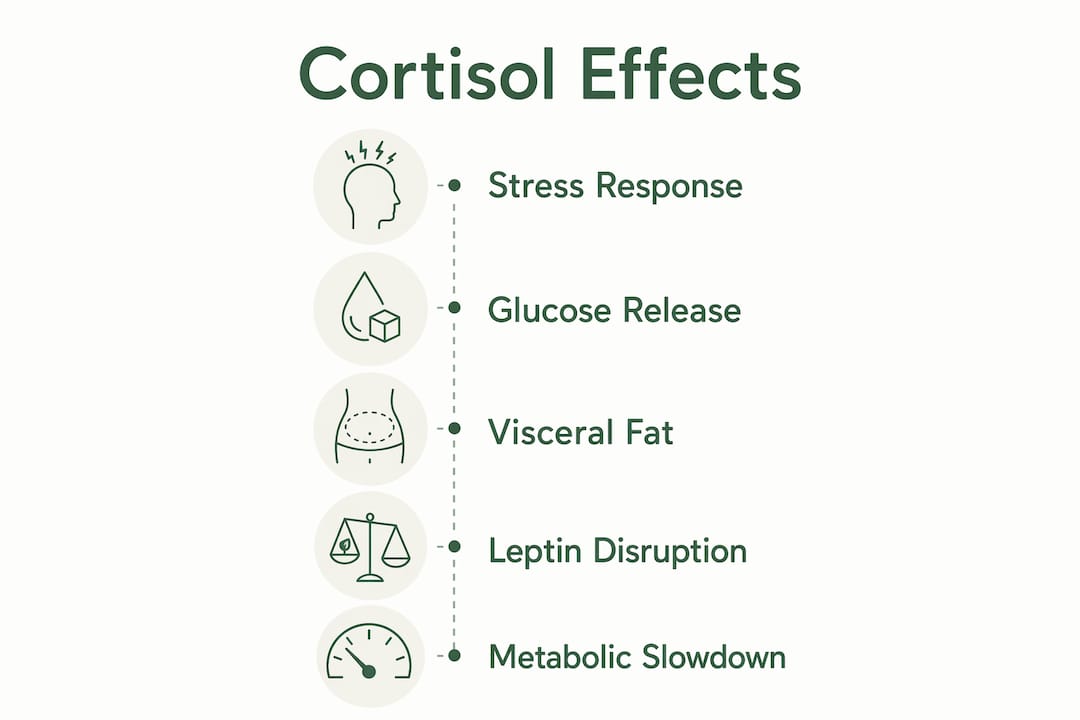
The abdomen is not an arbitrary location. Visceral fat, the fat that accumulates around internal organs, is metabolically active. It contains enzymes that convert inactive cortisone back into active cortisol, creating a self-sustaining feedback loop. The more visceral fat you carry, the more cortisol your body produces locally, which drives further fat accumulation. Breaking that cycle by willpower alone is genuinely difficult.
Cortisol also interferes with leptin, the satiety hormone. When leptin signalling is impaired, your brain does not receive a clear “I am full” message, so hunger persists even after adequate meals. Research published in Stress, Cortisol, and Obesity on PubMed confirms that glucocorticoids increase consumption of foods high in fat and sugar, and that individuals with higher cortisol responses to stress show greater propensity for weight gain and obesity.
| Mechanism | Effect on weight |
|---|---|
| Insulin resistance | Excess glucose stored as fat, particularly visceral |
| Leptin disruption | Persistent hunger despite adequate calorie intake |
| Visceral fat enzyme activity | Local cortisol production sustains fat storage cycle |
| Metabolic rate reduction | Fewer calories burned at rest |
| Sleep disruption | Raises cortisol further, amplifying all effects above |
Beyond weight, chronic cortisol elevation raises systemic inflammation, suppresses immune function, disrupts thyroid signalling, and increases cardiovascular risk. Weight gain is often the most visible sign, but it is rarely the only consequence.
Common myths about cortisol, and why you need a doctor not a social media feed
The wellness industry has turned cortisol into a marketing concept, and the gap between what is sold online and what medicine actually supports is wide.
Myths worth correcting:
- “Cortisol is just bad and should be lowered.” Cortisol is essential for survival. It regulates blood pressure, immune response, and energy mobilisation. The goal is not to suppress it but to prevent chronic over-elevation.
- “Cortisol supplements will fix my weight.” No over-the-counter supplement has strong clinical evidence for safely modulating cortisol. Misusing such products can cause adverse effects including dizziness and low blood sugar, according to medical guidance reviewed by endocrinologists.
- “I can test my cortisol at home and self-diagnose.” Home testing kits sold via social media are not validated for clinical diagnosis. Cortisol levels fluctuate throughout the day and are affected by dozens of variables; a single saliva test tells you very little without clinical context.
- “High cortisol always means Cushing’s syndrome.” Cushing’s is a specific diagnosed endocrine disorder caused by pathologically elevated cortisol. Stress-related cortisol elevation is a different, far more common phenomenon and requires a different approach.
- “Crash dieting will reset my cortisol.” Extreme caloric restriction is itself a physiological stressor that can raise cortisol levels, making the problem worse.
In the UK, cortisol testing through the NHS is generally reserved for people with symptoms suggesting a specific endocrine disorder, not routine weight concerns. If you genuinely suspect a hormonal problem is driving your weight gain, the right first step is a conversation with your GP, not a supplement from an Instagram advert. Your GP can refer you to an endocrinologist if clinical signs warrant it.
Practical ways to manage cortisol-related weight gain through diet and lifestyle
The evidence consistently points in one direction: multi-modal approaches that combine nutrition, sleep, physical activity, and stress management outperform any single intervention. There is no shortcut, but there are clear, evidence-backed strategies that work.
What to eat on a cortisol-balancing diet
A Mediterranean-style eating pattern is the most well-supported dietary approach for managing cortisol. It is rich in whole grains, legumes, fruits, vegetables, olive oil, and oily fish, all of which provide anti-inflammatory compounds and omega-3 fatty acids. Christine Ferguson, Ph.D., RDN, at the University of Alabama at Birmingham, explains that diet influences cortisol through the inflammatory pathway: raised cortisol increases inflammation, and inflammation raises cortisol further, so anti-inflammatory foods address both sides of that cycle.
Dietary adjustments towards Mediterranean eating can show measurable cortisol-lowering effects within weeks, though the timeline varies by individual. What consistently worsens the picture is a diet high in processed foods, added sugars, refined grains, and saturated fats, all of which are linked to raised cortisol and inflammatory markers.
Foods to prioritise:
- Oily fish (salmon, mackerel, sardines) for omega-3 fatty acids
- Leafy greens, berries, and colourful vegetables for antioxidants
- Whole grains (oats, brown rice, quinoa) for stable blood sugar
- Legumes (lentils, chickpeas) for fibre and slow-release energy
- Olive oil, nuts, and seeds for healthy fats
Foods to reduce:
- Ultra-processed foods and fast food
- Sugary drinks, sweets, and refined carbohydrates
- Foods high in saturated fat (pastries, processed meats)
- Alcohol, which disrupts sleep and elevates cortisol
Sleep: the most underestimated lever
Sleep disruption raises cortisol, which then alters hunger hormones and slows metabolism, creating a cycle that compounds weight gain. Prioritising 7–9 hours of consistent sleep is not a lifestyle luxury; it is a direct intervention on cortisol regulation. Practical steps include keeping a consistent wake time, avoiding screens for an hour before bed, and keeping the bedroom cool and dark.

Stress management and physical activity
Mindful eating and structured stress-reduction programmes have been shown to lower cortisol and reduce abdominal fat in clinical studies. Practices worth building into a daily routine include:
- Slow diaphragmatic breathing (4 counts in, 6 counts out)
- Mindfulness meditation, even 10 minutes daily
- Moderate aerobic exercise such as walking, cycling, or swimming
- Yoga and gentle movement, which lower cortisol more reliably than high-intensity training
High-intensity exercise done excessively can itself spike cortisol, so moderate, consistent activity is preferable to punishing gym sessions when stress is already high. For practical, evidence-backed techniques you can use at home, natural stress reduction resources offer a useful starting point.
Pro Tip: Combining dietary changes with at least one non-food stress-reduction practice, such as daily walks or breathing exercises, produces better cortisol management than changing diet alone. The two approaches address different biological drivers simultaneously.
Why women face a higher risk from cortisol-driven weight gain
Women are not simply more stressed than men; they are biologically more vulnerable to the weight-related consequences of cortisol elevation. Several mechanisms converge to create this disparity.
Hormonal interactions across the life cycle
Oestrogen and progesterone both interact with the hypothalamic-pituitary-adrenal (HPA) axis, the system that governs cortisol release. During perimenopause, declining oestrogen reduces the buffering effect on cortisol responses, leaving women more reactive to stressors. The result is more frequent and more pronounced cortisol spikes, which directly accelerate visceral fat deposition around the abdomen. Foodconnection’s perimenopause nutrition guide covers this hormonal interplay in detail, including how dietary choices can support a more balanced cortisol response during this transition.
Menstrual cycle fluctuations also affect cortisol sensitivity. In the luteal phase (the two weeks before a period), progesterone rises and can amplify stress reactivity, making women more susceptible to stress-driven eating during that window.
Stress-induced eating patterns
Research confirms that women with higher cortisol responses to stress eat more in response to that stress than their lower-responding counterparts. The foods chosen under stress tend to be high in fat and sugar, which worsens the cortisol picture further. This is not a character flaw; it is a documented neuroendocrine response. Dopamine and serotonin are temporarily raised by comfort foods, providing short-term relief while the underlying cortisol problem persists.
Key risk factors specific to women:
- Perimenopausal oestrogen decline amplifying HPA axis reactivity
- Luteal phase progesterone increasing stress sensitivity
- Greater tendency toward stress-induced eating in high-cortisol responders
- Metabolic changes during menopause increasing visceral fat susceptibility
- Higher prevalence of sleep disruption linked to hormonal fluctuations
For women navigating perimenopause weight gain, understanding the cortisol component is particularly useful because it shifts the focus from calorie restriction (which can raise cortisol) to hormonal regulation through nutrition and lifestyle.
How to tell if your weight gain might be cortisol-related
Not every case of unexplained weight gain is cortisol-driven, and self-diagnosis is unreliable. That said, there are patterns worth recognising before you speak to a GP.
Common signs that cortisol may be a factor:
- Weight gain concentrated around the abdomen, with relatively slim arms and legs
- Persistent fatigue despite adequate sleep
- Difficulty falling asleep or waking in the early hours
- Cravings for sweet or salty foods, particularly in the evening
- Feeling wired but tired simultaneously
- Mood changes, irritability, or low motivation
- Facial puffiness or a rounded face (in more pronounced cases)
What the UK medical pathway looks like:
If you present these symptoms to your GP, they will typically take a full history and may run standard blood tests to rule out thyroid dysfunction, diabetes, or other metabolic conditions. Cortisol testing is not a routine first-line investigation for weight concerns. If your GP suspects an endocrine disorder such as Cushing’s syndrome, they can refer you to an endocrinologist, who may request a 24-hour urinary cortisol test, a late-night salivary cortisol test, or a low-dose dexamethasone suppression test. These are clinical procedures, not the home kits sold online.
Frequently asked questions
Can I test my cortisol at home? Home saliva kits are available commercially, but they are not validated for clinical diagnosis and should not be used to make treatment decisions. A single cortisol reading without clinical context is rarely meaningful.
When should I see a GP about cortisol and weight? If you have persistent unexplained weight gain around the abdomen, fatigue, sleep disruption, and mood changes that have lasted more than a few weeks, a GP appointment is the right step. Do not wait for symptoms to become severe.
Are there NHS tests for cortisol? Yes, but they are ordered when there is clinical reason to suspect an endocrine disorder, not as a general wellness screen. Your GP is the right person to assess whether testing is warranted.
If you are eating healthily but not losing weight, hormonal factors including cortisol are worth investigating with a qualified professional rather than addressing through supplements alone.
How Foodconnection approaches cortisol-related weight concerns
Foodconnection is a UK-based nutrition consulting service that works with people whose weight concerns are rooted in hormonal and lifestyle factors, including chronic stress and elevated cortisol. The approach is programme-based rather than one-off, which matters for cortisol management because the physiological changes involved take weeks to months to shift and require consistent support.
What the Foodconnection methodology involves:
- In-depth lifestyle and dietary analysis to identify cortisol-driving factors specific to each person
- Personalised nutrition plans built around anti-inflammatory, cortisol-balancing foods
- Guidance on sleep hygiene, stress management, and physical activity integrated with dietary advice
- Ongoing support throughout the programme, not just an initial consultation
- Optional functional laboratory testing, including hormonal panels, with detailed interpretation
The functional lab testing option is particularly relevant here. Rather than relying on a single GP blood test, Foodconnection can arrange comprehensive hormonal assessments that give a fuller picture of how stress hormones are interacting with thyroid function, insulin, and other metabolic markers.
Generic advice to “eat less and move more” consistently fails people whose weight gain is driven by hormonal dysregulation. A personalised programme that accounts for cortisol’s role in appetite, fat distribution, and metabolism produces meaningfully different outcomes. For women in perimenopause especially, where daily hormonal rituals can make a measurable difference to cortisol balance, a structured programme offers something a generic diet plan cannot.
| Foodconnection feature | Relevance to cortisol management |
|---|---|
| Personalised nutrition plan | Targets inflammatory foods and supports blood sugar stability |
| Functional lab testing | Identifies hormonal imbalances driving weight gain |
| Lifestyle integration | Addresses sleep, stress, and activity alongside diet |
| Ongoing programme support | Sustains changes over the weeks needed for cortisol regulation |
| Hormonal specialisation | Specific expertise in perimenopause, thyroid, and adrenal health |
Foodconnection’s personalised programmes for stress-related weight
Cortisol-driven weight gain responds poorly to generic diets. The physiology is specific, the triggers are individual, and the solution needs to match both.

Foodconnection offers personalised weight management programmes built specifically for people whose weight concerns involve hormonal and stress-related factors. Rather than handing you a meal plan and wishing you luck, the programme works through your individual lifestyle, dietary patterns, sleep quality, and stress load to identify what is actually driving the problem. Functional lab testing is available as part of the process, giving you real data on your hormonal picture rather than guesswork.
The service is available in London and online across the UK, making it accessible whether you prefer face-to-face support or remote consultations. If cortisol, perimenopause, thyroid function, or chronic fatigue is part of your weight story, Foodconnection’s nutrition services are designed for exactly that complexity. Book a consultation to get a clear, personalised plan rather than another round of generic advice.
Key takeaways
Chronic cortisol elevation drives visceral fat accumulation, disrupts hunger hormones, and slows metabolism, making weight management genuinely harder without addressing the hormonal root cause.
| Point | Details |
|---|---|
| Cortisol drives visceral fat | Elevated cortisol promotes abdominal fat storage through insulin resistance and a self-sustaining enzyme feedback loop. |
| Diet directly affects cortisol | Mediterranean-style eating lowers inflammatory markers and supports cortisol balance; processed foods and added sugars worsen it. |
| Sleep is a direct cortisol lever | Disrupted sleep raises cortisol, which alters hunger hormones and slows metabolism, compounding weight gain. |
| Women face heightened risk | Perimenopausal oestrogen decline and stress-induced eating patterns increase women’s vulnerability to cortisol-driven fat accumulation. |
| Foodconnection offers personalised support | Foodconnection’s programme-based approach integrates nutrition, functional lab testing, and lifestyle guidance to address cortisol-related weight gain. |