
6–8 Prunes or Psyllium Daily: UK Evidence First Constipation Diet

The most effective first step is a soluble fibre source such as psyllium or a daily portion of prunes, paired with more fluids and a fixed toilet routine. Most people notice softer, more regular stools within a few days to four weeks. Seek medical advice quickly if you notice bleeding, unexplained weight loss, or a sudden change in bowel habit.
TL;DR:
- Consuming a daily soluble fiber like psyllium, prunes, or oats can promote softer, more regular stools within a few days to four weeks, especially when paired with adequate water intake.
- Increasing fiber gradually over one to two weeks and maintaining a consistent toilet routine helps prevent bloating and enhances bowel regularity.
- Foods with the strongest evidence for relieving constipation include prunes, kiwifruit, rye bread, and mineral water high in magnesium; their effects are supported by clinical trials.
- Supplements like psyllium and magnesium oxide are effective when used correctly, but probiotics have limited proven benefits, and water intake is crucial for fiber’s effectiveness.
- Movement, proper toilet posture, and awareness of dietary patterns such as high-fat or low-carb diets influence bowel habits and should complement fiber and fluid strategies.
Table of Contents
- Quick constipation diet checklist: what to try this week
- Fibre for constipation: soluble vs insoluble, and how much you actually need
- Prunes, kiwifruit, rye bread and mineral water: the foods with trial evidence
- Psyllium, magnesium oxide and probiotics: what the evidence actually supports
- Fluids, meal timing, and diets that make constipation worse
- Movement and toilet habits that support a constipation diet
- When to see a GP or pharmacist about constipation
- A nutritionist’s perspective: why diet alone sometimes isn’t enough
- How Foodconnection can help if diet alone hasn’t fixed it
- Sources
Quick constipation diet checklist: what to try this week
You don’t need to overhaul everything at once. Start with these steps and give them a fortnight before judging results:
- Add one soluble fibre source daily: oats, psyllium husk, or a small tin of chickpeas.
- Eat a small daily portion of prunes, or a teaspoon of psyllium in water, building up gradually.
- Drink water consistently through the day rather than in one large dose.
- Take a 10 to 15 minute walk after your main meal.
- Set a consistent toilet time, ideally 20 to 30 minutes after breakfast.
Increase fibre in small steps over one to two weeks rather than jumping straight to a high-fibre diet. Doing it too fast is the main reason people give up, blaming the “gassy” side effect rather than the pace of the change. Limit repeated use of stimulant laxatives (senna-type products) beyond short courses. They work, but leaning on them instead of fixing the underlying diet for constipation tends to store up problems rather than solve them.
Fibre for constipation: soluble vs insoluble, and how much you actually need
Soluble fibre dissolves in water and forms a gel that softens stool. You’ll find it in oats, psyllium husk, beans, and the flesh of apples and pears. Insoluble fibre doesn’t dissolve. It adds bulk and helps things move through faster. Wheat bran, wholegrain bread, and vegetable skins are the main sources.
Most adults need a moderate amount of fibre daily, varying by sex and energy intake. Few people in the UK reach that. The catch is that fibre only works properly when fluid intake rises alongside it. Add bulk without water and you can make constipation worse, not better.
Build fibre up over several days rather than doubling your intake overnight. A practical swap list: white rice to brown rice, white bread to wholegrain or rye, a peeled apple to one eaten with the skin on, and a side salad added to dinner instead of extra potato. Small, boring swaps like these do more for regularity than a single “superfood” ever will.
Prunes, kiwifruit, rye bread and mineral water: the foods with trial evidence
Most food advice for constipation is guesswork dressed up as nutrition tips. A small handful of foods actually have trial data behind them, and it’s worth knowing which ones.
Prunes carry the strongest evidence. Clinical trials show that eating them daily increases the number of complete bowel movements and improves stool consistency, often outperforming psyllium in head-to-head comparisons. That’s likely down to the combination of fibre and natural sorbitol, which draws water into the bowel. A handful (roughly 6 to 8 prunes, or the equivalent soaked or blended into porridge) is a reasonable starting point.
Kiwifruit has RCT support too, generally at two to three fruits a day. Some people tolerate kiwifruit better than prunes, with less bloating, which makes it worth trying if prunes cause discomfort.
Rye bread and high-mineral water both appear in the evidence base, though with fewer trials behind them than prunes or psyllium. Swapping standard white bread for rye, and choosing a mineral water with higher magnesium content where available, are both low-effort, low-risk changes worth testing over a few weeks. Expect looser stools before you notice any downside. That’s usually a sign the dose is working, not a reason to stop.
Psyllium, magnesium oxide and probiotics: what the evidence actually supports
Psyllium is the best-studied fibre supplement for constipation. Meta-analysis data shows it improves stool frequency and consistency, with the clearest benefits at doses above 10g a day sustained for at least four weeks. Start with a teaspoon in a full glass of water once daily, and build up over a week or two. Bloating is the main side effect, and it settles for most people once their gut adjusts. Take it with plenty of fluid. Dry-swallowed fibre supplements are a genuine choking risk.
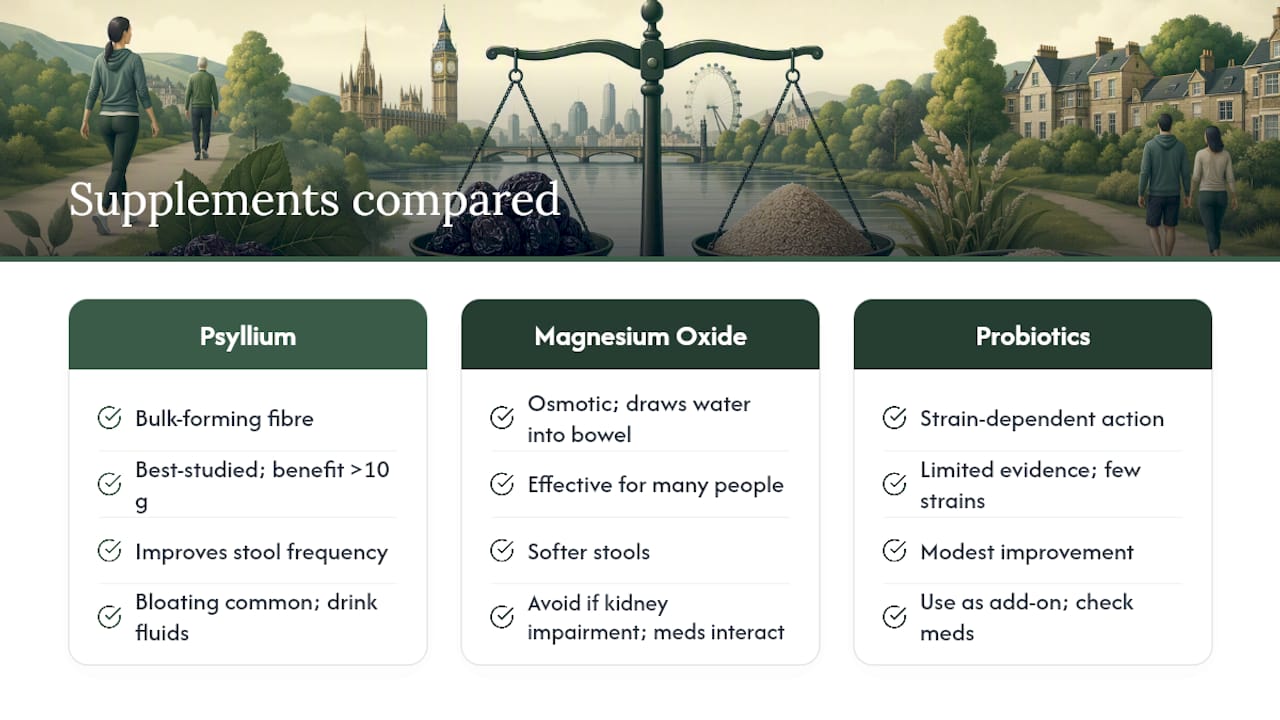
Magnesium oxide works differently. It pulls water into the bowel osmotically rather than adding bulk. It’s effective for many people, but anyone with kidney impairment should avoid it without medical supervision, and it can interact with certain antibiotics and thyroid medication.
Probiotics are the least convincing option. Recent guideline reviews point to only a handful of specific strains showing any benefit, and even then the effect is modest. Treat probiotics as a possible add-on, not a primary strategy.
Check with a pharmacist or GP before starting any of these if you take regular medication or have reduced kidney function.
Fluids, meal timing, and diets that make constipation worse
Fibre and fluid work as a pair. Without enough water, extra fibre can sit heavily in the bowel and worsen symptoms rather than easing them. Aim for water spread across the day, and consider a warm drink first thing in the morning. It can help trigger the bowel’s natural post-meal reflex, according to Harvard Health. Excess alcohol works against you here, since it dehydrates rather than hydrates.
Certain dietary patterns are worth watching. High-fat, heavily processed diets low in fibre are a recognised trigger for slower bowel transit, and very low-carbohydrate diets that cut out grains, fruit, and legumes often strip out the fibre sources that keep things moving. If you’re following a low-carb plan and constipation has crept in, that’s usually the first place to look.
Movement and toilet habits that support a constipation diet
Diet does most of the heavy lifting, but two habits change how well it works. A 10 to 15 minute walk after meals stimulates gut motility, giving fibre a better chance of moving through rather than stalling.

Toilet posture matters more than most people realise. A footstool that raises your knees above hip height straightens the angle of the rectum, making it physically easier to pass stool. Combine that with responding to the urge when it arrives rather than delaying, and a fixed time slot each morning. Two weeks is usually enough to tell whether these small changes have shifted your bowel frequency.
When to see a GP or pharmacist about constipation
See a GP promptly if you notice blood in your stool, unexplained weight loss, severe or worsening pain, or a sudden change in bowel habit lasting more than a few weeks, particularly after age 50. A pharmacist can advise on short-term over-the-counter options first. For a GP appointment, bring a list of current medications, a rough diet history, and a timeline of when symptoms started.
A nutritionist’s perspective: why diet alone sometimes isn’t enough
Diet fixes constipation for a lot of people, but not everyone, and that gap is where most generic advice falls short. What tends to actually work is a staged approach: fibre and fluids first, then targeted supplements like psyllium or magnesium if progress stalls, then a proper look at activity, stress, and gut motility if it still hasn’t shifted after a few weeks.
Where this gets interesting is that persistent constipation is often tangled up with something else entirely, a thyroid issue, a medication side effect, or an underlying gut condition that a generic “eat more fibre” leaflet was never going to catch. That’s precisely the case where testing and a properly tailored plan earn their place, rather than another round of trial and error with supermarket bran flakes.
— Irina
How Foodconnection can help if diet alone hasn’t fixed it
If you’ve worked through fibre, fluids, prunes, and psyllium and things still aren’t moving properly, that’s usually a sign the cause needs a closer look, not just another supplement swap. Foodconnection builds personalised nutrition programmes for exactly this kind of persistent digestive issue.
What’s included:
- A personalised eating plan built around your symptoms, tolerances, and existing diet, not a generic sheet.
- Ongoing support across the programme, so adjustments happen as your gut responds.
- Optional functional lab testing where symptoms suggest something beyond diet alone, such as thyroid or hormonal involvement.
This suits anyone who’s tried the standard fibre-and-fluids approach for a few weeks without lasting improvement, or who has a coexisting condition like IBS complicating things. Programmes are structured around ongoing sessions rather than a single one-off appointment, so you get adjustments as you go rather than a plan and a goodbye. Full details on service structure and pricing are on the nutrition services page. Book a first consultation to get a proper look at what’s driving your symptoms.
Sources
- The effect of fibre supplementation on chronic constipation: systematic review and meta-analysis
- Randomised trials on prunes for constipation (clinical evidence abstract)
- 8 ways to get constipation relief — Harvard Health
- Foods for constipation — Johns Hopkins Medicine
This article is general information, not a substitute for advice from a qualified doctor. Consult a qualified healthcare professional about your own circumstances before acting on anything here.