
Cholesterol diet plan: what actually works for UK adults

A good cholesterol diet plan does one thing above all else: it lowers LDL cholesterol and improves your overall lipid profile through specific, measurable dietary changes combined with lifestyle support and regular monitoring. The three non-negotiables are clear targets, consistent tracking, and adjustments when the numbers stall.
Here is what the evidence points to, based on TLC programme guidance and Heart UK recommendations:
- Saturated fat: keep it low as part of heart-healthy eating
- Plant stanols/sterols: aim for intake from foods or fortified products to support cholesterol management
- Soluble fibre: include a good amount daily from oats, barley, pulses and fruit
- Monitoring: baseline lipid panel, then retest at roughly 3 months
- Personalised support: consider a registered dietitian or nutrition programme if generic advice has not moved your numbers
Pro Tip: Don’t wait for a second poor result before seeking professional input. If your LDL is significantly elevated at baseline or you have other risk factors, a tailored programme from the outset saves months of trial and error.
Table of Contents
- What does a cholesterol diet plan actually achieve?
- Which foods should you prioritise and which should you cut?
- A practical sample day for a UK cholesterol diet plan
- Lifestyle pillars that must accompany your diet
- How do you measure progress and when should you adjust?
- When does a personalised nutrition programme make sense?
- Practical tips and red flags to watch for
- Key takeaways
- Why personalised plans outperform generic advice
- Foodconnection’s personalised cholesterol programme
- Useful sources and further reading
What does a cholesterol diet plan actually achieve?
The goal is not simply to eat more salad. A structured plan targets LDL reduction, improved triglycerides where elevated, and a better overall cardiovascular risk profile. Diet is one pillar of the Therapeutic Lifestyle Changes (TLC) programme, a three-part framework from the US National Heart, Lung, and Blood Institute that combines eating, physical activity, and weight management.
Realistically, dietary changes alone can produce meaningful LDL reductions within 3 months, though the degree varies considerably between individuals. Some people see a 10–15% drop; others with familial hypercholesterolaemia may need medication alongside diet. Medium-term (6–12 months), sustained changes tend to consolidate gains and reduce broader cardiovascular risk markers.
Evidence-based targets from the TLC programme: less than 7% of calories from saturated fat, less than 200 mg dietary cholesterol per day, 2 g/day plant stanols/sterols, and 10–25 g/day soluble fibre.
Two points worth stressing. First, diet helps substantially but is rarely the whole answer for high-risk individuals. Second, Heart UK consistently emphasises personalised plans over one-size-fits-all advice, because individual lipid responses vary enough that what works for one person may do little for another.
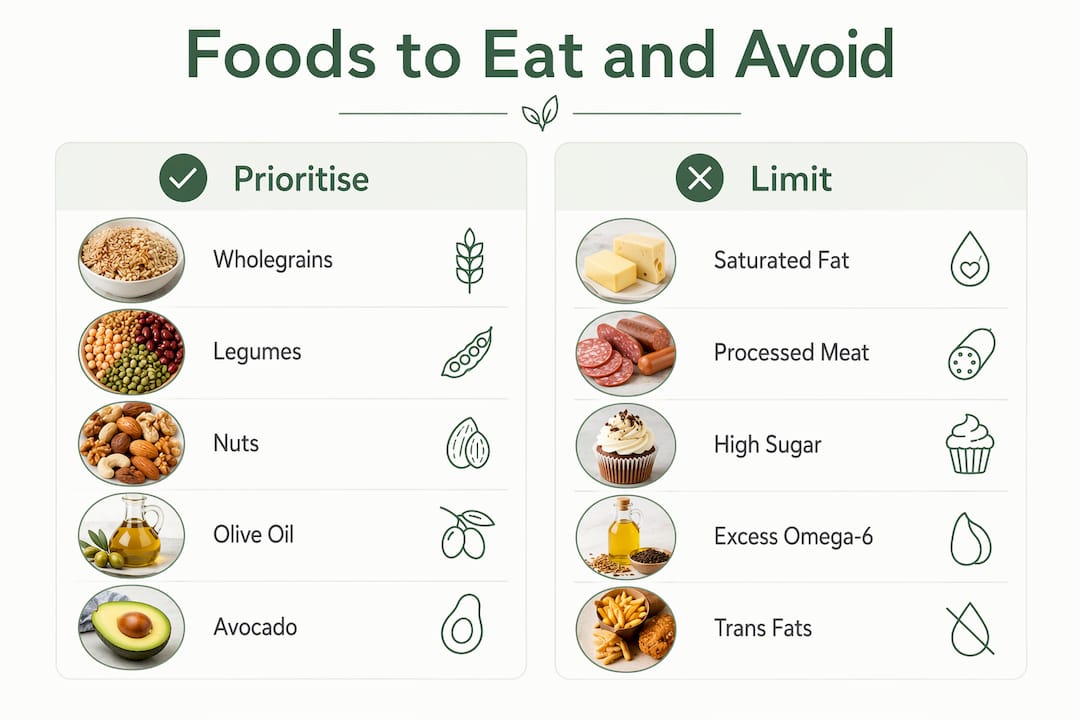
Which foods should you prioritise and which should you cut?
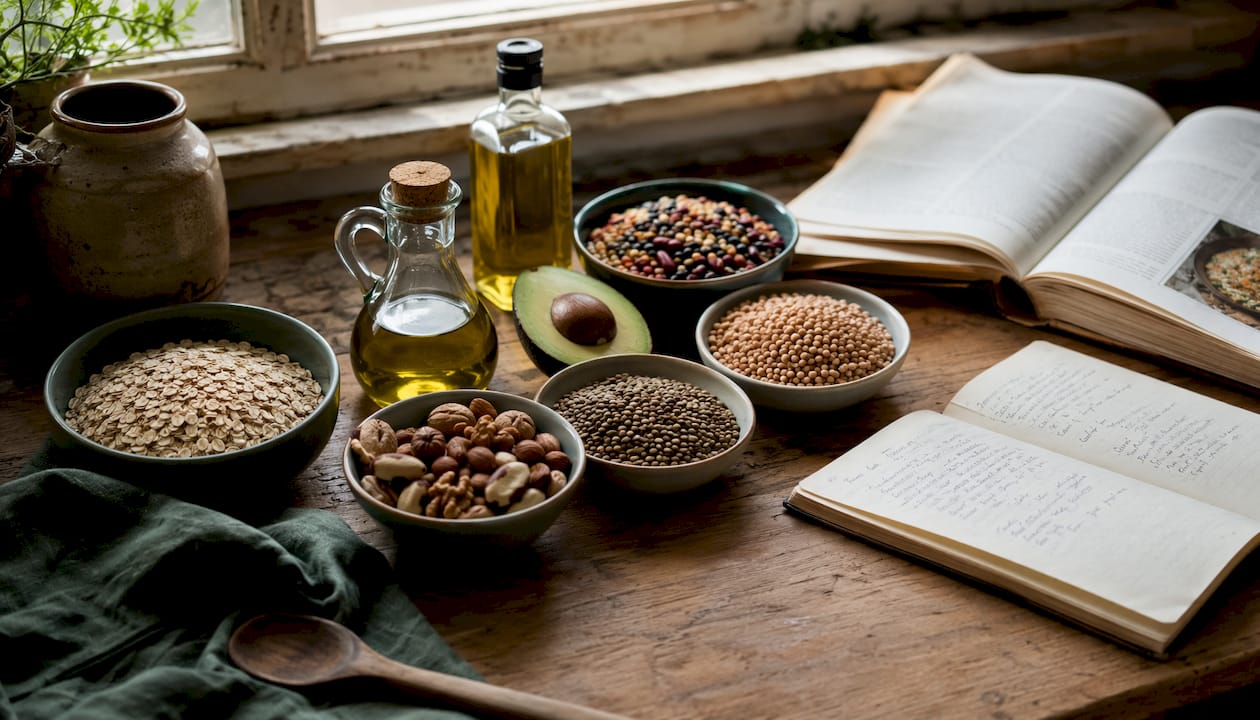
Start with what to add, because the additions do most of the work.
Foods to prioritise:
- Pulses (lentils, chickpeas, kidney beans): soluble fibre and plant protein
- Wholegrains (oats, barley, rye): beta-glucans that directly lower LDL
- Nuts (walnuts, almonds, hazelnuts): unsaturated fats and plant stanols
- Oily fish (salmon, mackerel, sardines): omega-3s twice weekly to lower triglycerides
- Olive oil and rapeseed oil: monounsaturated fats that support a healthy lipid profile
- Fruit and vegetables: soluble fibre, antioxidants, potassium
Natural sources of plant stanols and sterols include wholegrains, legumes, nuts, and oils such as olive and avocado. Fortified products (certain spreads, yoghurt drinks) are a convenient top-up, but they are not a substitute for a whole-food diet.
Pro Tip: Whole foods such as oats, beans and seeds provide equivalent physiological benefits to many fortified products at a fraction of the cost. Build the diet around real food first; use fortified options to close any gap.
Foods to reduce:
- Butter, lard, ghee, and full-fat dairy (high saturated fat)
- Processed meats, pastry, biscuits, and cakes
- Partially hydrogenated oils (trans fats, found in some imported processed foods)
- Refined carbohydrates and sugary drinks, which can raise triglycerides
One nuance worth knowing: the ratio of omega-3 to omega-6 fats matters clinically. Excessive omega-6 from certain vegetable oils can raise inflammatory markers despite being unsaturated. Rapeseed oil has a more favourable omega-3 to omega-6 ratio than sunflower oil, making it the better everyday cooking choice for a heart-healthy diet.
A practical sample day for a UK cholesterol diet plan
A realistic day can hit the key targets without being complicated. The aim is to include plant stanols/sterols, sufficient soluble fibre, and keep saturated fat low to support heart health.
| Meal | Key foods | Approx. soluble fibre | Stanol/sterol contribution |
|---|---|---|---|
| Breakfast | Porridge with oats, semi-skimmed milk, a handful of blueberries | 2–3 g | — |
| Lunch | Lentil and vegetable soup, wholegrain rye bread | 3–5 g | — |
| Snack | Small handful of almonds, one apple | 2 g | — |
| Dinner | Grilled mackerel, roasted vegetables, barley or brown rice | 2–4 g | — |
| Daily total | ~10–14 g | — |
A typical day as shown above provides around 10–14 g of soluble fibre, with individual meals contributing to this total. The range aligns with the TLC target of 10–25 g per day for measurable LDL reduction.
Reaching the recommended 2 g/day stanol/sterol target from whole foods alone takes effort. A fortified spread or yoghurt drink can close the gap without overhauling the rest of the day. Oats and barley are the most efficient sources of beta-glucans, and aiming for roughly 3 g per day from these grains provides meaningful LDL reduction.
Quick swaps:
- Butter → rapeseed oil or a plant stanol spread
- Full-fat cheddar → reduced-fat cheese or nutritional yeast
- White bread → wholegrain rye or seeded loaf
- Red meat twice a week → oily fish or a bean-based dish
- Crisps → unsalted nuts or oatcakes
Lifestyle pillars that must accompany your diet
Diet is one of three pillars in the TLC approach. The other two, physical activity and weight management, are not optional extras.
- Physical activity: aim for at least 150 minutes of moderate-intensity activity per week (brisk walking, cycling, swimming). Regular exercise raises HDL cholesterol, lowers triglycerides, and supports weight management. For personalised training that fits around your health goals, a structured programme can make the difference between sporadic effort and consistent progress.
- Weight management: even modest weight loss of 5–10% of body weight can improve LDL and triglyceride levels meaningfully. Foodconnection’s weight management programmes address this alongside dietary change.
- Alcohol: keep within UK guidelines (no more than 14 units per week, spread across several days). Excess alcohol raises triglycerides.
- Smoking: cessation improves HDL cholesterol and reduces cardiovascular risk independently of diet.
- Sleep and stress: poor sleep and chronic stress raise cortisol, which can worsen lipid and inflammatory markers over time.
Pro Tip: Even a 20-minute daily walk meaningfully improves HDL cholesterol over 12 weeks. You do not need a gym membership to start moving the numbers.
How do you measure progress and when should you adjust?
Measure a fasting or non-fasting lipid profile at baseline before making changes, then repeat after approximately 3 months of consistent dietary and lifestyle effort. That first retest tells you whether the plan is working or needs adjustment.
A typical monitoring schedule looks like this:
- Baseline: full lipid panel (total cholesterol, LDL, HDL, triglycerides) with your GP
- 3 months: repeat lipid panel; review with GP or registered dietitian
- 6–12 months: ongoing review, especially if medication has been introduced or risk factors have changed
Seek an earlier review if any of the following apply:
- Triglycerides rising rather than falling
- Strong family history of early cardiovascular disease (possible familial hypercholesterolaemia)
- Very high baseline LDL that has not shifted after 3 months
- Unexpected weight change, new symptoms, or a new diagnosis
The NHS recommends that adults with high cholesterol work with their GP to set a target LDL and review progress at agreed intervals. A registered dietitian adds the layer of bespoke meal planning and behaviour support that a standard GP appointment rarely has time to provide.
When does a personalised nutrition programme make sense?
Generic advice works for straightforward cases. When it does not, the reasons are usually individual: atypical lipid responses, multiple comorbidities (such as type 2 diabetes, thyroid disorders, or perimenopause), a family history that changes the risk calculation, or simply months of trying and not seeing results.
A tailored programme typically includes:
- Baseline assessment: detailed diet history, lifestyle review, symptom picture
- Optional functional lab testing: extended lipid panels, APOE genotyping, or other markers that clarify why standard advice is not working
- Bespoke meal planning: built around your preferences, schedule, and specific lipid targets
- Ongoing reviews: iterative adjustments as your numbers and circumstances change
- Behaviour change support: the part most generic plans skip entirely
“There is no ‘one size fits all’ when it comes to your heart health. You can tailor a meal plan to meet your needs.” — Heart Foundation
Foodconnection offers exactly this kind of structured, programme-based support. Irina, who authors Foodconnection’s nutrition content, works with clients on complex and chronic health issues where cholesterol is often one piece of a larger picture. If you are unsure whether a personalised programme is worth the investment, this guide sets out the honest case for and against.
Practical tips and red flags to watch for
Keep these close when you are getting started:
- Swap your breakfast cereal for porridge with berries at least 5 days a week
- Add a portion of pulses (lentils, chickpeas, beans) to at least one meal daily
- Replace butter with rapeseed oil for cooking and a plant stanol spread for bread
- Eat oily fish at least twice a week
- Choose wholegrain versions of bread, pasta, and rice as your default
- Snack on unsalted nuts rather than crisps or biscuits
- Read labels: anything above 5 g saturated fat per 100 g is high
- Limit processed meats to occasional use, not a weekly staple
- Drink water or unsweetened drinks rather than fruit juice or sugary alternatives
Red flags that need clinical review, not a DIY tweak:
- Triglycerides rising despite dietary changes
- LDL unchanged or worsening after 3 months of consistent effort
- Xanthomas (fatty deposits under the skin) or a family history of early heart attacks (possible familial hypercholesterolaemia)
- Unexplained weight loss alongside lipid changes
Pro Tip: A beetroot supplement can support circulation and blood pressure alongside a cholesterol-focused diet, but it is a complement to whole-food changes, not a replacement for them.
Key takeaways
A cholesterol diet plan works best when it combines specific food targets, consistent monitoring, and personalised adjustments rather than generic advice applied in isolation.
| Point | Details |
|---|---|
| Hit the daily targets | Aim for 2 g/day plant stanols/sterols, 10–25 g/day soluble fibre, and saturated fat below 7% of calories. |
| Prioritise whole foods | Oats, barley, pulses, oily fish, and rapeseed oil deliver the most benefit at the lowest cost. |
| Monitor at 3 months | Retest your lipid panel after roughly 3 months of dietary change; review with your GP or dietitian. |
| Combine all three pillars | Diet, physical activity, and weight management together produce better results than diet alone. |
| Foodconnection for complex cases | When generic plans stall, Foodconnection’s personalised programmes offer lab testing, bespoke meal plans, and ongoing support. |
Why personalised plans outperform generic advice
Most cholesterol guides hand you a food list and leave you to it. The problem is that individual lipid responses vary considerably. Two people following the same heart-healthy meal plan can see entirely different results, because genetics, gut microbiome, thyroid function, and existing metabolic conditions all influence how the body handles dietary fat and cholesterol.
Generic plans also ignore the behaviour side. Knowing what to eat and consistently doing it are different skills. Without iterative feedback, most people plateau or quietly revert to old habits after a few months.
The practitioners I find most effective work in cycles: assess, adjust, reassess. They use lab data not as a one-off snapshot but as a feedback loop. When a client’s LDL is not shifting despite good dietary adherence, the question is not “try harder” but “what else is driving this?” That might be thyroid function, stress hormones, or a genetic variant that changes how stanols/sterols work for that individual.
Foodconnection’s personalised cholesterol programme
Managing cholesterol through diet is rarely as simple as following a standard plan. Foodconnection offers personalised nutrition programmes built around your specific lipid profile, health history, and lifestyle, with the option to add functional laboratory testing to gain a clearer picture of what is actually driving your numbers.
A typical programme includes an initial in-depth assessment, optional advanced lab work, a bespoke meal plan aligned with your targets, and regular reviews over 8–12 weeks. Support continues beyond the initial programme for clients with ongoing or complex needs. Whether your priority is LDL reduction, weight management, or managing cholesterol alongside another condition, the programme adapts as your results change.
To find out whether a personalised programme is right for you, visit Foodconnection’s services page or book an initial consultation at foodconnection.life.
Useful sources and further reading
The following resources underpin the guidance in this article and are worth bookmarking for your own research.
- TLC Programme, NHLBI: the primary evidence-based framework for dietary cholesterol management; sets the numeric targets used throughout this article.
- MedlinePlus: How to lower cholesterol with diet: clear, accessible summary of dietary strategies including stanols/sterols and soluble fibre targets.
- Heart UK: the UK’s leading cholesterol charity; excellent for UK-specific guidance, recipes, and support resources.
- NHLBI TLC guide (PDF): the full TLC programme document with sample menus and detailed nutrient targets.
- Foodconnection blog: evidence-based articles on nutrition, gut health, hormones, and chronic health management from Irina and the Foodconnection team.
Always work with your GP and a registered dietitian to interpret your lipid results and decide whether dietary changes alone are sufficient or whether medication is appropriate for your situation. This article is general information, not personalised medical advice.