
6–12 Week Candida Diet: Evidence Backed Plan and When to See a GP

A candida diet is a short-term, low-sugar way of eating designed to reduce the processed and sugary foods thought to feed yeast overgrowth, not a proven cure for Candida infection. Any symptom relief people report is more plausibly down to cutting refined carbohydrates and alcohol, which improves diet quality generally, than to starving a fungus. If you have severe symptoms, recurrent thrush, or signs of a systemic infection, see your GP before changing your diet.
TL;DR:
- Cutting added sugars and refined carbohydrates may improve overall diet quality and reduce inflammation, but it does not directly treat Candida overgrowth.
- Incorporating non-starchy vegetables, protein, healthy fats, and low-sugar fruits supports blood sugar stability without necessarily affecting yeast.
- Restrictive measures like avoiding dairy, gluten, or mold-containing foods lack strong scientific backing unless medically diagnosed sensitivities exist.
- Confirming Candida overgrowth requires medical testing, as symptoms often overlap with other gut conditions like SIBO or IBS; diet alone is not diagnostic.
- Supervised, short-term elimination and gradual reintroduction tend to be more effective and sustainable than prolonged, self-guided restrictions.
Table of Contents
- What to eat on a candida diet
- Foods to avoid and why they’re restricted
- What the evidence actually shows
- How to start a candida diet safely
- Who should be cautious with this approach
- When self-diagnosis isn’t enough
- Why supervised support matters more than a strict elimination plan
- A nutrition consultant’s take on the candida diet
- Get supervised support with your candida diet
- Sources
- FAQ
What to eat on a candida diet
The working principle is straightforward: keep blood sugar steady and feed the gut with whole foods rather than refined ones. Every meal should lean on non-starchy vegetables, a decent protein source, and some fat, because that combination blunts the glucose spike that a carb-heavy plate produces on its own.
Non-starchy vegetables (courgette, broccoli, spinach, peppers, mushrooms) form the base of most meals. Steaming or roasting them rather than boiling preserves more nutrients and makes larger portions easier to eat without bloating.
Protein and healthy fats matter more than most guides admit. Eggs, oily fish, chicken, tofu, olive oil, and avocado slow gastric emptying and reduce the glycaemic load of whatever else is on the plate, which is the actual mechanism behind “stable blood sugar” advice rather than any effect on yeast directly.
Low-sugar fruit still has a place. Berries, kiwi, and green apple in modest portions provide fibre and micronutrients without the sugar hit of tropical fruit or dried fruit.
Fermented foods like kefir and live natural yoghurt appear repeatedly on candida-style meal plans, according to guidance from BBC Good Food. The honest caveat is that tolerance varies enormously from person to person, and fermented foods support microbiome diversity without replacing medical treatment for a confirmed infection, according to a review of fermented foods and gut microbiota. Introduce one new fermented food at a time and watch for bloating over 48 hours before adding another.
Tolerated grains and pulses, including quinoa, buckwheat, brown rice, and lentils, are usually fine in moderate portions unless a specific intolerance shows up during reintroduction.
- Non-starchy vegetables: courgette, broccoli, spinach, peppers, mushrooms
- Protein and fat: eggs, oily fish, chicken, tofu, olive oil, avocado
- Low-sugar fruit: berries, kiwi, green apple (small portions)
- Fermented foods: kefir, live natural yoghurt (introduce gradually)
- Grains and pulses: quinoa, buckwheat, brown rice, lentils
Pro Tip: Pair every carbohydrate with a protein or fat source. A bowl of quinoa on its own spikes blood sugar faster than the same quinoa eaten with grilled salmon and greens.
Foods to avoid and why they’re restricted
Most candida diet plans restrict the same handful of categories, and the logic behind each one is worth understanding rather than following blindly.
Added sugars, sugary drinks, and confectionery sit at the top of every list. Sugar feeds yeast in laboratory conditions, but the more relevant point for a person eating three meals a day is that refined sugar spikes blood glucose and displaces nutrient-dense food, which is where most of the reported benefit likely comes from.
Refined carbohydrates and white-flour products (white bread, most pastries, standard pasta) behave metabolically like sugar once digested, so they get grouped with it even though they don’t taste sweet.
Alcohol and ultra-processed foods are usually paused too, partly for their sugar content and partly because they tend to travel together with poor sleep and low vegetable intake, confounding any attempt to judge what’s actually helping.
Dairy is where plans get inconsistent. Some restrict all dairy on the assumption that lactose behaves like any other sugar; in practice, this is often unnecessary for people who tolerate dairy well, and live yoghurt or kefir is frequently reintroduced early precisely because of its fermented-food benefits.
The evidence gets noticeably thinner around mould avoidance, preservative bans, and blanket gluten exclusion. These restrictions appear on plenty of candida diet guides online with little clinical backing, and cutting gluten without a coeliac or sensitivity diagnosis adds inconvenience without a clear physiological reason.
- Added sugars, honey, syrups, sugary drinks
- White bread, standard pasta, most pastries
- Alcohol, particularly beer and sweet wine
- Ultra-processed snacks and ready meals
- Dairy (often unnecessarily; test individually)
There’s no robust trial showing that avoiding mould-containing foods or all gluten changes Candida levels in someone without a diagnosed sensitivity, which is one reason clinicians are cautious about how far these plans get extended.
What the evidence actually shows
Mayo Clinic’s position is blunt: there’s little scientific evidence that a candida cleanse diet treats Candida overgrowth, and any improvement people notice likely reflects a general reduction in processed and high-sugar foods rather than an antifungal effect. That’s a meaningful distinction. It means the diet’s real value may lie in improved diet quality, not in any specific action against yeast.
Three plausible mechanisms explain why people feel better anyway: reduced glycaemic load lowers inflammation markers for many people, less processed food generally means more fibre and micronutrients, and some fermented foods or specific probiotic strains show experimental promise for reducing Candida’s ability to adhere to gut tissue, according to a review of probiotic and Candida interactions. That third mechanism is strain-specific, and clinical translation from lab results to real symptom relief remains inconsistent, according to research on probiotics and Candida.
A large chunk of “candida symptoms” (bloating, fatigue, brain fog, skin flare-ups) overlap heavily with irritable bowel syndrome, small intestinal bacterial overgrowth (SIBO), and undiagnosed food intolerances. Clinical reviews consistently flag this overlap and recommend evaluating for those conditions before assuming fungal overgrowth is the cause, according to a PubMed review of overlapping gut disorders.
| Claim | Evidence strength |
|---|---|
| Cutting added sugar improves general wellbeing | Reasonably strong, from broader nutrition research |
| Cutting sugar specifically reduces Candida overgrowth | Weak; largely theoretical |
| Probiotics reduce Candida adhesion (lab settings) | Moderate in vitro evidence, strain-specific |
| Probiotics improve clinical Candida symptoms | Weak and inconsistent |
| “Antifungal” foods like caprylic acid or coconut oil work in humans | Very weak; mostly in vitro or animal studies |
Compounds marketed as natural antifungals, including caprylic acid and coconut oil, have shown effects mainly in test tubes or animal models, with human clinical benefit still unestablished, according to research on antifungal food compounds.
How to start a candida diet safely
Jumping straight into a strict elimination plan on day one is the most common mistake, and it’s usually unnecessary. A gradual approach is easier to sustain and easier to interpret.
- Remove added sugar and sugary drinks first, for one to two weeks, and note any change in energy or bloating.
- Cut refined carbohydrates and alcohol next, keeping everything else stable so you can attribute any change accurately.
- Add fermented foods and extra vegetables once the first two steps feel manageable.
- Hold the fuller plan for a limited time, a window practitioners commonly use to balance genuine symptom assessment against the risk of unnecessary long-term restriction, according to Mayo Clinic’s guidance.
- Reintroduce one restricted food group at a time over spaced intervals, logging symptoms as you go.
A simple sample day: eggs with spinach and avocado for breakfast; grilled chicken, quinoa, and roasted vegetables for lunch; kefir with berries as a snack; baked salmon with broccoli and lentils for dinner. Repeat with variations across three days rather than planning a full week upfront, since flexibility helps if a food doesn’t sit well.
- Keep a daily symptom log (energy, bloating, skin, mood) rather than relying on memory
- Reintroduce dairy or gluten separately, never together, so you can tell which one caused a reaction
- If travelling, prioritise whole-food, low-sugar choices where possible, a habit that travel and holiday eating guidance covers well for anyone worried about derailing progress on a trip
Who should be cautious with this approach
Strict dietary restriction isn’t risk-free, and some readers should not attempt this without supervision.
- Pregnant or breastfeeding women, whose nutrient needs are higher and less forgiving of restriction
- Children and teenagers, whose growth depends on consistent energy and micronutrient intake
- Anyone with a BMI under 18.5 or a history of disordered eating
- People with diabetes, since cutting carbohydrates changes medication needs
- Anyone on multiple medications, particularly antifungals, where dietary changes can interact
Prolonged restriction risks fibre, B vitamin, and calcium shortfalls if whole food groups disappear for months rather than weeks. Rotating protein sources, keeping portions of tolerated grains in the plan, and reviewing the diet with a professional every few weeks all reduce that risk.
Pro Tip: If you’re taking a prescribed antifungal medication, tell whoever is guiding your diet. Some dietary changes, particularly large increases in probiotic-rich foods, are worth discussing alongside treatment rather than layering on top without a conversation.
When self-diagnosis isn’t enough
Bloating, fatigue, and skin irritation are notoriously non-specific. They show up in coeliac disease, SIBO, thyroid dysfunction, and ordinary stress, which is exactly why online candida quizzes are unreliable diagnostic tools.
Confirming a clinically relevant Candida infection typically involves a swab or stool test, and in more serious or invasive cases, endoscopy with biopsy, according to NHS guidance on thrush and candidiasis. Where infection is confirmed, antifungal medication is the standard treatment; diet plays a supportive role rather than a curative one, according to Mayo Clinic.
Before a GP appointment, it helps to bring:
- A list of symptoms with how long each has lasted
- Any patterns you’ve noticed (worse after sugar, alcohol, or certain foods)
- Current medications and supplements
- Whether symptoms improved or worsened on any diet changes already tried
Expect questions about recurrence, sexual health where relevant, and possibly a referral for a stool test or, if gut symptoms dominate, onward referral to a gastroenterologist to rule out SIBO or IBS.
Why supervised support matters more than a strict elimination plan
DIY candida diets tend to fail in one of two ways: they get abandoned within a fortnight, or they get followed too strictly for too long. A programme-based approach starts with an assessment, applies a genuinely short-term elimination phase, and moves through monitored reintroduction rather than leaving someone guessing indefinitely.
Foodconnection builds that structure around a symptom diary and, where clinically useful, targeted functional testing such as stool analysis to check whether SIBO or another gut issue better explains the symptoms before recommending a more restrictive plan. That distinction, between supportive dietary change and a confirmed diagnosis, is exactly where most self-guided candida diets go wrong.
A nutrition consultant’s take on the candida diet
Most people who write to me about candida overgrowth have already spent months cutting entire food groups on their own, and the majority feel worse, not better, by the time they ask for help. That’s the part the internet version of this diet leaves out: restriction without a plan for reintroduction just becomes a smaller, more anxious diet.
The version of this that actually works is boring by comparison. Cut sugar and alcohol for a few weeks, watch what happens, add foods back one at a time, and stop if nothing’s changing after twelve weeks. If symptoms are severe or keep recurring, that’s a GP conversation, not a longer elimination phase. Sustainable diet quality beats permanent restriction every time I’ve seen the two compared.
— Irina
Get supervised support with your candida diet
Professional nutrition services offer a structured programme with a clear elimination phase followed by reintroduction, providing an alternative to self-guided candida diets with uncertain duration.
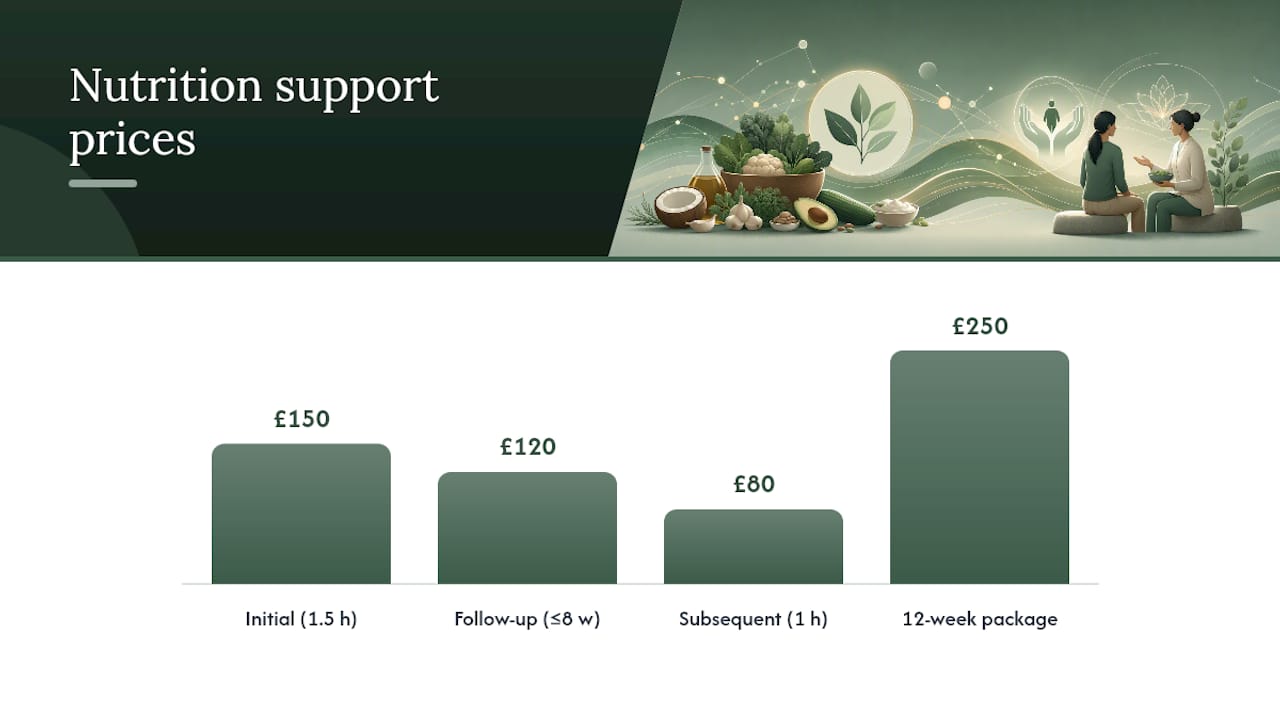
The initial consultation runs one and a half hours and includes written personalised recommendations, priced at £150 as a one-off. A follow-up within eight weeks (£120) checks how reintroduction is going, and subsequent one-hour follow-ups (£80 each) keep the plan adjusted as symptoms change. For anyone wanting extended support through the full six-to-twelve-week window, the 12 weeks of dedicated support package (£250) bundles that continuity in from day one.
Where diagnostic uncertainty is part of the picture, Foodconnection also offers laboratory test analysis and interpretation to help rule out SIBO or other overlapping conditions before committing to a restrictive plan. If you’re ready to stop guessing and start with a proper assessment, book an initial consultation to get a personalised starting point.
This article is general information, not a substitute for advice from a qualified doctor. Consult a qualified healthcare professional about your own circumstances before acting on anything here.
Sources
- Candida cleanse diet: What does it treat? - Mayo Clinic
- Thrush in men and women - NHS
- PMC review: probiotic and Candida interactions (example NCBI review)
FAQ
What foods can I eat if I have candida overgrowth?
Non-starchy vegetables, lean protein, healthy fats, low-sugar fruit like berries, fermented foods such as kefir, and tolerated grains like quinoa or brown rice form the core of most plans.
What is the best diet for getting rid of candida?
No diet is clinically proven to eliminate Candida overgrowth on its own; a low-sugar, whole-food approach may ease symptoms by improving overall diet quality, while confirmed infections need antifungal treatment from a GP.
How can I tell if I have candida overgrowth?
Symptoms like bloating, fatigue, and skin irritation are non-specific and overlap with SIBO, IBS, and other conditions, so a swab or stool test from a GP is the reliable way to check, not an online symptom quiz.
Is Greek yoghurt okay on a candida diet?
Plain, unsweetened Greek yoghurt with live cultures is generally well tolerated and often included for its fermented-food benefits, though individual tolerance varies and it’s worth introducing gradually.
How long should you follow a candida diet?
Most practitioners recommend a short-term window of around six to twelve weeks, followed by gradual reintroduction of restricted foods rather than indefinite restriction.