
A practical bone health diet: daily targets and meals

Two nutrients matter more than anything else on your plate: calcium and vitamin D, with recommended daily amounts advised by health authorities. Hit those consistently through a whole diet rich in fruit, vegetables, low-oxalate greens, dairy or fortified alternatives, oily fish and protein, and you’re doing the single most useful thing you can do for your skeleton.
Three changes to make today:
- Add one calcium-rich portion to a meal you already eat (yoghurt on porridge, cheese in a sandwich, fortified milk in tea).
- Swap one snack for tinned sardines or a handful of almonds.
- From autumn to early spring, consider taking a vitamin D supplement since UK sunlight isn’t strong enough to make enough on its own.
Key Takeaways
Meeting the calcium and vitamin D targets through varied whole foods, not supplements alone, is the single most effective step for long-term bone strength.
| Point | Details |
|---|---|
| Daily calcium target | Aim for 700 mg a day from dairy, fortified alternatives, tinned fish or leafy greens. |
| Daily vitamin D target | Aim for 10 micrograms (400 IU), with a supplement in autumn and winter. |
| Choose low-oxalate greens | Kale, cabbage and broccoli give more usable calcium than spinach. |
| Limit salt and cola | High sodium increases urinary calcium loss, so check labels regularly. |
| Get personalised support | Foodconnection offers tailored programmes and lab testing for complex or persistent bone health needs. |
This article is general information, not a substitute for advice from a qualified doctor. Consult a qualified healthcare professional about your own circumstances before acting on anything here.
Table of Contents
- Calcium: how much you need, where to get it and portion examples
- How much vitamin D do you need, and when?
- What other nutrients support bone strength?
- Which foods should you eat regularly?
- Which foods and habits should you limit?
- Does your bone diet change with age, pregnancy or health conditions?
- When should you consider supplements or testing?
- Why does exercise matter alongside diet?
- What does a bone-friendly day of eating actually look like?
- What does the evidence say about diet and fracture risk?
- Sources
Calcium: how much you need, where to get it and portion examples
The UK target for adults is a daily amount of calcium recommended by health authorities, and most people can reach that through food alone without supplements. Dairy remains the most efficient route: a 200ml glass of milk gives roughly 240 mg, a small pot of yoghurt around 200 mg, and 30g of hard cheese about 200 mg.
Beyond dairy, good sources include fortified plant milks, canned oily fish eaten with their soft bones, calcium-set tofu, and leafy greens such as kale and broccoli.
- Milk, yoghurt, cheese: reliable, well-absorbed calcium.
- Fortified soya, oat or almond milk: check the label for added calcium.
- Sardines or tinned salmon with bones: calcium plus vitamin D in one tin.
- Calcium-set tofu and low-oxalate greens: solid options for dairy-free diets.
Pro Tip: Spinach looks like a calcium powerhouse but its high oxalate content binds much of that calcium, blocking absorption. Kale, cabbage and broccoli give you far more usable calcium per portion.
How much vitamin D do you need, and when?
Adults need 10 micrograms (400 IU) of vitamin D daily, and the NHS advises considering a daily supplement in autumn and winter when sunlight can’t do the job.
From late March to the end of September, most people in the UK make enough vitamin D through sunlight on their skin. Once the clocks change, that source largely disappears, which is why autumn and winter supplementation isn’t optional caution, it’s standard guidance for almost everyone in the country. People who cover their skin for cultural or religious reasons, spend little time outdoors, or have darker skin may need a supplement year-round.
Food helps too, though it rarely covers the full target alone:
- Oily fish (mackerel, salmon, sardines).
- Egg yolks.
- Fortified spreads and breakfast cereals.
- Fortified plant milks and yoghurts.
If you only make one seasonal change, make it this: a 10 µg supplement each day from October through to early March.
What other nutrients support bone strength?
Calcium and vitamin D get the headlines, but they aren’t the whole story. Magnesium, vitamin K, phosphorus and omega-3 fatty acids all play distinct roles in bone structure and remodelling, and skipping them leaves gaps that calcium alone can’t fill.
- Protein: builds the collagen matrix bone minerals attach to, found in eggs, poultry, fish, beans and lentils.
- Magnesium: supports bone stiffness, found in nuts, seeds and wholegrains.
- Vitamin K: activates osteocalcin, the protein that binds calcium to bone, found in kale, broccoli and Brussels sprouts.
- Phosphorus: works alongside calcium in bone mineral, found in dairy, meat and fish.
- Omega-3: supports bone quality, found in oily fish and flaxseeds.
A meal combining leafy greens, oily fish and a handful of nuts quietly covers four of these five nutrients at once.
Which foods should you eat regularly?
Consistency beats perfection. Aim for this pattern most weeks rather than chasing every nutrient every single day.
- Dairy or fortified alternative: 2–3 portions daily.
- Oily fish: twice weekly.
- Low-oxalate leafy greens: at least one portion daily.
- Legumes and nuts: several times weekly.
- Fortified cereals or spreads: daily if dairy intake is low.
None of these portions are large. A pot of yoghurt, a tin of sardines twice a week, and a side of broccoli most days will get most adults close to target without any dramatic diet overhaul.
Which foods and habits should you limit?
High-salt foods, regular cola, excess alcohol and very high caffeine intake all work against your bones, and the sodium link is the most underestimated of the four. Excess dietary sodium increases urinary calcium loss, meaning a salty diet quietly drains calcium your body has already absorbed.
- Check labels and choose lower-sodium processed foods where you can.
- Swap cola for water or sparkling water with fruit.
- Limit liver to once a week, since it’s extremely high in vitamin A (retinol), which in excess can weaken bone.
- Keep alcohol within sensible limits.
Does your bone diet change with age, pregnancy or health conditions?
Vegans, older adults, post-menopausal women and people with malabsorption issues often need more deliberate planning than the general advice above covers.
- Vegans: rely on fortified plant milks, calcium-set tofu and fortified juices, and consider blood testing if intake looks marginal over time.
- Older adults: absorption of both calcium and vitamin D declines with age, so review intake regularly rather than assuming past habits still meet current needs.
- Post-menopausal women: falling oestrogen accelerates bone loss, so adequate protein alongside calcium and vitamin D matters, and a bone density conversation with a GP is worth having. Our guide to perimenopause and how food can help covers this in more depth.
- People with malabsorption (coeliac disease, Crohn’s, prior gut surgery): nutrients can pass through unabsorbed even on a good diet.
Pro Tip: If you fall into more than one of these groups at once, such as being vegan and post-menopausal, don’t just double up on general advice. Get tested rather than guessing.
When should you consider supplements or testing?
Most people should get calcium from food, not tablets. Vitamin D is the exception: a 10 µg supplement is routinely recommended in autumn and winter, or year-round for higher-risk groups.
Blood testing becomes worth discussing with a GP when you suspect deficiency, have a diagnosed malabsorption condition, or have eaten a low-calcium or low-vitamin-D diet for years rather than months. A confirmed deficiency may lead to a prescription-strength supplement rather than an over-the-counter dose.
- Avoid excess vitamin A from liver or high-dose supplements, which can weaken bone over time.
- If your dietary calcium is genuinely low, discuss supplementation with a clinician rather than self-prescribing.
- High-dose calcium supplements can interact with certain thyroid and osteoporosis medications.
Pro Tip: Functional testing can clarify whether a persistent deficiency is a dietary gap or an absorption problem, which changes the entire treatment plan. Explore functional lab testing options if this sounds like you.
Why does exercise matter alongside diet?
Diet builds the raw material; movement tells your body to actually use it. Pair a bone-friendly diet with regular weight-bearing and resistance activity, avoid smoking, and keep alcohol within sensible limits.
- Weight-bearing exercise: brisk walking, dancing, stair climbing, most days.
- Resistance training: two sessions a week, targeting major muscle groups.
- Fall prevention for older adults: balance exercises, good lighting, checking rugs and trip hazards at home.
Smoking accelerates bone loss regardless of diet quality, so stopping is one of the highest-impact single changes available.
What does a bone-friendly day of eating actually look like?
A single well-planned day can meet both numeric targets while covering the wider nutrient list.
- Breakfast: fortified cereal with milk and a handful of almonds. Quick calcium, plus magnesium from the nuts.
- Lunch: sardines on wholegrain toast with a side of steamed broccoli. Calcium and vitamin D from the fish, vitamin K from the broccoli.
- Snack: a pot of yoghurt with a spoonful of flaxseed. More calcium, plus omega-3.
- Dinner: tofu stir-fry with kale, peppers and brown rice. Protein, calcium, and vitamin K in one bowl.
For a dairy-free version, swap the yoghurt for a fortified plant alternative and lean more heavily on the tofu and greens.
What does the evidence say about diet and fracture risk?
Systematic reviews consistently find that people eating patterns high in fruit, vegetables, legumes, low-fat dairy, whole grains and fish have a lower risk of hip fracture than those on less varied diets. The effect comes from the overall pattern, not any single nutrient.
The evidence is graded moderate for adults, and a more recent review update reached the same conclusion: healthier overall dietary patterns track with reduced hip-fracture risk. The practical takeaway is to build a genuinely varied diet rather than fixating on calcium tablets alone.
How Irina applies this with clients in practice
In practice, no two people hit these targets the same way. Appetite, digestion and hormonal shifts all change what’s realistic, so I tailor portion sizes and food choices around what someone can actually digest and enjoy consistently. When intake stays low despite genuine effort, or malabsorption is suspected, that’s when testing and a structured programme add real value beyond general advice.
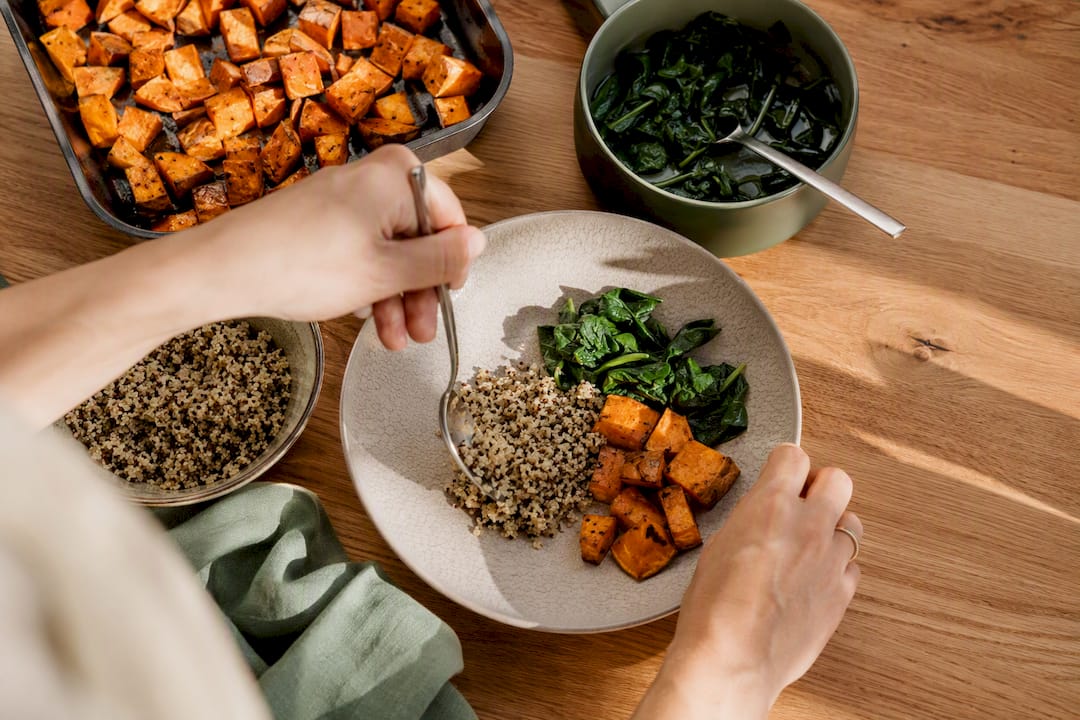
How personalised nutrition support fits into your bone health plan
General targets work well until your diet is complicated by digestive issues, hormonal shifts, or years of low intake nobody’s ever properly assessed. That’s where a tailored plan earns its keep over a generic list of foods to eat.
Foodconnection builds personalised nutrition plans around your actual digestion, hormones and lab results, not a one-size-fits-all checklist. If you suspect malabsorption, have persistent low intake, or you’re navigating menopause alongside bone concerns, our one-to-one support and lab testing services can pinpoint what’s actually happening before recommending changes. Book a consultation to get a plan built around your own results, not generic averages.
Sources
- Food for healthy bones - NHS
- Systematic review: dietary patterns and bone health (PMC)
- Nutrients review on bone-related micronutrients (MDPI)
- Dietary patterns and bone health — systematic review update (US report)
Recommended
- Prediabetes diet: managing blood sugar with complex health needs | FoodConnection blog
- Cholesterol diet plan: what actually works for UK adults | FoodConnection blog
- Insulin resistance diet: why personalisation changes everything | FoodConnection blog
- Personalised nutrition plan: your complete UK guide | FoodConnection blog