
Cut Fizzy Drinks for One Week: Clinic Grade Bloating Diet Plan

Start with the fastest wins: cut fizzy drinks, sugar alcohols and excess lactose for a week, and see what changes. If bloating persists, a short, dietitian-supported low FODMAP trial lasting a few weeks is the next evidence-backed step. Most people notice a difference within days to a couple of weeks. Pain that won’t shift, unexplained weight loss, or blood in your stool mean it’s time to see your GP, not tweak your diet further.
TL;DR:
- Most people notice significant bloating relief within one to two weeks by reducing fizzy drinks, sugar alcohols, and excess lactose.
- Starting with portion control and eating slowly costs nothing and can prevent or reduce bloating without dietary restrictions.
- A structured low FODMAP diet is most effective after simpler measures fail and should be guided by a dietitian to avoid nutrient gaps.
- Proper elimination and reintroduction phases of the low FODMAP method help identify individual triggers, with symptoms often improving after a few weeks.
- Fast-acting relief methods like walking, peppermint or fennel tea, and avoiding carbonated drinks can provide noticeable results on the same day.
Table of Contents
- What causes bloating, and why diet matters
- Which dietary strategy should you try first?
- Running a low FODMAP trial properly
- A sample 7-day anti-bloating meal plan
- How to test and personalise your own diet
- What actually helps within a day or two
- Irina’s clinical perspective: building a personalised bloating plan
- How Food Connection can help you get to the bottom of it
- Sources
What causes bloating, and why diet matters
That tight, swollen feeling an hour after lunch isn’t always a problem. Some post-meal distension is completely normal. Your stomach and intestines stretch to accommodate food, and gas is a natural by-product of digestion. Bloating becomes a genuine issue when it’s frequent, painful, disproportionate to what you’ve eaten, or paired with visible abdominal swelling that comes and goes throughout the day.
Diet is usually the biggest lever. Fermentable carbohydrates, known collectively as FODMAPs, are poorly absorbed by some people and get fermented by gut bacteria, producing gas as a direct result. Lactose does the same in anyone with reduced lactase enzyme activity. Sugar alcohols like sorbitol and xylitol, common in “sugar-free” sweets and protein bars, draw water into the bowel and ferment rapidly. Carbonated drinks add gas directly. Eating too fast, talking while chewing, or wolfing down oversized portions all encourage swallowed air, which has nowhere to go but back up or through.
Diet isn’t the whole story, though. Several non-dietary factors drive bloating just as strongly:
- Constipation. Stool sitting in the colon ferments longer and stretches the bowel wall.
- IBS. Irritable bowel syndrome is strongly linked with visceral hypersensitivity, meaning normal amounts of gas feel painful.
- SIBO or IMO (small intestinal bacterial or methanogen overgrowth). Bacteria colonising the wrong part of the gut ferment food earlier than they should.
- Swallowed air (aerophagia). Chewing gum, drinking through straws, and anxiety-driven rapid breathing all contribute.
- Medications. Some painkillers, antidepressants, and iron supplements slow gut transit.
A handful of symptoms warrant a GP visit rather than another diet tweak: unexplained weight loss, blood in the stool, severe or worsening pain, or a persistent change in bowel habit lasting more than a few weeks.
Which dietary strategy should you try first?
Not every bloating trigger needs the same fix, and starting with the most restrictive option first is usually a mistake. The sensible order runs from least disruptive to most structured.
Portion control and pacing come first because they cost nothing and carry zero risk. Eating slowly, chewing thoroughly, and stopping before you’re stuffed reduces both swallowed air and the sheer volume your gut has to process at once. Harvard Health lists exactly this kind of behavioural tweak as one of the most reliable low-risk interventions available.
Cutting sugar alcohols and carbonated drinks is the second step, and it’s often the one people skip because they don’t realise how much sorbitol is hiding in “diet” products and protein snacks. This alone resolves bloating for a meaningful subset of people without any further restriction.
Lactose reduction fits a specific group: people who feel worse after dairy specifically, or who’ve had a positive lactose breath test. Cutting lactose broadly when it isn’t your trigger just narrows your diet for no benefit.
Low FODMAP elimination is the structured option for anyone whose symptoms persist after the simpler steps, particularly those with diagnosed or suspected IBS. This is where the evidence is strongest.
Systematic reviews report that structured low FODMAP diets improve symptoms, including bloating, in roughly 50 to 86% of people with IBS, a wide range that reflects differences in how strictly the diet was followed and how symptoms were measured.
That’s not a small effect for a dietary change with no drugs involved. It’s also why Mayo Clinic Press frames low FODMAP as primarily an IBS tool rather than a general wellness diet, best run with dietitian supervision so nothing important gets cut long-term.
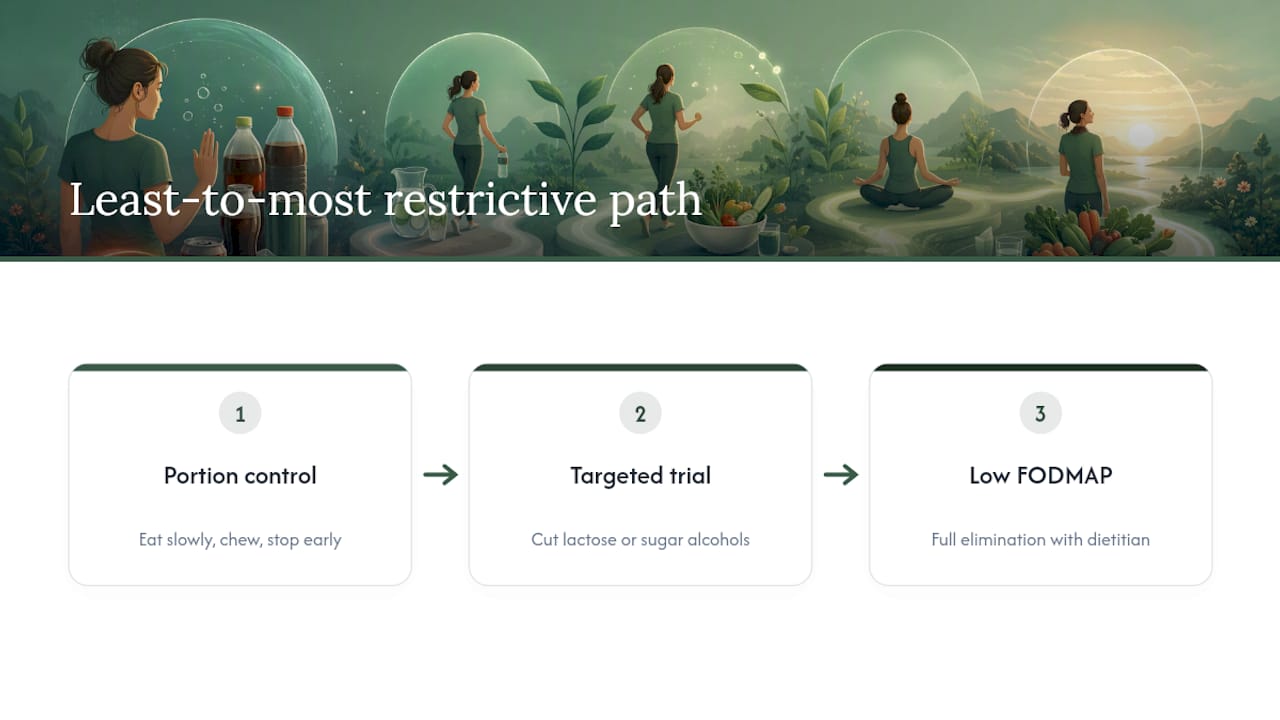
The prioritised path looks like this: try the least restrictive changes for a week or two, run a targeted trial (lactose or sugar alcohols) if a specific pattern shows up, and move to a full low FODMAP elimination with dietitian support only if bloating is still disrupting your life.
Running a low FODMAP trial properly
The low FODMAP method isn’t a diet you stay on. It’s a diagnostic process with three distinct phases, and skipping the later two is the most common way people get it wrong.
Phase one: elimination, lasting a few weeks. You remove high-FODMAP foods across all categories: onions, garlic, wheat, many legumes, apples, pears, honey, and lactose-containing dairy. Johns Hopkins Medicine describes this phase as strict but time-limited by design, not a permanent way of eating.
Phase two: reintroduction, testing one FODMAP subgroup roughly every three days while the rest of your diet stays low FODMAP. This isolates which specific sugars actually trigger you, rather than assuming all of them do.
Phase three: personalisation, where you build a long-term diet that avoids only your confirmed triggers.
Easy swaps make elimination less painful than it sounds:
- Swap onion and garlic for the green tops of spring onions, chives, or garlic-infused oil (the fermentable compounds don’t dissolve into the oil).
- Swap regular milk for lactose-free milk or a fortified plant alternative.
- Swap wheat pasta or bread for rice, quinoa, or certified low-FODMAP oats where wheat is a confirmed trigger.
- Swap regular yoghurt for a lactose-free or Greek strained version.
Label-reading matters more than people expect. Sugar alcohols like sorbitol, xylitol, mannitol, and erythritol turn up in sugar-free gum, “keto” snacks, and diabetic-friendly sweets, all listed quietly in small print. Onion and garlic powder hide in stock cubes, sauces, and seasoned crisps under generic labels like “natural flavouring”.
Pro Tip: Set a calendar reminder before you start elimination. The biggest failure mode isn’t doing the diet wrong, it’s staying in the restrictive phase for months out of fear, which risks nutrient gaps and makes the reintroduction step feel more daunting than it needs to be.
A sample 7-day anti-bloating meal plan
This plan avoids the most common fermentable triggers while keeping meals varied enough to actually stick to. Lactose-sensitive and vegetarian swaps are noted where relevant.
- Monday: Porridge made with lactose-free milk and blueberries; grilled chicken salad with rice, cucumber and olive oil dressing; baked salmon with quinoa and courgette. Snack: a handful of walnuts.
- Tuesday: Scrambled eggs on gluten-free toast; leftover salmon and quinoa bowl; stir-fried tofu (vegetarian swap) or chicken with green beans and rice noodles. Snack: lactose-free yoghurt with strawberries.
- Wednesday: Overnight oats with chia seeds and lactose-free milk; turkey and spinach wrap using a low-FODMAP tortilla; beef or lentil (small tested portion) chilli with rice. Snack: a banana.
- Thursday: Smoothie with lactose-free milk, spinach and kiwi; rice salad with grilled chicken, peppers and feta; baked cod with roast potatoes and carrots. Snack: rice cakes with peanut butter.
- Friday: Gluten-free toast with mashed avocado and a poached egg; leftover cod and vegetables; stir-fried prawns or tempeh with bok choy and rice. Snack: an orange.
- Saturday: Greek yoghurt (lactose-free if needed) with strawberries and pumpkin seeds; grilled halloumi or chicken salad; homemade pizza on a low-FODMAP base with garlic-infused oil. Snack: a small handful of pumpkin seeds.
- Sunday: Vegetable and cheese frittata using lactose-free cheese; roast chicken with potatoes, carrots and green beans; leftover roast in a rice bowl. Snack: grapes.
Shopping list staples: lactose-free milk and yoghurt, rice, quinoa, gluten-free oats and bread, firm tofu, canned tuna or salmon, a wide range of low-FODMAP vegetables (carrots, courgette, spinach, bok choy, tomatoes in small portions), garlic-infused oil, and a mix of berries, kiwi, oranges and grapes for fruit.
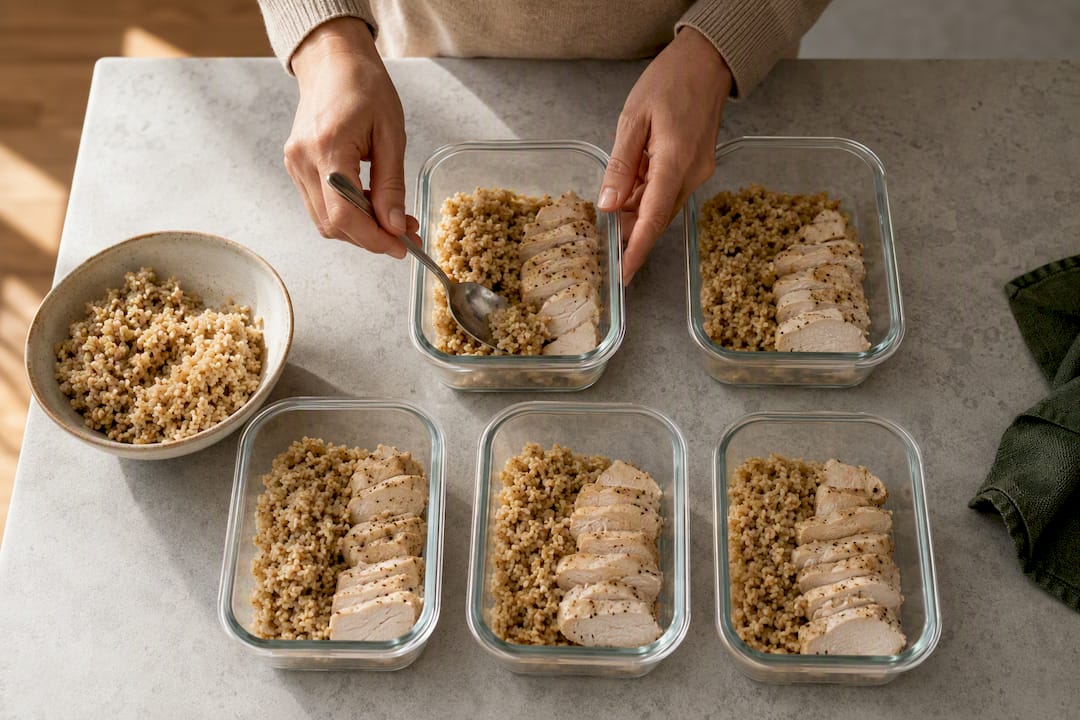
Batch-cook the grains and proteins on a Sunday. Portion into containers by eye, roughly a fist-sized serving of carbohydrate and a palm-sized portion of protein per meal, and you’ve removed most of the decision fatigue that leads to reaching for a quick, riskier option.
How to test and personalise your own diet
Guessing your triggers wastes weeks. A structured process gets there faster.
- Keep a food and symptom diary for at least 7 to 14 days. Record what you ate, portion size, timing, and symptom severity on a simple 1 to 10 scale. Mayo Clinic Press and NIDDK both point to this diary as the practical first step before any restrictive diet begins.
- Reintroduce one FODMAP subgroup every 72 hours during phase two, logging any reaction against your baseline. This isolates fructans, lactose, polyols, and the others individually rather than lumping them together.
- Ask your GP about coeliac screening, a lactose hydrogen breath test, or SIBO testing if symptoms are severe, persistent, or paired with red-flag signs. These conditions can mimic simple food intolerance but need different treatment entirely.
- See a registered dietitian if elimination alone doesn’t resolve things, or if you’re finding the diet hard to sustain safely. A gut health-focused consultation typically reviews your diary, checks nutritional adequacy, and builds the reintroduction schedule around your actual life rather than a generic template.
What actually helps within a day or two
While the bigger dietary changes take weeks to show their full effect, a few measures work fast enough to notice the same evening.
- Walk for 10 to 20 minutes after eating. It genuinely speeds gut transit and gas movement, a point Harvard Health backs directly.
- Sip peppermint or fennel tea, both traditional carminatives with reasonable anecdotal support for easing cramping gas.
- Skip carbonated drinks and chewing gum. Both load your gut with swallowed air you didn’t need.
- Try alpha-galactosidase drops before a legume-heavy meal if beans are a known trigger.
- Simethicone can ease acute trapped gas for some people, though evidence for charcoal and many other “anti-bloating” supplements remains thin and inconsistent.
These are stopgaps, not fixes. If bloating keeps returning despite them, that’s a signal to dig into diet more systematically rather than reaching for another tablet.
Irina’s clinical perspective: building a personalised bloating plan
. In practice, a proper bloating assessment starts well before any food gets cut: symptom history, current eating patterns, sleep and stress levels, and sometimes functional testing such as a SIBO breath test or stool panel to rule out what a diary alone can’t catch.
The programme structure that works best isn’t a rigid diet handed over on day one. It’s a short trial, a careful reintroduction, and then ongoing tuning as life changes, because the trigger that flares under exam stress often isn’t the one that flares on holiday.,.
— Irina
How Food Connection can help you get to the bottom of it
Persistent bloating that doesn’t settle with the steps above is exactly what a structured nutrition programme is designed to solve. Food Connection runs personalised nutrition programmes for digestive complaints, combining one-to-one nutrition therapy with optional functional lab testing, including SIBO, stool and hormone panels, when symptoms suggest something beyond diet alone.
A first consultation typically covers symptom history, current diet, and lifestyle in detail before any elimination plan is built, so you are not guessing which FODMAP group is the problem. Support may continue through the reintroduction phase and beyond, adjusting the plan as triggers become clearer. Unlike a single browse through a generic meal plan, ongoing guidance can catch patterns that only show up after a few weeks. If bloating has been running your week for longer than it should, book a consultation and get a plan built around your actual gut rather than a template.
This article is general information, not a substitute for advice from a qualified doctor. Consult a qualified healthcare professional about your own circumstances before acting on anything here.
Sources
- Systematic review: low‑FODMAP diet efficacy (PMC article)
- FODMAP diet: what you need to know — Johns Hopkins Medicine
- What is a low‑FODMAP diet? Foods, meal plan and benefits — Mayo Clinic Press
- How to get rid of bloating: Tips for relief — Harvard Health