
Bile acid diarrhoea diet: a practical low-fat plan that works

Yes, a low-fat diet commonly reduces urgency and watery stools in people with bile acid diarrhoea, but it isn’t a universal fix. Response varies from person to person, and diet usually sits alongside medical treatment rather than replacing it entirely.
Here’s what to do this week if you’ve had a diagnosis or a strong clinical suspicion:
- Start a four-week low-fat trial. Aim for roughly 40g of total fat per day or less, sometimes framed as under 20% of daily energy intake.
- Keep a symptom diary. Note stool frequency, consistency (the Bristol Stool Chart is useful here), urgency, and what you ate beforehand.
- Avoid large, high-fat meals while you’re testing the waters, rather than eliminating fat entirely on day one.
- Speak to your GP or a registered dietitian before committing to long-term restriction. Cutting fat hard for months without support risks nutrient gaps.
- Ask about SeHCAT testing if it’s available in your area and hasn’t already been offered.
- Expect medication to come into the conversation. Bile acid sequestrants such as cholestyramine are the standard first-line drug treatment, and diet often works best combined with them rather than instead of them.
Bile acid diarrhoea (the everyday term for bile acid malabsorption, or BAM) is a mechanical problem: too much bile acid reaches your colon, and it irritates the gut wall and pulls in water. Diet addresses the fuel for that mechanism. Medication addresses the mechanism itself. Most people need to understand both to get their symptoms under control.
Key Takeaways
A low-fat diet, trialled for four weeks and monitored with a symptom diary, is the most practical first step for managing bile acid diarrhoea safely.
| Point | Details |
|---|---|
| Aim for ≤40g fat daily | Target under 40g total fat per day, capping added fats like butter and oil at around 3 teaspoons. |
| Trial for four weeks | Give the low-fat diet a genuine four-week test before judging whether it’s working. |
| Keep a symptom diary | Track stool consistency, urgency, and meals to spot patterns and guide clinical discussions. |
| Watch for nutrient gaps | Monitor vitamins A, D, E, K and B12, especially if taking a bile acid sequestrant. |
| Expect variable response | Diet helps many people, but sequestrant medication is often needed alongside it, not instead of it. |
| Get personalised support | Foodconnection builds bespoke low-fat meal plans with follow-up monitoring to avoid nutrient shortfalls during the trial. |
Table of Contents
- What is bile acid diarrhoea and why does diet matter?
- What are the typical symptoms of bile acid diarrhoea?
- How is bile acid diarrhoea diagnosed?
- What treatments come before or alongside diet?
- What does a practical low-fat diet for bile acid diarrhoea actually look like?
- What does a day of low-fat eating actually look like?
- Which nutrients need monitoring on a low-fat diet?
- How do you manage a flare-up quickly?
- When should you see a doctor or dietitian?
- How does personalised nutrition support work for bile acid diarrhoea?
- What patients wish they’d known sooner
- Getting structured support for your low-fat trial
- Frequently asked questions
- Sources
What is bile acid diarrhoea and why does diet matter?
Bile acids are made in your liver from cholesterol, stored in the gallbladder, and released into the small intestine to help digest fat. Roughly 95% of them get reabsorbed in the terminal ileum and recycled back to the liver. That recycling loop is called the enterohepatic circulation, and when it breaks down, excess bile acids spill into the colon.
Once there, bile acids act almost like a laxative. They stimulate colon cells to secrete water and salt, and they speed up gut transit. The result is the watery, urgent diarrhoea that gives the condition its name. Because bile acid release is triggered by fat intake, meals higher in fat tend to provoke worse symptoms, which is the whole rationale behind a low-fat diet.
Clinicians recognise three types of bile acid malabsorption, and the type someone has often shapes how much diet alone can help.
- Type 1 follows ileal disease or surgical resection, most often linked to Crohn’s disease or bowel surgery that removes or damages the terminal ileum where bile acids are normally reabsorbed.
- Type 2, sometimes called primary or idiopathic bile acid diarrhoea, happens without any obvious structural cause. The liver appears to overproduce bile acids, or the feedback signal that should slow production doesn’t work properly. This is the type most often mistaken for irritable bowel syndrome with diarrhoea.
- Type 3 occurs secondary to other gastrointestinal conditions, including gallbladder removal (cholecystectomy), coeliac disease, small intestinal bacterial overgrowth (SIBO), chronic pancreatitis, and radiation enteritis.
The type matters because Type 1 often responds strongly to sequestrant medication given the structural cause, while Type 2 sometimes responds better to a combination of diet and drug therapy. Anyone managing a low FODMAP diet for suspected IBS symptoms that hasn’t improved should ask whether bile acid diarrhoea has been ruled out, since the two conditions overlap heavily in presentation.
What are the typical symptoms of bile acid diarrhoea?
The hallmark symptom is watery diarrhoea that comes on with real urgency, sometimes within minutes of eating. Many people describe having to know exactly where the nearest bathroom is at all times, which affects work, travel, and social plans more than most other digestive complaints.
Beyond the core symptom, watch for this pattern:
- Frequent bowel movements, often more than three times a day
- Sudden, hard-to-ignore urgency with little warning
- Steatorrhea: pale, greasy, foul-smelling stools that may float, which points towards fat malabsorption specifically
- Bloating and excessive wind, often worse after fatty meals
- Abdominal cramping, typically before or during a bowel movement
- Nocturnal diarrhoea, which is less common in straightforward IBS and worth mentioning to your doctor specifically
Timing is a genuine diagnostic clue. Symptoms that reliably worsen after fatty meals, particularly rich takeaways, fried food, or creamy sauces, point more strongly towards bile acid diarrhoea than a random, meal-independent pattern would. If your diarrhoea seems entirely unrelated to what you eat, other causes deserve equal attention.
How is bile acid diarrhoea diagnosed?
The gold-standard test where it’s available is the SeHCAT scan (Selenium-75 HomotauroCholic Acid Test). You swallow a small radioactive tracer, then return a week later for a scan that measures how much of it your body has retained. Retention below a certain threshold, usually 15%, indicates bile acid malabsorption, and the lower the retention, the more severe the malabsorption tends to be. Not every hospital trust offers SeHCAT, and access varies by region, so ask your gastroenterologist directly whether it’s available to you.
Where SeHCAT isn’t accessible, many clinicians use a therapeutic trial instead: prescribing a bile acid sequestrant for a few weeks and watching whether symptoms improve. A strong response is treated as reasonably good evidence for the diagnosis, even without imaging confirmation.
Before reaching either point, doctors typically work through a standard exclusion process:
- Blood tests, including vitamin B12, thyroid function, and coeliac serology, since thyroid disorders and coeliac disease can mimic bile acid diarrhoea closely
- Stool tests to rule out infection or inflammation
- Sometimes imaging or colonoscopy, particularly if there are red-flag symptoms like weight loss or rectal bleeding
- Assessment for SIBO if bloating is prominent, since overgrowth can cause a secondary form of bile acid diarrhoea
Other things clinicians commonly check alongside these:
- Recent surgical history, especially gallbladder removal or bowel resection
- Medication review, since some drugs (metformin, for instance) can cause diarrhoea that mimics BAM
- Family or personal history of inflammatory bowel disease
What treatments come before or alongside diet?
Diet rarely stands alone as the only tool. Medication is usually part of the conversation, and understanding both helps you have a more useful discussion with your clinician.
Bile acid sequestrants are the primary drug class. Cholestyramine, taken as a powder mixed with water or juice, and colesevelam, taken as tablets, both work by binding excess bile acids in the gut so they’re excreted rather than irritating the colon lining. They’re effective for many patients, though colesevelam tends to be better tolerated because cholestyramine has a gritty texture some people find unpleasant long-term.
Anti-diarrhoeal medication, mainly loperamide, gets used practically rather than as a root-cause treatment. Many people take it preventatively before a meal out or a long journey, rather than only after symptoms start.
The overall approach tends to be tiered:
- Mild symptoms: a low-fat diet trial alone is often tried first
- Moderate symptoms: diet combined with a bile acid sequestrant
- Severe or persistent symptoms: both of the above plus specialist gastroenterology input, and sometimes further investigation for an underlying secondary cause
Pro Tip: Take cholestyramine or colesevelam at least an hour apart from other medications, including thyroid hormone replacement and oral contraceptives. Sequestrants bind indiscriminately, so they can reduce absorption of other drugs and fat-soluble vitamins if taken too close together.
What does a practical low-fat diet for bile acid diarrhoea actually look like?
Vague advice to “eat less fat” doesn’t help much on a Tuesday evening when you’re deciding what to cook. The numbers matter, so here they are plainly: guidance from NHS trusts commonly recommends less than 40g of total fat per day, with some protocols framing the target as roughly 35 to 50g, or under 20% of total daily energy intake. Added fats specifically, meaning butter, oil, and spreads used in cooking or on top of food, are often capped at around 3 teaspoons (15ml) a day.
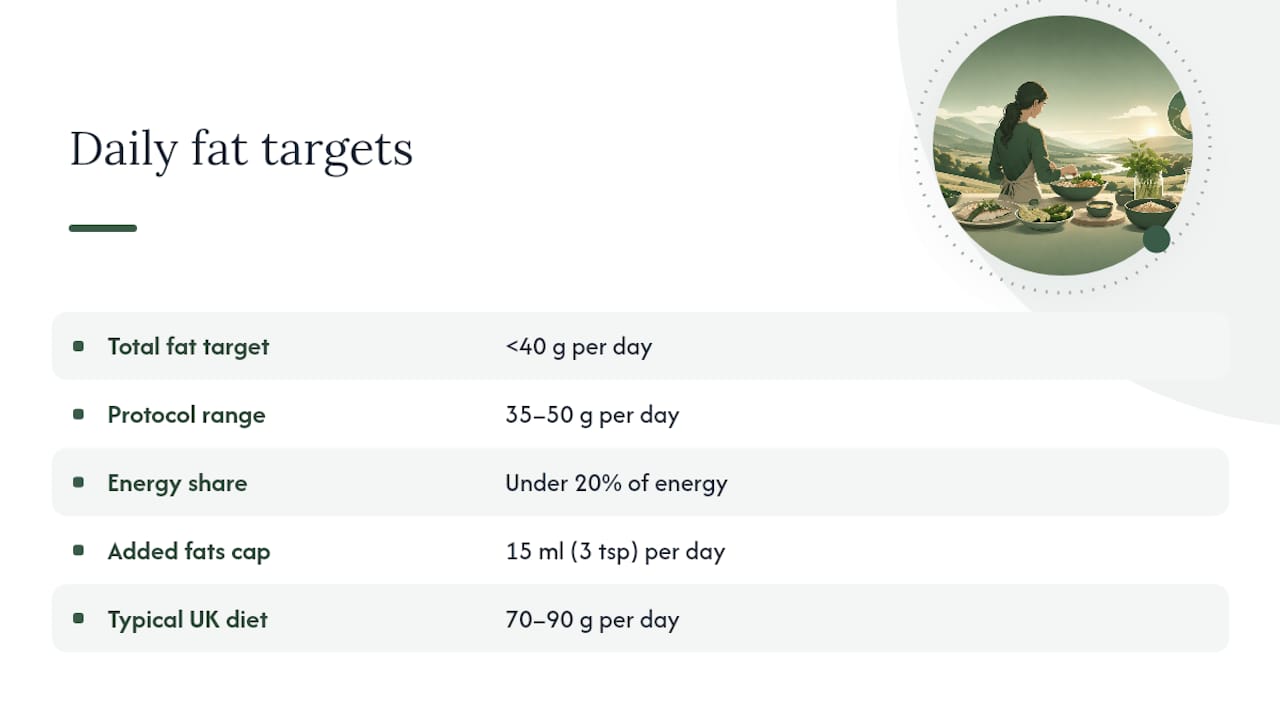
That’s a meaningful cut for most people, given a typical UK diet often runs to 70 to 90g of fat daily. It’s achievable without turning meals joyless, but it takes some label-reading discipline in the first few weeks.
Cooking and shopping rules that make the difference
Frying is the biggest single culprit, since oil soaks directly into food during cooking. Switching to grilling, steaming, poaching, or air-frying removes a large chunk of hidden fat without changing much about what you’re actually eating. Trim visible fat off meat before cooking, remove poultry skin, and use an oil spray rather than pouring from the bottle, which typically cuts the amount you use by more than half.
Foods to favour
- Lean proteins: skinless chicken and turkey, white fish, beans, lentils, and tofu
- Low-fat dairy, or fortified plant alternatives if you prefer them
- Starchy carbohydrates for steady energy: rice, pasta, potatoes, bread
- Soluble fibre sources such as oats and psyllium husk, which can help firm up stool consistency for some people
- Fruit and vegetables, most of which are naturally low in fat
Foods to limit or avoid
- Butter, cream, and full-fat cheese
- Fried food of any kind, including takeaways
- Pastry, particularly puff pastry, which is notoriously fat-dense
- Processed fatty meats: sausages, bacon, salami
- Creamy sauces, mayonnaise-heavy dressings, and oily marinades
Hidden fats trip people up more than obvious ones. A seemingly innocent salad can carry more fat than a modest portion of fish and chips once a creamy dressing goes on top, and pre-packaged sandwiches are frequent surprise offenders.
Reading labels quickly matters here, and the NHS traffic-light system gives you a fast way to judge any packaged food per 100g:
Aim for low or medium options as your default, and treat anything flagged high as an occasional food rather than an everyday staple.

Pro Tip: Grate cheese instead of slicing it. You’ll use visibly less while it still coats a dish evenly. Swap cream for plain yogurt in sauces, choose plain popcorn or rice cakes over crisps, and remember that coconut oil doesn’t require bile salts for digestion, though it’s still high in saturated fat, so use it sparingly rather than as a free pass.
Run this as a genuine four-week trial. Track symptoms alongside your fat intake, and if things haven’t meaningfully improved by the end, reintroduce higher-fat foods gradually rather than staying restricted indefinitely on a diet that isn’t working for you. Unnecessary long-term restriction carries its own risks, which the next section covers.
What does a day of low-fat eating actually look like?
Theory is one thing. Here’s what roughly 35 to 40g of fat looks like across a real day, adjusted for how active you are.
A typical weekday
- Breakfast: porridge made with skimmed milk, topped with banana and a spoon of honey
- Lunch: a chicken and salad sandwich on wholemeal bread with a light spread, no mayonnaise
- Snack: a rice cake with a thin layer of jam
- Dinner: grilled white fish, boiled new potatoes, steamed green beans
- Evening snack: low-fat yogurt with berries
A higher-activity day (a bit more energy needed, still low fat)
- Breakfast: wholemeal toast with a poached egg and grilled tomatoes
- Lunch: lentil soup with a bread roll
- Snack: a banana and a handful of pretzels
- Dinner: turkey stir-fry with plenty of rice, using a splash of low-sodium soy sauce instead of oil-heavy sauces
- Snack: rice pudding made with skimmed milk
A lighter day, for when symptoms are still settling
- Breakfast: plain toast with a thin spread and honey
- Lunch: plain rice with steamed chicken and vegetables
- Snack: a rice cake
- Dinner: white fish poached in stock, plain boiled potatoes, plain steamed carrots
A few swaps make this easier to sustain long-term rather than something you white-knuckle through for a month:
- Swap butter for a low-fat spread, and measure it rather than eyeballing it for the first few weeks
- Choose filo pastry over puff pastry when a recipe calls for pastry at all
- Use low-fat dairy or fortified plant milks in place of full-fat versions
- Pick plain yogurts over flavoured ones with added cream
Don’t cut fat so aggressively that calories collapse alongside it. Starchy carbohydrates are your friend here: rice, pasta, bread, and potatoes carry very little fat but plenty of energy, which matters if you’ve noticed unintended weight loss. Readers managing overlapping cholesterol concerns might find the swap logic in a low-fat cholesterol diet plan useful too, since the mechanics of cutting saturated fat while keeping calories adequate are broadly similar.
Which nutrients need monitoring on a low-fat diet?
A low-fat diet done for months without oversight can quietly create new problems even as it solves the original one. Vitamins A, D, E, and K are fat-soluble, meaning your body needs dietary fat present to absorb them properly. Cut fat too hard for too long, and levels of these vitamins can drift down without you noticing until a blood test flags it.
Vitamin B12 deserves separate attention, particularly for anyone with Type 1 bile acid diarrhoea linked to ileal disease or resection, since B12 is absorbed in that same section of the small bowel.
Weight loss is another quiet risk. If fat intake drops sharply and nothing replaces those calories, unintended weight loss follows, which clinicians typically manage by increasing starchy carbohydrates and energy-dense low-fat foods rather than by loosening the fat restriction itself.
Practical monitoring steps worth raising with your GP or dietitian:
- Ask for baseline blood tests covering B12, and discuss whether fat-soluble vitamin levels should be checked given your specific history
- If you’re on a bile acid sequestrant, ask about a daily multivitamin and vitamin D supplement, since these medications actively bind fat-soluble vitamins alongside bile acids
- Track your weight weekly during the initial trial period, not obsessively, just enough to catch a downward trend early
- Book a periodic review, particularly if you’re maintaining the low-fat diet beyond the initial four-week trial
Anyone already managing a metabolic condition should note that the dietitian oversight logic here mirrors advice given for supervised dietary change in fatty liver disease: restriction without monitoring tends to solve one problem while quietly creating another.
How do you manage a flare-up quickly?
Some days the diet plan goes out the window, whether from an unexpected meal out or a stressful week. Here’s the short version for getting symptoms back under control fast.
- Stop eating high-fat foods immediately, even if you’ve already started a meal
- Take your prescribed bile acid sequestrant or loperamide if your clinician has advised using them this way
- Prioritise fluids, since watery diarrhoea depletes both water and electrolytes quickly
- Switch to small, frequent, bland, low-fat meals rather than three large ones
- Hold off on adding extra fibre for a day or two, since a sudden fibre increase can aggravate an already irritated gut
On hydration specifically: water is fine for mild cases, but if diarrhoea has been frequent for more than a day, an oral rehydration solution replaces lost salts more effectively than water alone. Limit caffeine and alcohol during a flare, since both can stimulate gut motility further and worsen urgency.
- Keep oral rehydration sachets in the house if flares happen more than occasionally
- Carry loperamide when travelling or eating out, if your clinician has approved this
- Note what triggered the flare in your symptom diary, since patterns often emerge after a few episodes
When should you see a doctor or dietitian?
Give the low-fat trial a genuine four weeks before deciding it isn’t working. That said, some symptoms warrant contacting your GP well before the trial period ends:
- Blood in your stool, or stools that look black or tarry
- Severe or rapid weight loss that wasn’t intentional
- Persistent vomiting alongside the diarrhoea
- Signs of dehydration: dizziness, dark urine, reduced urination
- Fever alongside diarrhoea
For a routine review at the end of your trial, bring genuinely useful information rather than a vague description of “it’s been bad”:
- Your symptom diary, including stool frequency and consistency using the Bristol Stool Chart
- A record of any weight change over the trial period
- A list of current medications and supplements, including anything over-the-counter
- Details of any recent blood tests or imaging already done
- Specific questions about SeHCAT testing or sequestrant medication if diet alone hasn’t been enough
Ask directly for a dietitian referral if your GP hasn’t already offered one. Dietetic input typically covers a structured food-symptom diary review, tailored fat targets based on your actual eating pattern, guided reintroduction of higher-fat foods, and monitoring for the nutrient gaps covered above. It’s a different, more hands-on level of support than a general information leaflet can offer.
How does personalised nutrition support work for bile acid diarrhoea?
Generic advice gets you started, but bile acid diarrhoea genuinely varies enough between individuals that a one-size-fits-all sheet often falls short after the first few weeks. That variability is well recognised: clinical research shows dietary response differs considerably from person to person, which is exactly why a tiered, personalised approach tends to outperform a single static diet sheet.
A structured nutrition programme typically works through several stages. It starts with a clinical assessment covering your symptom history, current medications, and any test results you already have. From there, your practitioner reviews your symptom diary in detail, looking for patterns a quick GP appointment often doesn’t have time to unpack. Where appropriate, functional testing such as stool analysis or nutrient panels can help identify whether SIBO or a specific deficiency is complicating the picture.
From that assessment, a personalised low-fat meal plan gets built around your actual eating habits, not a generic template, followed by a structured plan for reintroducing foods once your four-week trial period ends.
Ongoing support matters as much as the initial plan. That includes:
- Scheduled follow-ups to track whether symptoms are genuinely improving, not just assumed to be
- Weight and symptom tracking over time, catching nutrient shortfalls before they become a problem
- Supplement guidance specifically tailored to whether you’re taking a bile acid sequestrant
- Coordination with your GP or gastroenterologist so nutrition advice and medical treatment stay aligned rather than working at cross-purposes
What patients wish they’d known sooner
Most people who trial a low-fat diet for bile acid diarrhoea see real improvement within the first couple of weeks. Urgency eases first, usually before stool consistency fully normalises. But a meaningful minority find diet alone isn’t enough, and that’s not a failure of willpower. It usually means medication needs to join the plan, not replace it.
The pitfall that catches people out isn’t the diet itself. It’s what happens after the initial four weeks, when relief feels so good that restriction quietly becomes permanent without anyone checking whether it’s still necessary, or whether nutrients are being missed along the way. Weight drifts down. Energy dips. Nobody notices until a blood test does.
Patience with the process matters more than most people expect going in. Reintroducing foods gradually, one at a time, rather than in one big test, gives you a much clearer picture of what your gut actually tolerates versus what you’ve simply been avoiding out of caution. A symptom diary sounds tedious for the first few days and then becomes the single most useful tool in the whole process, because patterns that feel invisible in the moment become obvious once they’re written down over a fortnight.
The honest reassurance is this: for most people, the picture improves over time, not just in symptoms but in flexibility. Diets that start out strict rarely need to stay that strict. Combined treatment, whether that’s diet with a sequestrant, or diet with occasional loperamide for specific situations, usually means less restriction is needed overall than doing diet alone at maximum intensity.
Getting structured support for your low-fat trial
Running a four-week low-fat trial with a generic leaflet is one option. Working through it with someone who adjusts your plan as your symptoms respond, rather than leaving you to guess whether a plateau means the diet’s failing or you just need another week, tends to get people to a workable long-term routine faster and with fewer nutrient gaps along the way.
Foodconnection builds personalised nutrition programmes specifically for people managing digestive conditions like bile acid diarrhoea, combining bespoke low-fat meal planning with structured follow-up so fat targets are met without quietly losing fat-soluble vitamins or B12 along the way. Where useful, functional lab testing can clarify whether SIBO or another secondary cause is part of your picture, and supplement guidance is built in for anyone taking a bile acid sequestrant. If you’re already under a gastroenterologist, a referral for NHS dietetic input may also be worth requesting alongside private support. To start, visit the Foodconnection programme page and book an initial assessment to build a plan around your own symptoms and history.
Frequently asked questions
Does a low-fat diet cure bile acid diarrhoea? No. It manages symptoms for many people by reducing how much bile acid gets triggered by fatty meals, but it doesn’t correct the underlying cause. Some people need medication such as cholestyramine alongside dietary changes for full symptom control.
How much fat should I eat with bile acid diarrhoea? Most guidance suggests under 40g of total fat per day, with added fats like butter and oil capped at around 3 teaspoons daily. Your dietitian may adjust this based on your specific symptoms and nutritional needs.
How long should I trial a low-fat diet before giving up? A four-week trial period is generally the recommended duration to assess whether symptoms improve; if not, higher-fat foods can be gradually reintroduced.
Can I eat fibre if I have bile acid diarrhoea? Fibre from starchy carbohydrates and some soluble fibre sources like oats is generally fine and can help firm stool consistency. During an acute flare, though, it’s worth pulling back on fibre temporarily since a sudden increase can aggravate symptoms.
Is dairy a problem for bile acid diarrhoea? Full-fat dairy contributes meaningfully to daily fat intake, so low-fat or fat-free versions are usually better tolerated. Lactose intolerance is a separate issue and worth checking separately if dairy specifically seems to trigger symptoms.
Should I take vitamin supplements while managing bile acid diarrhoea? If you’re taking a bile acid sequestrant, a daily multivitamin and vitamin D supplement is commonly recommended to offset reduced absorption of fat-soluble vitamins. Speak to your GP or dietitian before starting supplements, and ask about baseline blood tests first.
This article provides general dietary information and isn’t a substitute for personalised medical advice. Confirm your specific fat targets, medication plan, and monitoring schedule with your GP, gastroenterologist, or a registered dietitian.
This article is general information, not a substitute for advice from a qualified doctor. Consult a qualified healthcare professional about your own circumstances before acting on anything here.
Sources
- Bile Salt Diarrhoea - University Hospitals Sussex NHS Foundation Trust
- Dietary advice for bile acid malabsorption (BAM) - Leicester hospitals
- Bile acid malabsorption - Royal Marsden patient information
- Clinical research highlighting variability in dietary response (PubMed ID 26621941)
Recommended
- Low FODMAP diet: a practical guide for IBS relief in the UK | FoodConnection blog
- Cholesterol diet plan: what actually works for UK adults | FoodConnection blog
- Fatty liver diet: what to eat, avoid, and change | FoodConnection blog
- Insulin resistance diet: why personalisation changes everything | FoodConnection blog